
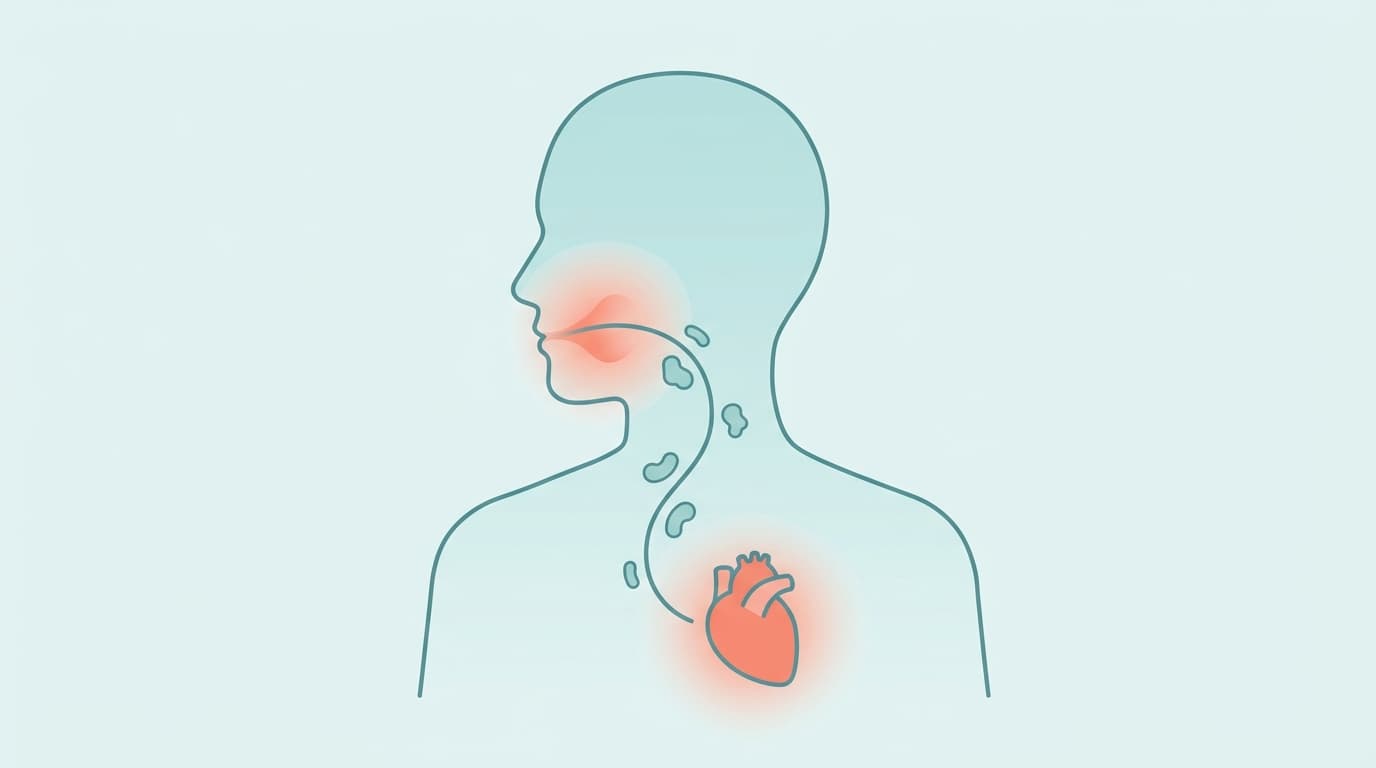
Gum Bacteria Directly Detected in Heart Tissue
Multiple studies had already reported a correlation between periodontitis and myocardial infarction: having periodontitis raises the risk of a heart attack, and the more severe the periodontitis, the larger the resulting infarct. What had never been confirmed was what the bacteria in the gums actually do once they reach the heart. In a study published in the journal Circulation in November 2025, a research team from Zhejiang University and the Shanghai Jiao Tong University School of Medicine examined this pathway directly by combining a ligature-induced periodontitis model with a coronary-ligation myocardial infarction model in mice.
When the researchers compared mice with periodontitis alone, mice transplanted with dental plaque from periodontitis patients, and mice with both conditions combined, the mice with both conditions showed the greatest drop in cardiac contractile function and the largest area of myocardial damage. Analysis of bacterial genes in heart tissue found the same bacteria that had proliferated in the gums also present in heart tissue, while hearts of mice without myocardial infarction showed almost no detectable bacteria. The team then narrowed this down to five species, including Porphyromonas gingivalis and Fusobacterium nucleatum, cultured them individually, and implanted them; these bacteria alone were enough to worsen the myocardial infarction to the same degree. In germ-free mice, ligating the gums alone did not worsen heart function, but the same outcome appeared once these five species were introduced, confirming that the bacteria themselves were the cause.
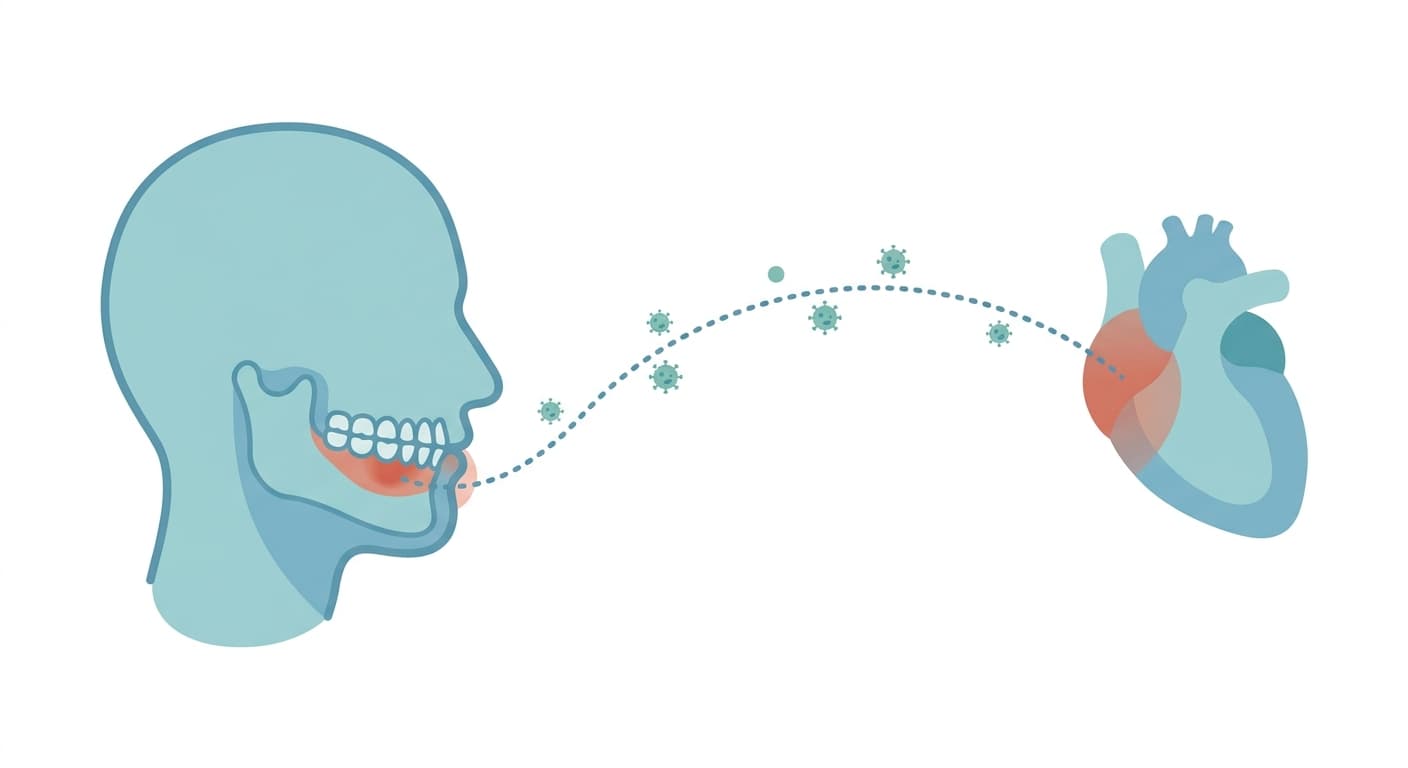
Bacteria Enter Through Gaps in Damaged Blood Vessels
The team also confirmed how the bacteria travel from the mouth to the heart. In cultured dishes of oral epithelial cells and vascular endothelial cells, these five bacterial species attached more readily and penetrated more deeply than other bacteria, and reduced the amount of adhesion proteins (E-cadherin and VE-cadherin) that hold cells together, widening the gaps between cells. A mutant strain lacking the gene for this adhesion protein was weaker at prying open those gaps in the same experiment, and heart function worsened less. In other words, the bacteria could only reach the heart through the bloodstream when the vascular permeability already elevated by the heart attack overlapped with the gaps opened by gum inflammation.
It's Immune Cells, Not Bacteria, That Attack the Heart
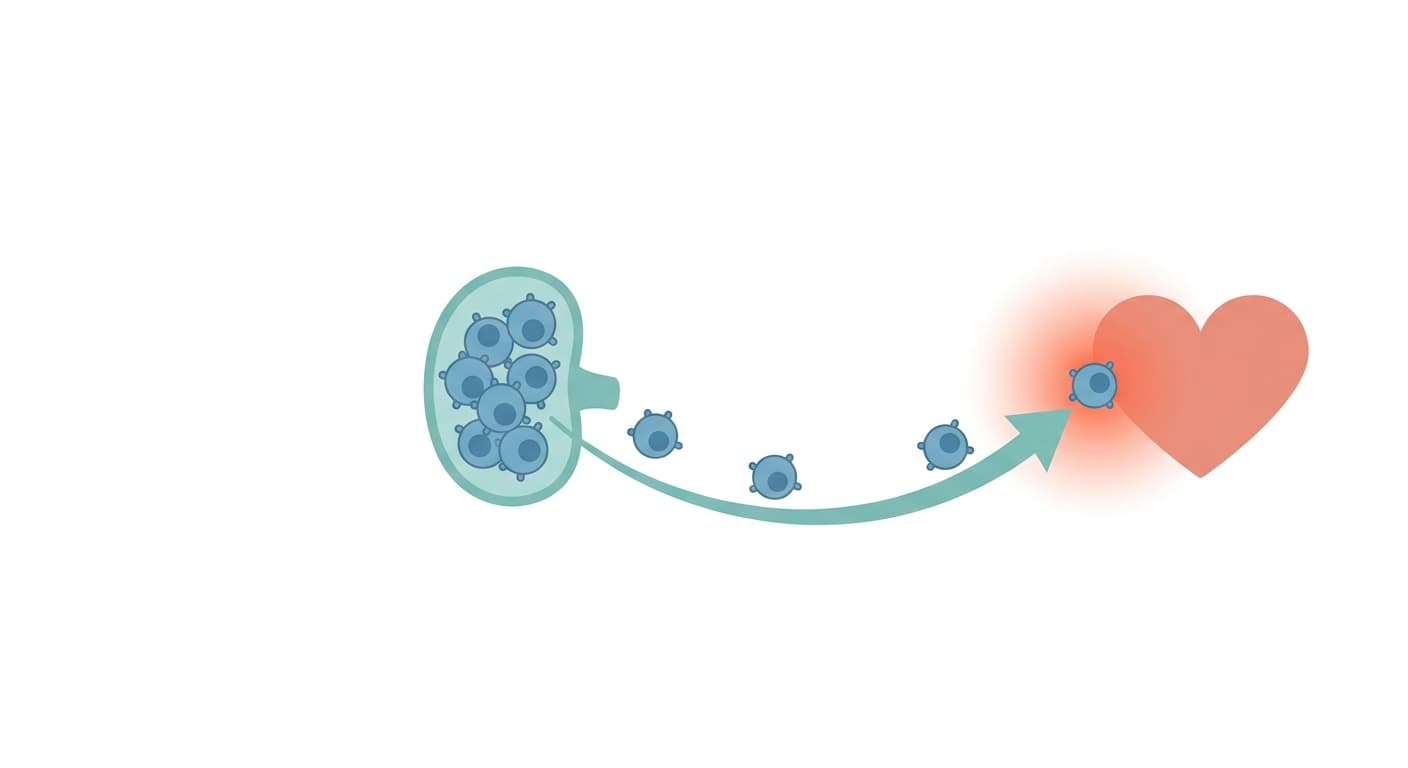
The bacteria that reached the heart did not directly destroy the myocardium. The researchers found that the cervical lymph nodes (the lymph nodes that drain the oral cavity) swelled in response to the bacteria, and that within them, B cells, particularly B2 cells that produce inflammatory substances (interleukin-6 and tumor necrosis factor-alpha), increased sharply. These B2 cells followed a sphingosine-1-phosphate signal out of the lymph nodes, traveled through the bloodstream, and then converged on heart tissue by following a signaling molecule (CXCL13) released by the damaged heart. In mice whose lymph nodes had been removed beforehand, whose B cells had been depleted, or in which this migration pathway had been blocked with drugs, implanting the bacteria did not worsen the myocardial infarction. This indicates that the inflammatory response of the B2 cells recruited by the bacteria, rather than the bacteria themselves, is the actual driver of the increased heart damage.
The Same Signal Appeared in 72 Heart Attack Patients
The researchers also compared 72 heart attack patients, split into 36 with periodontitis and 36 without. The group with periodontitis had a lower cardiac ejection fraction and higher blood levels of BNP, a marker of heart failure severity. Blood tests also showed elevated levels of inflammatory B2 cells, CXCL13, and a bacterial component (LPS) together, meaning the same directional signals seen in the mouse experiments were also observed in humans. However, because this comparison used blood drawn at a single point in time, it could not establish the order of cause and effect, and it remains uncertain how closely the acute ligature model in mice matches chronic periodontitis in humans. Research aimed at reducing oral bacteria continues, such as a treatment that uses bacteriophages to selectively kill periodontitis-causing bacteria, but this study does not establish whether such treatment would also block the heart-invasion pathway identified here and thereby change heart attack outcomes.