
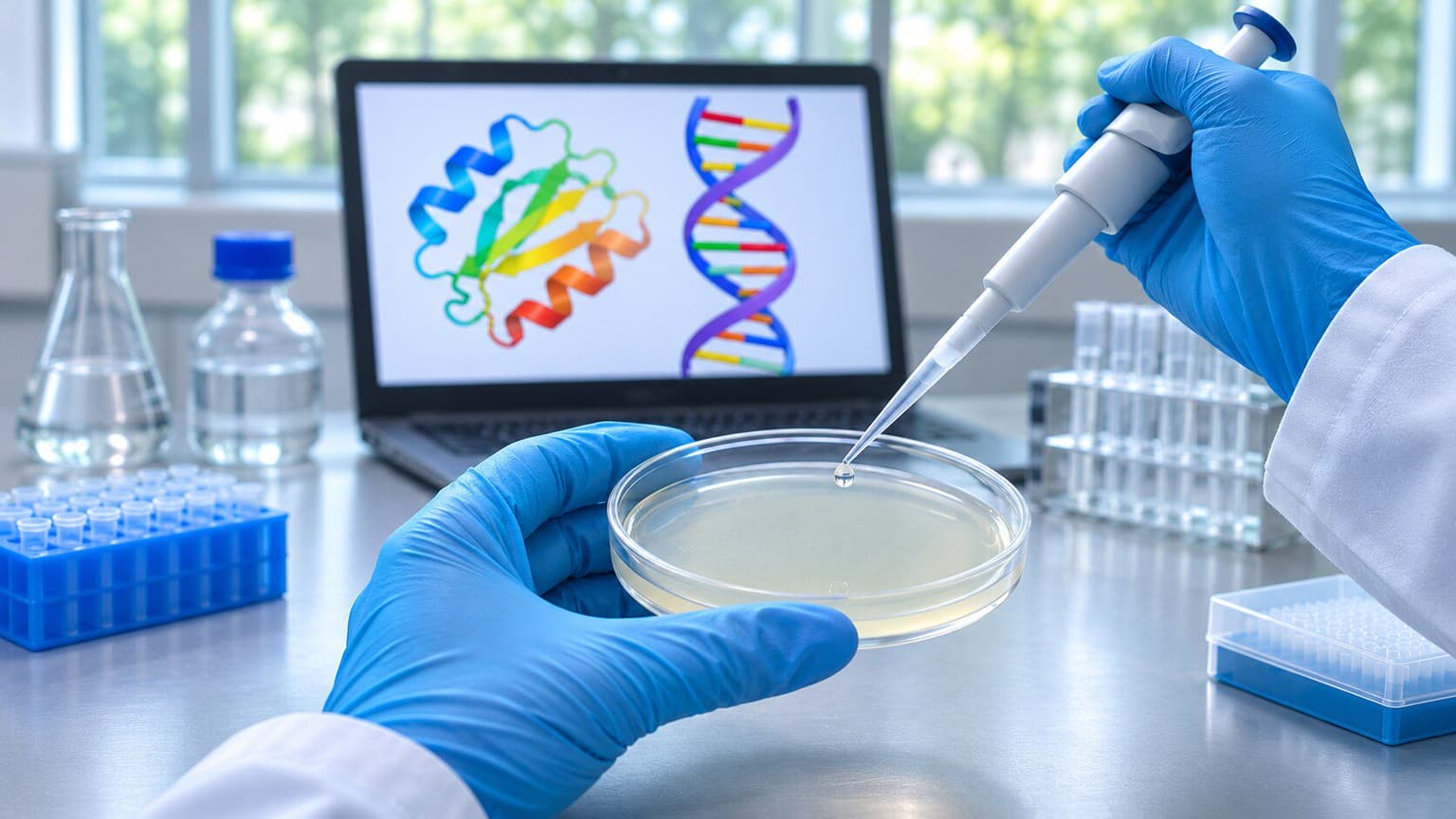
Genetic information from oral viruses has become a resource for finding antibacterial substances. In a study published in 2025, researchers at Tsinghua University and Peking University built the oral virus database HOVD, produced enzymes identified within it, and inhibited the growth of cultured periodontal bacteria. Even though they could not isolate live viruses that infect the bacteria, they obtained functional proteins from genetic information.
The article on phage therapy explored ways to attack bacterial biofilms using viruses and their enzymes. Here, we look at an earlier step: the technology used to identify antibacterial enzyme candidates in a vast genetic catalog.
A Genetic Catalog of Oral Viruses
Bacteriophages, or phages, are viruses that infect bacteria. Research on oral microorganisms has extensively examined bacterial types and functions, but many gaps remain in our understanding of which bacteria phages interact with and what functions they perform. The researchers built HOVD by combining existing oral virus data with newly analyzed genetic information from saliva.
HOVD contains 24,440 taxonomic units of bacteria-infecting phages, grouped by genetic similarity. This does not mean that so many live viruses were cultured and stored. It is a catalog assembled by identifying and piecing together viral genetic fragments from samples containing genetic material from multiple microorganisms, then grouping similar sequences.
The researchers used software called CheckV to assess how completely the genomes had been reconstructed. They retained data with more than 50% completeness and distinguished the sampling sites, such as saliva, the tongue surface, and dental plaque above and below the gumline. Beyond simply collecting large numbers of sequences, they organized the data so that viruses from different environments could be compared.
Predicting Target Bacteria from Genetic Patterns
Finding antibacterial enzymes first requires narrowing down which phages are associated with the target bacterium. The researchers focused on Porphyromonas gingivalis, a bacterium involved in periodontitis. Using a program called VirHostMatcher, they compared how frequently short DNA sequences occur in phage and bacterial genomes. The approach assumes that the more similar the patterns of sequence use, the more likely the organisms are to be associated.
These calculations must be distinguished from direct observations of infection. Across HOVD, the researchers could link only 28.4% of phages to bacterial hosts at the species level. Reference genomes available for comparison are limited, and a single phage may be associated with multiple bacteria, making it difficult to establish every connection from genetic patterns alone.
Next, they searched the candidate phage genomes for the genetic instructions for endolysins, enzymes that break down bacterial cell walls. They selected candidates by comparing sequences against databases of known protein functions and also predicted protein structures using ColabFold-AlphaFold2. Structure prediction is a tool for understanding the candidates; the subsequent experiments determine whether they have antibacterial activity.
From Virus Isolation to Enzyme Production
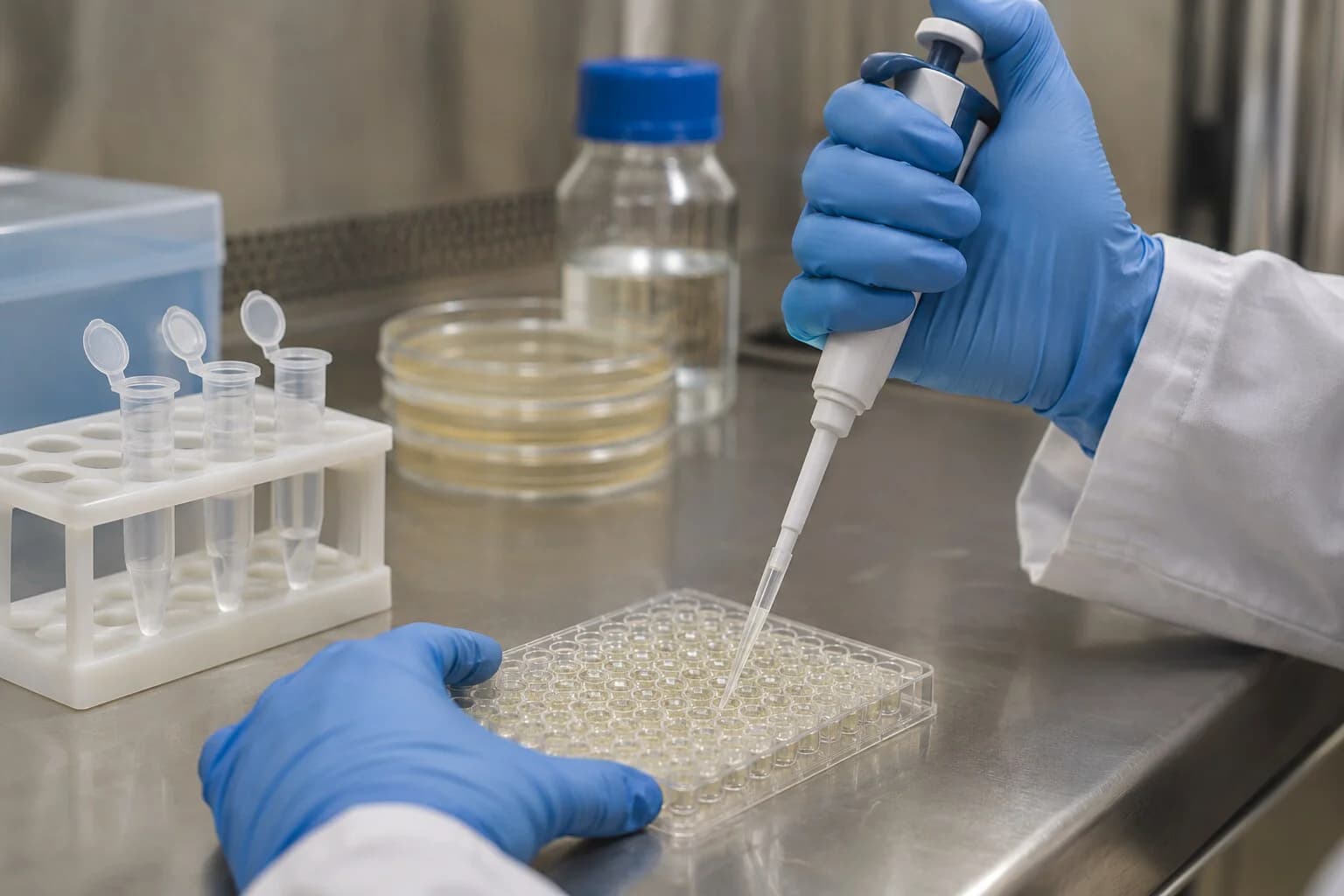
Using phages directly requires obtaining viruses that infect the target bacteria. In this study, the researchers did not succeed in isolating phages targeting P. gingivalis. Instead, they introduced the genetic instructions for endolysin candidates identified in the catalog into Escherichia coli, then produced and purified the proteins. This step turned database sequences into substances that could be tested.
They obtained three purified proteins, named Pro.3, Pro.4, and Pro.5. Endolysins are enzymes that break down bacterial cell walls, causing the cells to burst. Unlike an approach that uses phages themselves to infect bacteria, this experiment brought separately produced proteins into contact with the bacteria.
The researchers incubated the proteins with P. gingivalis for two hours under oxygen-free conditions. Among the conditions tested, a low-concentration combination of all three proteins inhibited growth most effectively. The demonstrated result was growth inhibition in cultured bacteria. It did not show the removal of biofilms formed by multiple bacteria within the gums or improvement of periodontitis in humans. Some of the researchers disclosed that they were applying for patents related to these enzymes.
The technological shift lies in the starting point for finding antibacterial candidates. Alongside the route of obtaining viruses that can be cultured, the study established a route from selecting useful enzymes in a genetic catalog of oral viruses to producing them and testing whether they work.