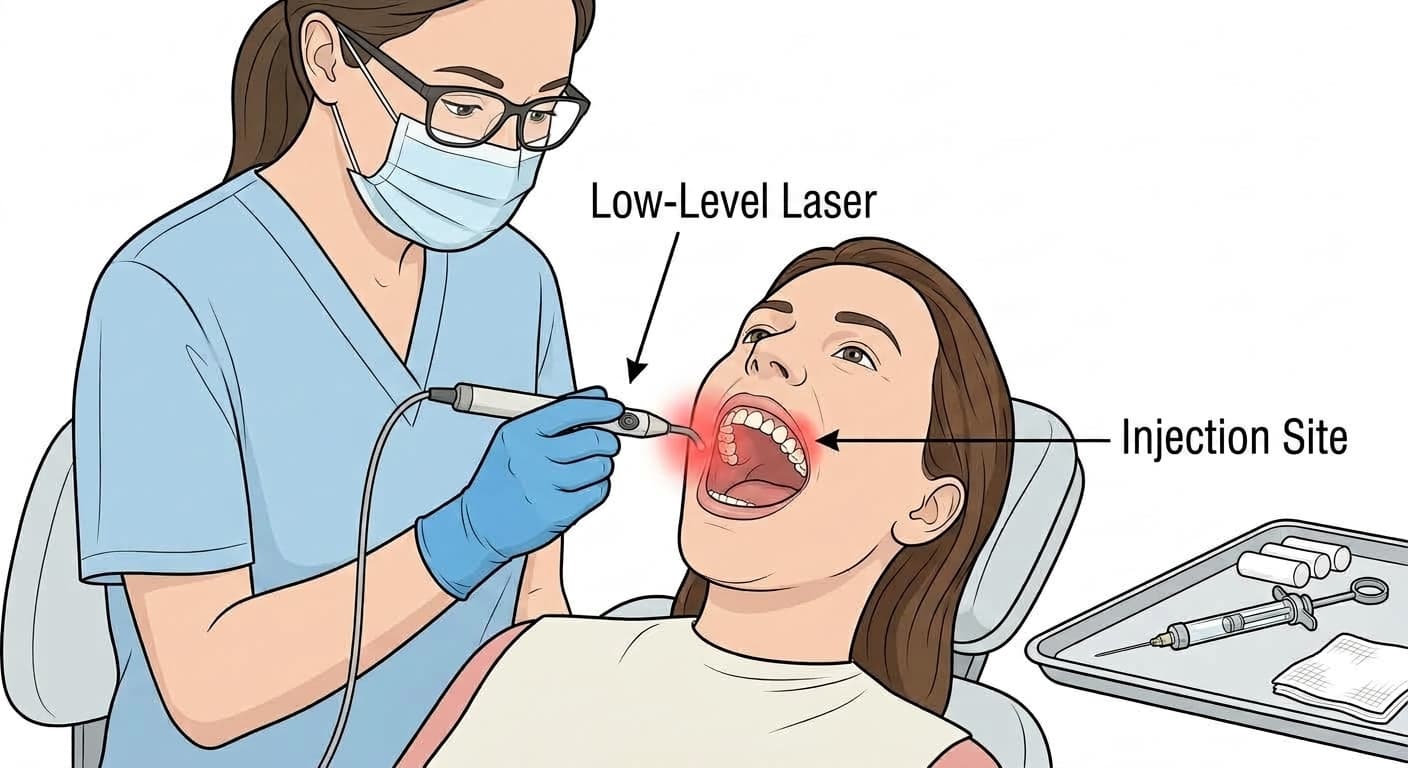
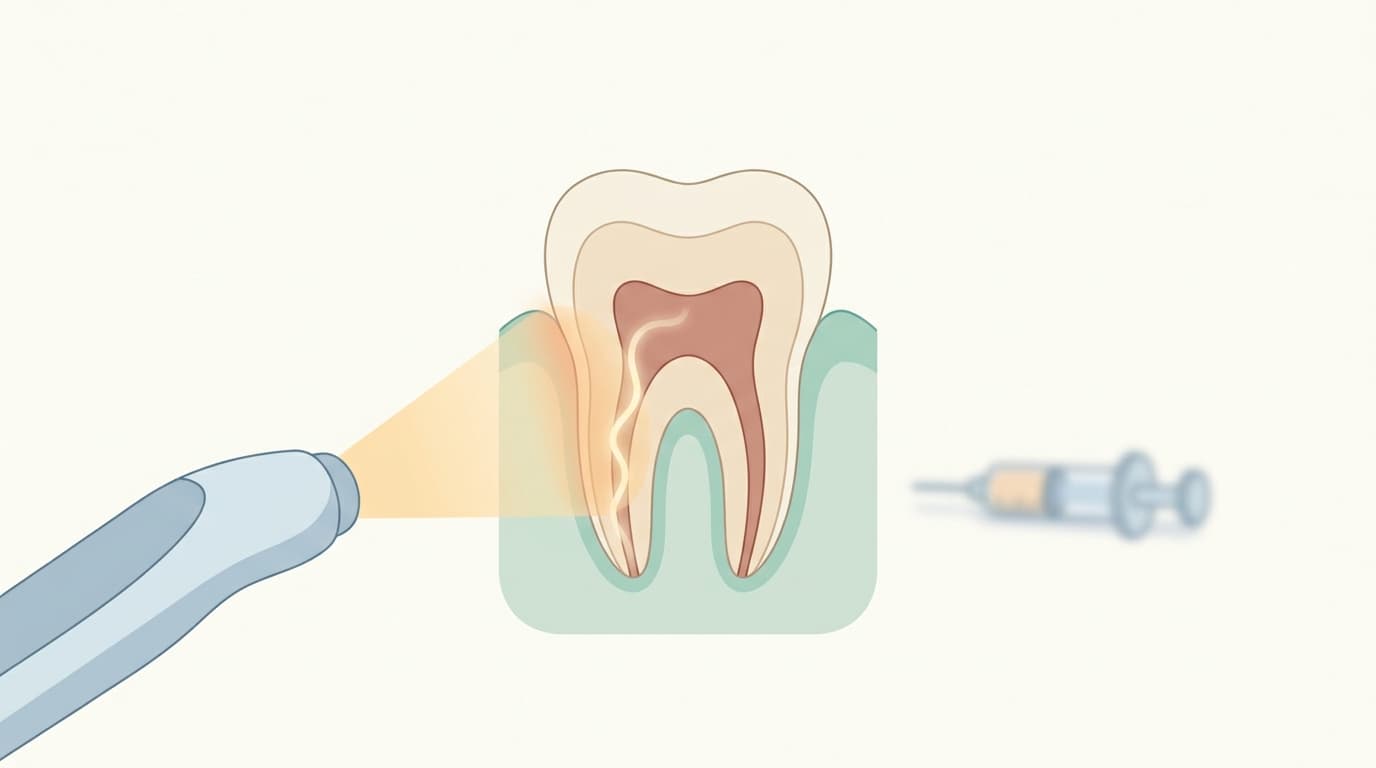
A new study has found that shining a low-level laser on the gum for a few seconds right before a dental anesthetic injection reduces the sting of the needle going in. A 2026 meta-analysis statistically pooled randomized controlled trials from several countries that tested this approach and confirmed that pain scores were lower in people who received laser exposure beforehand than in those who did not. This therapy, which uses a low-level laser or LED to trigger a cellular response, is called photobiomodulation, and this publication has previously covered its use in reducing orthodontic pain. While that earlier article looked at pain during tooth movement, this new research looks at the pain at the moment the anesthetic needle goes in.
How It Slows Nerve Signals
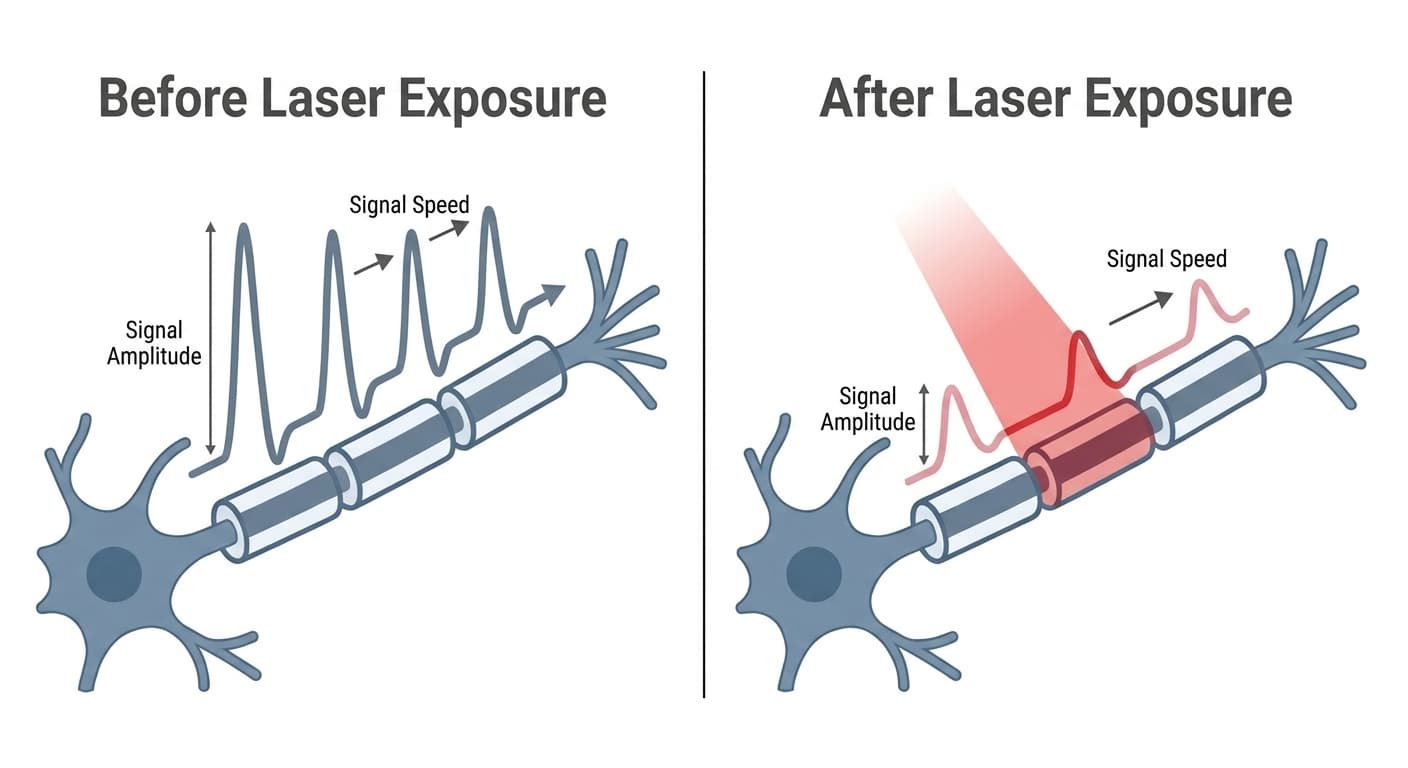
Photobiomodulation is different from dental lasers that cauterize wounds or cut tissue. Its energy is too low to damage tissue; instead, mitochondria inside nerve cells absorb the light and alter the electrical state of the cell membrane. As a result, the electrical signal (action potential) traveling along the nerve becomes smaller in amplitude and slower to propagate. Multiple animal and human studies have repeatedly confirmed that the thin, small-diameter nerve fibers that carry pain signals are especially affected by this. In effect, the pain signal generated the instant the needle punctures the gum is weakened and delayed before it reaches the brain.
Using Light to Dull Sensation Is Not a New Idea
Attempts to use lasers to dull pain responses in dentistry go back to the 1970s. In a randomized clinical trial aimed at blunting tooth nerve responses before drilling out decay, a group exposed to a pulsed Nd
laser showed a clear reduction in nerve response, comparable to a group treated with the topical anesthetic cream EMLA. This meta-analysis addresses the case of applying that same principle right before an anesthetic injection. Where needle-free jet injection, which delivers anesthetic with high-pressure force instead of a needle, eliminates the needle itself, photobiomodulation takes a different approach: it keeps the needle but lowers the pain signal the needle creates before it happens.An Effect Was Found, but Certainty Remains Low
The meta-analysis pooled results across several pain scales. On the visual analog scale (a 0-to-10 scale used for both adults and children) and on FLACC, a pediatric scale that scores facial expression, crying, and movement, scores were significantly lower in the group that received laser exposure beforehand. On one of the four scales, however, no statistically clear difference emerged. A bigger problem is that results varied widely from study to study. Irradiation conditions such as the laser's wavelength, exposure time, and energy density differed from one study to the next, and many studies did not follow the standard protocols that international societies had already established. For this reason, the meta-analysis rated the certainty of its findings as "very low" on all four measures.
This meta-analysis is the first to bring together evidence that laser exposure before an anesthetic injection can reduce pain, but it has also revealed that the wavelength, intensity, and duration of that exposure have yet to be settled. Follow-up studies that standardize irradiation conditions will likely be needed before this approach can become a standard procedure in dental practice.