
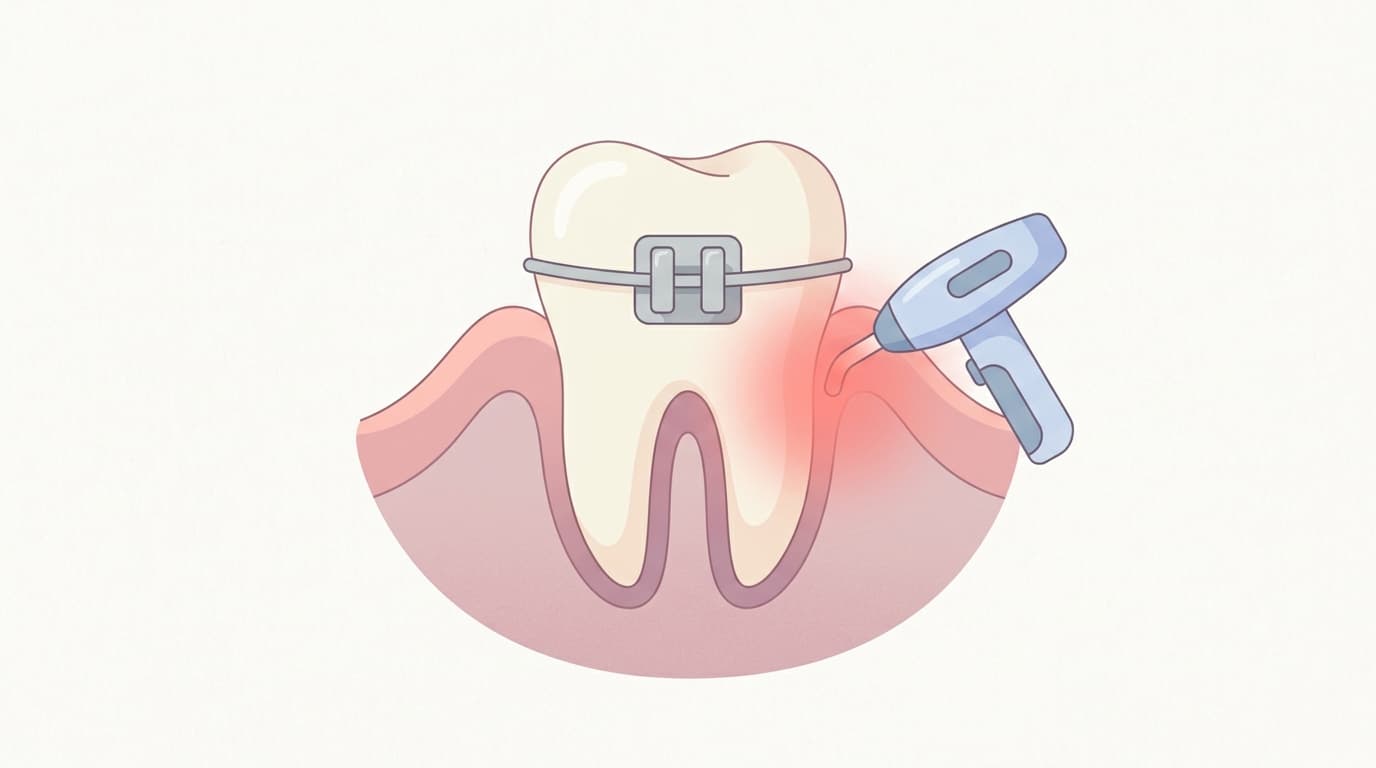
More dental clinics are turning to lasers to ease the pain that can linger for days after orthodontic appliances are tightened. Photobiomodulation therapy, which shines low-level laser light on the gums to modulate cellular responses, has been studied especially actively in orthodontics in recent years. Pooling the latest research shows that the pain-reducing effect has been replicated similarly across studies from different countries, and the effect on speeding up tooth movement has only recently been quantified, though its size is still modest.
What the Light Does Inside the Gums
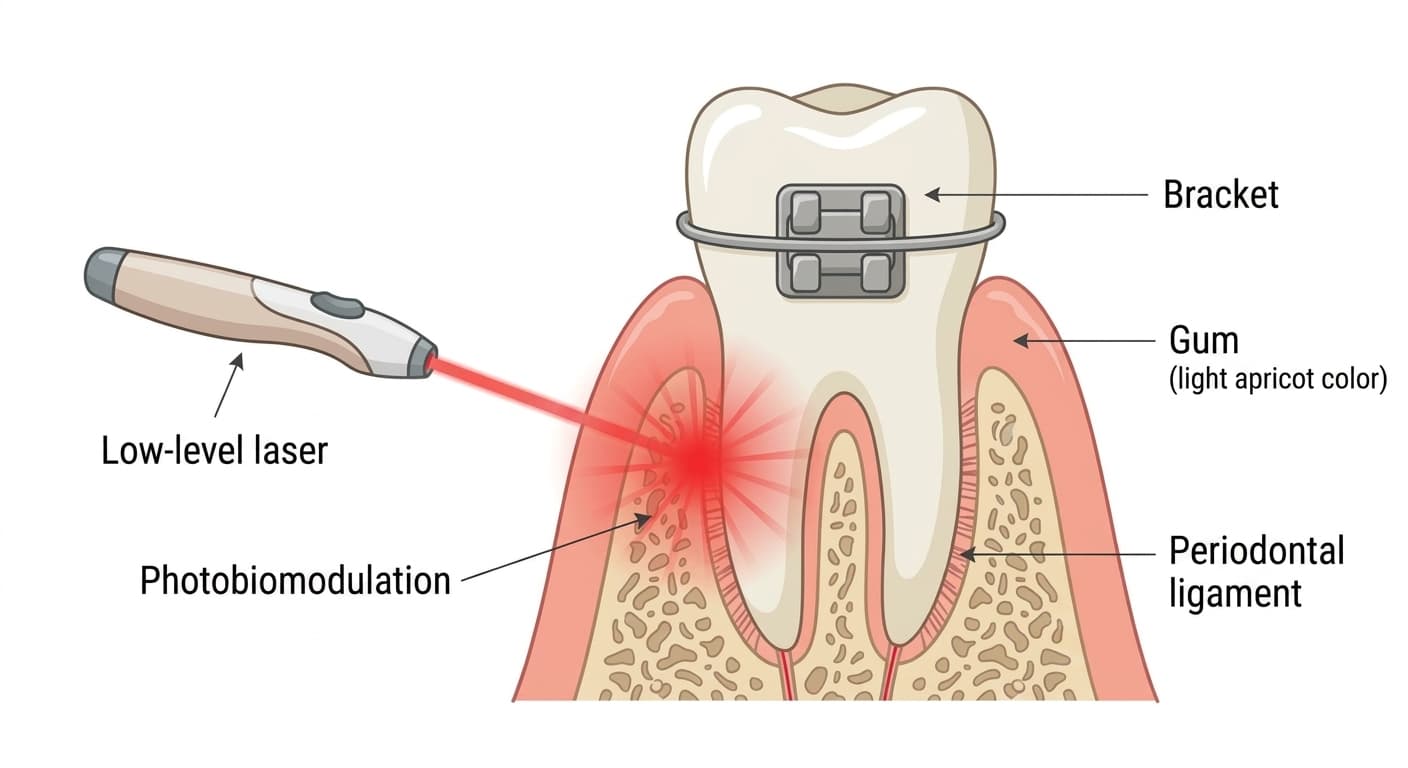
Photobiomodulation exposes tissue to light in the red or near-infrared wavelength range. Rather than burning or cutting tissue the way conventional lasers do, the light energy triggers chemical reactions inside cells that regulate the release of substances involved in pain and inflammation and support tissue regeneration. In dentistry it has traditionally been used to treat mouth ulcers or gum inflammation. Dentistry has also used lasers in peri-implantitis treatment, but that approach aims to reduce bacteria inside the gum, whereas here the goal is not bacteria but the pain and tissue response itself. However, light intensity drops off quickly as it passes through gum and bone, so exactly how much reaches the tooth root surface is still unclear. Until now, orthodontic pain could only be managed with anti-inflammatory painkillers or simply endured for days, and there was no clear way to speed up tooth movement either.
Pain Relief Is Consistent, but Delivery Method Matters
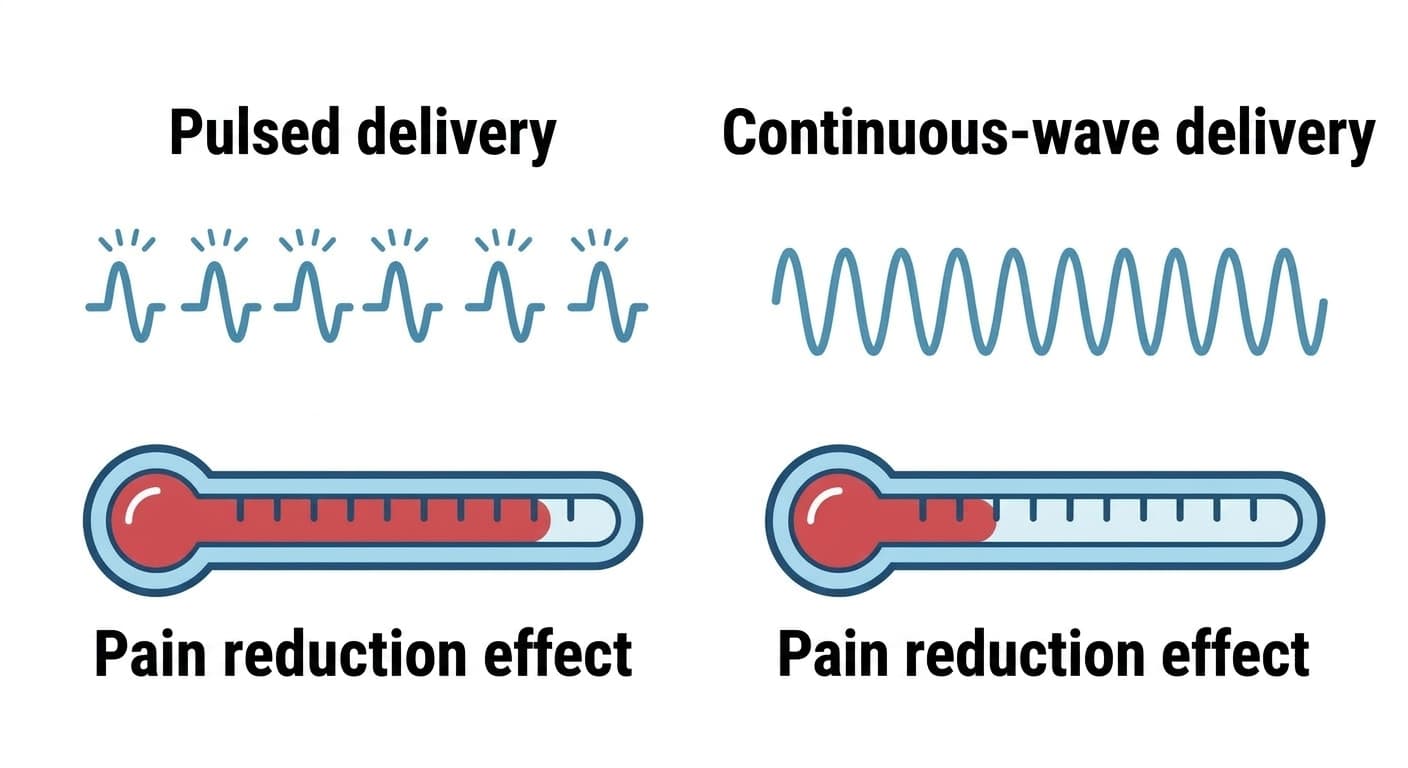
In a split-mouth trial where patients who had just had brackets fitted received laser treatment on one side of the face and a sham treatment on the other, pain on the treated side was clearly lower than on the untreated side. When four groups received the same total energy delivered in different ways, the results diverged. A group treated with a pulsed laser fired 15 times per second reduced the time to pain resolution more than a group treated with a continuous-wave diode laser. A review that pooled multiple studies likewise found that the amount of light needed to reduce pain was smaller than the amount needed to speed up tooth movement, and that dosing every other day worked better than dosing daily. In other words, even with the same laser, the pain-relief effect varies with the wavelength, dose, and interval between sessions.
The Effect on Speeding Tooth Movement Is Still Small
The evidence on tooth movement speed is more cautious. A recent umbrella review pooled the many systematic reviews and primary studies accumulated so far, recalculating results using only the studies with low risk of bias. It found that teeth on the laser-treated side moved about 1mm more on average over three months. The same analysis also examined reports that light exposure makes orthodontic mini-screw anchorage more stable, but concluded the evidence for that was very weak. Another umbrella review published the same year likewise confirmed a trend toward faster tooth movement but rated the certainty of the evidence as low. Both analyses noted that most of the underlying individual studies had low methodological reliability and concluded that the evidence does not yet warrant recommending routine use in everyday practice. An earlier systematic review was more conservative, finding only that the initial alignment phase after bracket placement was shortened by an average of 50 days, with no evidence that overall treatment duration was reduced. In one small clinical trial, teeth in the group treated with LED photobiomodulation moved nearly twice as fast as the placebo group over four weeks, and gum-swelling side effects fell by more than half.
Taken together, the studies to date show that photobiomodulation's pain-reducing effect is relatively consistently reproduced, and its magnitude depends on how the light is delivered. Its effect on speeding tooth movement has only recently been quantified, but the effect size is small and the quality of evidence still low, so it has not translated into a professional-society recommendation.