
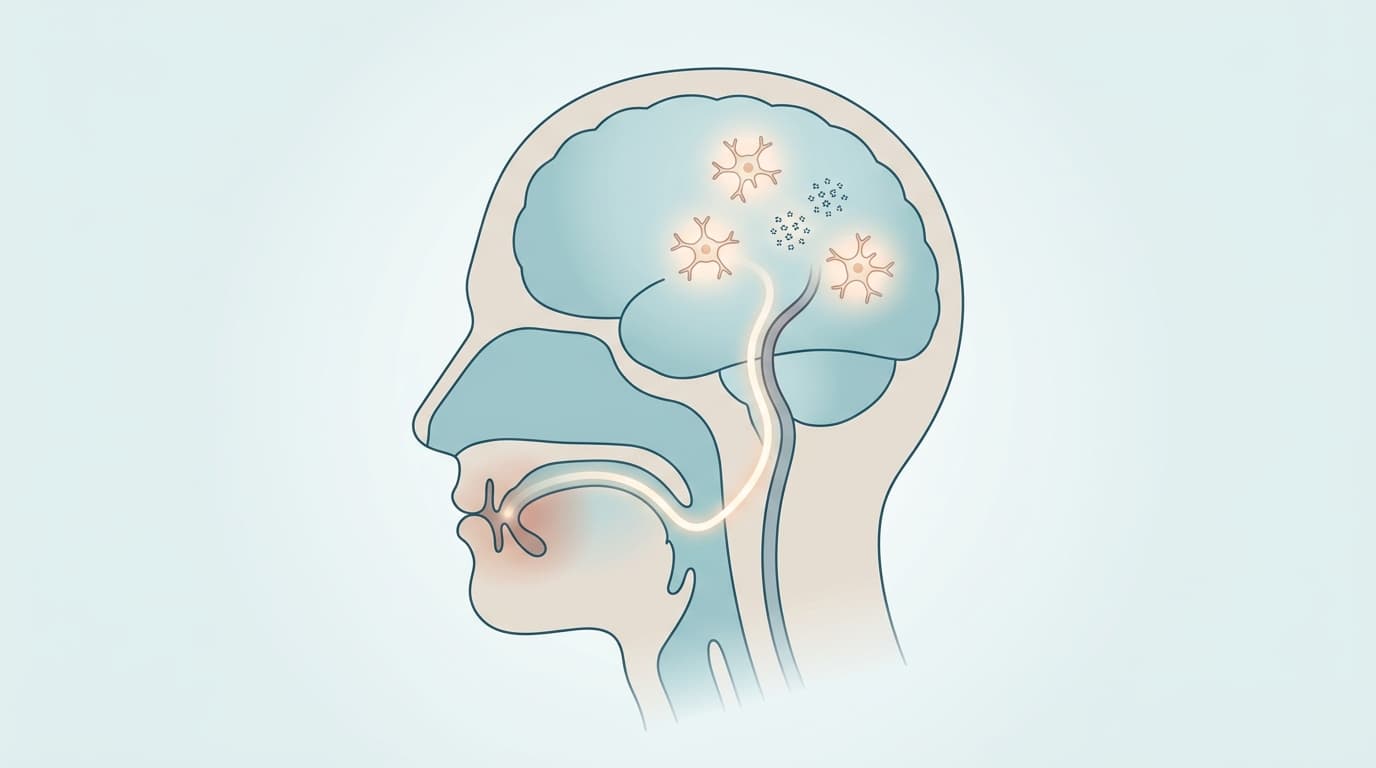
A mouse study has confirmed a pathway by which bacteria in the gums that cause periodontitis travel all the way to the brain and increase a protein that is a hallmark of Alzheimer's disease. Alzheimer's disease, estimated to affect more than 50 million people worldwide, has long been reported to frequently occur alongside periodontitis, but the specific pathway linking the two had not been clear. In a study published in 2025, a research team at Dalian Medical University in China laid out in detail how periodontitis bacteria breach the brain's defensive barrier, trigger an immune response, and, as a result, cause a toxic protein to accumulate.
Gum Bacteria Crossed the Blood-Brain Barrier
The researchers induced periodontitis artificially by tying ligatures around the molars of mice, then repeatedly infected them with Porphyromonas gingivalis (hereafter Pg), a bacterium that is a leading cause of periodontitis, over 16 weeks. As a result, the volume of the mice's alveolar bone (the jawbone surrounding the teeth) shrank to about half that of healthy mice, and inflammatory cells gathered at the site, confirming that a periodontitis model had been established.
Analysis of these mice's brains showed that the permeability of the blood-brain barrier, which filters substances entering the brain, had increased, and Pg genes were detected directly in brain tissue. This means the infection that started in the gums had actually traveled through the bloodstream all the way to the brain. We've previously covered research showing that gum bacteria travel through damaged blood vessels to the heart and cause inflammation there. This new study traced the pathway to the brain rather than the heart.
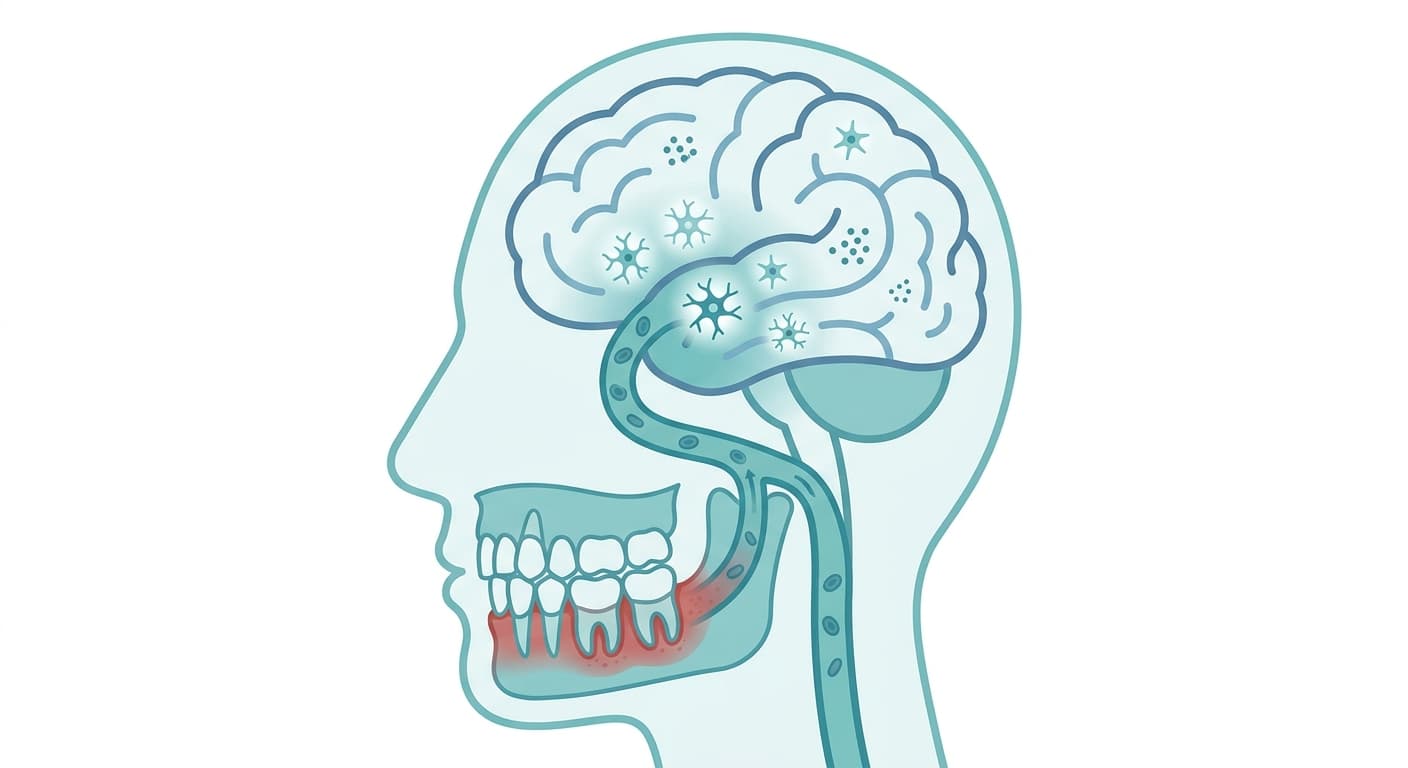
When the Immune Switch Flipped On, the Toxic Protein Built Up
Once inside the brain, Pg stimulated astrocytes and microglia (glial cells), which handle the brain's immune function. These cells increased their release of interferon, a signaling molecule secreted in response to bacteria, and this in turn raised expression of the immune protein IFITM3. IFITM3 has only recently been identified as a protein that boosts the activity of gamma-secretase, the enzyme that produces amyloid-beta, the toxic protein that accumulates in the brains of Alzheimer's patients.
Indeed, brains of Pg-infected mice showed more regions with amyloid-beta buildup, and the mice performed worse on the Morris water maze test, which measures memory. In mice genetically engineered to develop Alzheimer's disease (the APP/PS1 model), the same infection made symptoms worse. The fact that cognitive decline appeared even in healthy mice from periodontitis alone suggests that gum inflammation itself can have an independent effect on the brain. Another study published around the same time reported a separate pathway by which periodontitis disrupts the balance of gut microbes and worsens symptoms in Alzheimer's model mice. In other words, there is more than one route to the brain.
Already Found in Human Brains, but a Treatment Remains Elusive
A 2019 study had already reported that Pg and its toxin, gingipain, could be detected in the brains of patients who died of Alzheimer's disease, and that their levels were linked to the degree of neuronal damage. The same study also showed that infecting mice with Pg allowed the bacteria to colonize the brain and increased amyloid-beta production, but that this response was reduced when inhibitors blocking the bacterial toxin were used. The new Dalian Medical University study identified a specific protein, IFITM3, sitting in the middle of that pathway.
That said, the human brain is more complex than a mouse's, and this model's periodontitis was artificially induced with ligatures, so it differs from the natural progression seen in actual patients. Results on the treatment side remain mixed as well. Atuzaginstat (COR388), an inhibitor that blocks Pg's toxin, failed to demonstrate overall efficacy in human clinical trials, but it did show some improvement in the subgroup of patients with confirmed Pg infection, and trials of next-generation inhibitors are ongoing. Whether managing periodontitis can prevent or delay Alzheimer's disease has not yet been established in humans, but this study showed that gum health and brain health are more directly connected than previously thought.