
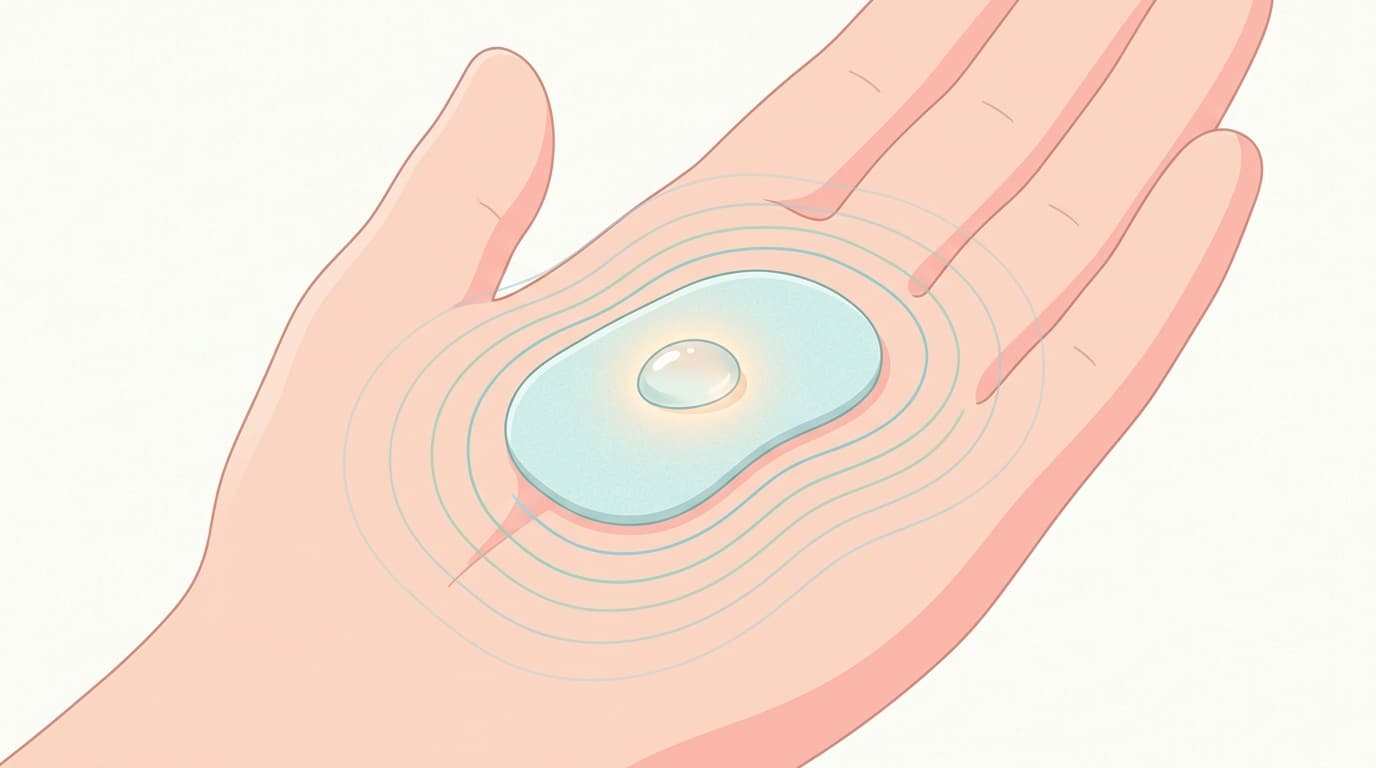
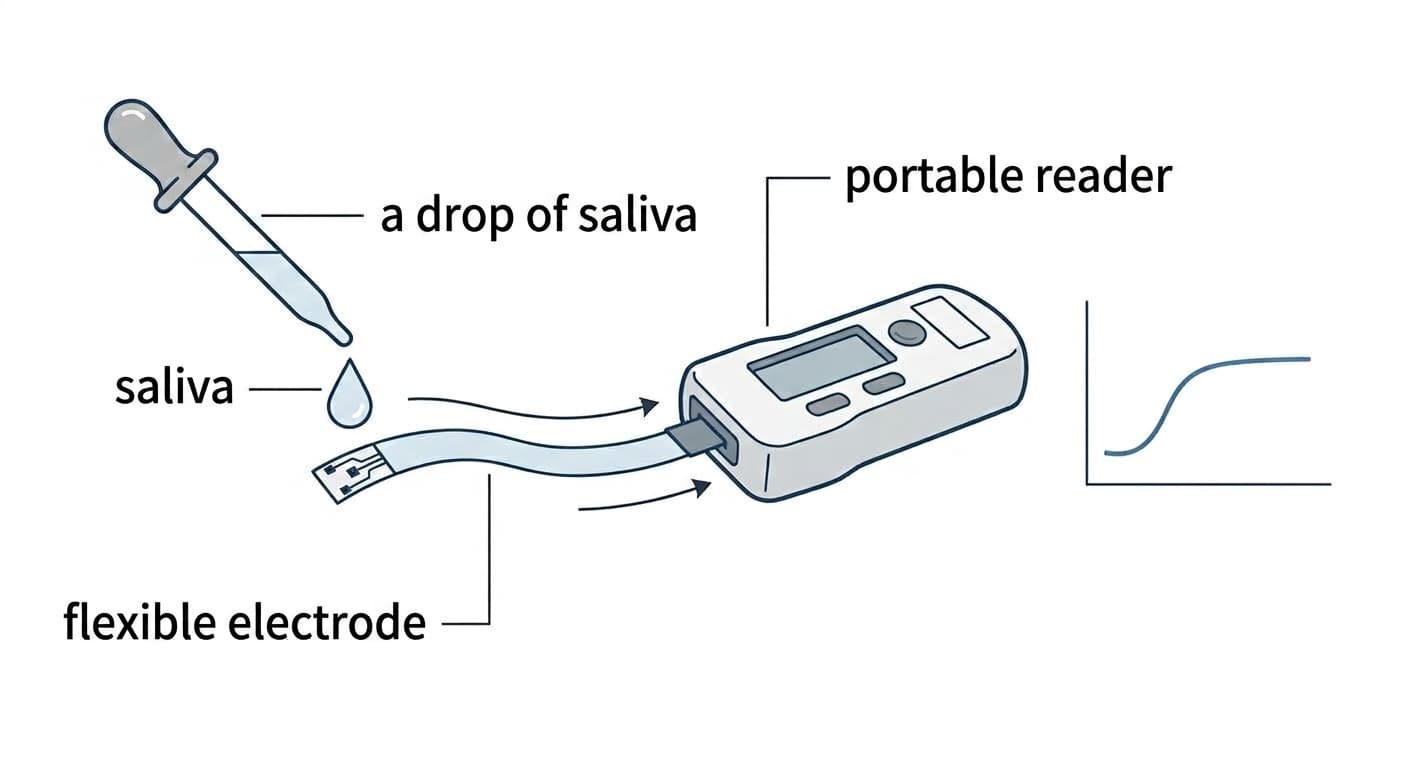
A research team at Yangzhou University in China has built a portable electrochemical sensor that assesses oral cancer from a single drop of saliva. When saliva is dropped onto a fingernail-sized flexible electrode, the amount of a specific genetic material inside it is converted into an electrical signal. In preliminary tests, this signal distinguished oral cancer patients from healthy individuals with an accuracy of 0.98 out of 1.0, nearly perfect. It's worth noting, though, that this is early-stage evidence from a small sample confirmed by a single research team.
A Single Genetic Molecule in Saliva Signals Cancer
The target this sensor detects is miR-31, a type of microRNA (miRNA). It's a short fragment of genetic material that regulates how other genes function inside cells. According to a 2012 report by Taiwanese researchers, this molecule was already elevated in the saliva of oral cancer patients even at the earliest, smallest tumor stages, and decreased again after the tumor was removed. The same study also confirmed that this molecule is detected more clearly in saliva than in blood. Subsequent studies have supported this finding, establishing miR-31 as a candidate biomarker for oral cancer.
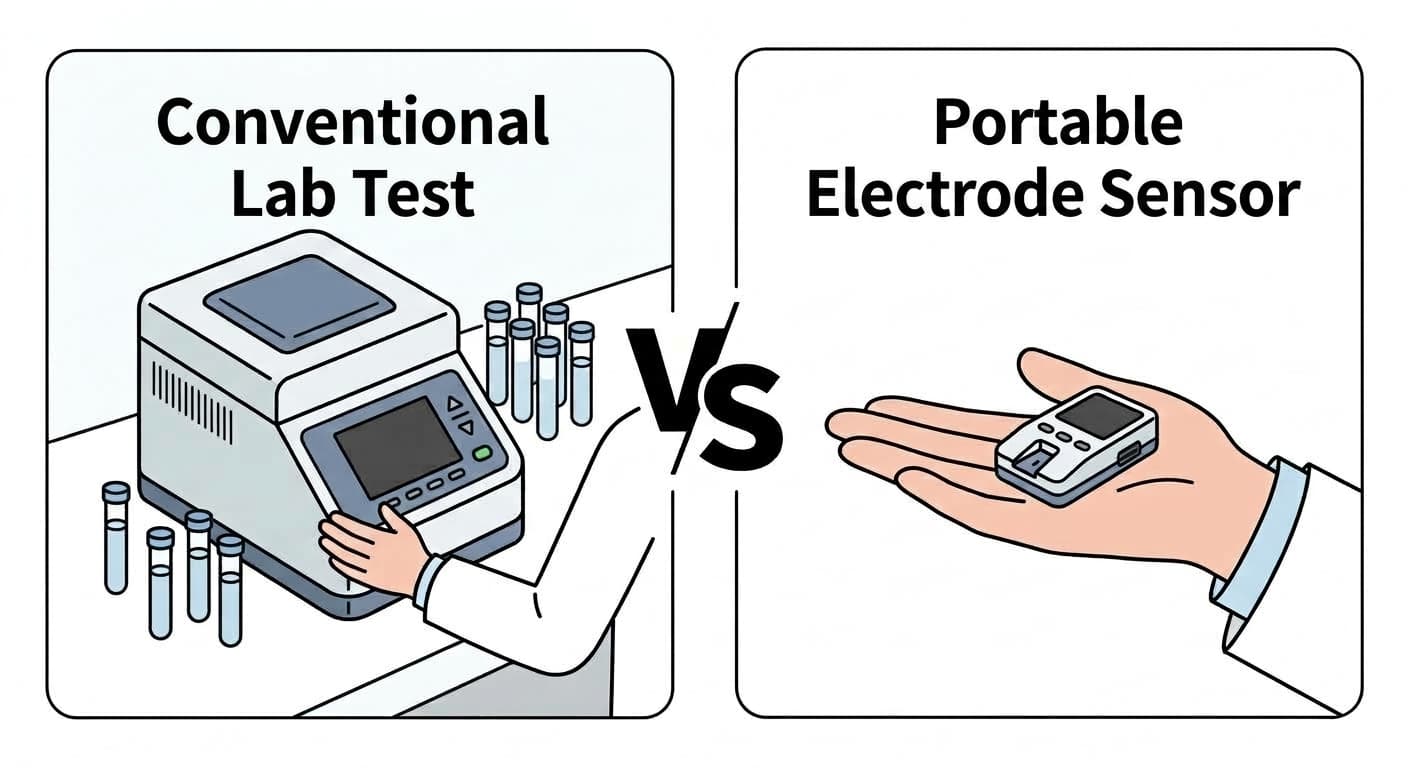
The problem is that measuring this molecule has always required a lab test that amplifies and reads the gene (quantitative reverse transcription PCR). Collecting saliva, adding reagents, and running the equipment alone takes several hours, and requires a lab with trained personnel and equipment. This study focused on shrinking that entire process down to a single palm-sized device.
Chemical Reactions on the Electrode Become an Electrical Signal
The research team coated the electrode surface with a special material made by combining iron and DNA. This material conducts electricity well and has a large surface area, providing many sites for reactions to bind. When miR-31 attaches to it, a specifically shaped strand of genetic material called a 'G-quadruplex' forms, and a dye called methylene blue readily binds to this strand. The current signal grows in proportion to how much of this dye accumulates on the electrode, and the team used this combination as a signal-amplifying barcode. The detection limit was also extremely low, picking up a signal even from trace amounts of miR-31.
Measuring the Molecule Directly, Not Reading a Photo
This approach takes a different path from AI-based oral cancer screening that flags suspicious areas in photos of the mouth. The article covering that method noted a limitation: while it's good at not missing lesions, it often flags normal tissue as lesions too. This sensor, by contrast, directly measures a single molecule in saliva rather than a visible lesion, aiming to catch a signal even at a stage before any lesion becomes visible. An earlier device from the same research team, released last March, read a fluorescent signal captured by a smartphone camera under ultraviolet light; this time, they changed the design to get results purely from the electrode's electrical signal, without a camera.
Still an Early-Stage Result
This result comes from a preliminary clinical feasibility study conducted by a single research team. There has been no independent confirmation yet using patients pooled from multiple hospitals, and it remains to be seen how well the sensor distinguishes the target from other oral lesions that aren't normal tissue. Still, the underlying approach, reading genetic material in saliva directly as an electrical signal outside the lab, shows that multiple research teams are rapidly iterating on devices aimed at the same target. Before a saliva test that reads results from a single palm-sized electrode instead of lab equipment can enter actual clinics, much more validation is needed.