
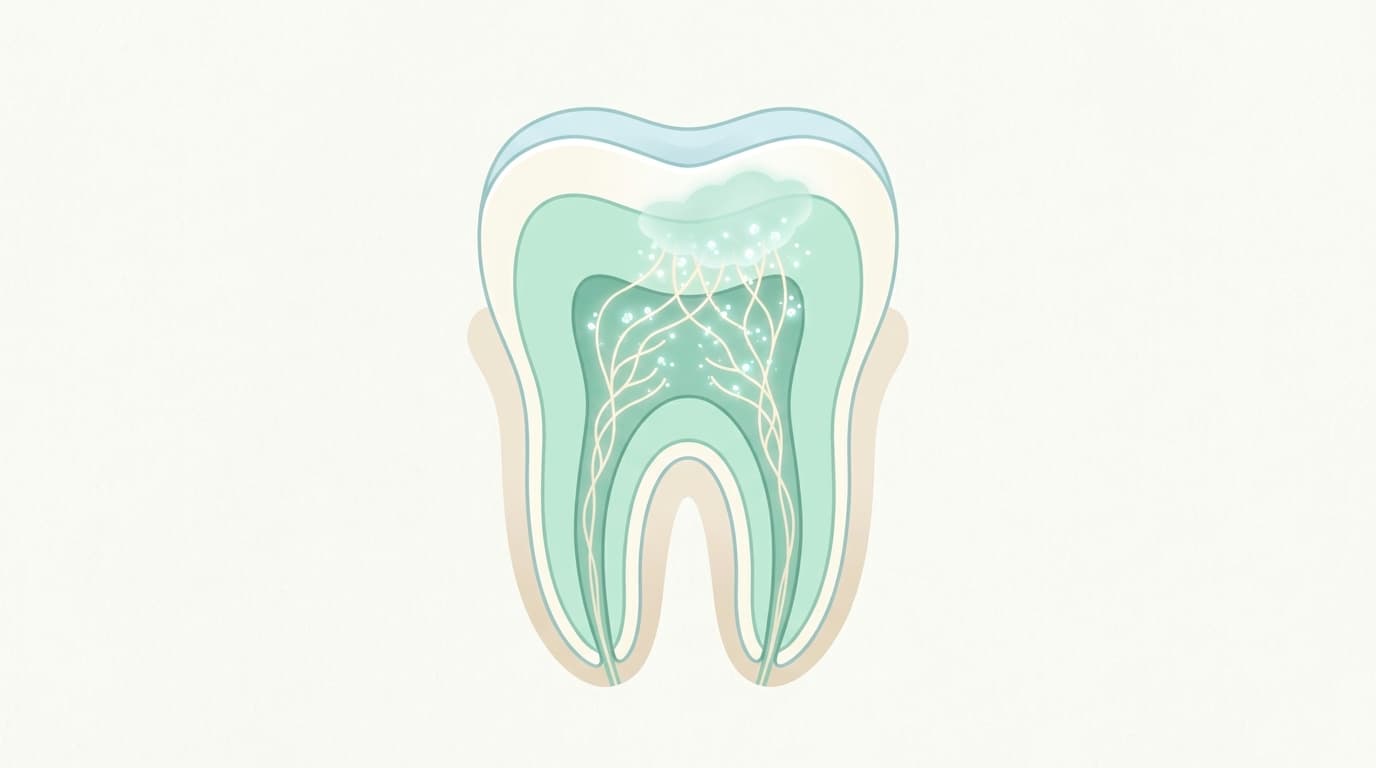
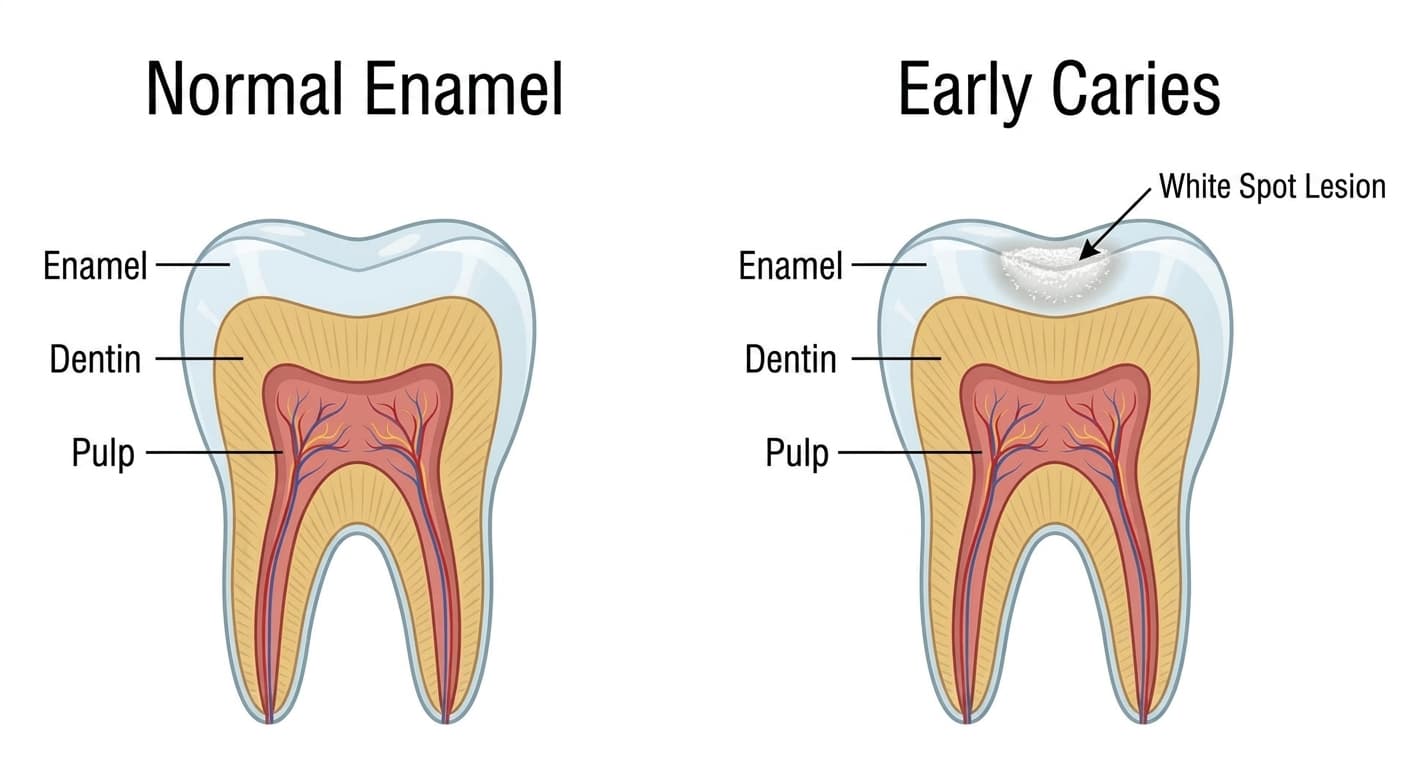
Many people notice a chalky white patch on their front teeth after having orthodontic braces removed. This patch is a white spot lesion, a spot where minerals have leached out just beneath the surface of the enamel (the hard outer layer covering the tooth). Unlike a cavity, where bacteria have eaten through the surface, a white spot lesion is still at a reversible stage. In recent years, a string of clinical trials has tested filling these lesions with a material called self-assembling peptide (P11-4) instead of fluoride. The best-known commercial product built on this peptide is supplied to dental clinics under the name Curodont.
Fluoride Hardens the Surface, Self-Assembling Peptide Fills the Inside
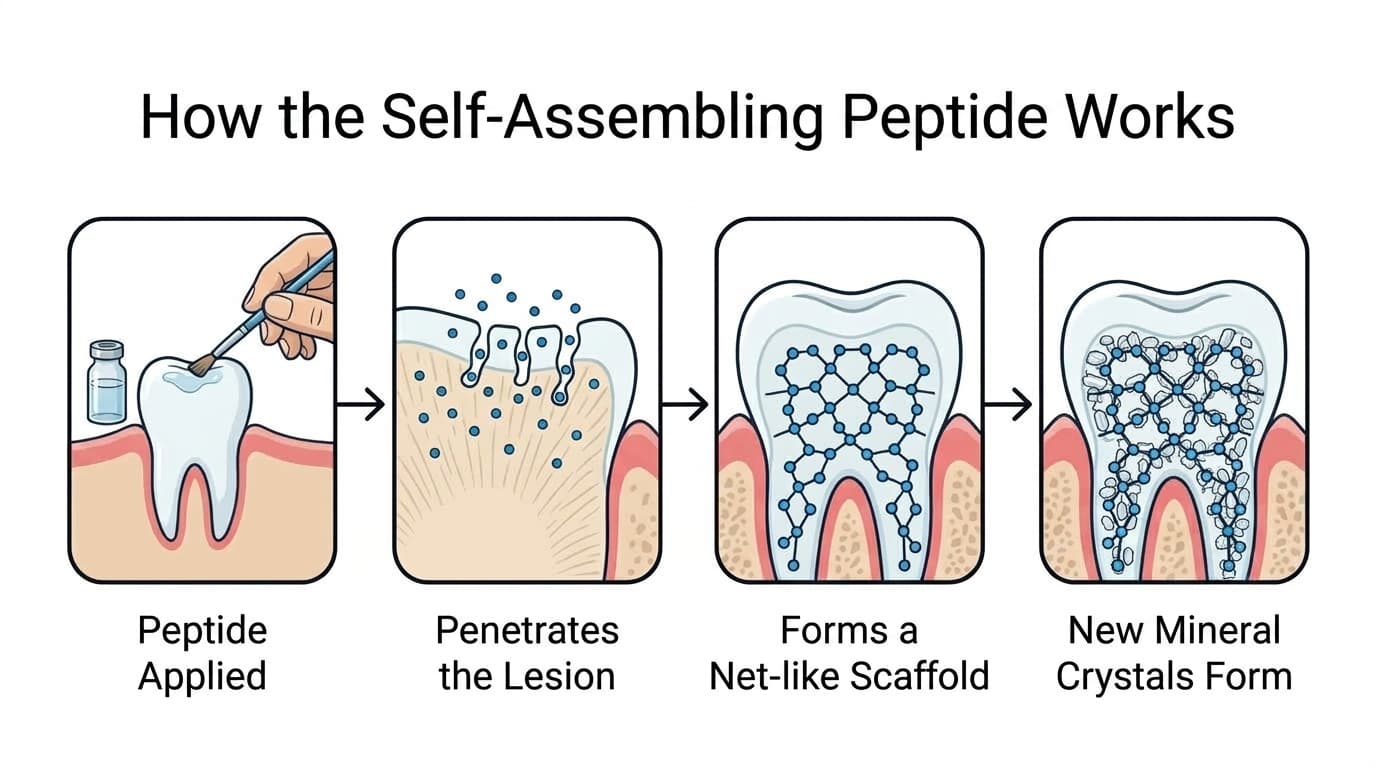
Fluoride works by drawing calcium and phosphate ions from saliva to form new crystals on the enamel surface. Because it hardens the surface first, it has a limitation: the empty space beneath that surface often doesn't get filled in well. When self-assembling peptide is brushed on, it seeps into the porous structure of the lesion, self-assembles into a net-like scaffold, and that scaffold provides a foothold for new hydroxyapatite (the mineral that makes up teeth) crystals to grow. It fills the lesion from the inside out.
Measured with Light, the Inside Was More Filled In
A systematic review that pooled seven clinical trials on early caries lesions found that readings from a laser fluorescence device (DIAGNOdent, which measures mineral density inside the tooth using light) dropped 23 to 41 percent more in the groups treated with self-assembling peptide. A larger drop in this reading means the lesion has been remineralized to a greater degree. Yet in the same studies, the visually assessed caries grade (ICDAS) showed no clear difference between the two materials. In other words, even though the two looked similar on the outside, the self-assembling peptide group had filled in more on the inside.
Confirmed in Orthodontic Adolescents and Primary Teeth Too
A randomized controlled trial that followed 25 adolescents wearing fixed orthodontic appliances for 18 months found that new white spots developed on 14.5 percent of tooth surfaces in the group treated with fluoride gel alone. In the group that also applied a gel mixed with self-assembling peptide twice a week, that rate dropped to 7.2 percent. The sample was small, so the finding should be read cautiously, but a similar pattern showed up in another trial involving 66 white spot lesions on primary teeth. The group given an intensive application of Curodont Repair Fluoride Plus, which adds fluoride to the peptide, had significantly more lesions arrested and significantly more active lesions reduced than the group given a standard fluoride varnish (Duraphat). Compared with a casein-based fluoride varnish (MI Varnish), the two performed similarly for the first few months, and Curodont only pulled ahead after 9 months.
Used Alone, It Sometimes Lost Out to Fluoride
Not every trial has favored self-assembling peptide. In a trial involving 39 white spot lesions, the group treated with self-assembling peptide alone actually lagged behind groups treated with an arginine-containing fluoride varnish or a calcium-phosphate fluoride varnish in how much the color and size of the lesion improved after 9 months. That trial used the peptide alone, without fluoride, and measured changes in surface color and size with a colorimeter. A more recent trial went even further, finding that phosphorylated nano-chitosan, an experimental material not yet commercialized, reduced lesions more than self-assembling peptide did. That suggests the competition among materials for reversing early caries hasn't stopped with self-assembling peptide.
Self-assembling peptide is not a material for filling a cavity that has already formed; it can only be used on early lesions that haven't yet broken through the surface. Once a cavity has formed, it will no longer fill back in, so treatment needs to move on to a filling or an arrest therapy such as SDF. If you notice a white spot, it's worth having a dentist check whether it's still at a stage where it can be reversed.