
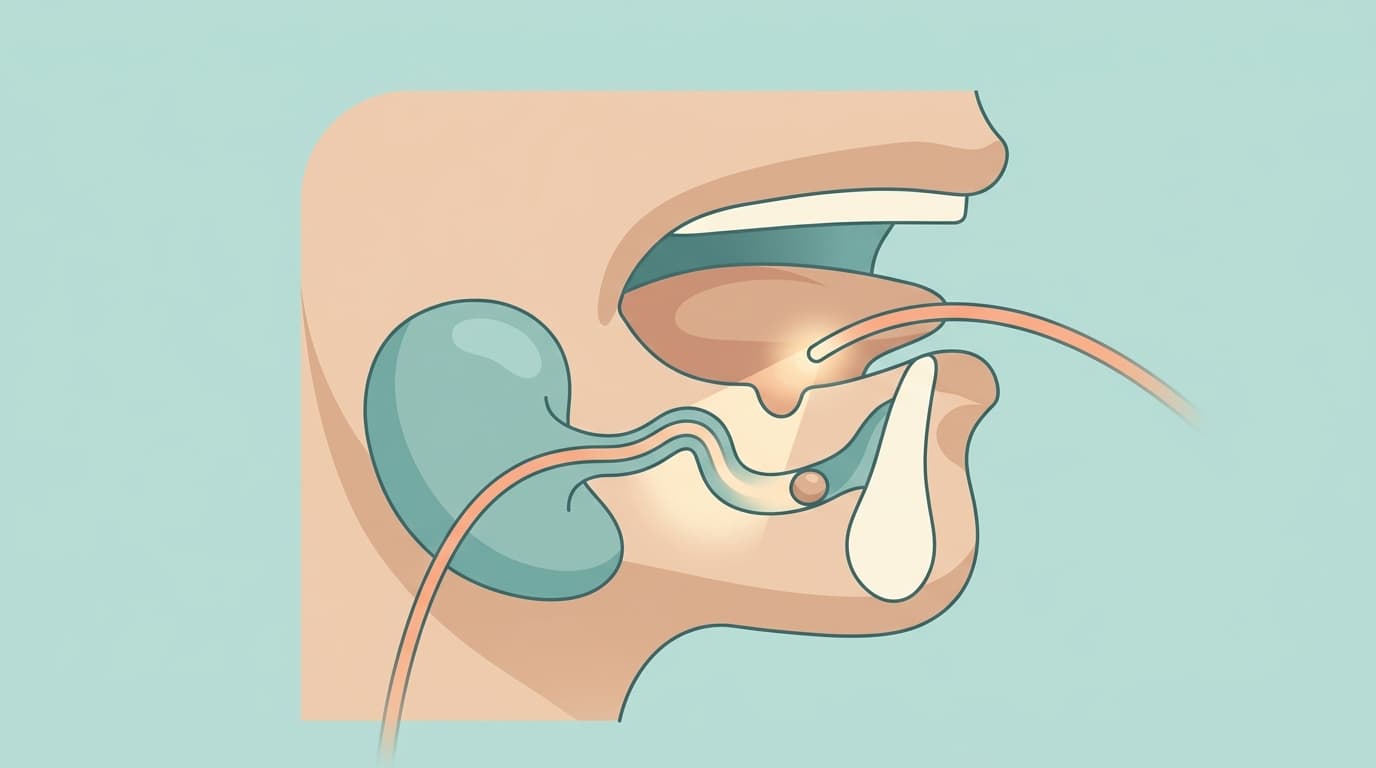
A stone-like mass can form inside the salivary duct beneath the jaw or tongue, a condition called sialolithiasis. For a long time the standard treatment was surgery to remove the entire salivary gland. More recently, a technique that threads a thin endoscope about 1mm across (sialendoscopy) through the duct's natural opening in the mouth, then views the stone directly and breaks it apart with a laser or air pressure before removing it, has been gaining ground. A 2025 randomized controlled trial from Turkey directly compared two stone-fragmentation methods: holmium
(Ho) laser lithotripsy and pneumatic lithotripsy.Removing Only the Stone, Not the Gland
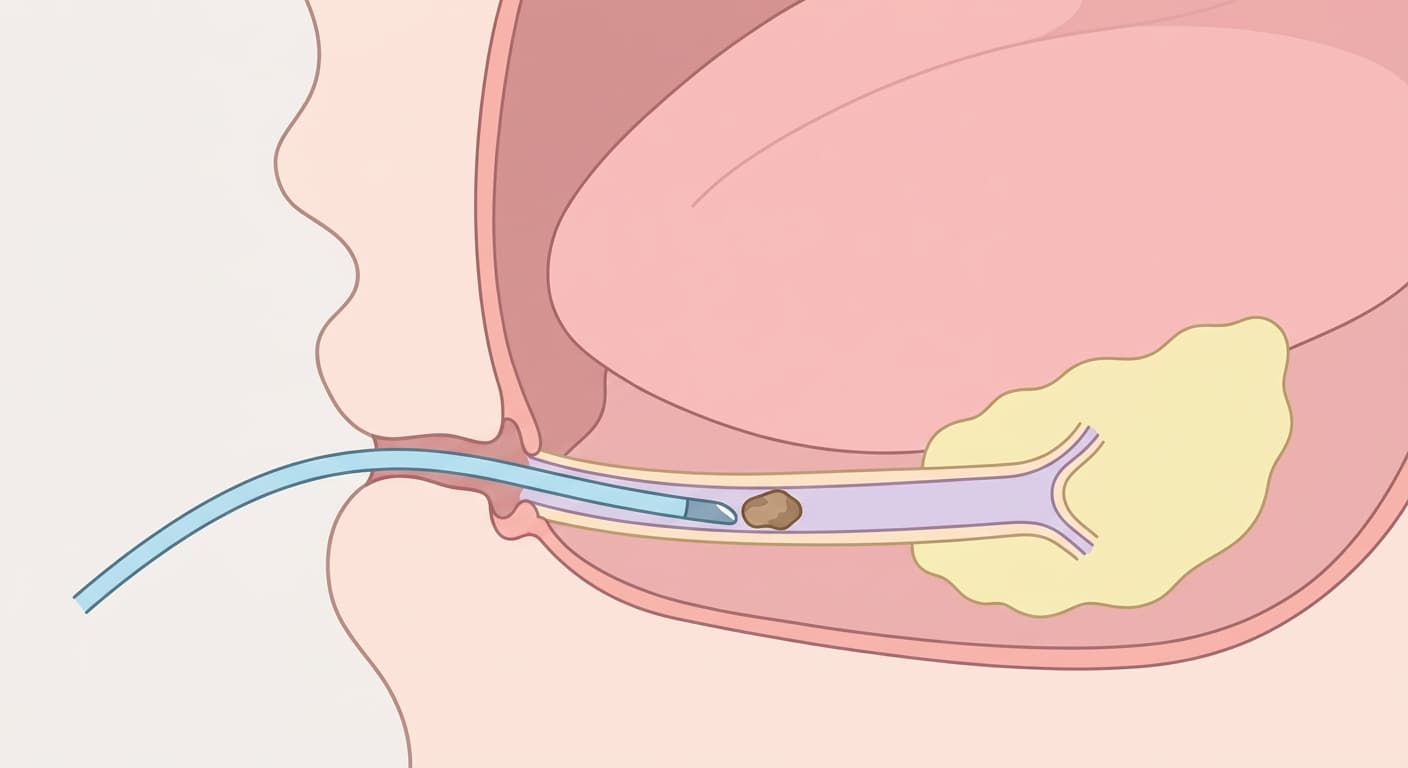
Salivary stones occur most often in the submandibular gland, the gland beneath the jaw. When a stone-like mass blocks the duct that carries saliva, the gland swells and becomes painful every time a person eats. When a stone was large or lodged deep inside the gland, the standard treatment used to be surgical removal of the entire submandibular gland, which required general anesthesia and carried a risk of damaging the nerves that control sensation and movement in the jaw and tongue. Because sialendoscopy enters through the duct's natural opening in the mouth, it allows a direct view inside the duct without any incision in the skin. As more procedures are now completed in the office under local anesthesia alone, the technique is spreading as a way to avoid general anesthesia and reduce cost.
Two Ways to Break Up the Stone
It is uncommon for a stone to be removed whole using the endoscope alone. In most cases the stone is larger than the duct's diameter or is embedded in the duct wall, so it first needs to be broken into fragments. Holmium
laser lithotripsy fires laser pulses through a thin optical fiber fitted into the endoscope's working channel, scorching and cracking the surface of the stone, while pneumatic lithotripsy uses a thin probe inserted through the same channel to deliver a rapid series of short, forceful taps with compressed air that knock the stone apart. Both methods end the same way: the stone is broken into pieces small enough for the duct to pass, then flushed out or picked out with the endoscope.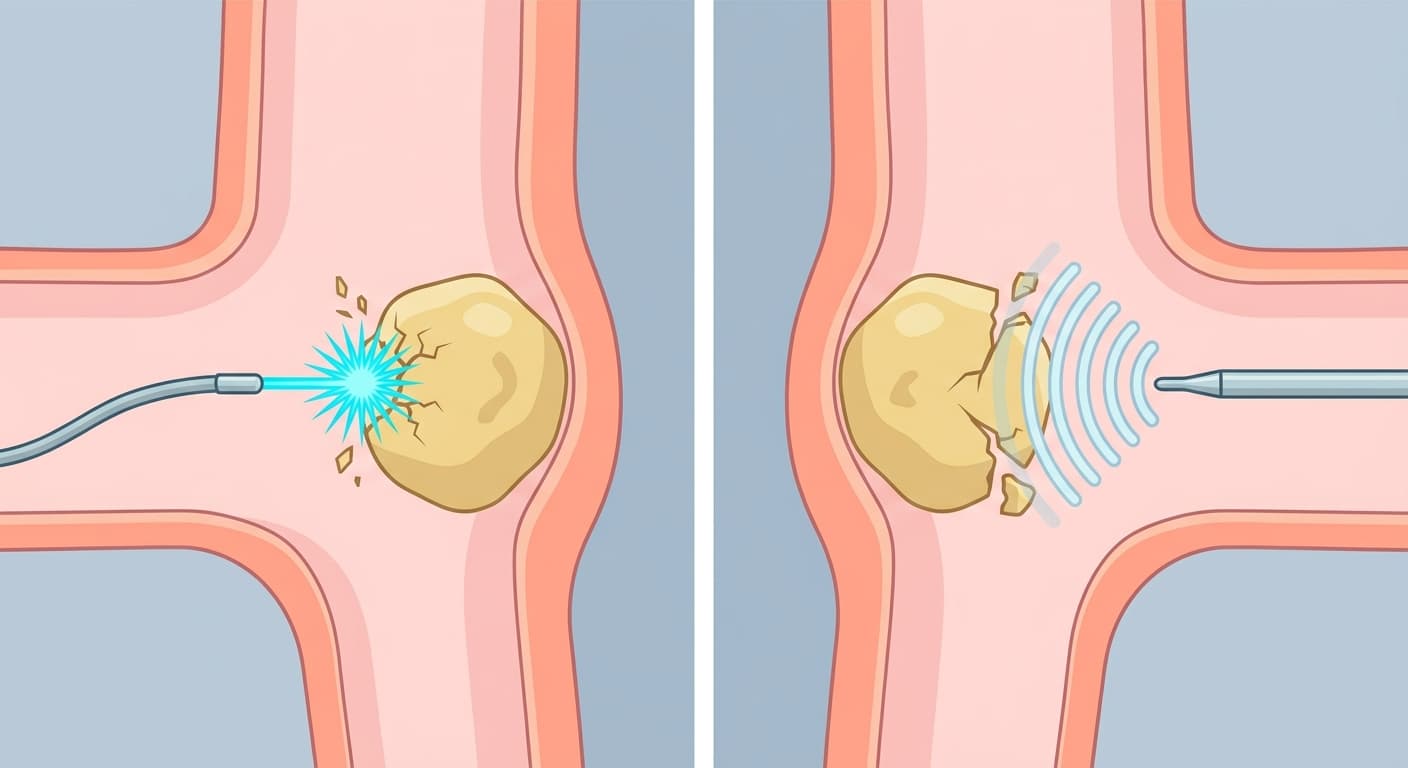
Removal Rates Were Similar, but Time and Side Effects Differed
The trial divided patients with submandibular gland stones into two groups, treating one with laser lithotripsy and the other with pneumatic lithotripsy. The complete stone removal rate was 92% for the laser group and 96% for the pneumatic group, with no clear difference between the two methods. However, when a stone was located in the distal or middle portion of the duct, procedure time was shorter with the pneumatic method. The nature of the complications also differed: the laser group had more instances of mucosal tearing or perforation of the duct wall, while the pneumatic group had more cases in which fragmented stone pieces were instead pushed deeper into the duct. Six months after the procedure, quality-of-life scores improved markedly from baseline in both groups, and by a similar margin. Because these results come from a pilot study at a single hospital, they still need to be confirmed across more institutions.
This approach does not work for every stone. A recent analysis pooling cases accumulated in Japan found that when endoscopy alone was used to remove stones, without any lithotripsy device, the success rate stayed at 40%, and it dropped sharply when a stone was larger than 7.5mm or embedded deep within the gland tissue. In such cases, treatment shifts to extracorporeal shock wave lithotripsy, which fires shock waves from outside the body, or to conventional gland-removal surgery. Even so, with laser and pneumatic lithotripsy added to the toolkit, a substantial share of stones that remain within the duct now fall within the range that can be resolved without removing the gland.