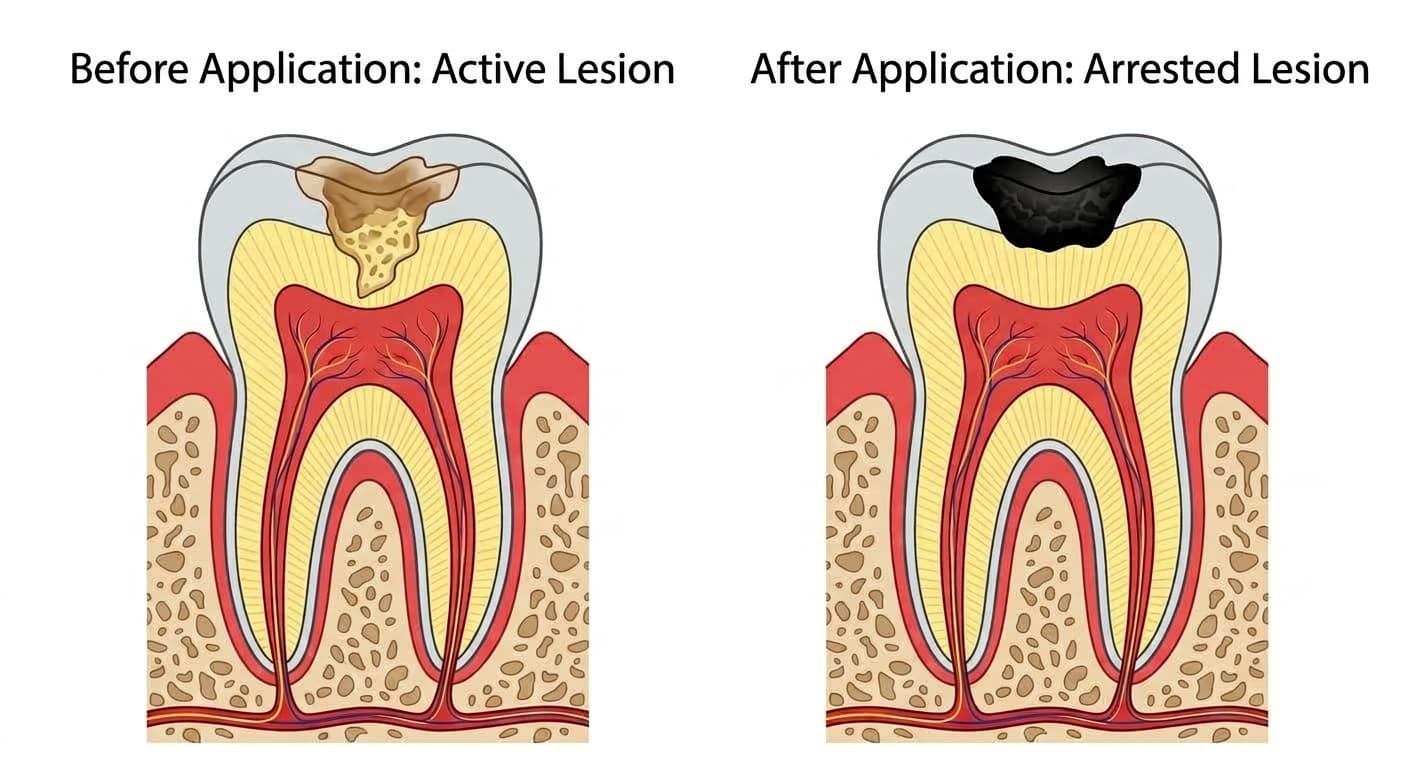
A US phase 3 clinical trial has confirmed evidence that children's severe cavities can be stopped without drilling them out. Silver diamine fluoride (SDF), a solution that dissolves silver and fluoride together, was simply painted onto cavity sites, and decay progression stopped at a far higher rate than in children who received a placebo. These results are set to serve as the evidence base for the US Food and Drug Administration's (FDA) formal approval of SDF as a caries treatment.
Children Who Struggle to Cooperate: Why Drilling Gets Hard
Cavities are common enough to affect 40% of children in the United States, but severe cavities in particular carry a heavier health and economic burden. When several teeth in a young child between 12 and 71 months old decay severely all at once, it is called severe early childhood caries, and children in this age range have difficulty sitting still in the dental chair long enough for the decayed areas to be drilled out. As a result, general anesthesia or sedation is often used alongside treatment. One US study reported that treatment under general anesthesia extended cavity-free time by 4 months compared to sedation, but costs rose faster, at $881 per additional cavity-free month as of 2015. There have also been attempts to change the anesthesia method itself, such as intranasal sedation, but SDF takes a different approach: stopping the progression of decay itself through application alone, without anesthesia or sedation.
What Silver and Fluoride Do Together
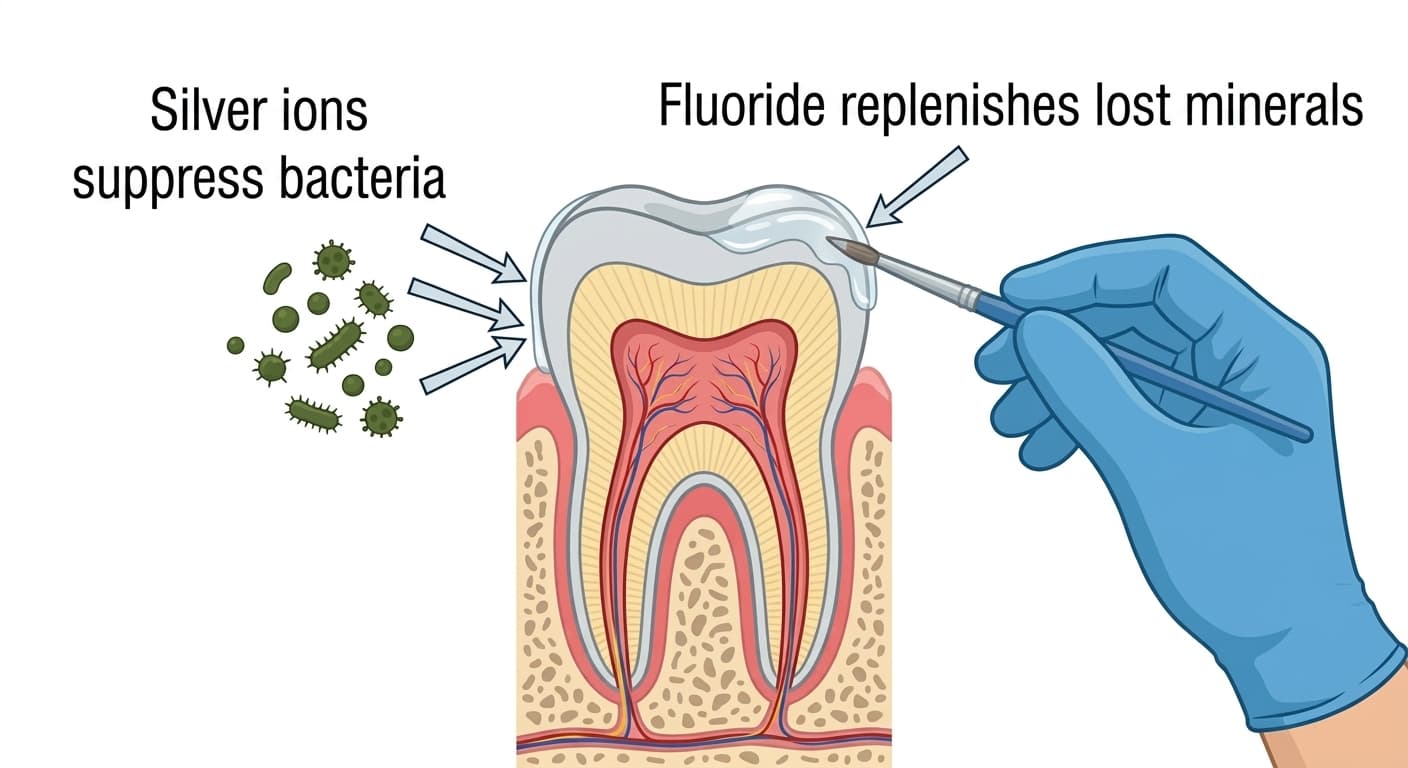
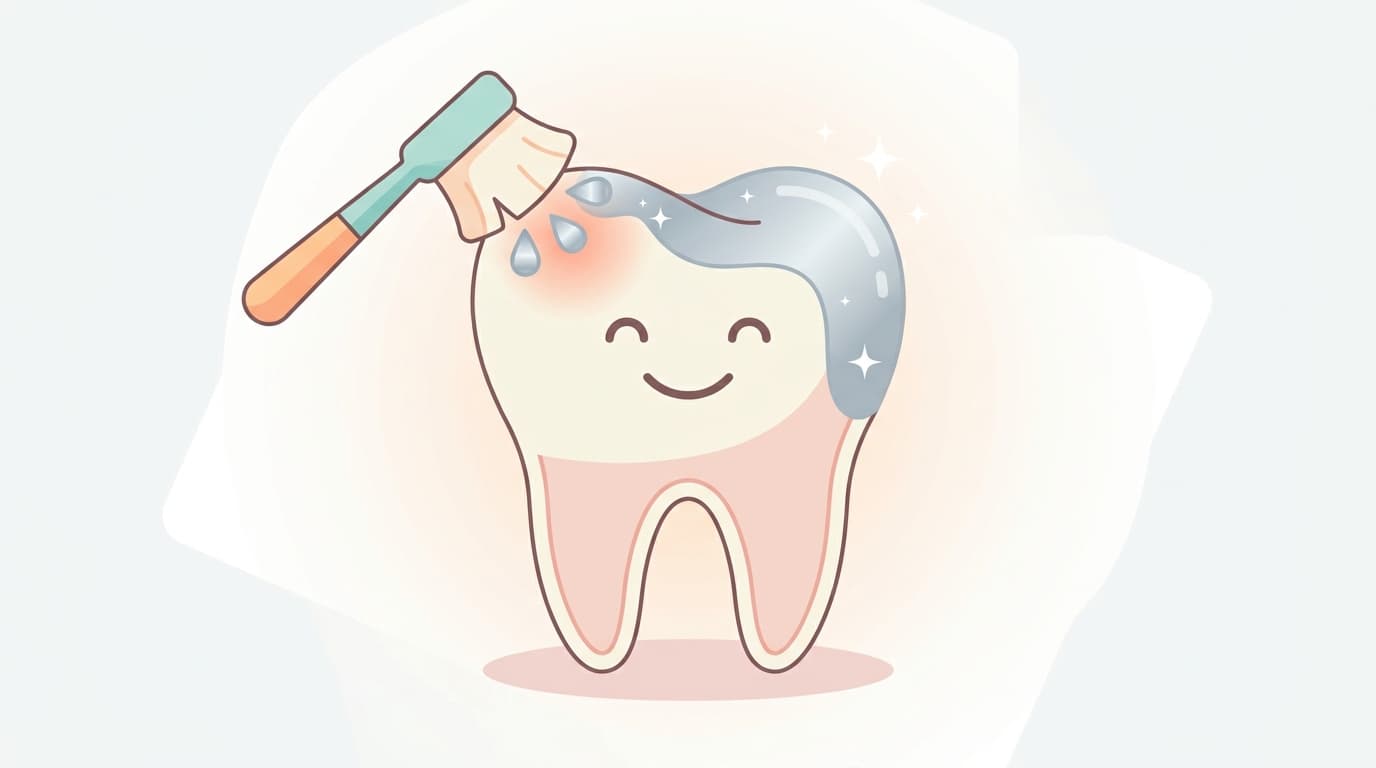
38% SDF is a solution that dissolves silver ions, ammonia, and fluoride together. Applied to cavity sites with a small brush, the antibacterial action of silver ions suppresses the bacteria that cause cavities, while fluoride replenishes lost minerals and hardens the tooth surface. In this process, however, the silver ions oxidize and permanently stain the treated area black. This is both a sign that decay progression has stopped and a cosmetic drawback.
830 Children Split Into Two Groups, Treated Twice
This clinical trial was conducted across three US institutions from 2018 to 2023. 830 children aged 1 to 6 with active cavity lesions were divided into an SDF group and a placebo group, receiving two applications at the start and at 6 months, with lesion arrest checked at 3, 6, and 8 months. In the SDF group, 57.5% of lesions were arrested at 3 months, 54.0% at 6 months, and 50.2% at 8 months. In the placebo group at the same time points, the rates were 18.8%, 22.5%, and 17.4% respectively. The SDF group was more than 30 percentage points higher than the placebo group at all three time points. Pain levels showed no difference between the two groups, and adverse event rates were similar, at 47.3% for the SDF group and 43.3% for the placebo group, with most events mild to moderate.
What Remains
The black staining that remains is still cited as parents' biggest reason for avoiding SDF. Since oxidation of silver ions has been identified as the cause of the staining, research is also underway into using other antibacterial metals, such as selenium nanoparticles, in place of silver to reduce staining. In this trial, only 584 of the 830 participants (70%) were followed through to completion, and about 10% of those lost to follow-up dropped out because of COVID-19, so whether the effect persists beyond 8 months will need further observation.
This phase 3 clinical trial confirmed through a randomized controlled design that SDF reliably stops cavity progression compared to placebo. The results are set to serve as evidence for formally approving SDF as a caries treatment in the United States.