

Sometimes treatment can only begin once the whole child is calmed down, not just the tooth. For young patients who refuse to even sit in the dental chair, pediatric dentistry has long relied on syrups given by mouth or intravenous sedation. Lately, intranasal sedation, which requires nothing more than a spray into the nose, has been taking that place. A recent pooled analysis comparing the two most widely used drugs, dexmedetomidine and midazolam, found no clear difference in how often treatment was completed successfully, but the two diverged in how quickly the drug took effect and how long the child stayed sedated.
Absorption Through the Nasal Mucosa
Intranasal sedation delivers a drug into the nose with a spray or dropper and absorbs it through the nasal mucosa. The nasal mucosa has a large surface area and a rich blood supply, so the drug is absorbed quickly and bypasses first-pass metabolism through the liver, which would otherwise weaken its effect. That is why it can produce an effect similar to systemic sedation without a needle.
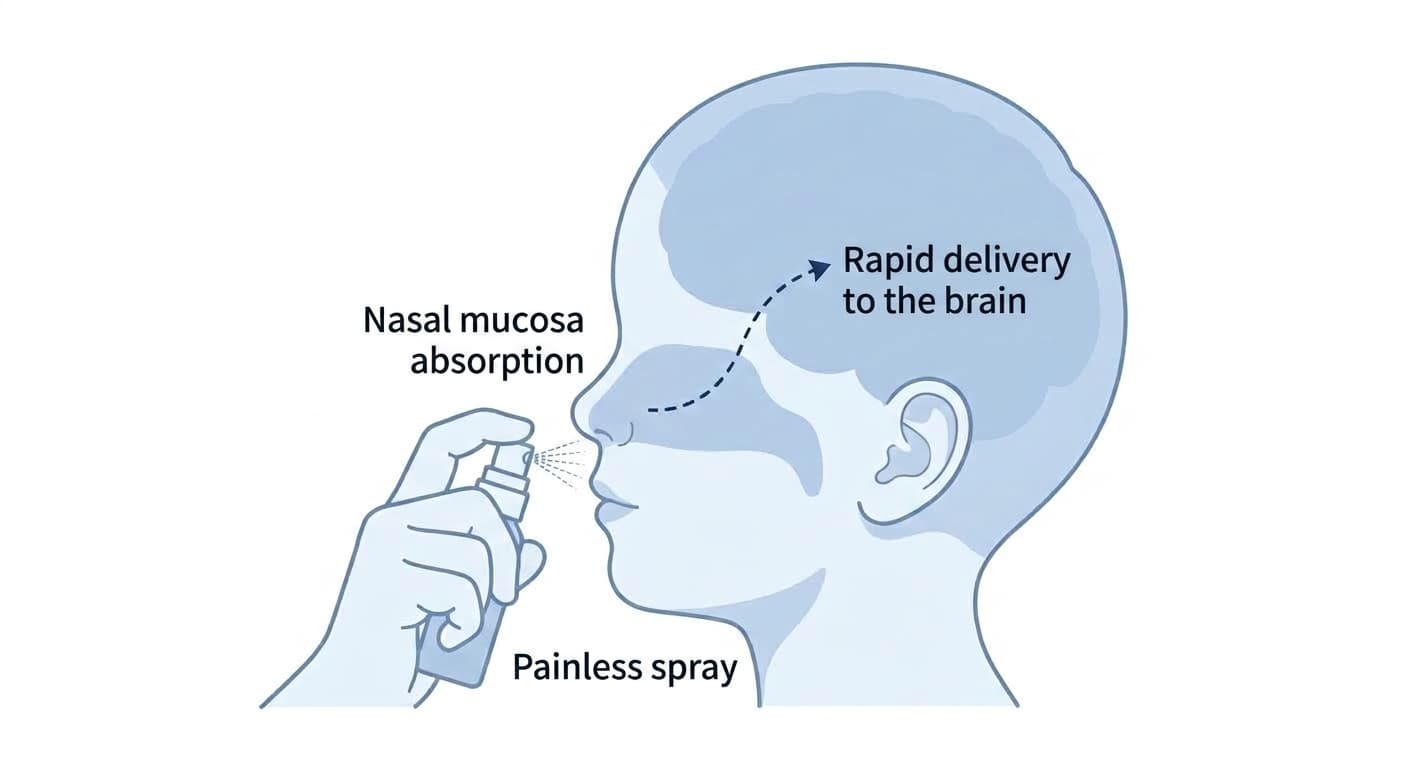
The two most commonly used drugs work differently. Midazolam is a benzodiazepine that acts on GABA receptors in the brain to reduce anxiety and impair memory formation, while dexmedetomidine acts on alpha-2 adrenergic receptors to produce sedation that resembles natural sleep. Ketamine, which blocks pain signals, is sometimes added to either drug. Because it leaves airway reflexes relatively intact, ketamine complements the sedative effect of both drugs.
Replacing the Syringe and the Syrup
This outlet has previously covered needle-free jet injection, which delivers local anesthetic without a needle, computer-controlled anesthesia, which pushes the drug in slowly, and VR therapy, which uses virtual reality to soothe a child's anxiety. Intranasal sedation is different from these: rather than local anesthesia, it addresses sedation itself, the lowering of the whole body's level of consciousness.
Chloral hydrate, a sedative syrup often sold in Korea under the brand name Pocral in dental and pediatric practice, has traditionally been the most widely used method for pediatric sedation. It has been used for more than 150 years and is inexpensive, but its failure rate exceeds 20%, and children frequently spit it out or vomit because of its bitter taste, which requires strict fasting beforehand. In a clinical trial at Seoul National University Hospital comparing this oral sedative with an intranasal combination of dexmedetomidine and ketamine in children under age 7, the two methods achieved similar rates of successful sedation within 15 minutes (75.8% versus 66.7%), but adverse events such as hypoxia or abnormal breathing occurred in only 3.2% of the intranasal group, far lower than the 16.7% seen with the oral sedative. That study involved non-dental sedation cases such as echocardiography and CT scans, but it shows that the intranasal route is also being validated in Korea as an alternative to conventional oral sedation.
Same Success Rate, Different Timing
A separate analysis focused specifically on pediatric dental treatment likewise found no clear difference in success rates between dexmedetomidine and midazolam. Averaging across individual studies, dexmedetomidine's success rate (75%) was higher than midazolam's (58%), but the variation between studies was large enough that the two drugs' relative superiority could not be established statistically.
Onset time and duration of sedation, however, differed clearly. Dexmedetomidine took an average of 8.8 minutes longer than midazolam to take effect, and its sedative state lasted an average of 20.3 minutes longer.
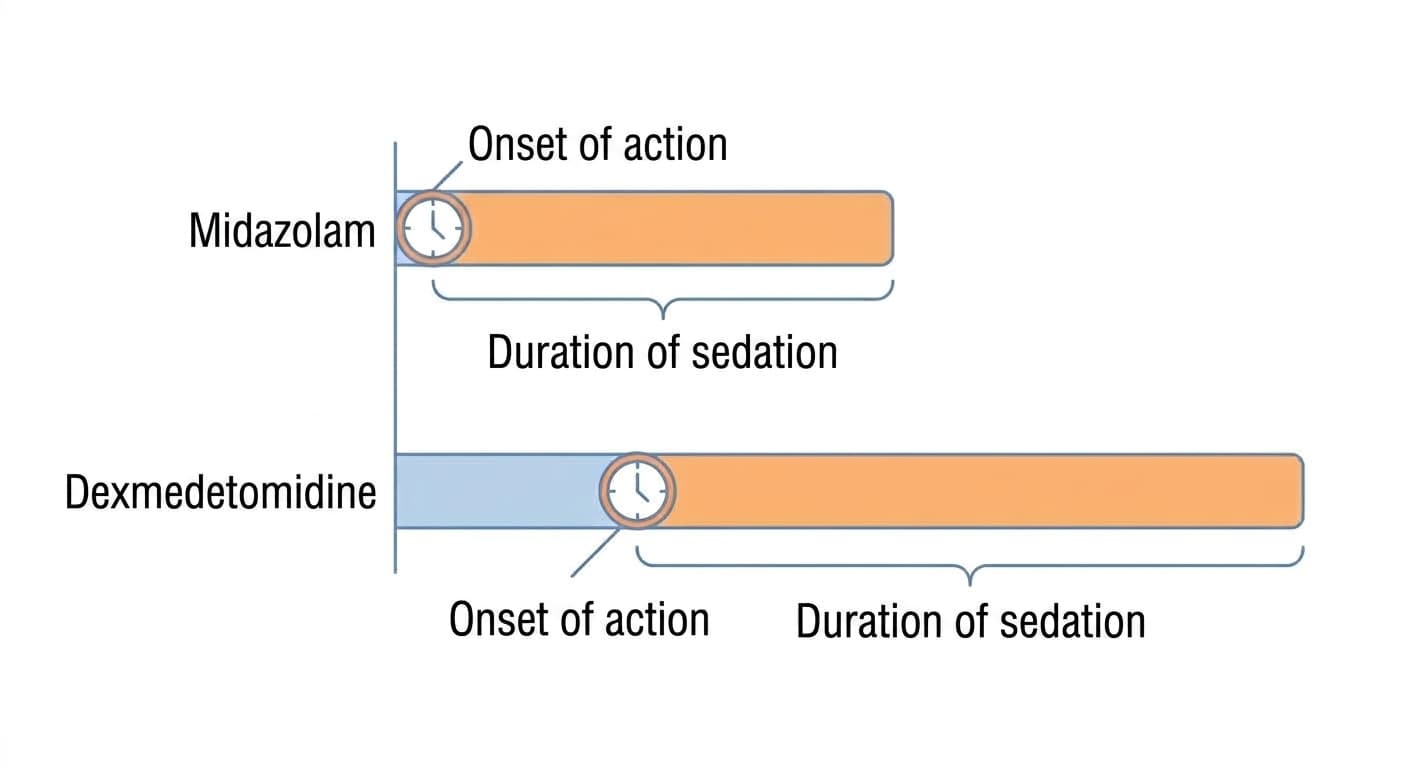
That suggests midazolam may suit quick procedures such as a short extraction or filling, while dexmedetomidine, slower to start but longer-lasting, may be better suited to treatments that address several teeth at once. Combination regimens that add ketamine to either drug showed the highest average success rate at 84%, but only one or two studies support that finding, so it is too early to treat it as established evidence.
Dosing and Protocols Still Unsettled
The evidence behind this comparison is not yet solid. Studies varied in drug dosage, delivery device, and the scale used to measure sedation, making it difficult to combine the results under a single standard. The optimal dose, delivery device, and timing of administration for pediatric intranasal sedation have not yet been established.
Even so, the comparative analyses consistently confirmed one point: with either drug, a child can be sedated without ever seeing a needle. Sedation in pediatric dentistry is shifting away from a question of which drug to use and toward a question of when a fast-acting drug is needed and when a longer-lasting one is needed.