
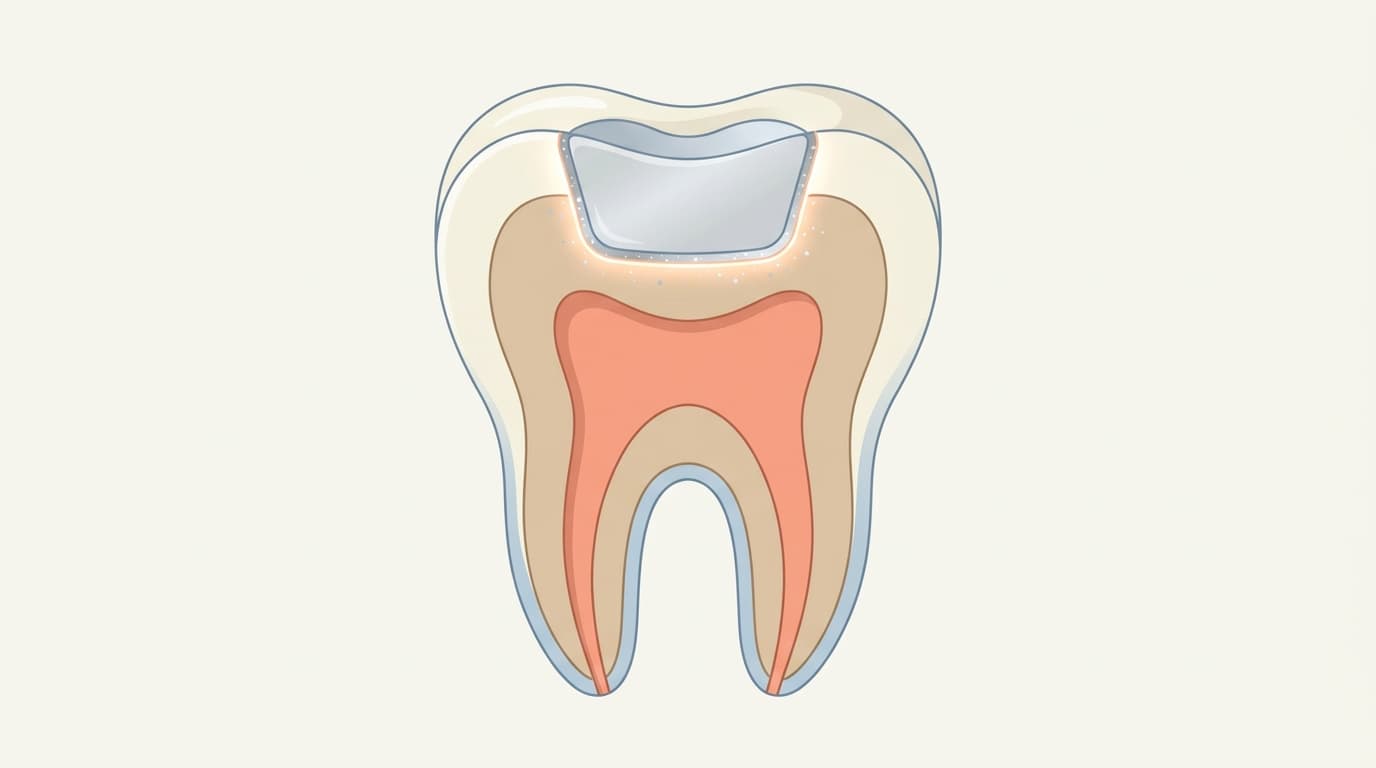
Teeth filled with resin to treat cavities can decay again over time. This isn't because the filling itself cracks, but because the adhesive layer joining the tooth and the resin weakens first, letting bacteria seep through the gap. A research team at Jilin University in China recently published a study in which they created a dental adhesive that combines a component that chemically bonds with dentin and silver nanoparticles, aiming for both bonding strength and antibacterial activity, and confirmed its effects in the lab.
The Adhesive Layer Fails First
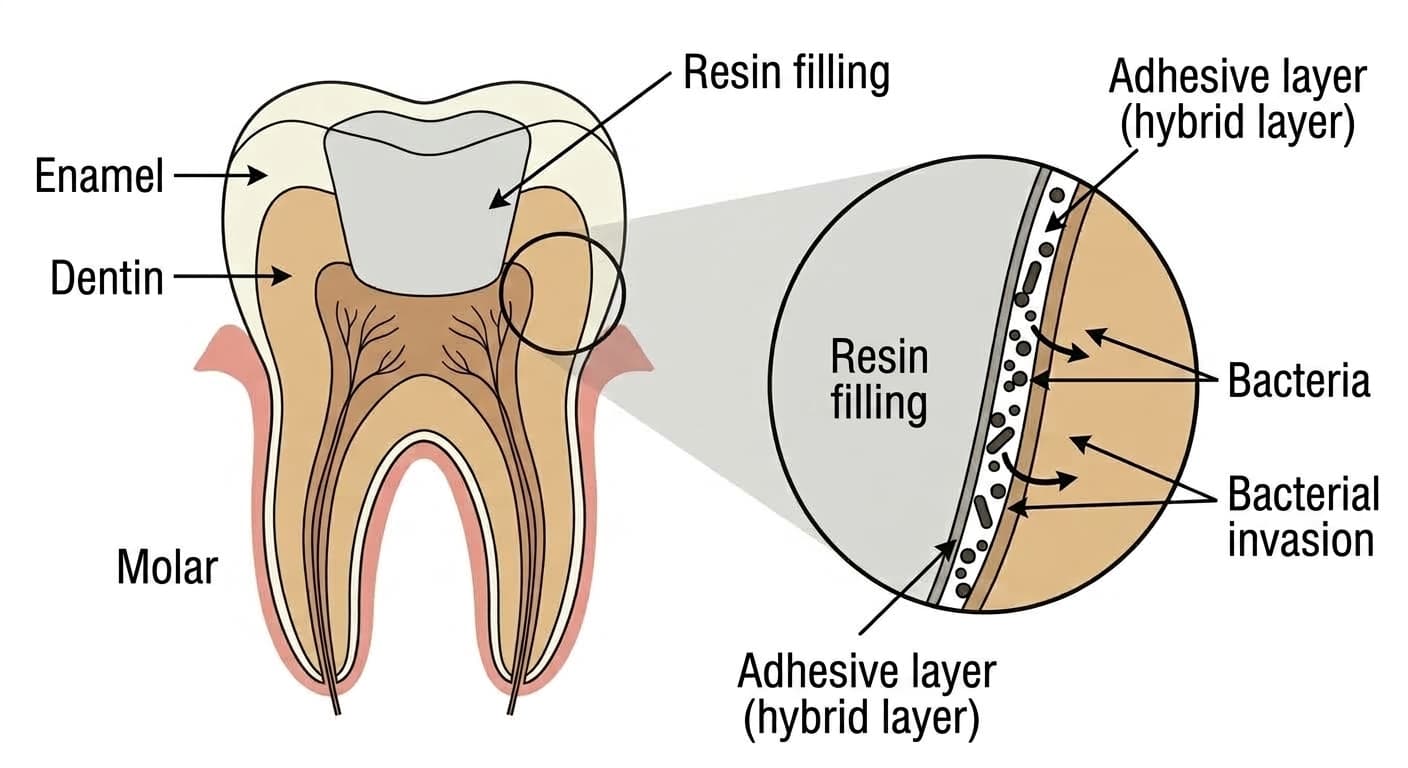
Secondary caries is considered the most common reason restorations need to be retreated. A survey pooling dental records from multiple countries found that up to 59% of retreated restorations failed due to secondary caries. After a tooth is prepared, the bonding adhesive dissolves dentin's minerals with acid and lets resin seep into the exposed collagen fibers, forming a bonding boundary called the "hybrid layer." The problem is that this boundary weakens over time. Water remains in gaps the resin fails to fill completely, and as the tooth's own collagen-degrading enzymes (MMPs) become active, the exposed collagen breaks down. Once bacteria enter through that gap and take hold, it leads to secondary caries. Dental adhesives have evolved from etch-and-rinse systems, through methods that apply acid and primer together, to today's universal bonding systems, but the weakening of the hybrid layer itself remains an unresolved challenge.
Adding Components That Bond with Collagen and Kill Bacteria
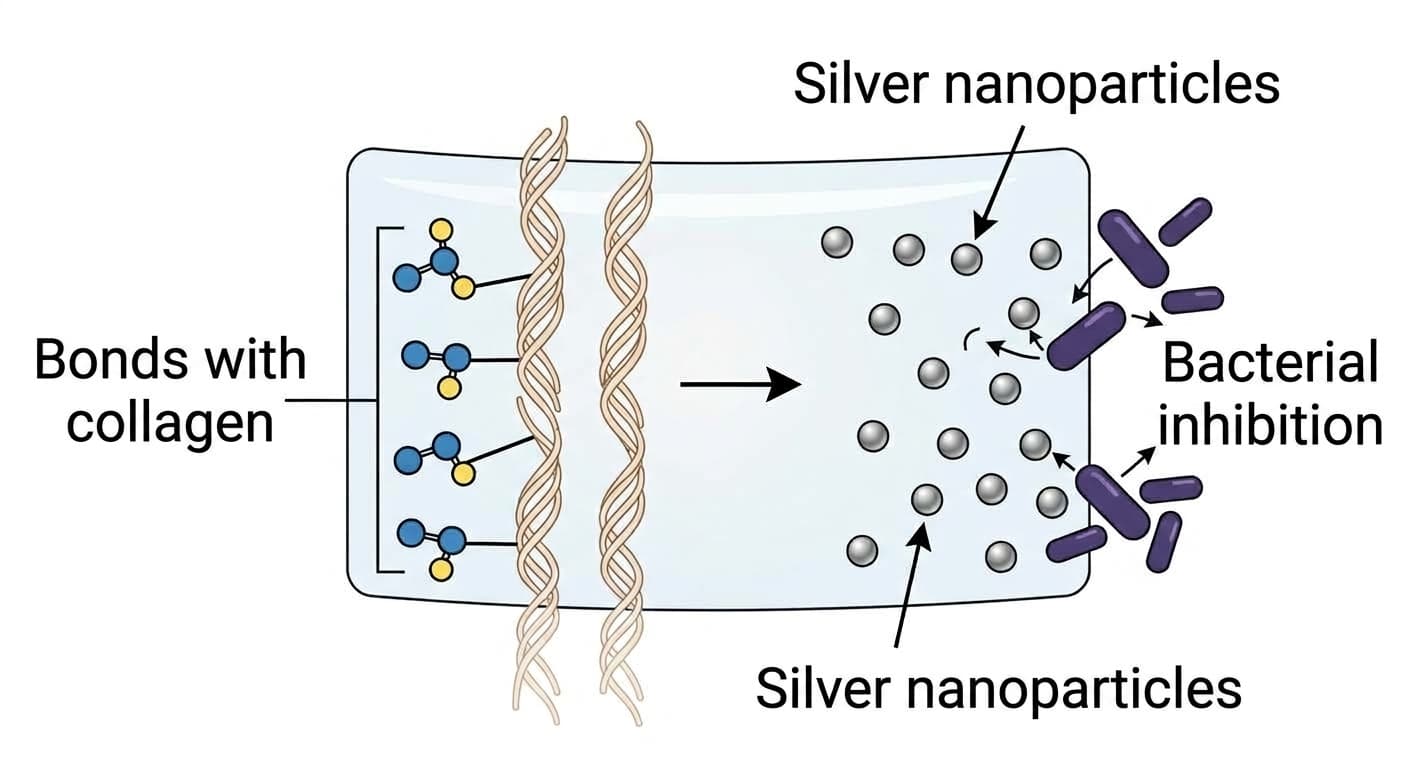
The research team added two functions to this adhesive. The first is a component called "4-formylphenyl acrylate (FA)," which forms a direct chemical bond with dentin collagen, chemically reinforcing the bonding boundary. The same lab had previously reported a similarly structured cross-linking agent that also bonds with collagen to reduce attack from degrading enzymes. The second is silver nanoparticles synthesized directly within the adhesive. Adding silver nanoparticles to dental materials has also been tried in pit-and-fissure sealants, which fill the grooves of molars to prevent cavities. While that approach is a preventive material that seals a tooth surface before it decays, this study differs in that it adds silver nanoparticles to an adhesive used on a site that has already been treated and filled for decay. Combining both components in a single adhesive to achieve bonding strength and antibacterial activity together is the core of this study.
Bonding Strength and Antibacterial Activity Confirmed in the Lab
The research team measured bonding strength on tooth specimens coated with this adhesive, both immediately after bonding and after artificial aging. The new adhesive showed higher bonding strength than a conventional adhesive at both time points, along with less microleakage of water seeping through the bonded interface. When Streptococcus mutans, a bacterium representative of tooth decay, was cultured on the bonded surface, biofilm metabolic activity and the number of surviving bacteria dropped markedly, and the activity of collagen-degrading enzymes was also suppressed. However, all of these results come from lab tooth specimens and cultured bacteria; clinical trials confirming whether the adhesive actually holds up over time in the human mouth have not yet been conducted.
Other Approaches Targeting the Same Problem
Efforts to solve the problem of a weakening bonding boundary go beyond this study. Research inspired by the adhesive proteins of mussels mixed zinc and polydopamine into an adhesive and reported that aged bonding strength rose to as much as 1.9 times that of conventional adhesives, while another approach mixed in bioactive glass particles to let minerals re-accumulate on their own at the bonding boundary. Though the materials differ, they share the same goal: reducing gaps where water remains, protecting collagen, and blocking bacteria. This study stands out for implementing chemical bonding, antibacterial action, and enzyme inhibition simultaneously within a single adhesive, reflecting a recent trend in the development of multifunctional adhesives.