
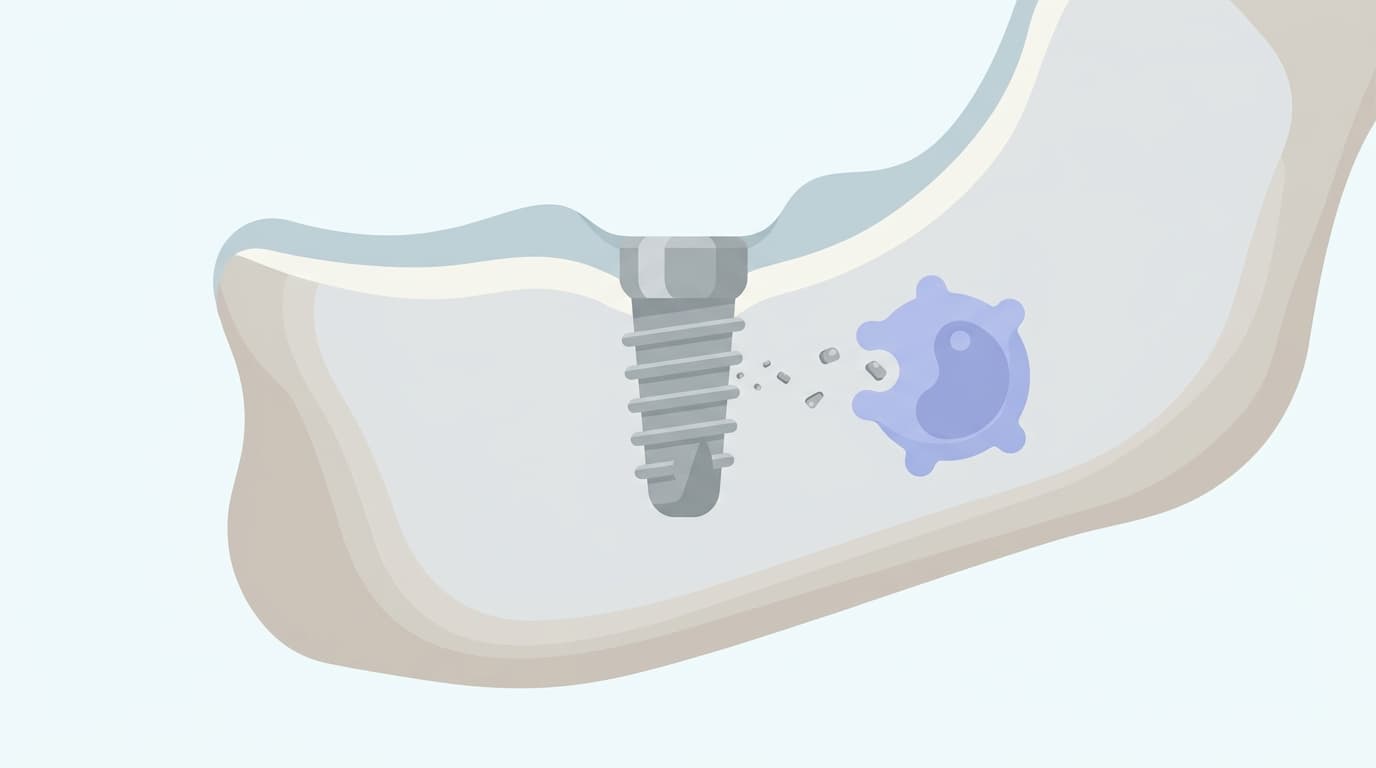
When an implant site keeps loosening or the surrounding bone recedes for no clear reason, the usual suspects are bacterial infection or excessive biting force. In very rare cases, though, the body mounts an immune response against the titanium the implant is made of, producing the same symptoms. A systematic review published in 2026 gathered the reported cases of this kind: among 20 cases confirmed as titanium hypersensitivity, 17 ultimately required removing the implant, and only 3 were resolved by replacing the abutment, the component that anchors the crown. The problem is that no test can reliably screen for this reaction beforehand.
How the Body Reacts to Titanium
The surface of a titanium implant is covered by a thin oxide layer called titanium dioxide, which normally protects it from corrosion and unwanted reactions. But repeated chewing loads, shifts in oral pH, and biofilm (a thin layer of bacteria that builds up on tooth surfaces) can strip this oxide layer away and cause it to re-form over and over. In the process, tiny titanium particles and ions leach into the surrounding tissue. When macrophages, the immune cells that engulf foreign material, swallow these particles, they release cytokines, inflammatory signaling proteins. A recent review outlines how this signal can activate osteoclasts, the cells that break down bone, ultimately dissolving the bone around the implant.
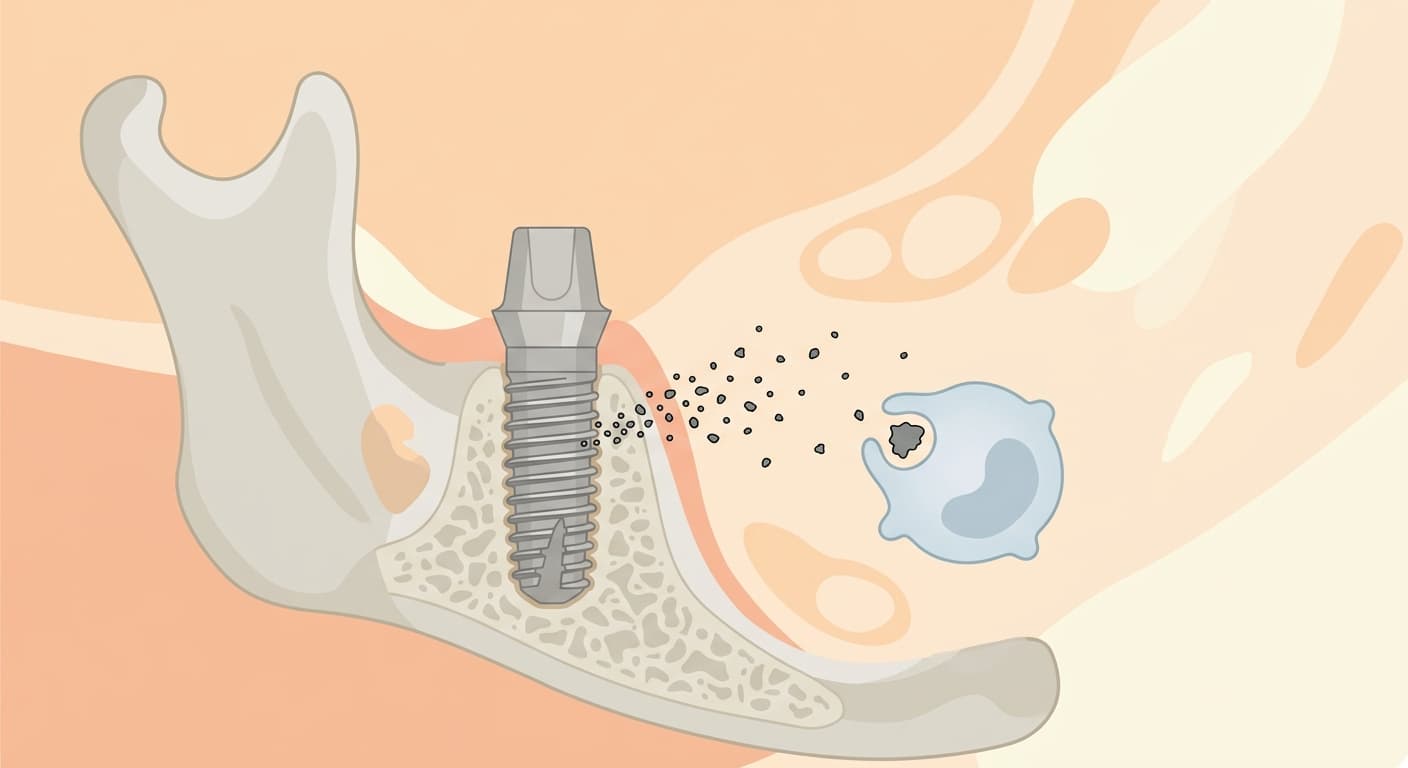
What's interesting is what this reaction actually is. The word allergy usually brings to mind adaptive immunity, where antibodies or specific immune cells respond to a particular substance. But a 2022 study comparing diagnostic tests concluded that titanium hypersensitivity looks less like adaptive immunity and more like a nonspecific reaction in which the particles themselves stimulate macrophages. In other words, it isn't an allergy targeting a specific antigen but the body's general defense response to a foreign substance.
How Reliable Are Allergy Tests?
Two types of tests are currently used. One is the patch test, which applies a small amount of metal to the skin and observes the reaction. The other is the lymphocyte transformation test, which incubates lymphocytes from a blood sample with titanium and measures how much they proliferate (often sold under the brand name MELISA). In a 2008 Spanish study of 1,500 implant patients, only 35 with suspected allergy were tested this way: 9 (0.6%) came back positive, versus none in the control group. Among the subgroup of patients who developed allergy-like symptoms after implant failure, nearly half tested positive.
The trouble is that the tests don't even agree with each other. The 2022 review comparing diagnostic tests pooled 10 studies that compared patch tests against lymphocyte transformation tests, and results varied widely between studies, most of which also carried a high risk of bias. As noted above, if this reaction is a nonspecific response driven by the particles themselves rather than a specific antigen, tests designed to detect antibodies or particular lymphocytes may struggle to catch it in the first place. The review suggested that clinical signs of inflammation around the implant are a better first-line indicator than test results.
What Happens Once It's Confirmed
The 2026 systematic review compiled how cases diagnosed through these tests and clinical findings were actually managed. Across 9 studies published so far (1 prospective study and 8 case reports), 21 patients and 33 implants were reviewed. Combining skin, blood, and tissue tests with clinical symptoms, 20 cases were diagnosed as titanium hypersensitivity. In 17 of those, the implant had to be removed; in 3, symptoms resolved after keeping the implant body in place and replacing only the abutment with a different material. Because this figure comes from already-reported problem cases rather than a randomly sampled population, it should not be read as a true incidence rate.
An Alternative That Skips Metal Entirely
For patients with recurring hypersensitivity, metal-free zirconia implants are being studied as an alternative. We've previously covered findings that two-piece, screw-assembled zirconia implants performed comparably to titanium at one year. However, zirconia surfaces don't allow cells to attach well on their own, so they need surface treatment, such as roughening with coarse particles, acid etching, or laser-cut micro-grooves, to bond well with bone. A recent review found that zirconia surfaces treated this way showed improved responses from both bone-forming cells and the cells that line the gum tissue.
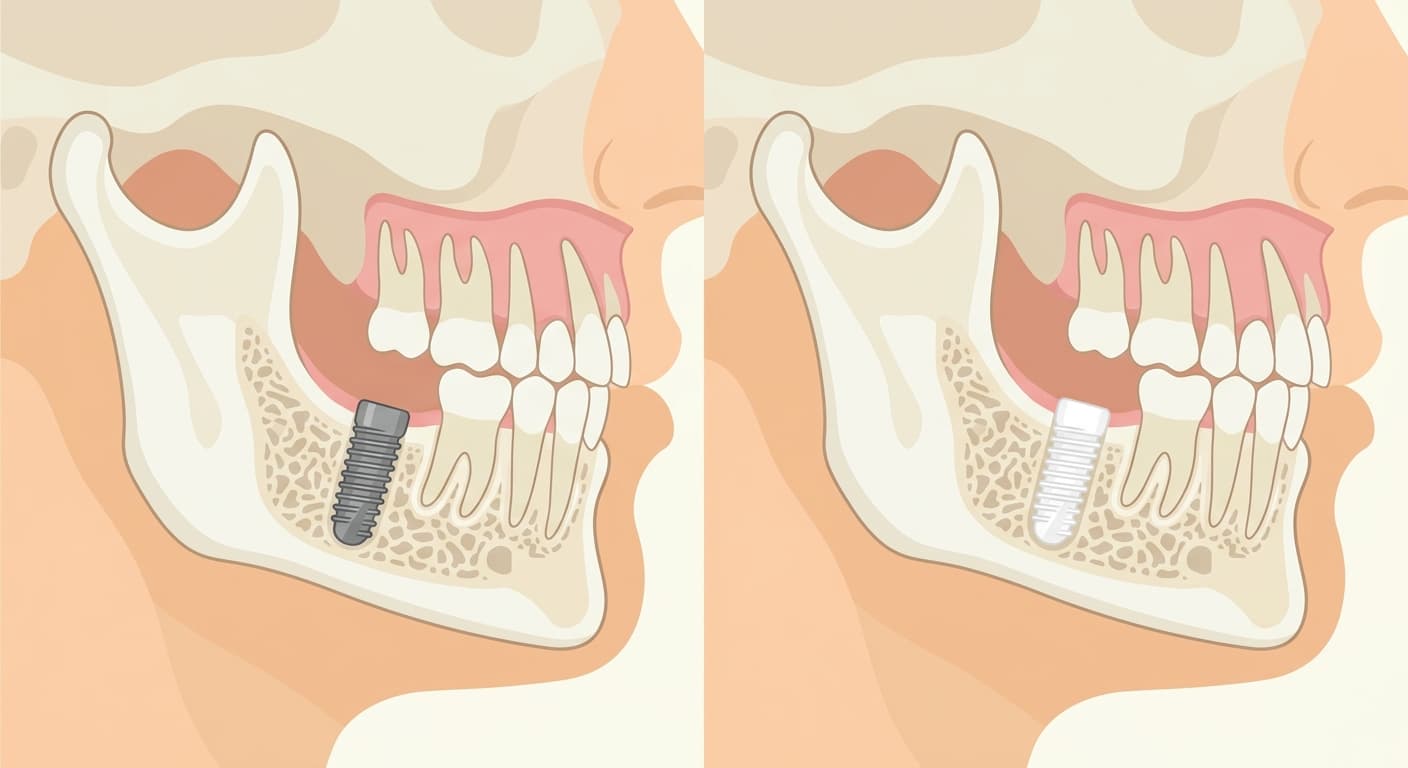
Immune reactions to titanium implants are now recognized as a rare but real complication. Since tests to screen for it in advance remain unreliable, clinical findings still carry the most weight, while metal-free zirconia is gaining ground as an alternative as surface treatment technology advances.