
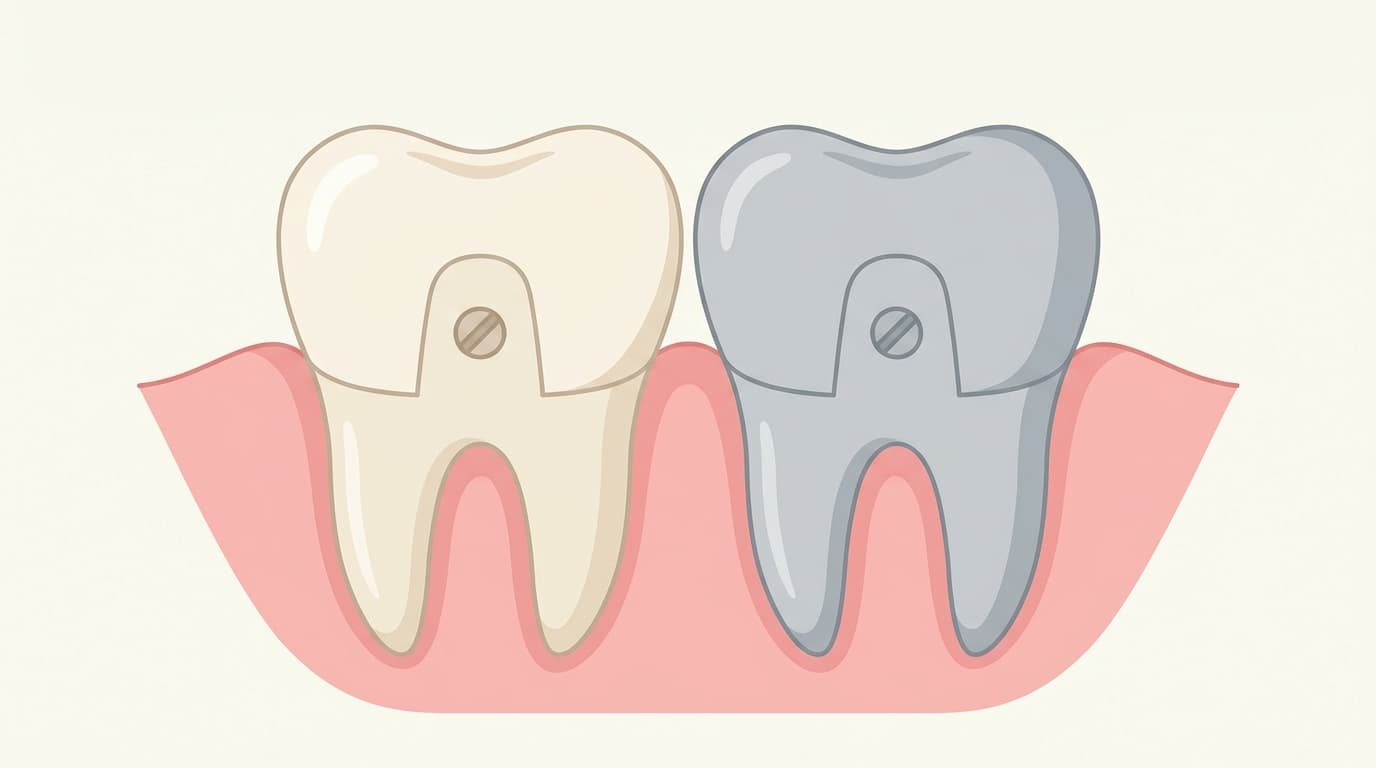
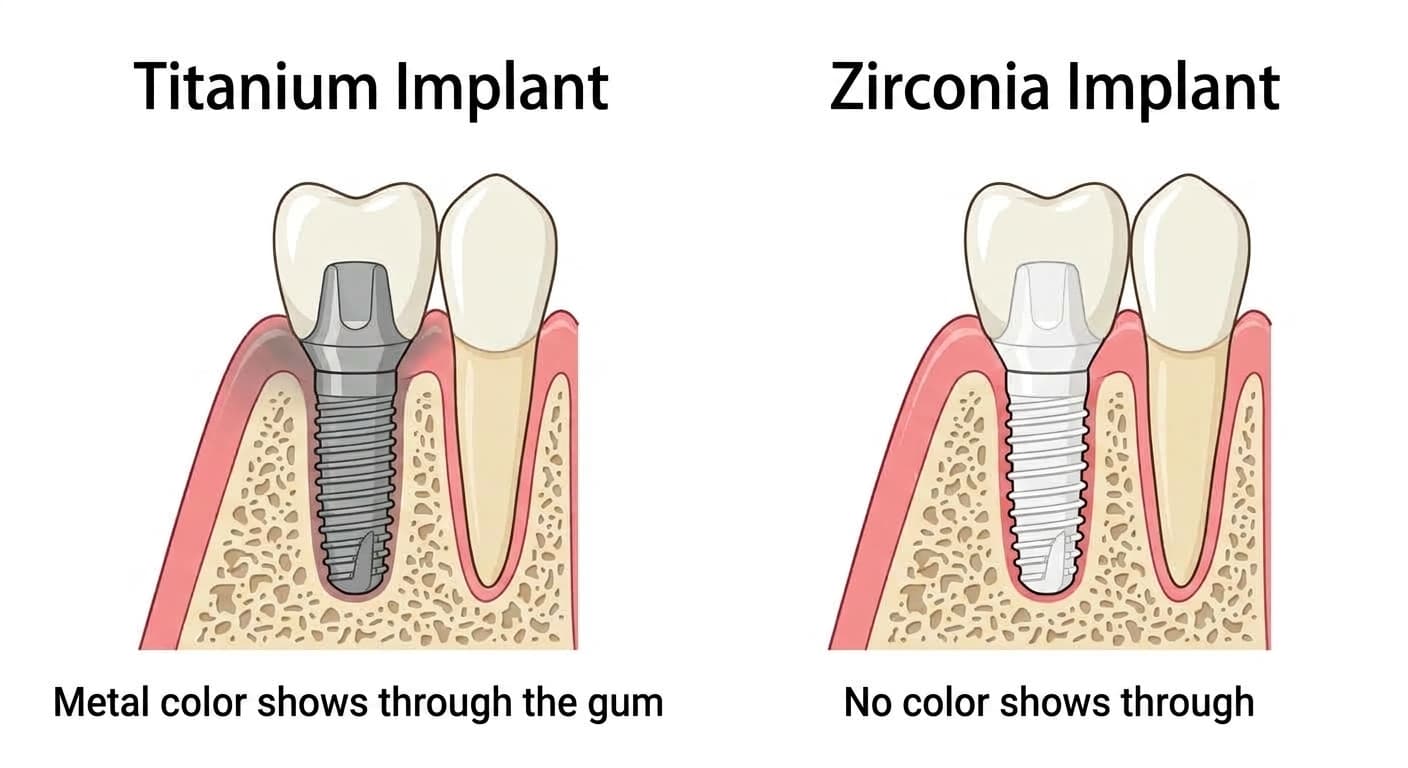
For more than 40 years, dental implants were assumed to be made of titanium. It became the standard material because of its strength and its ability to bond well with bone, but its gray color can show through the gum at sites with thin tissue, and in a small number of patients, metal hypersensitivity has led to implant failure. Zirconia, which uses no metal, emerged as an alternative, but its tendency to crack made it difficult to assemble with screws the way titanium implants are. In 2026, a research team from four university hospitals in Switzerland and Austria published one-year follow-up results comparing a screw-retained zirconia implant with titanium.
Why a Screw-Retained Design Wasn't Possible Before
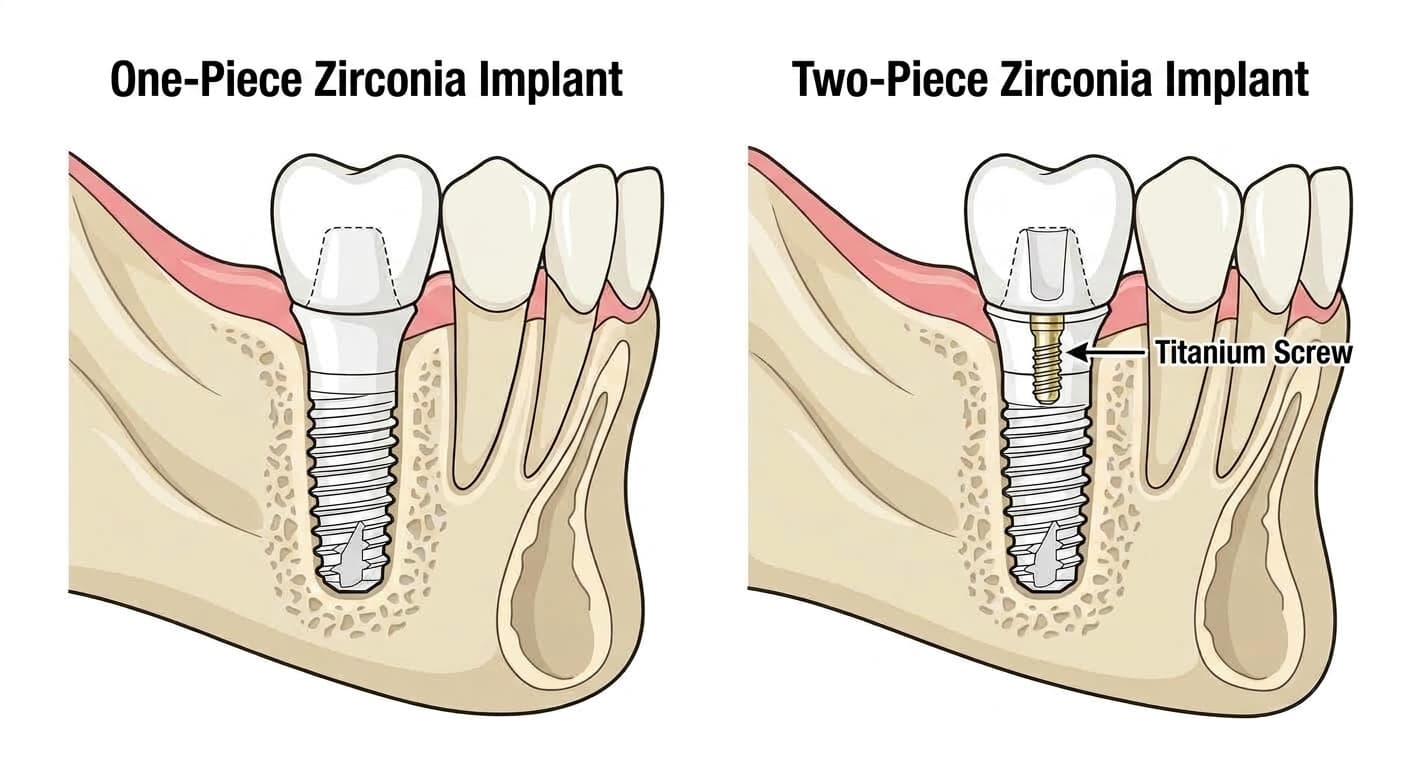
An implant consists of a screw-shaped body placed in the bone and a component that secures the crown on top of it, and with titanium, connecting these two parts with a screw is common. Because zirconia cracks easily under impact, building this kind of screw structure was difficult, so most zirconia implants were made as a one-piece unit, fusing the body and the crown-retaining part together. Because a one-piece implant can't be angled, it was hard to use at sites where the tooth was tilted. Two-piece zirconia implants that cemented the crown in place did exist, but when cement residue was left in the gum crevice, it more often led to inflammation.
We've previously covered the lifespan of zirconia used in crowns and bridges that cap teeth. This study is about using that same material for the framework itself, the implant body that the crown is placed on.
What Changed
The zirconia implant compared in this study has its fracture-prone shoulder shaped into a gentle stepped contour, with a titanium screw fitted inside the zirconia body to secure the crown. Its surface uses the same coarse-grit acid-etching method to widen the space for bone to attach. The body shape follows a titanium implant design with a reported 10-year survival rate of up to 95%. The implant was made by Straumann, which also supplied the implants used in the trial. However, funding came from the International Society of Implant Dentistry, and the design and analysis were carried out independently of the manufacturer.
Measuring the One-Year Results Side by Side
Sixty-one zirconia and 61 titanium implants were placed, fitted with crowns, and followed for one year.
| Item | Titanium | Zirconia |
|---|---|---|
| Bone loss (placement to crown loading) | 1.10±0.78mm | 0.94±0.67mm |
| Bone loss (crown loading to 1 year) | 0.07±0.55mm | 0.08±0.51mm |
| 1-year survival rate | 96.5% (2 failures) | 100% |
The degree of bone resorption, plaque accumulation, gum bleeding, and wound healing speed all showed no statistically significant difference. The research team noted that the difference in survival rate is also difficult to interpret as statistically meaningful, given the small number of implant failures. Another randomized comparative trial published the same year likewise found no difference in bone loss between zirconia and titanium implants placed at maxillary premolar sites; if anything, zirconia scored better for gum color and texture while titanium scored better for maintaining gum height, showing that each material has different aesthetic strengths.
What Still Remains
During surgery, the implant and impression component detached more often on the zirconia side, requiring extra care in handling. The research team noted this may be due to the design of how this component is secured. Because the two materials can be told apart visually, evaluators could not be blinded to which implant they were assessing, and the fact that follow-up lasted only one year also remained a limitation.
With the emergence of a screw-retained zirconia implant, it is now possible to secure a crown at various angles and in various ways, as with titanium, without using metal. Up to one year, there was no difference from titanium in bone stability or survival rate, but whether this result holds up over time will require longer follow-up.