
When patients with temporomandibular disorder (TMD), with jaw pain or limited mouth opening, used a smartphone app alongside their regular treatment, their pain fell more after six weeks than in patients who used a sham app that only logged symptoms. The result comes from a trial conducted by a joint Hallym University and Seoul National University research team at two South Korean university hospitals, in which assignment was blinded to both participants and the researchers assessing outcomes. It marks another case of a so-called digital therapeutic (DTx), an app prescribed by a doctor because the software itself is designed to produce a treatment effect, proving effective, this time for temporomandibular disorder.
What the App Does
Temporomandibular disorder is mainly treated conservatively, with a stabilization splint or physical therapy, but it has been hard to keep managing habits like clenching or resting the jaw on a hand once patients leave the clinic. The research team tried to fill that gap with an app. The digital therapeutic used in this trial is a prescription app designed for daily use (product name: Clickless DTx TMD-01). It packs in six features: disease education about temporomandibular disorder, an exercise guide that has patients follow gentle jaw movements on screen, habit tracking that lets patients log clenching or jaw-resting behavior themselves, psychoeducation for managing stress, meditation guidance, and feedback generated from the records patients enter.
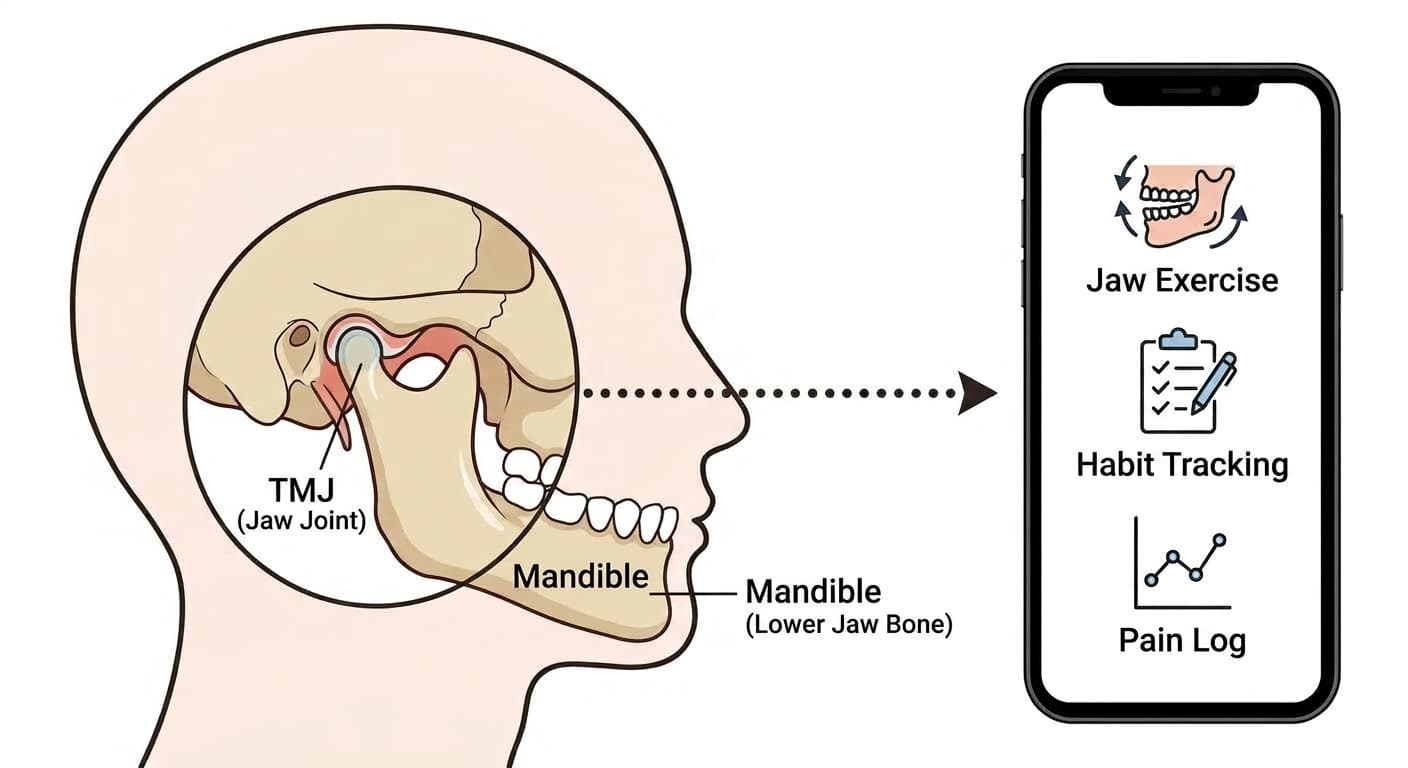
The placebo app used by the comparison group had the same screen layout and usage flow, but it only had a pain-logging feature, with no exercises or educational content at all. The two apps were made to look alike, and assignment was blinded to both participants and the researchers assessing outcomes. The study coordinators who tracked compliance and adverse events, however, knew which app each patient had been assigned.
Results Versus the Placebo App
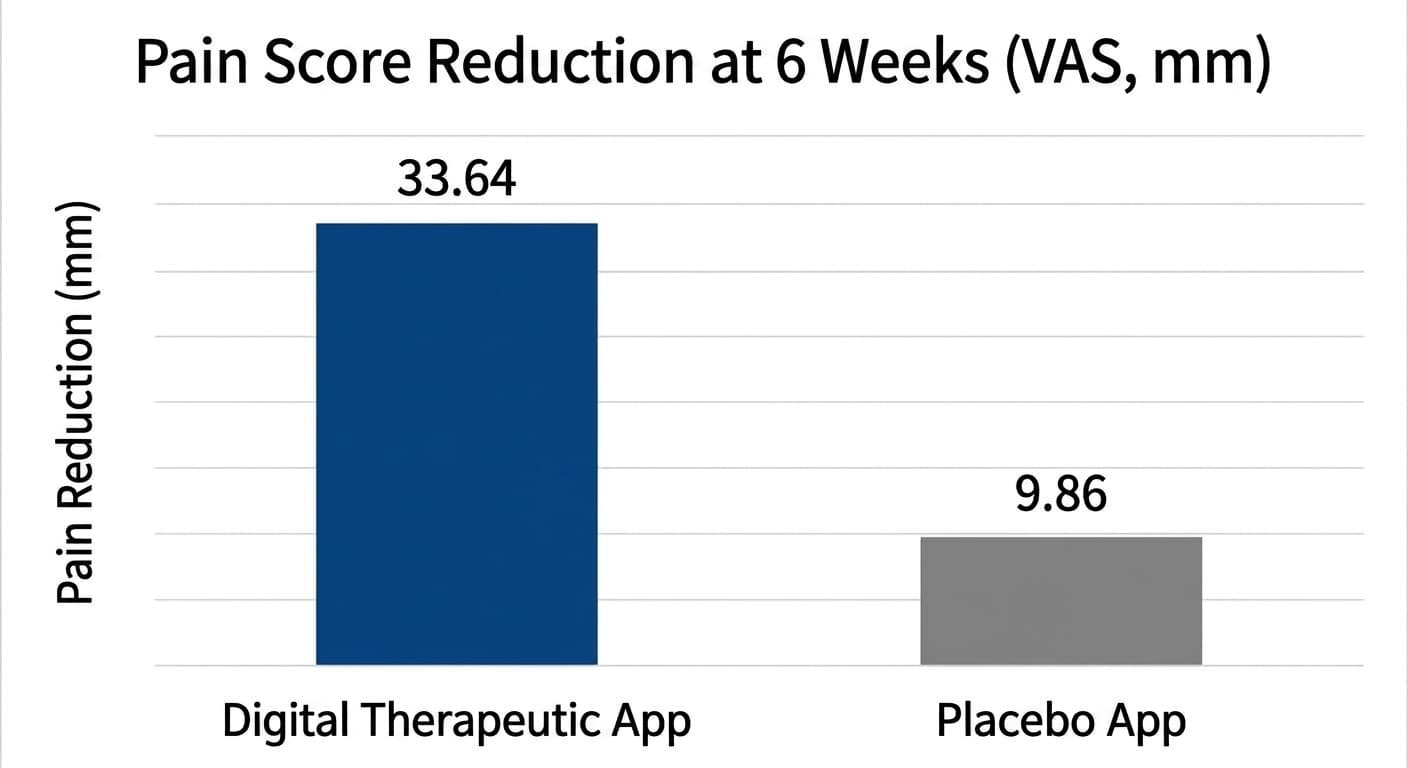
Researchers randomly assigned 102 TMD patients aged 19 to 65 to two groups, both of which used their assigned app for six weeks alongside their existing treatment. In the primary analysis of the 93 patients (44 in the treatment-app group, 49 in the placebo-app group) who met the predefined usage and assessment criteria, pain scores, measured on a 100mm scale, fell by an average of 33.64mm in the digital therapeutic group, markedly more than the 9.86mm drop in the placebo group.
Maximum mouth opening also increased by an average of 4.36mm more in the digital therapeutic group, and scores on questionnaires measuring jaw-function discomfort and clenching/jaw-resting habits improved more as well. Scores on anxiety and depression questionnaires, however, showed no clear difference between the two groups.
What Drove the Effect
A follow-up analysis by the same research team looked into where this effect came from. Patients whose clenching or jaw-resting habits actually decreased showed larger reductions in pain, and an exploratory mediation analysis suggested that behavioral change might mediate about 29% of the pain-improvement effect. How often patients opened the app, by contrast, showed no clear link to pain reduction. This is a hypothesis-generating analysis examining the association between behavioral change and pain improvement, and it does not establish that behavioral change causes the reduction in pain. The digital therapeutic's effect was larger among patients with higher depression and anxiety scores, and the response itself was already evident at 4 weeks, even before the 6-week mark.
Compared With Other Approaches
Where a vibration biofeedback splint worn during sleep reduces how long a patient grinds their teeth at night, this digital therapeutic differs in that it's software addressing pain and habits during waking hours. What this trial showed is not that a prescription app can replace pain medication or physical therapy. It's that an app can step in and catch habits, like clenching or resting the jaw on a hand, that keep repeating outside the clinic. That said, these results were observed over six weeks at two South Korean university hospitals, so there is not yet data on whether the effect holds up with longer use. Pain did decrease somewhat in the placebo group too, but the key finding of this trial is that the group using the app with actual treatment content saw a far larger reduction in pain.