

Intra-articular injections for patients with temporomandibular joint (TMJ) osteoarthritis, who experience jaw pain and limited mouth opening, are changing. In the past, treatment consisted of arthrocentesis to flush out the joint followed by a single injection of hyaluronic acid. More recently, platelet-concentrate injections and therapies concentrating substances secreted by stem cells have also come into use. But these materials have not all produced the same effect. A 2025 systematic review pooling nine randomized controlled trials and 403 patients found that platelet injections showed almost no difference from hyaluronic acid, while stem cell-derived therapy produced better results than hyaluronic acid in both pain and mouth opening. An earlier article covered how MRI identifies TMJ osteoarthritis, so this one looks at how osteoarthritis confirmed that way is treated.
What Goes Back In After the Wash Has Changed
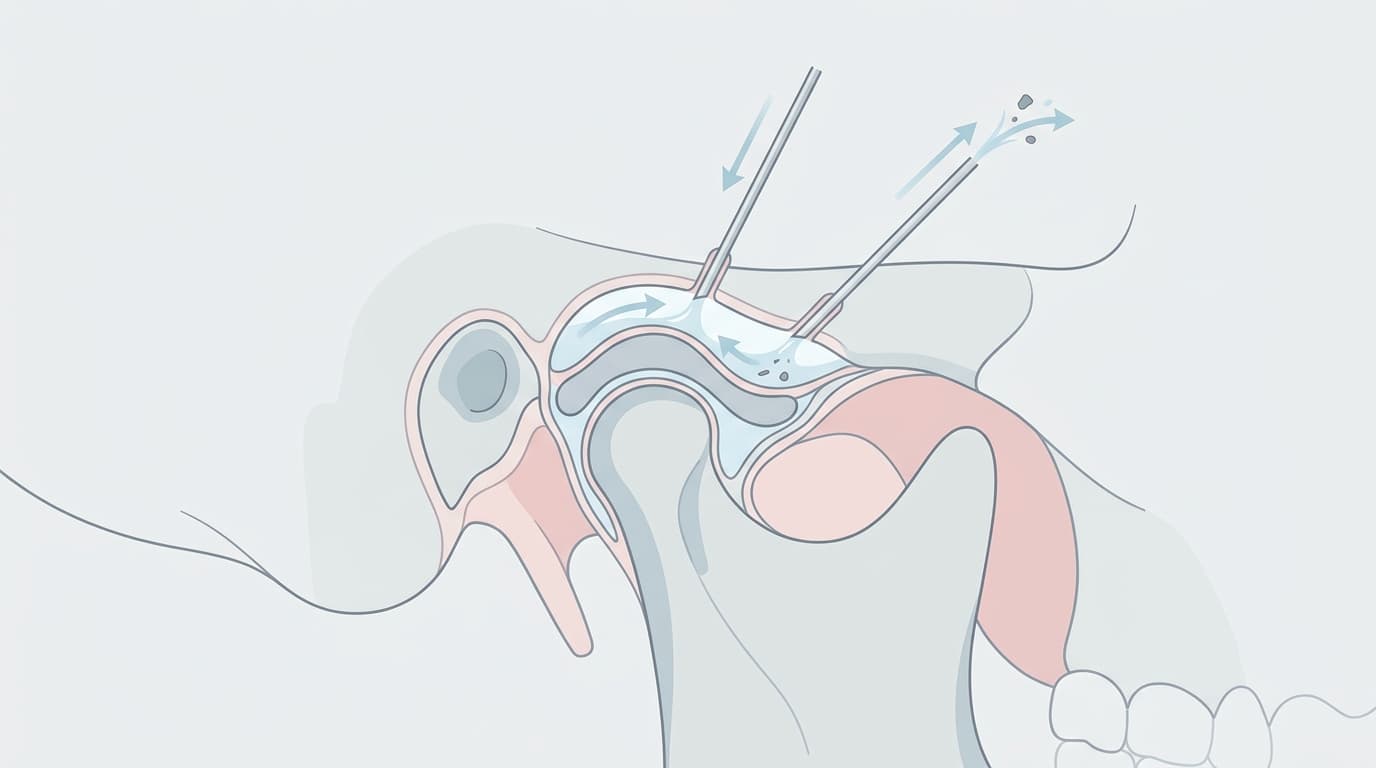
As osteoarthritis progresses, inflammatory signaling molecules and worn-off tissue debris build up in the joint's synovial fluid, making it thicker. Arthrocentesis is a procedure that inserts two thin needles into the joint space and flushes out this debris with saline. What gets put back in after the wash has long been the core of treatment. Hyaluronic acid, the longest-used option, restores the viscosity of the synovial fluid and delivers nutrients to the cartilage. More recently, platelet-concentrate injections and stem cell-derived therapies have been added to that spot.
Platelet Injections Were No Different From Hyaluronic Acid
Platelet-rich plasma (PRP) is made by centrifuging blood to concentrate platelets, which are then injected into the joint. The principle is that growth factors in the platelets aid tissue repair. But in three of the four studies that directly compared PRP with hyaluronic acid, there was no difference in improvement of pain or maximum mouth opening (the widest the mouth can open). Differences in the centrifugation methods used to concentrate platelets across studies, which led to inconsistent growth factor content in the injections, have been cited as a reason for the mixed results.
Substances From Stem Cells Had a Bigger Effect
Rather than injecting stem cells directly, a therapy that collects and concentrates only the growth factors and anti-inflammatory substances the cells secrete showed different results. The group that received this therapy had significantly greater improvements than the hyaluronic acid group in both pain and maximum mouth opening. A 2026 integrative review found pain scores dropped 30 to 50 percent and function scores rose 20 to 40 percent, with no safety issues over two years of follow-up. In studies using i-PRF, a formulation that traps platelets in a fibrin mesh and releases them slowly over 7 to 14 days, inflammatory signaling molecules decreased and MRI even showed signs of cartilage preservation. Still, the number of studies producing these results remains small, and some were rated as having a moderate to high risk of bias.

Why Hyaluronic Acid Remains the Default
Steroid injections reduce pain quickly, by 50 to 70 percent, but the risk of cartilage damage grows with repeated use, so they are used less often now. Hyaluronic acid's effect of reducing pain by 25 to 45 percent has been consistently reproduced across multiple studies, and with few side effects, it also serves as the baseline for other treatments. TMJ injections are moving past the stage of simply adding a single lubricant toward a regenerative-therapy stage where the outcome depends on what is injected. Based on the evidence so far, platelet injections have not shown a clearly better result than hyaluronic acid, and the difference seen with stem cell-derived therapy is the clearest signal.