
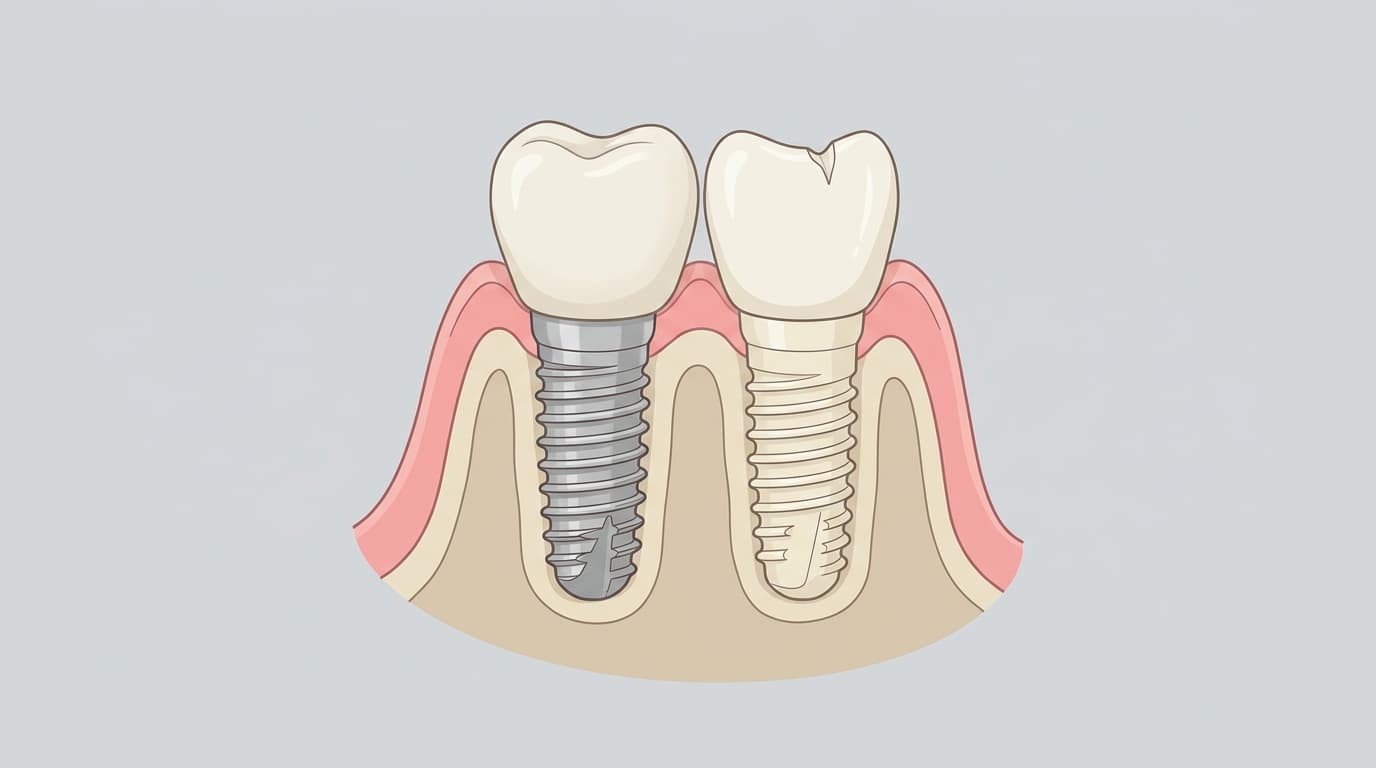
The implant body is anchored in the bone and acts as the root that supports the crown. For a long time, titanium was nearly the only option for this body, but zirconia, a metal-free alternative, emerged to address metal allergies and the gray shadowing that can show through thin gum tissue over metal. A one-year follow-up already found no difference between titanium and a screw-retained, two-piece zirconia implant, but that study was limited by its short follow-up period. A team at the University of Zurich in Switzerland published the results of a three-year randomized controlled trial in October 2026 that placed zirconia and titanium implants in posterior molar sites, one of each per patient. Bone and gum health were similar regardless of material, but survival rates and failure patterns diverged.
A Within-Patient Design Comparing Two Materials
The study placed one zirconia implant and one titanium implant in each of 42 patients. Because biting force, oral hygiene habits, and bone quality vary from person to person, it is hard to isolate the effect of the material alone; comparing the two materials side by side in the same patient's mouth reduces this individual variation. Bone loss (marginal bone loss), gum condition, esthetics, and patient-reported satisfaction were evaluated at one and three years after crown placement, and 39 patients (37 zirconia and 39 titanium implants) completed the three-year follow-up.
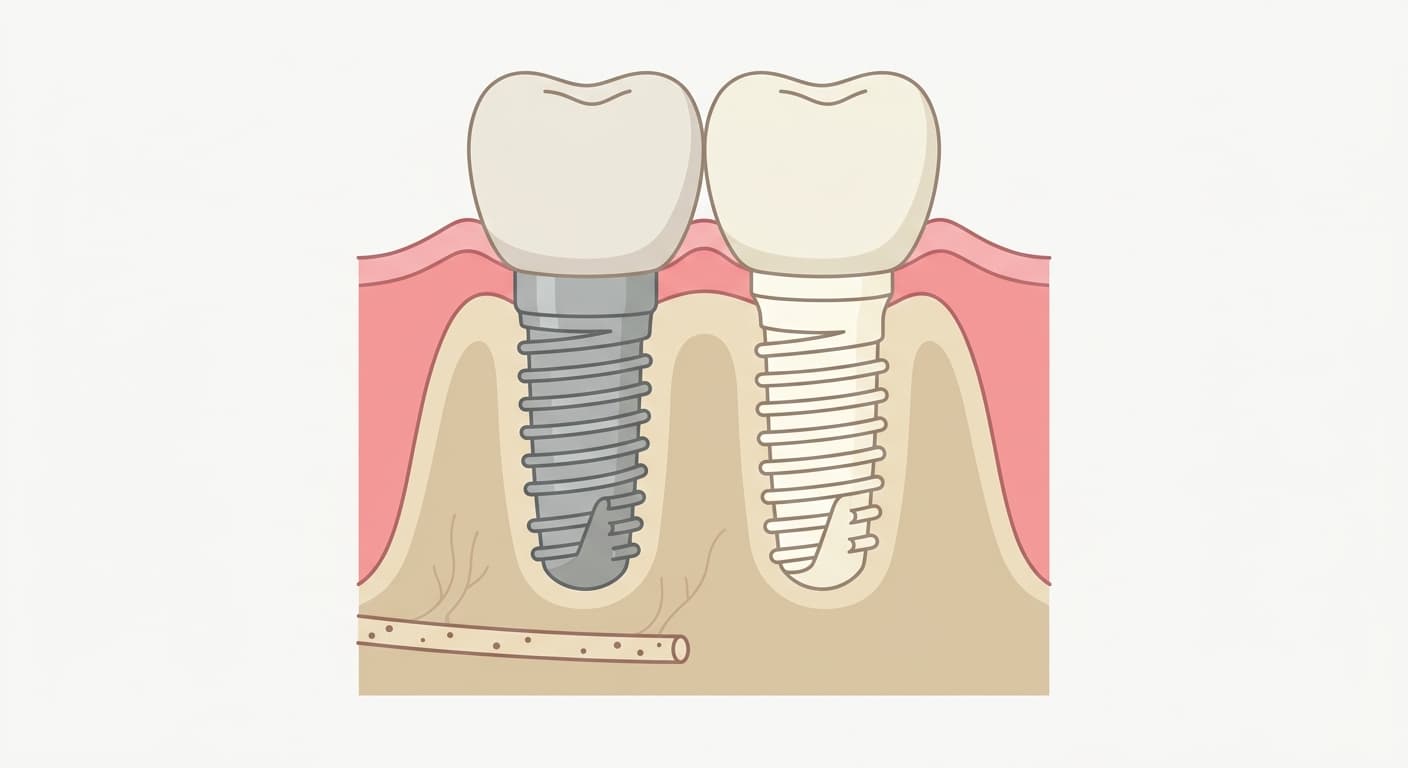
Similar Bone and Gum Health Measures Across Materials
There was no clinically meaningful difference between the two materials in the degree of marginal bone loss that occurred after the bone had stabilized. Gum bleeding, plaque accumulation, periodontal pocket depth, and the amount of keratinized tissue around the gums were also similar. Peri-implantitis appeared in 7.9% of implants overall, split almost evenly between three titanium and three zirconia implants. Esthetics and patient-reported satisfaction showed no clear difference either, and patients who did notice a difference tended to lean slightly toward preferring zirconia.
Differences in Survival Rates and Technical Complications by Material
The 3-year survival rate was 100% for titanium and 94.9% for zirconia, with two zirconia implants lost during the observation period. However, the small numbers involved make it difficult to draw firm statistical conclusions about this difference. What diverged more clearly was the pattern of failure. Crowns on zirconia implants chipped significantly more often. On the titanium side, there were two cases of the crown-retaining screw loosening, while on the zirconia side there were two cases of crown decementation, in which the cement bond failed and the crown came loose.
| Item | Titanium | Zirconia |
|---|---|---|
| 3-year survival rate | 100% | 94.9% (2 lost) |
| Peri-implantitis | 3 | 3 |
| Main technical problem | Screw loosening (2 cases) | Chipping (significantly more common); decementation (2 cases) |
Zirconia, being a ceramic, is inherently more prone to cracking under impact than titanium, a metal. A 2026 systematic review of zirconia crowns and bridges placed on natural teeth likewise identified chipping and debonding as the most common mechanical problems, pointing in the same direction as this implant comparison.

Surface-Enhancement Technologies for Zirconia and Remaining Challenges
Zirconia also has a drawback: its chemically less reactive surface means bone cells attach to it more slowly than to titanium in the early stages. A team at Beijing Stomatological Hospital in China coated this surface with a titanium oxide film and further treated it with alkali and heat, then implanted it in rat bone; they found that more new bone grew compared with untreated zirconia. This is still an animal-stage experiment, but it shows that efforts to compensate for the material's weakness through surface technology are ongoing. Through three years, both materials preserved bone and gum health comparably, but the way they failed diverged by material. Zirconia's problems clustered around chipping, and titanium's around screw loosening, and this study alone cannot determine which kind of problem is easier to manage.