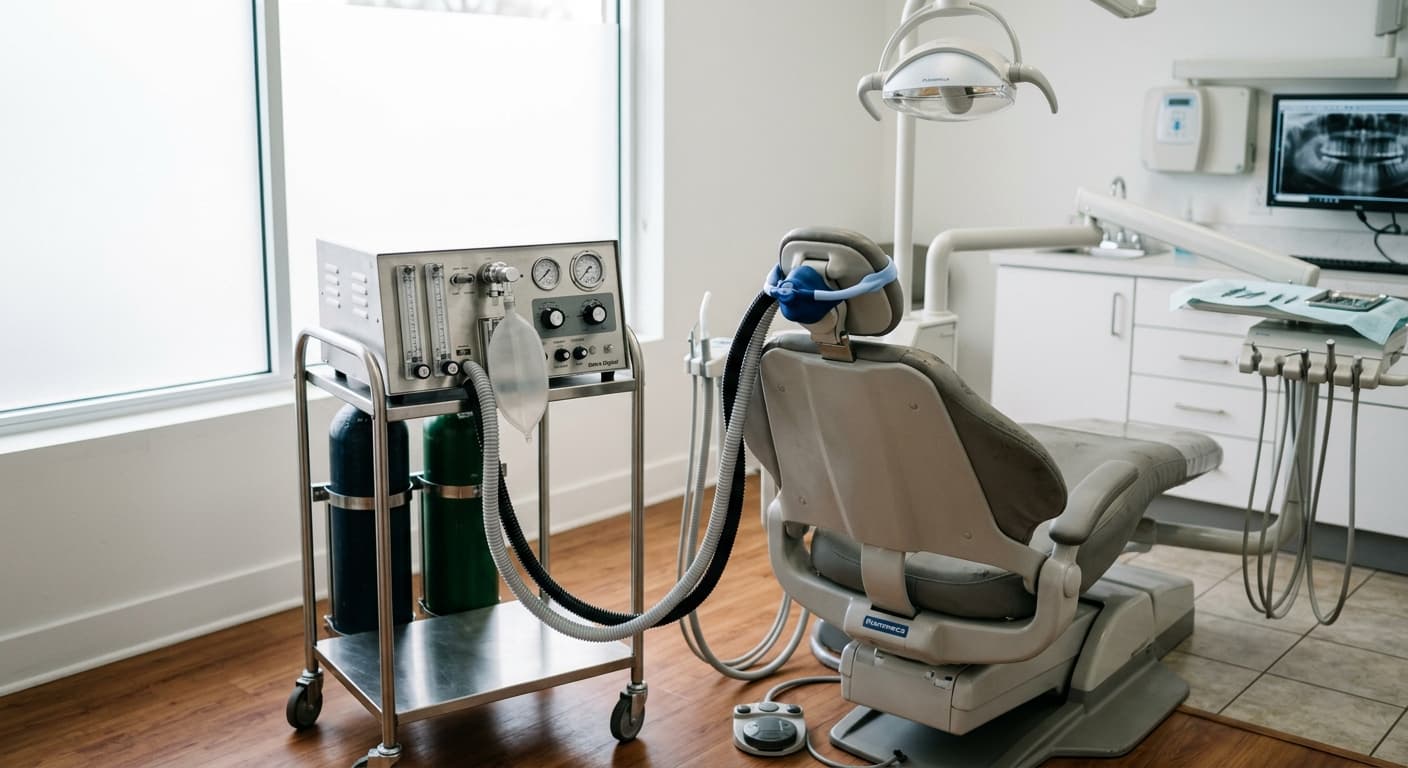
Hospitals across the United States and Europe have begun clearing out an anesthetic gas long used in operating rooms, citing its impact as a greenhouse gas. Nitrous oxide, the laughing gas also used in dentistry to calm anxious patients, is being ripped out of hospital piping too.
According to Bloomberg, the European Union has this year restricted use of the anesthetic desflurane to cases of medical necessity. Roughly 600 hospitals across the US and Canada have also stopped routine use of the drug over the past decade, according to a tally by the nonprofit Practice Greenhealth.
Why Is Anesthesia Gas a Greenhouse Gas?
Desflurane, introduced in the US in 1992, became widely used for its fast wake-up effect. But around 2010, scientists began raising concerns about the drug's warming effects. Desflurane has 2,530 times the global warming potential of carbon dioxide over a 100-year period and heats the atmosphere up to 50 times more than comparable anesthetics. A study published in 2024 estimated that the greenhouse gases emitted together by desflurane and nitrous oxide, also known as laughing gas, are equivalent in the US alone to the annual emissions of 12 million gasoline-powered cars.
Health care accounts for about 5% of global greenhouse gas emissions, roughly on par with the fifth-largest emitting country. Anesthesia gases make up only a small share of that total, but some surveys find they account for as much as 60% of an operating room's emissions.
Hospitals Start by Ripping Out the Piping
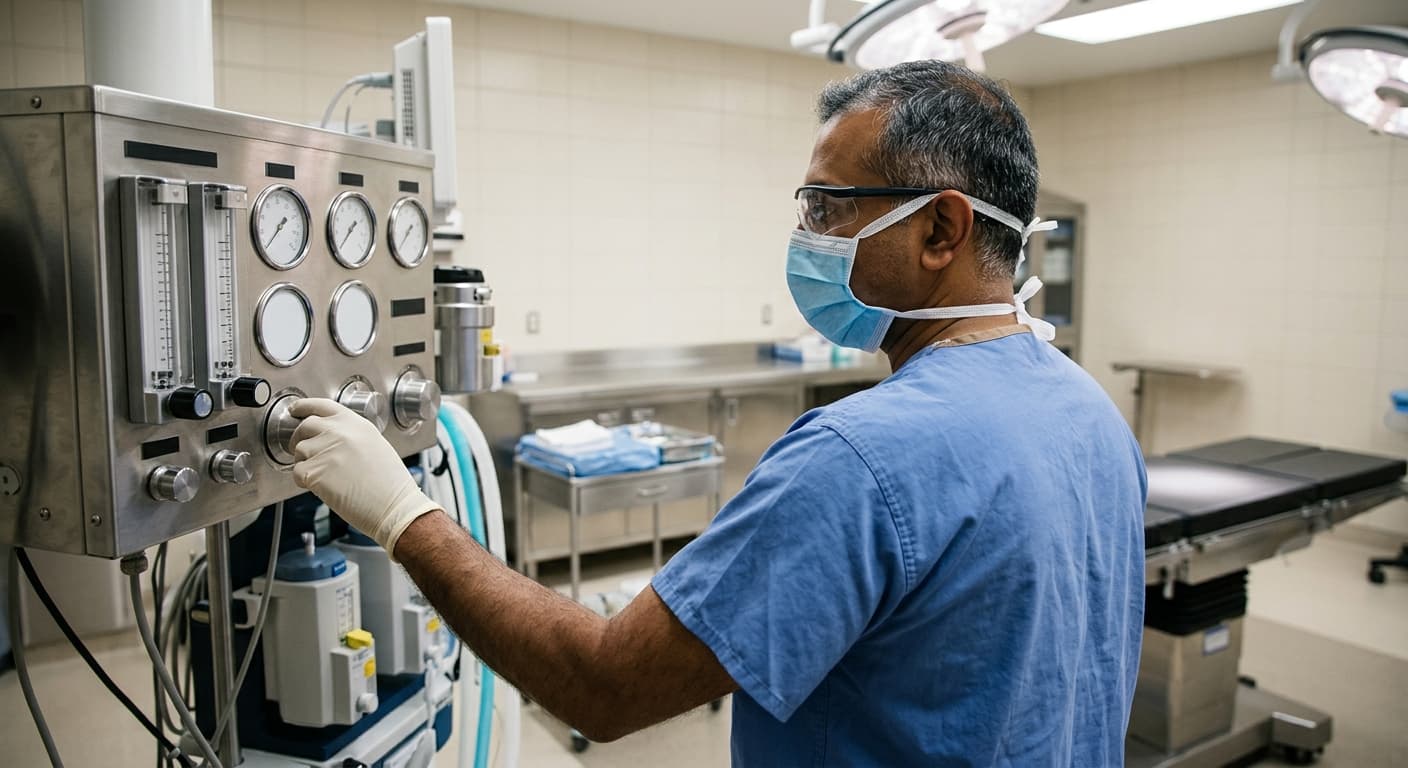
NYU Langone Health, New York City's largest health system, has removed the vaporizers used to administer desflurane altogether. It has also gotten rid of the nitrous oxide piping that once ran to every operating room wall, switching to portable tanks instead. Piping is prone to leaks. Brian Chesebro, environmental stewardship director at the hospital system Providence St. Joseph Health, found that more than 90% of the nitrous oxide in his system's aging pipes was leaking out. He told Bloomberg he redid the math 50 times because the figure was so hard to believe. NYU Langone Health expects these measures to cut its direct emissions by an average of 4% and save $300,000 a year.
The Netherlands is going a step further, working to replace inhaled anesthesia with intravenous anesthesia, which is reported to emit up to 98% less than the inhaled form. Helped along by this shift, a 2025 study in Lancet Planetary Health found that anesthetic greenhouse gas emissions fell nearly 30% over the past decade. The same study noted, however, that desflurane use is actually rising in lower-income countries.
The Manufacturer Sees It Differently
Baxter International, which manufactures desflurane, maintains that the drug's climate impact is negligible. Citing two studies it commissioned, the company argues that current usage levels have little effect. One of those studies, however, was co-authored by a researcher who had received funding from Baxter; the company said the payments were nominal and for work done in the past. Piers Forster, a climate scientist at the University of Leeds, sees it differently. "It absolutely does make a difference," he told Bloomberg. "The good thing about it is you get the instant benefit of reducing emissions. So it's really worth it."
Nitrous oxide is no stranger to South Korean dentistry either. A 2021 paper by Tak Min-kyung and colleagues in the Journal of the Korean Academy of Pediatric Dentistry, which analyzed National Health Insurance Service sample data, found that among pediatric patients treated under sedation, the share receiving nitrous oxide-oxygen inhalation sedation rose from 45.9% in 2002 to 89.5% in 2015. Of that sedation care, 87.7% took place at neighborhood dental clinics. Discussion of the gas as a greenhouse gas source, though, has yet to begin in South Korea. More recently, intranasal sedation delivered through the nose has been taking the place of oral sedatives in pediatric dentistry, so how the use of nitrous oxide evolves from here is worth watching.