
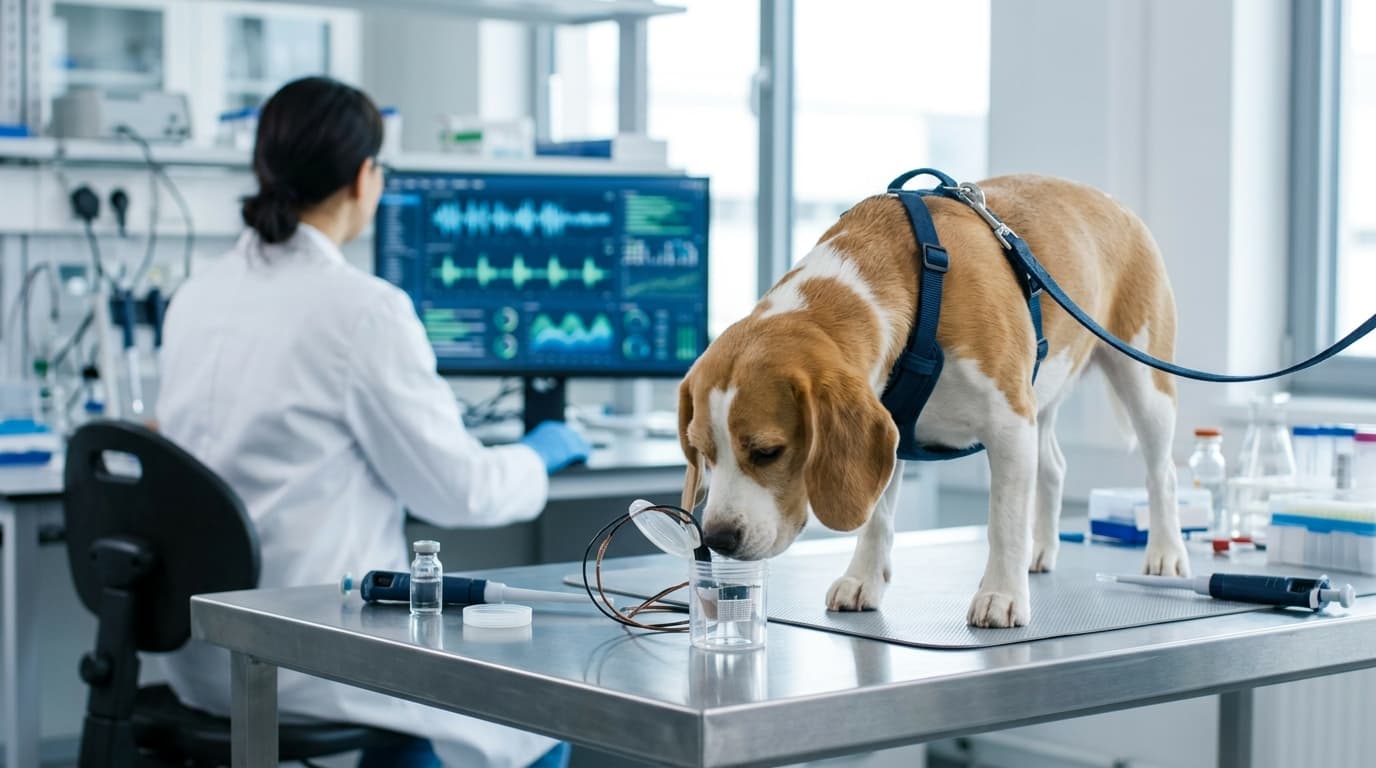
A startup based in Bengaluru, India, is testing a cancer screening method across the country that combines dogs' sense of smell with artificial intelligence to detect cancer early.
According to Bloomberg, the startup Dognosis is training dogs of several breeds, including beagles, labradors and Dutch shepherds, to detect traces of cancer in a person's breath. A patient breathes into a mask to provide a sample, and when a dog sniffs it, sensors and AI analyze the resulting movements, breathing patterns and behavioral changes to determine whether cancer is present. The process involves no imaging scans, blood tests or biopsies.
A Dog's Nose That Detects Cancer
Co-founder Akash Kulgod explained, "It is like finding a needle in a haystack of who in a population has an undiagnosed case of cancer." Dognosis raised $1.5 million (about KRW 2.1 billion) in a pre-seed round in 2024 and has since raised additional funding.
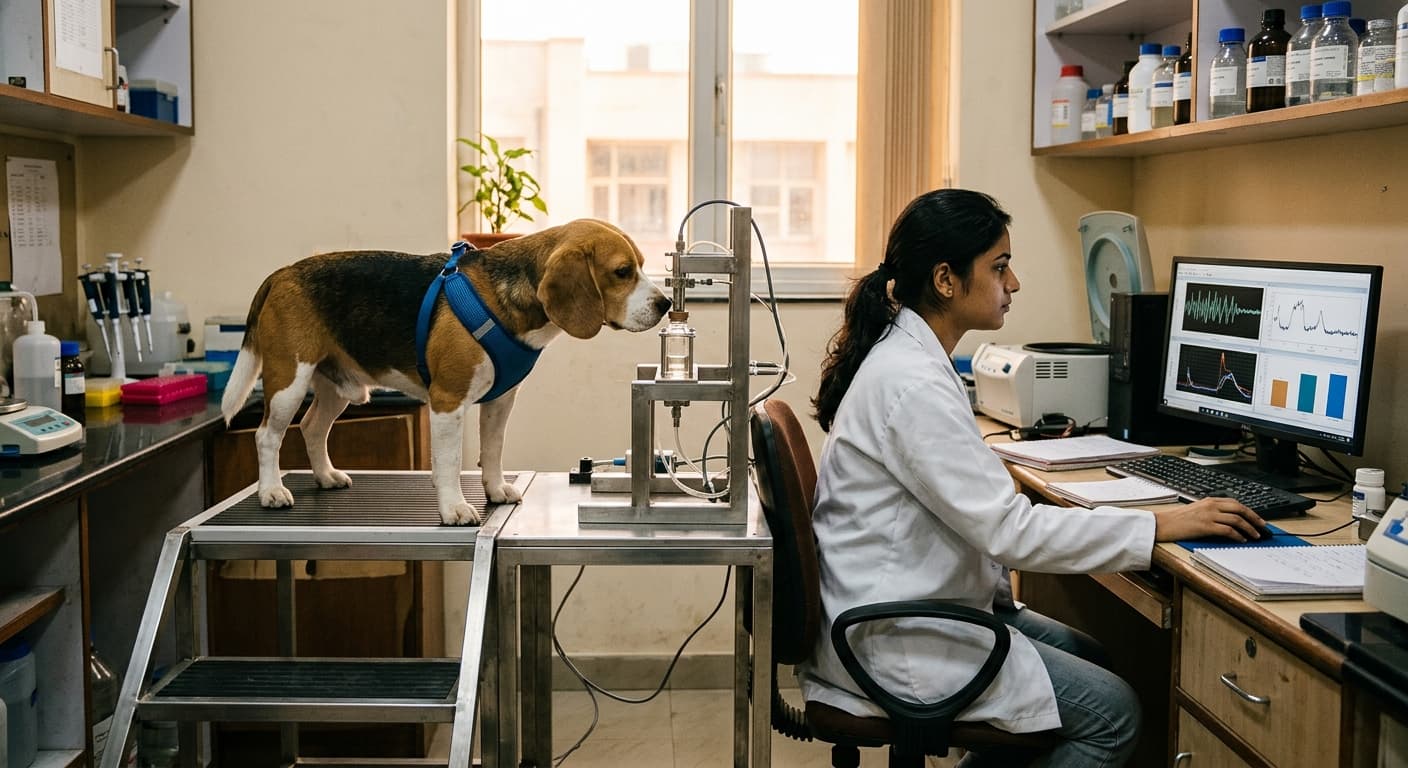
A Phase 2 clinical trial published in the Journal of Clinical Oncology reported that the test detected early-stage cancers across seven broad cancer groups and more than 20 cancer types, including breast cancer, with roughly 90% sensitivity. The company did not disclose how that figure breaks down by cancer type, including oral cancer. Kulgod added that the dogs have also been able to distinguish cancer types they were not specifically trained on.
Since April this year, Dognosis has been running a Phase 3 clinical trial recruiting about 10,000 people across 10 hospitals. It targets asymptomatic people at high risk and cancer survivors at risk of recurrence; those who test positive receive standard follow-up care such as imaging and biopsies.
India's Oral Cancer Screening Rate Stands at About 1%
Behind Dognosis's push to accelerate this technology is a gap in India's cancer screening. The International Agency for Research on Cancer (IARC) estimated that India recorded 1.5 million new cancer diagnoses and more than 900,000 deaths from cancer in 2024. Roughly one in ten Indians faces a risk of developing cancer before age 75.
By cancer type, cancers of the lip and oral cavity were the second most common after breast cancer. Even so, a 2019-2021 survey found that only 0.9% of women and 1.2% of men reported ever having been screened for oral cancer.
Dognosis said it plans to launch an affordable, at-home multi-cancer screening test in India next year. The company aims to expand its trained dog workforce to 30, cut testing turnaround time to one week, and handle up to 1 million tests a year; it is also considering entering the US market in late 2027 or early 2028. Other companies are pursuing similar approaches: New Jersey-based SpotitEarly has reported similar results but has not yet commercialized its test.
Pankaj Chaturvedi, deputy director of the Centre for Cancer Epidemiology at Tata Memorial Centre in Mumbai, said such emerging technologies "should strengthen, not replace, existing screening programs."
Korea's situation is different. Korea's National Cancer Screening Program covers six cancers: stomach, liver, colorectal, breast, cervical and lung cancer. Oral cancer is not included. According to the National Cancer Information Center at the National Cancer Center, 930 new cases of oral cancer were diagnosed in Korea in 2023, accounting for 0.3% of all cancers; the disease was 1.8 times more common in men than in women and occurred most frequently among people in their 60s.
Domestic research is also underway on using breath to detect oral conditions. A study on nanosensors that detect oral disease from exhaled breath found that the technology caught periodontitis but missed cavities. No domestic effort targeting cancer detection, like Dognosis's, has been reported yet.