
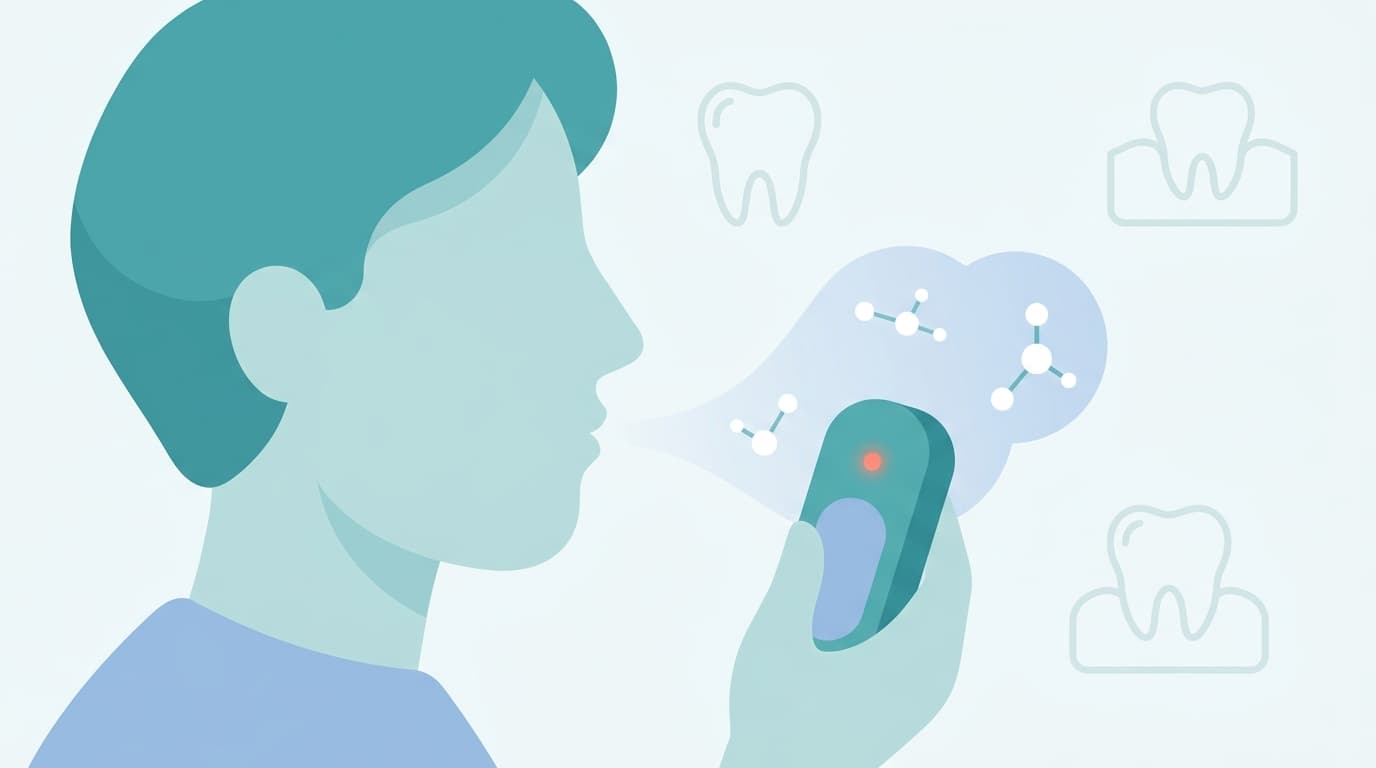
Can a single breath reveal dental disease? A joint research team from the Hebrew University of Jerusalem's Hadassah School of Dental Medicine and the Technion tested a nanosensor that reads chemicals in exhaled breath to distinguish cavities, gingivitis, periodontitis, and peri-implantitis. The results varied sharply by condition. The sensor accurately distinguished periodontitis and healthy implants, but it failed to reliably catch early-stage changes like cavities or gingivitis.
Disease Leaves Its Trace in Breath
Bacteria living in the mouth and inflamed gum tissue release chemicals as metabolic byproducts, and some of these enter the breath as volatile organic compounds, or VOCs (organic compounds that readily evaporate into the air). The research team collected breath samples from people with cavities, gingivitis, periodontitis, and peri-implantitis, as well as from healthy individuals, and used gas chromatography-mass spectrometry (GC-MS, a lab technique that separates and identifies compounds one by one) to see which compounds differed between conditions. One compound chemically separated periodontitis from cavities and gingivitis, and 13 compounds distinguished healthy implants from peri-implantitis. This means each disease leaves a distinct chemical fingerprint in the breath. Dentists currently diagnose periodontitis or cavities by probing gum pocket depth or examining teeth and bone individually on X-rays, but reading the breath aims to capture signals from multiple conditions at once, in a single exhale.
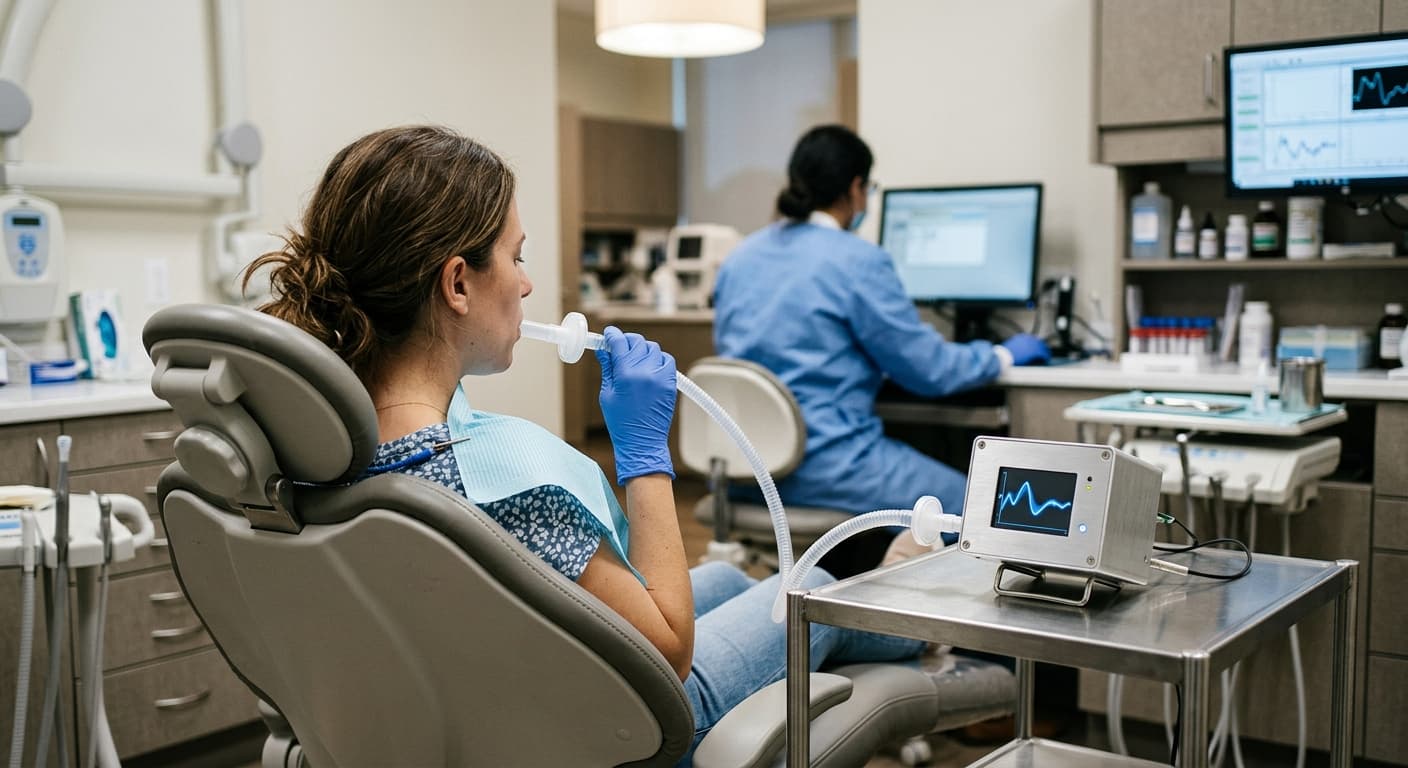
A Palm-Sized Sensor Reads That Fingerprint
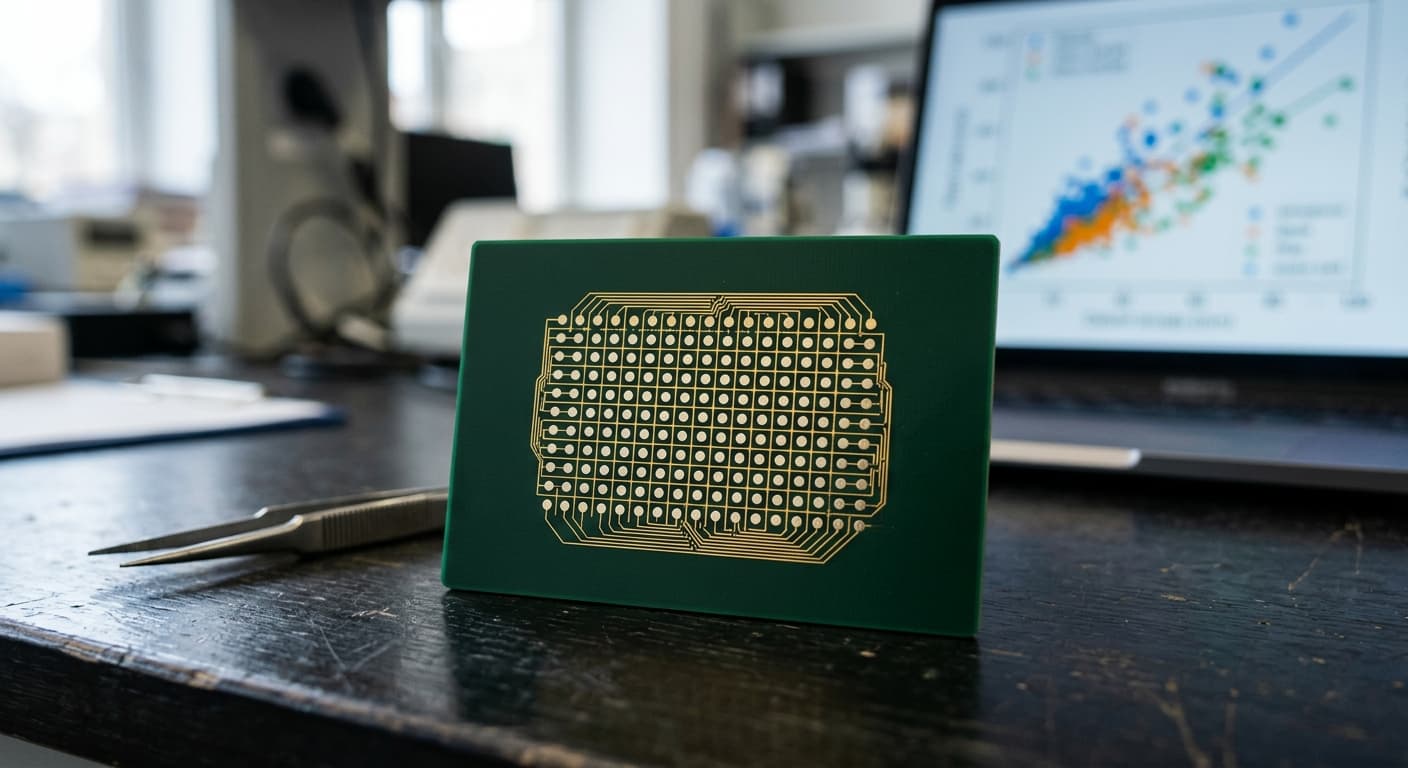
GC-MS is accurate, but the equipment is bulky and results take time, making it impractical for direct use in a dental clinic. Instead, the team also read the same breath samples with a nanosensor array made up of 40 types of nanomaterials, each producing a distinct electrical signal on contact with a chemical. Unlike GC-MS, which identifies individual compounds, the nanosensor takes in the combined signal from many compounds mixed together as a single pattern; machine learning is trained beforehand on these patterns by disease type, then judges which pattern a newly collected breath sample most resembles. When sensor signals were grouped by disease category, the differences between groups were also statistically distinct.
Catches Periodontitis, Misses Cavities
A machine learning model built from just 10 selected sensors achieved 69.6% accuracy on the training data and 58.8% on the validation data. The results varied widely by condition. The model correctly identified nearly all people with periodontitis and those with healthy implants in the validation data, but it missed anywhere from half to as many as three-quarters of cases involving earlier-stage or weaker-signal conditions like cavities, gingivitis, and peri-implantitis. Specificity, the rate of correctly ruling out disease in healthy people, was high, ranging from 71.4% to 100%, and the overall discrimination score (area under the ROC curve) was also high, at 0.88-0.97 out of 1. This means that while accuracy using a single threshold to sort multiple diseases at once was low, the ability to distinguish each disease separately was higher than that figure suggests.
Looking at Breath, Not Saliva
A method that reads oral bacterial genes to gauge disease stage already exists. A method that read bacterial genes in saliva to stage periodontitis sequenced the types and amounts of bacteria mixed in saliva to gauge how far periodontitis had progressed. This nanosensor instead reads, from breath, the chemical traces left behind by bacteria and inflamed tissue, rather than the bacteria or their genes themselves. Because it requires only an exhaled breath rather than a saliva sample, the test is simple, but it showed a clear limitation: its ability to discriminate drops in early-stage conditions where chemical quantities are low or signals overlap.
Both the chemical analysis and the sensor experiments confirmed that compounds in exhaled breath can serve as signals of oral disease. But reliably reading that signal with a portable device and machine learning alone was clearly achieved only for distinguishing periodontitis and implant status; the method still cannot reliably catch early-stage conditions like cavities, where the chemical signal is faint.