
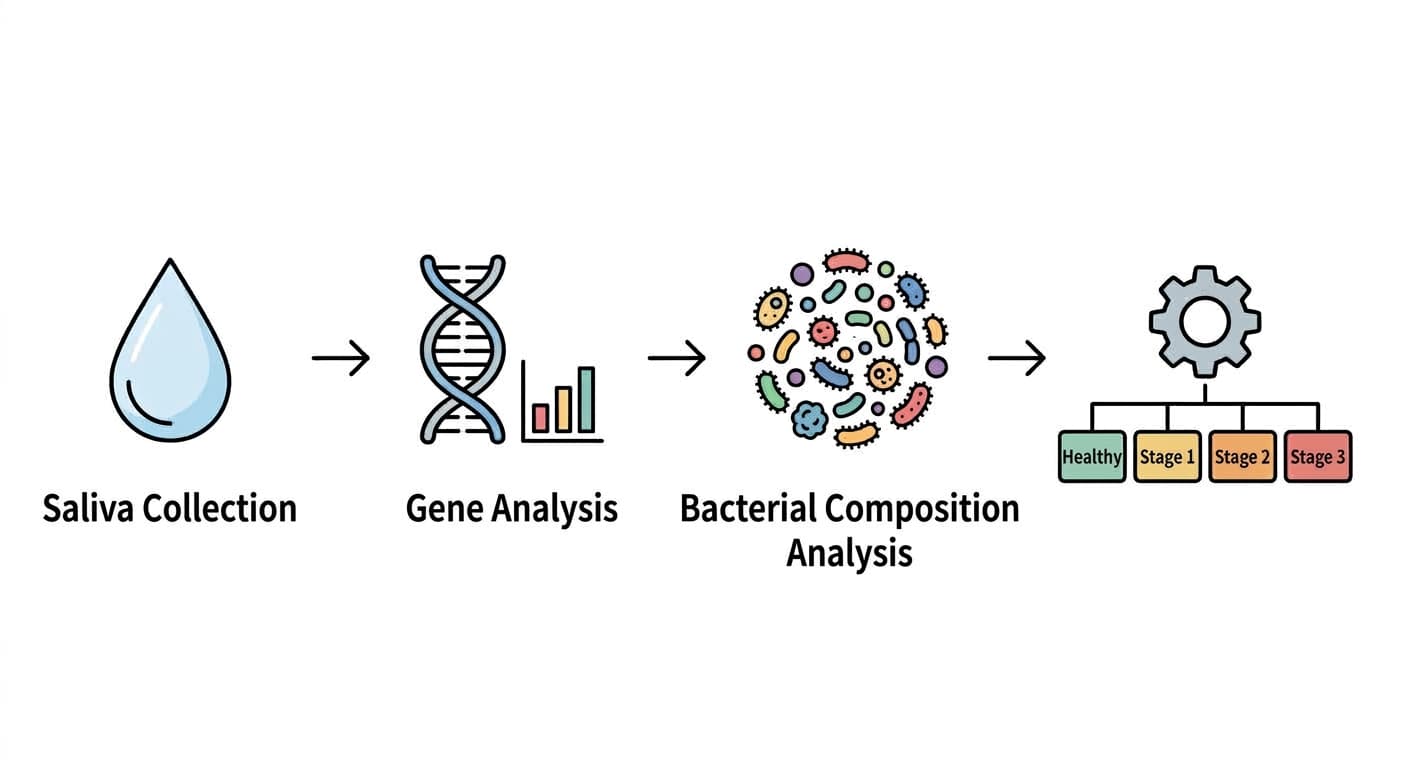
A Korean research team combining the Department of Periodontology at Pusan National University Dental Hospital, the College of Pharmacy at Jeonbuk National University, the genomic analysis company Helixco Inc., and the Ulsan National Institute of Science and Technology (UNIST) has built a diagnostic model that uses only the bacterial composition of a single drop of saliva to distinguish stages ranging from no periodontitis to Stages 1 through 3. By reading and comparing bacterial genes in the saliva of 250 healthy people and patients, the model reached 92% accuracy in determining whether periodontitis was present or absent using the ratios of just 20 bacterial species. However, distinguishing the earliest Stage 1 from healthy gums remained difficult.
Saliva Replaces the Probing and Measuring of Gums
Periodontitis has traditionally been diagnosed at the dentist's office by directly measuring periodontal pocket depth, checking how much the gums have receded, and observing whether bleeding occurs on probing. This approach requires a clinic visit, and results can vary somewhat depending on the examiner. A periodontitis self-test kit covered earlier in these pages worked by measuring the concentration of a gum-destroying enzyme (aMMP-8) dissolved in mouth rinse. This new study instead reads the types and ratios of bacteria in saliva itself, rather than an enzyme. Where an earlier test that predicts cavities from bacteria in an infant's saliva estimated whether a child around one year old would develop cavities, this study extends the scope of testing to adult periodontitis, and even to distinguishing its stage of progression.
Which Bacteria Are Used to Make the Distinction
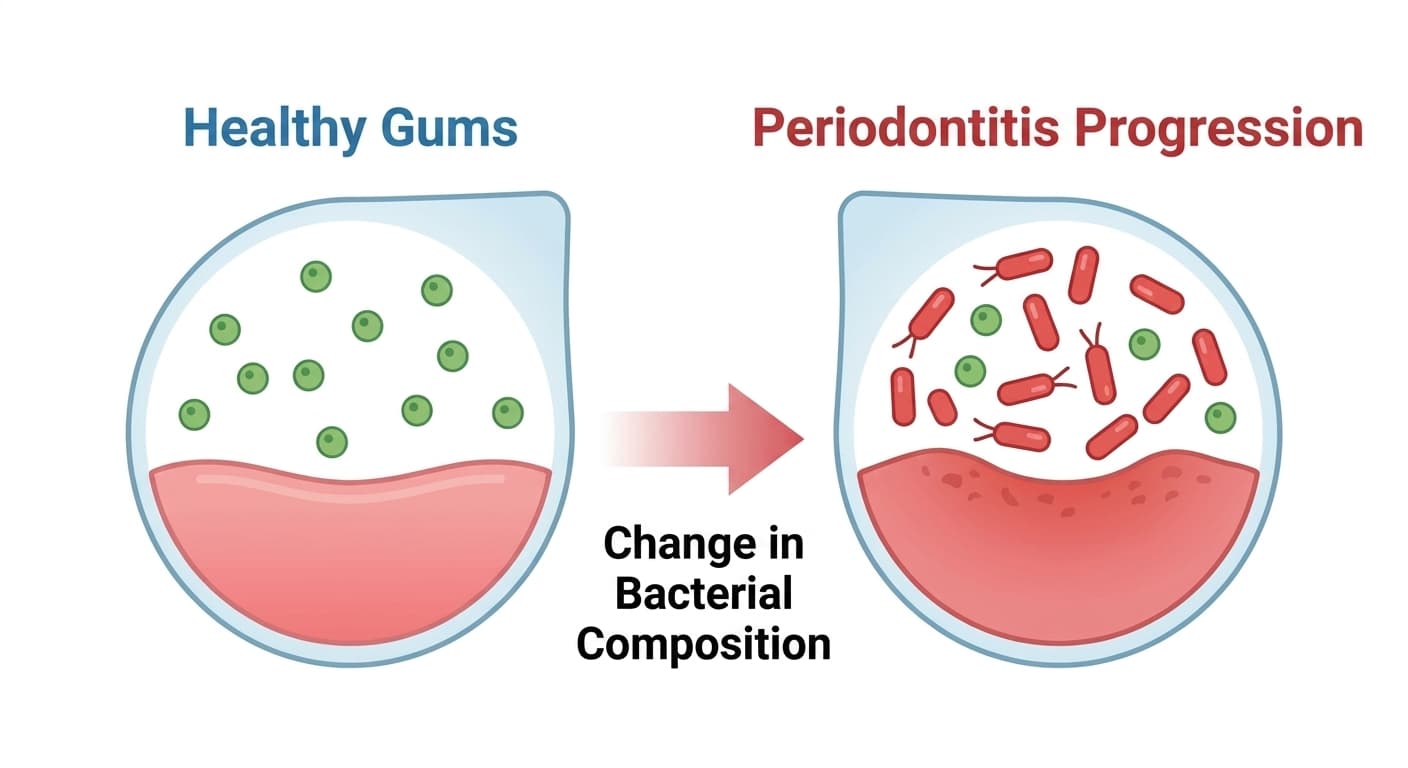
The research team collected saliva from 100 healthy people and 150 patients with Stage 1 through 3 periodontitis (50 per stage) who visited Pusan National University Dental Hospital, and read their bacterial genes (16S ribosomal RNA). Among 425 bacterial species identified, the team selected 20 species that clearly increased or decreased depending on the stage, and fed their ratios into an AI classification method called random forest. The 7 species that increased together across every diseased stage of the gums included Porphyromonas gingivalis and Tannerella forsythia, both considered representative pathogens of periodontitis. Conversely, 3 species, including Actinomyces, were abundant in healthy people and decreased as the disease progressed. Among these, the ratio of Actinomyces emerged as the single most important criterion for classification across all four classification methods. Most existing models looked only at the harmful bacteria that increase, and looking at the beneficial bacteria that decrease as well was credited with raising this model's specificity by more than 17 percentage points over previous models.
Accuracy Depended on What Was Being Distinguished
When simply distinguishing whether periodontitis was present or absent, accuracy (AUC) reached 92%: the model correctly identified 86 out of 100 people with the disease and correctly cleared 92 out of 100 healthy people. However, when trying to separately distinguish only the earliest Stage 1 from healthy gums, accuracy dropped to 73%. The model identified 79 out of 100 people with the disease, but also misclassified about 38 out of 100 healthy people as having the disease. In the four-way classification separating healthy, Stage 1, Stage 2, and Stage 3 all at once, balanced accuracy reached only 76.8%, and AUC ranged from 68% to 90% depending on the stage. This means that as periodontitis deepens, differences in bacterial composition become more distinct, while the boundary between Stage 1, when the disease has just begun, and healthy gums remains blurry.
Results Held Up With Data From Other Countries
The research team also tested the same model against bacterial data already published from Spain and Portugal. However, the Spanish data was built not from saliva but from plaque scraped from the gum crevice, so the sample type itself differed, and this lowered some metrics, including specificity. The team described this as a demanding test of how well the model held up when moving across different sample types. Because the model was built using Korean participants, and salivary bacterial composition can differ by ethnicity, further validation is needed in other population groups. This study collected saliva at a single point in time to distinguish the current stage, and did not predict the disease's activity over time or its future progression. Even so, the results point to a way of gauging both the presence of periodontitis and its approximate stage of progression from a single drop of saliva.