
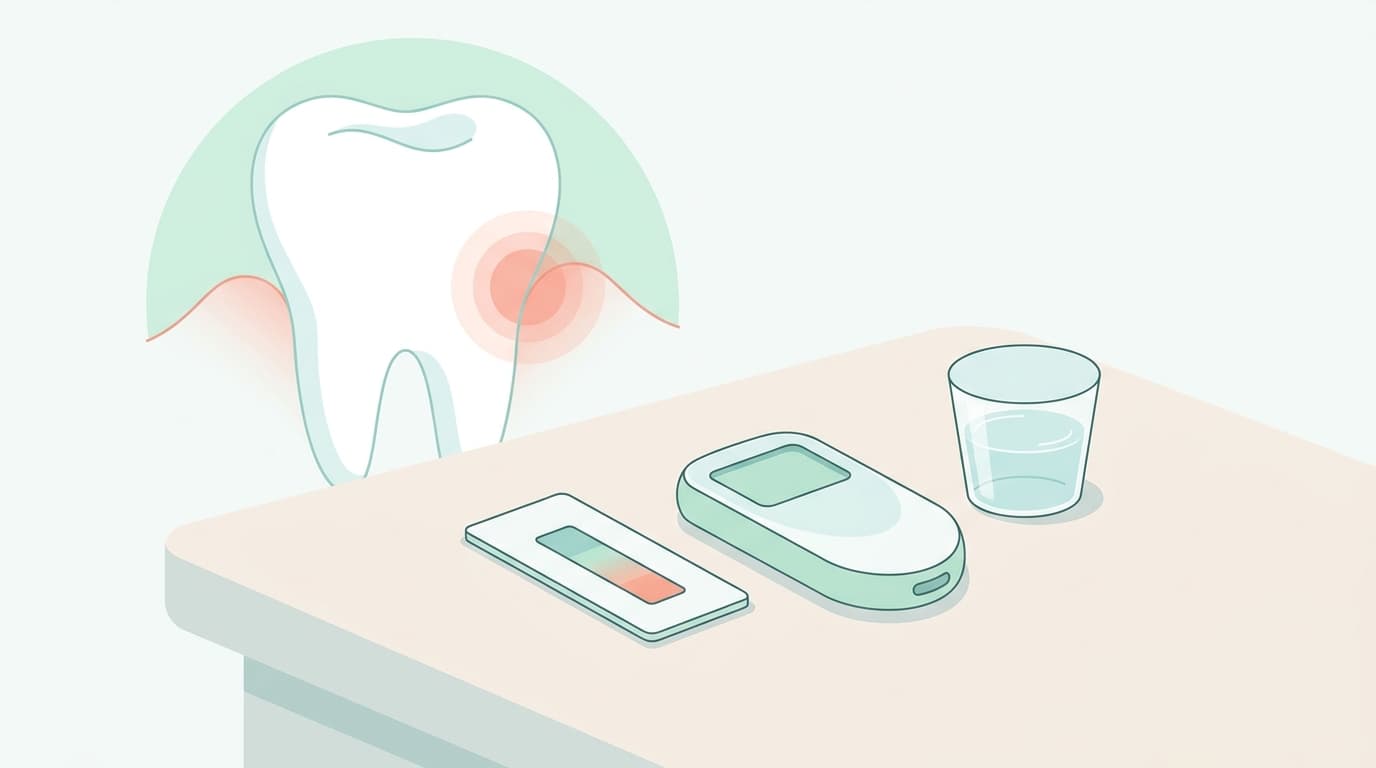
Until now, checking whether your gums bleed or your teeth are loosening has essentially meant one thing: a dentist probing each gum pocket one by one with a thin instrument to measure its depth. In recent years, several countries have started using a self-test kit that replaces this with something simpler: rinse your mouth with mouth rinse, spit it out, and within five minutes get a number showing how much gum tissue is actually being destroyed right now. The kit measures the concentration of an enzyme in saliva called aMMP-8 (active matrix metalloproteinase-8), and a string of recent papers has tested just how reliable this measurement really is.
It Looks at Tissue Being Destroyed Right Now, Not Bone Already Lost
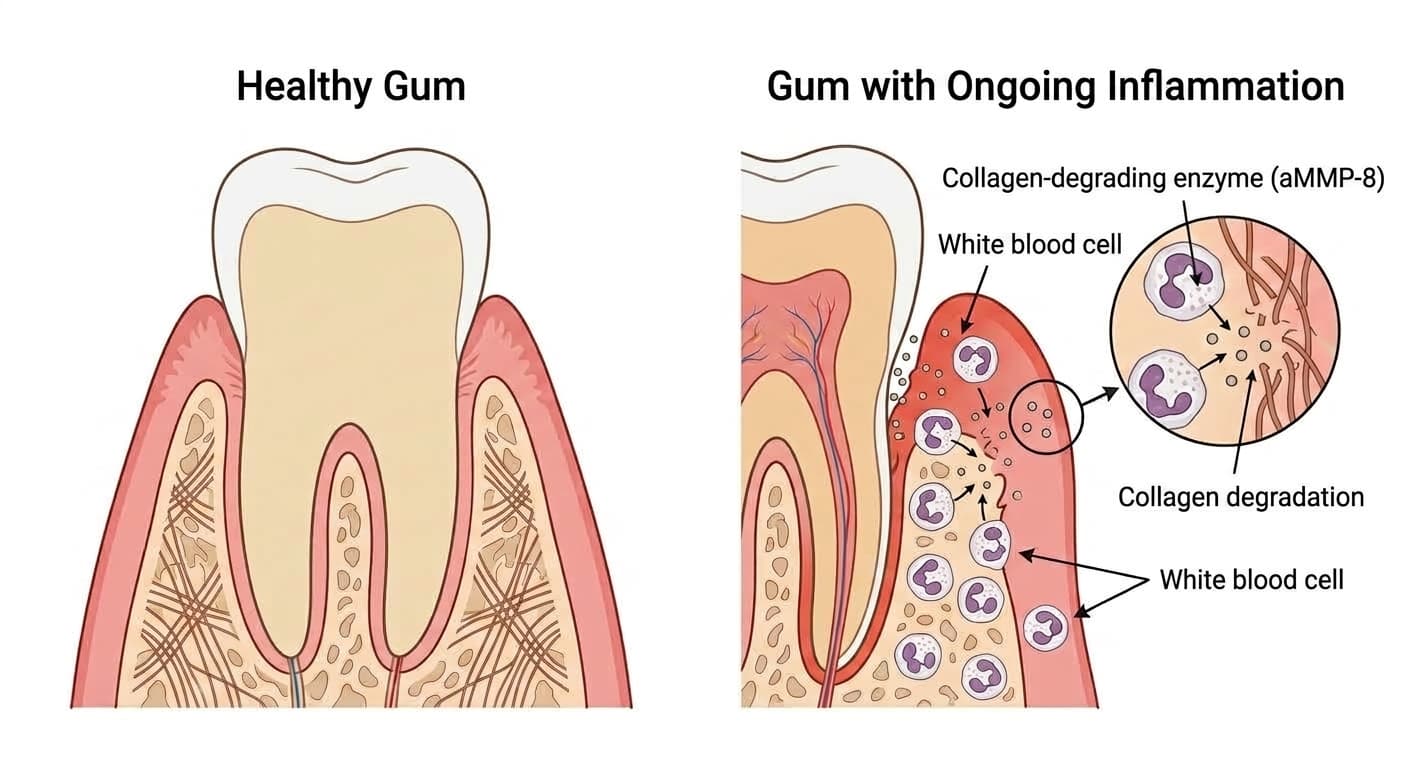
AI-assisted diagnosis that finds and marks bone loss on an X-ray works by spotting traces of bone that was already lost long ago, in a photograph. The aMMP-8 test works differently. This enzyme is released when white blood cells (neutrophils) that defend the body break down collagen fibers at sites of gum inflammation, a biological signal of tissue destruction happening at this very moment, something clinical examination alone cannot show. Researchers describe it as a marker that bridges clinical findings and the underlying biological process.
Rinse, Apply, and the Reader Does the Rest
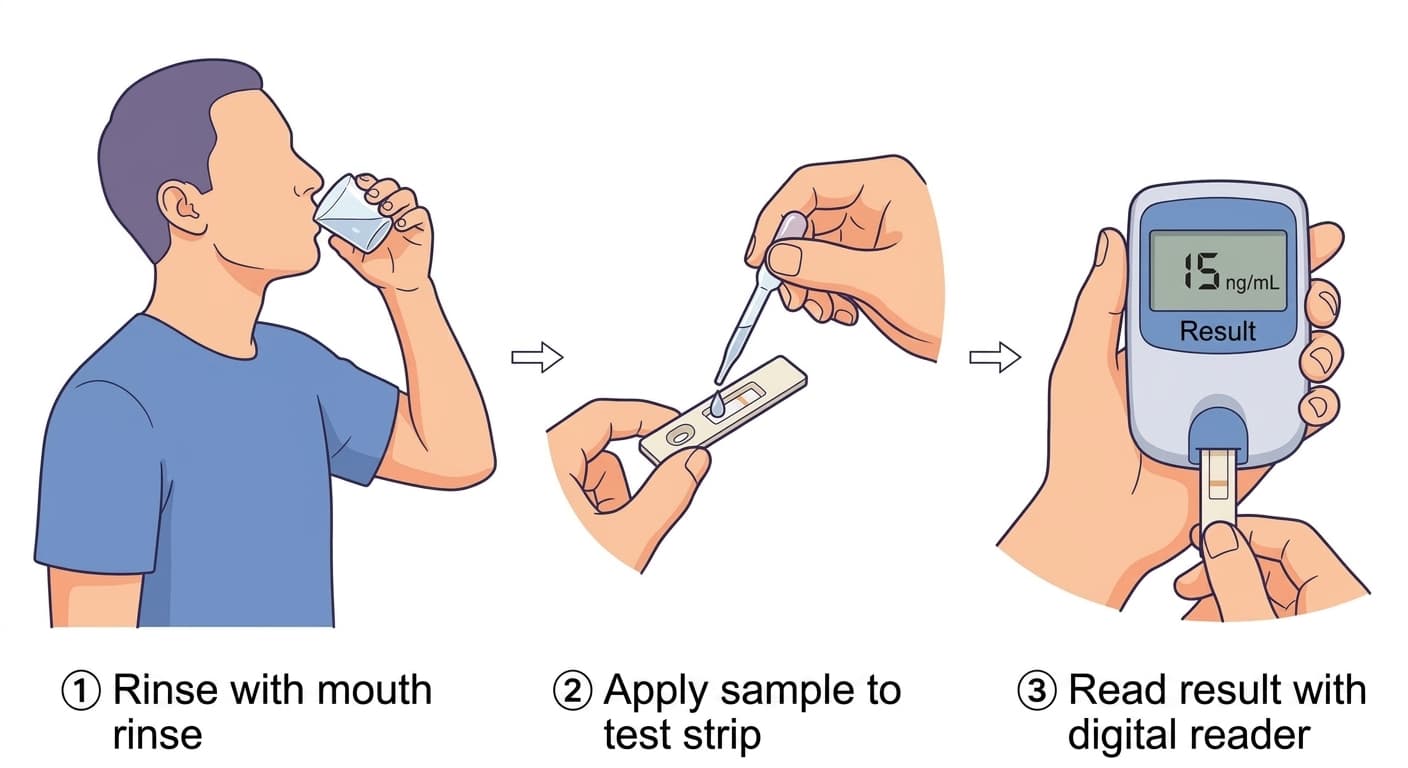
The procedure is simple. Rinse your mouth with mouth rinse, spit it out, then drop the liquid onto a test strip. An antibody binds to aMMP-8 and shows up as a line, which a digital reader called the Oralyzer reads out in nanograms per milliliter (ng/mL). A reading above 20 ng/mL counts as positive. Kits sold under names like PerioSafe are already commercially available in several countries, and a newer self-test model has emerged where you handle the strip yourself and enter the result into a smartphone app, which then factors in age, waist circumference, smoking status, and family history of diabetes to calculate periodontitis risk.
It Catches Advanced Disease but Misses Early Cases
An updated 2025 meta-analysis pooled data from eight studies covering 2,048 people to assess the test's accuracy. Of 100 people who actually had periodontitis, the test correctly flagged 59 as positive (sensitivity 0.59); of 100 people without periodontitis, it correctly cleared 82 as negative (specificity 0.82). The researchers rated this as moderate accuracy and stated plainly that, given how many cases it misses, it cannot replace existing dental exams. In studies that tested 384 and 390 people in Hong Kong and Shanghai respectively, the 20 ng/mL cutoff missed more than half of early-stage (Stage I-II) periodontitis. That's because the test strip measures the total amount of enzyme released across the whole mouth, making it insensitive to early lesions confined to just one localized site.
Adding a short questionnaire to the self-test result changes things, though. In a Chinese study of 566 people, the self-test alone had lower accuracy, but a model that combined it with questionnaire information such as smoking status and age raised the discriminative power for detecting advanced Stage III-IV periodontitis to 0.955 (close to 1), nearly matching the quantitative test measured with a professional reader.
Also Used to Track Whether Treatment Is Working
This test is used not only for diagnosis but also to track treatment progress. In a study comparing 27 patients with severe periodontitis before and after treatment, the enzyme-positive rate dropped from 85.2% before treatment to 18.5% one month after, and the people whose enzyme levels dropped the most also saw the biggest reductions in pocket depth. ImplantSafe, built on the same technology, is applied to tissue around dental implants as well. A study of people in Greece who had had implants for more than a year found that the group with peri-implantitis had aMMP-8 levels more than double those of the healthy group. Using this measurement to identify the disease correctly classified 81 out of 100 people with peri-implantitis and 74 out of 100 healthy people (sensitivity 81.25%, specificity 74.07%). In effect, this test can confirm whether tissue destruction has begun before assessing treatment outcomes of the kind covered in Laser Therapy for Peri-Implantitis.
The aMMP-8 self-test kit is a tool that chemically flags ongoing tissue destruction before visible symptoms appear. It's useful for screening out advanced periodontitis and helps track response to treatment, but it still misses nearly half of early, localized lesions. Rather than replacing hands-on periodontal probing, it's finding its place as a complementary tool that fills the gap in between.