
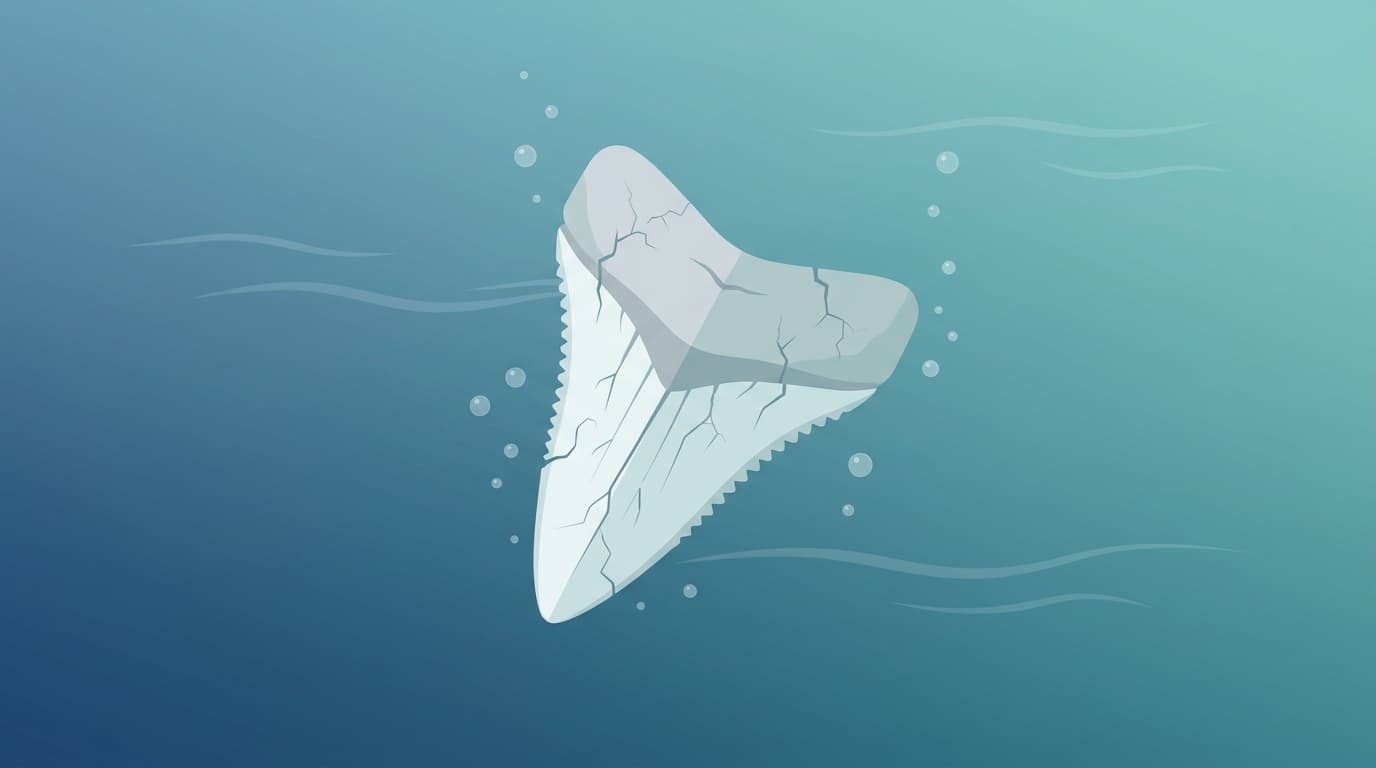
A team of German researchers soaked more than 600 shark teeth in seawater at a future level of ocean acidity and found that the surfaces cracked and the corrosion reached down to the root.
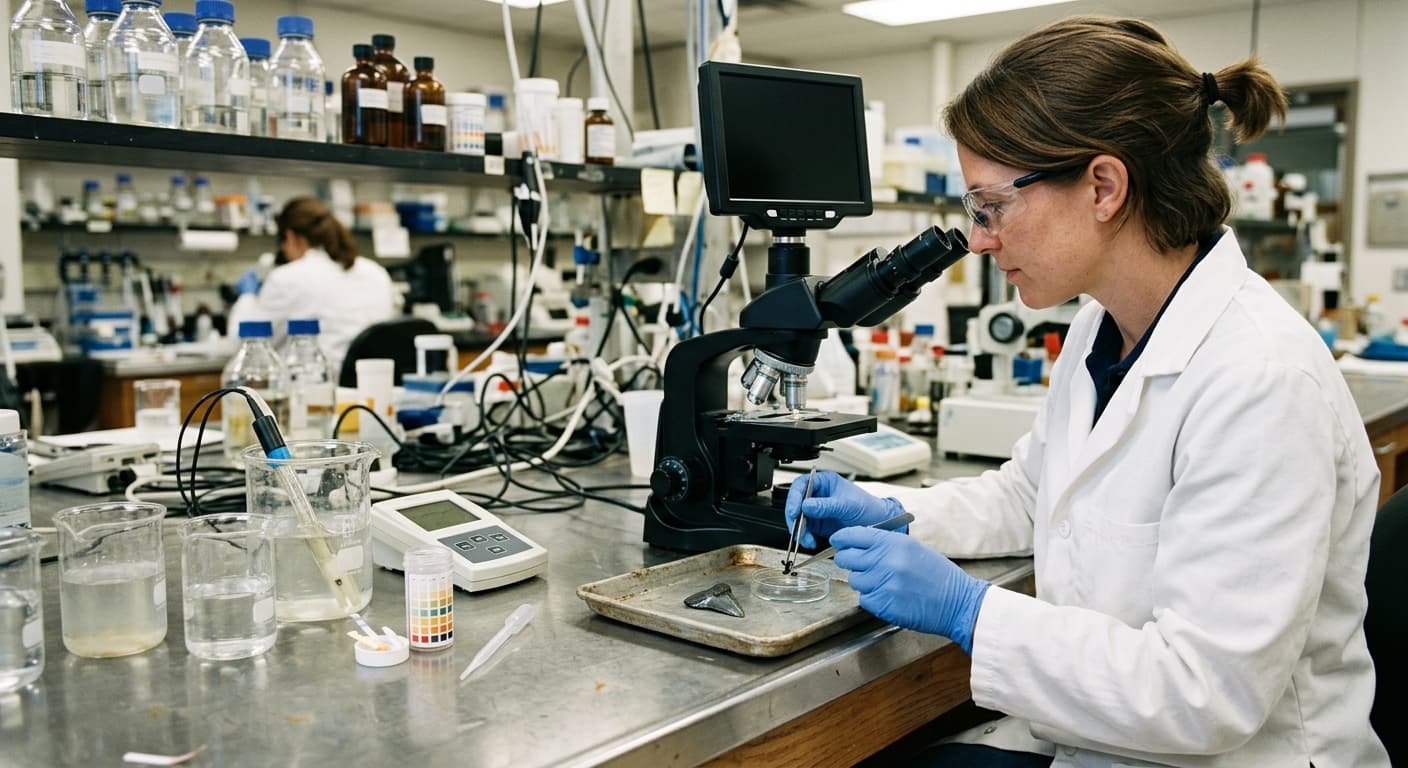
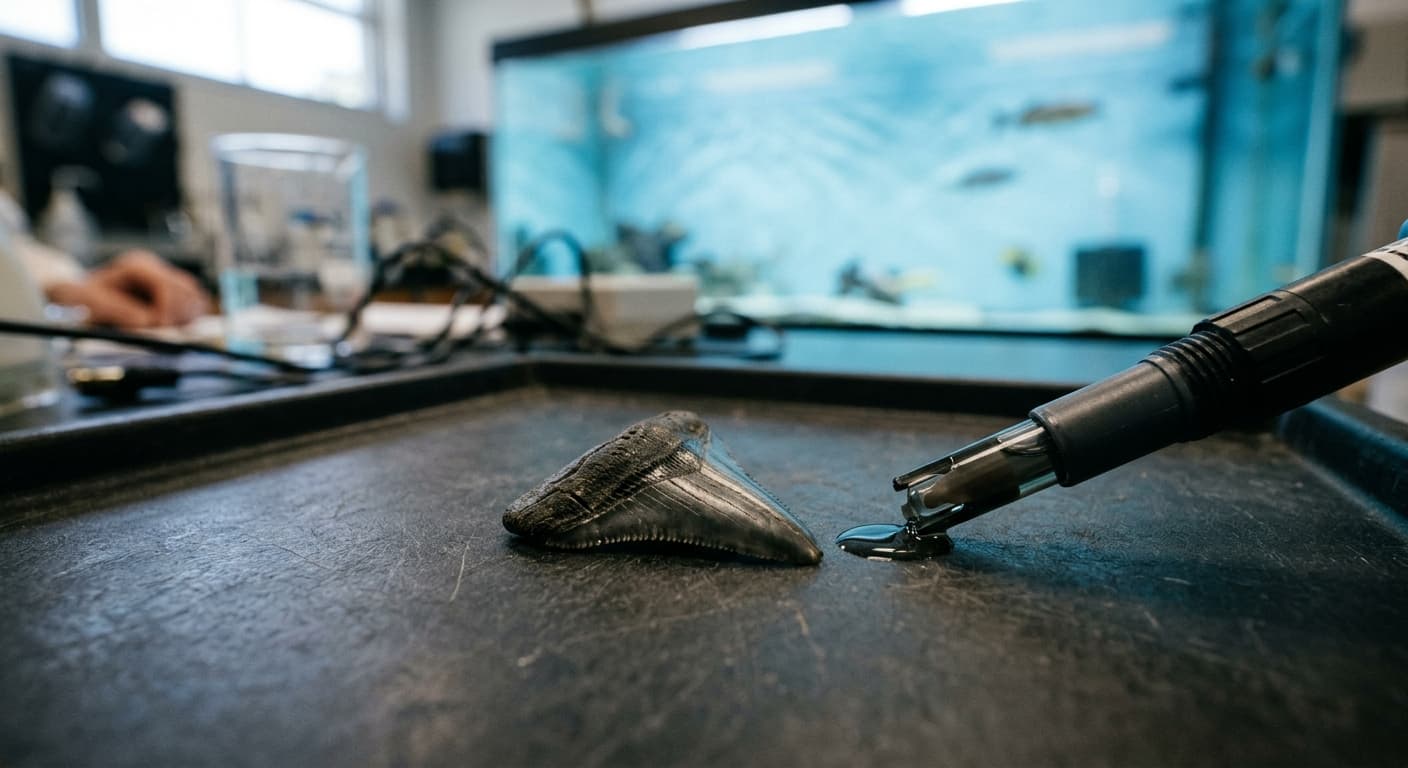
According to the Associated Press, researchers at Heinrich Heine University Düsseldorf in Germany collected teeth that blacktip reef sharks, which grow to about 1.7 meters long, had shed and discarded at an aquarium. They soaked some of the teeth in seawater at today's acidity and the rest in seawater at the acidity projected for the year 2300, then compared the changes. Ocean acidification is the rise in ocean acidity that occurs as seawater absorbs more carbon dioxide from the air, and the ocean is expected to become almost ten times more acidic than it is today by 2300. The findings were published in the marine science journal Frontiers in Marine Science.
What Changed
Teeth soaked in water at today's acidity kept a relatively smooth surface. Teeth soaked in water acidified to 2300 levels, however, developed cracks and holes on the surface and corrosion that reached down to the root. "We found there is a corrosion effect on sharks' teeth," said Maximilian Baum, who led the study. "Their whole ecological success in the ocean as the rulers of other populations could be in danger."
Why the Teeth Matter
Sharks go through thousands of teeth over a lifetime, replacing them as they go. Their sharp teeth have let them regulate the populations of other fish species and marine mammals, keeping sharks at the top of the ocean food chain. But the researchers explained that as the ocean becomes more acidic, the mineral structure that makes up the teeth itself weakens, which could shake both sharks' hunting ability and their ecological standing. The International Union for Conservation of Nature (IUCN) already classifies more than a third of the world's shark species as threatened with extinction.
Are Sharks Really at Risk?
Not every expert reached the same conclusion. Nick Whitney, a senior scientist at the New England Aquarium who was not involved in the study, pointed out that because shark teeth develop inside mouth tissue, they are not immediately exposed to changes in ocean acidity. "They've been around for 400 million years and have evolved and adapted to all kinds of changing conditions," he said. Gavin Naylor, director of the Florida Museum of Natural History, likewise maintained that overfishing remains the biggest threat to sharks. Still, both researchers acknowledged that ocean acidification could also harm shell formation in oysters and clams and weaken fish scales.
Blacktip reef sharks, the species examined in this study, are not found in Korean waters, and there is no separate domestic research on shark tooth corrosion. Still, the corrosion mechanism the researchers described, in which acid dissolves the mineral content of teeth, applies just as directly to human teeth. Damage in which carbonated drinks or stomach acid reflux dissolve enamel and dentin is distinguished from cavities in dentistry and called dental erosion. Whether in the ocean or inside the mouth, contact with acid starts by dissolving the very minerals that give teeth their hardness.