Overview
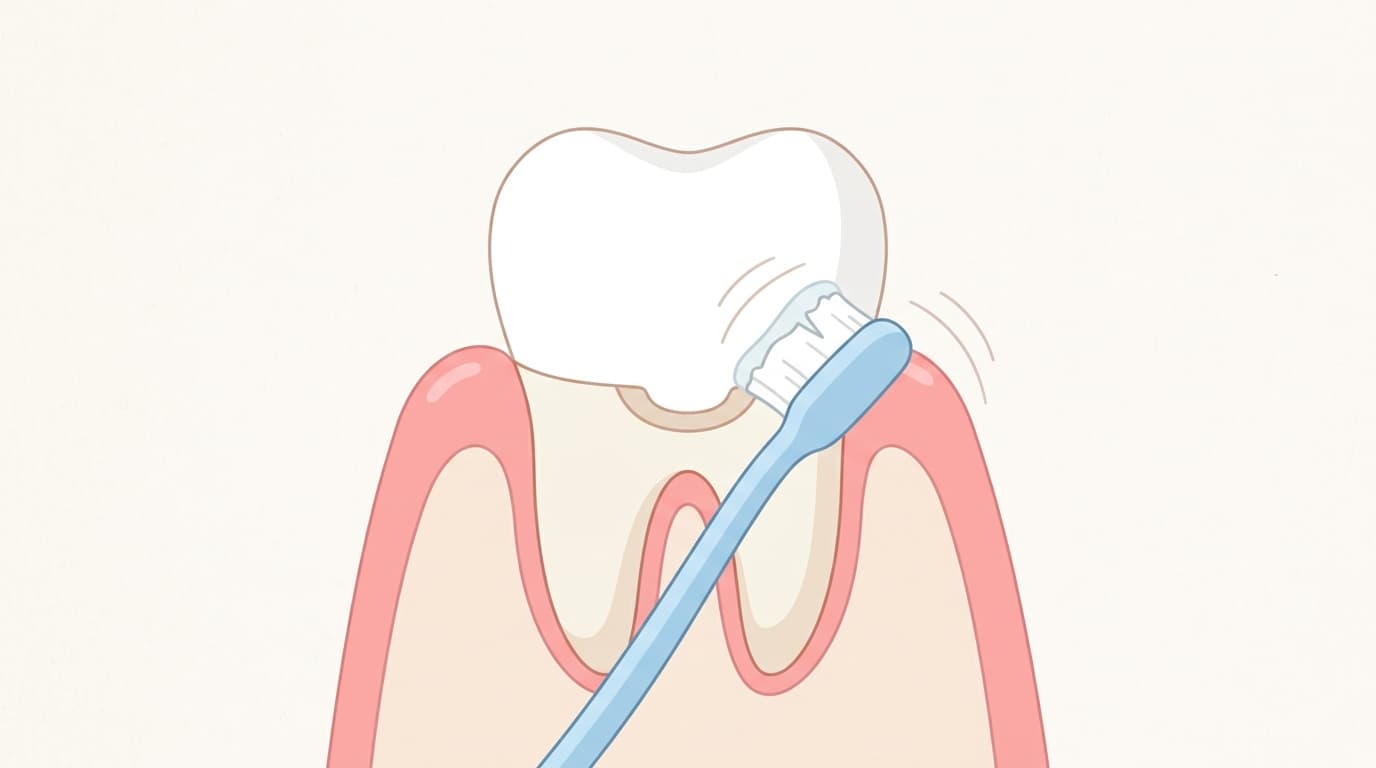
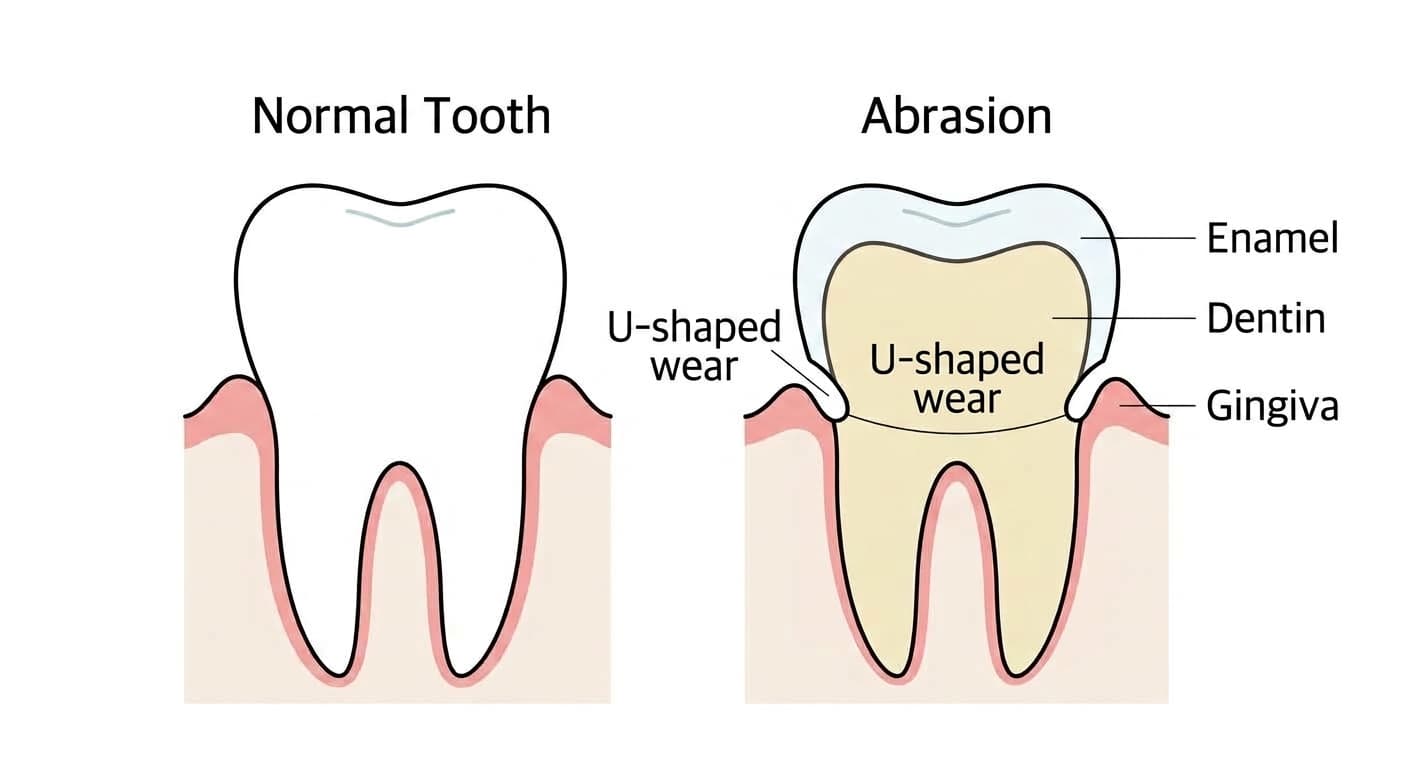
Abrasion is the gradual wearing away of a tooth's outer surface caused by repeated friction with an external object, such as a toothbrush or a toothpick. Unlike caries, in which acids produced by bacteria dissolve the tooth, abrasion is a non-carious lesion caused purely by physical friction. Its most common form is a smooth U-shaped notch at the cervical area, where the tooth meets the gum, that is wider than it is deep, though the shape alone is not enough to confirm the diagnosis.
Causes
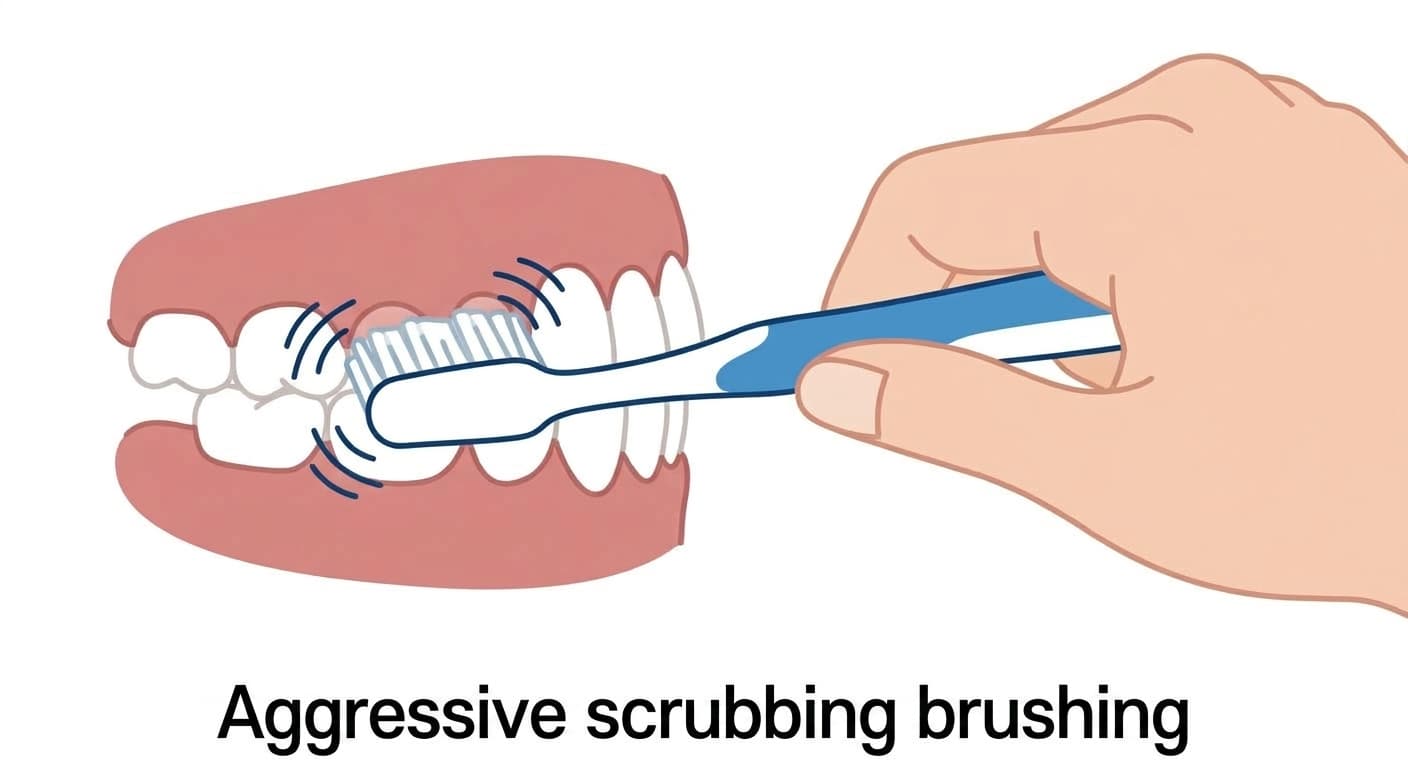
The most common cause is improper toothbrushing. Pressing the bristles hard and scrubbing side to side, combined with long-term use of a highly abrasive toothpaste, concentrates wear on one side of the cervical area. Repeatedly scraping the same spot with a toothpick, fingernail, or ring can also cause it. Tooth wear from food during chewing is a separate process, handled apart from abrasion. In practice, brushing-related abrasion often overlaps with attrition (tooth-to-tooth friction from grinding), erosion (from acidic foods and stomach acid), and abfraction (wedge-shaped cervical defects from abnormal chewing forces), so a single cause often cannot fully explain a lesion.
Symptoms
A U-shaped notch is visible at the neck of the tooth, or feels like a smooth indentation to the touch. If the notch exposes the underlying dentin, cold water, cold air, or sweet foods can trigger brief sensitivity. However, when the damage progresses slowly, it's also common to see only a visible change with no sensitivity at all. Rarely, if left untreated for a long time and the defect deepens, pain when chewing can occur.
Diagnosis
The dentist first visually examines the location and shape of the notch. A wide, shallow U-shape suggests abrasion; a narrow, sharp wedge shape suggests abfraction; and a smooth, saucer-like shape suggests erosion. However, because multiple causes often act together on a single tooth and produce a mixed shape, the appearance alone is not used to settle on a single cause. The dentist also asks about brushing habits, favorite foods, and whether the patient grinds their teeth, and if sensitivity is present, checks how the tooth responds to cold stimuli. X-rays may also be taken to check for overlapping caries.
Treatment & Where to Go
If the notch is shallow and symptom-free, the first step is to change the brushing habit and switch to a less abrasive toothpaste while monitoring it. If sensitivity is present, a toothpaste containing remineralizing and desensitizing ingredients can be tried first. If the sensitivity continues, the defect progresses, there's a risk of food impaction or weakened tooth structure, or it becomes a significant aesthetic concern, the notch is filled with a resin or glass ionomer (GI) restoration. If the gum has also receded and a significant length of root is exposed, periodontal surgery to cover the gum may be considered as well. Rarely, if the defect deepens enough to irritate the pulp, it can progress to pulpitis, which may require root canal treatment. This care is handled by a dentist who performs tooth restoration, and referral to periodontics may be needed.
Outlook & Precautions
If the underlying habit is left unaddressed, the abrasion will continue to progress, exposing more dentin and worsening sensitivity. Even after restorative treatment, if the habit of brushing too hard persists, the area around the filling material can wear again or the material can come loose, so it's important to maintain a brushing habit that uses a soft-bristled brush with moderate pressure. See a dentist if sensitivity suddenly worsens or if throbbing pain continues even without any stimulus.