
Overview and Causes
Changes in the gum margin that expose the root
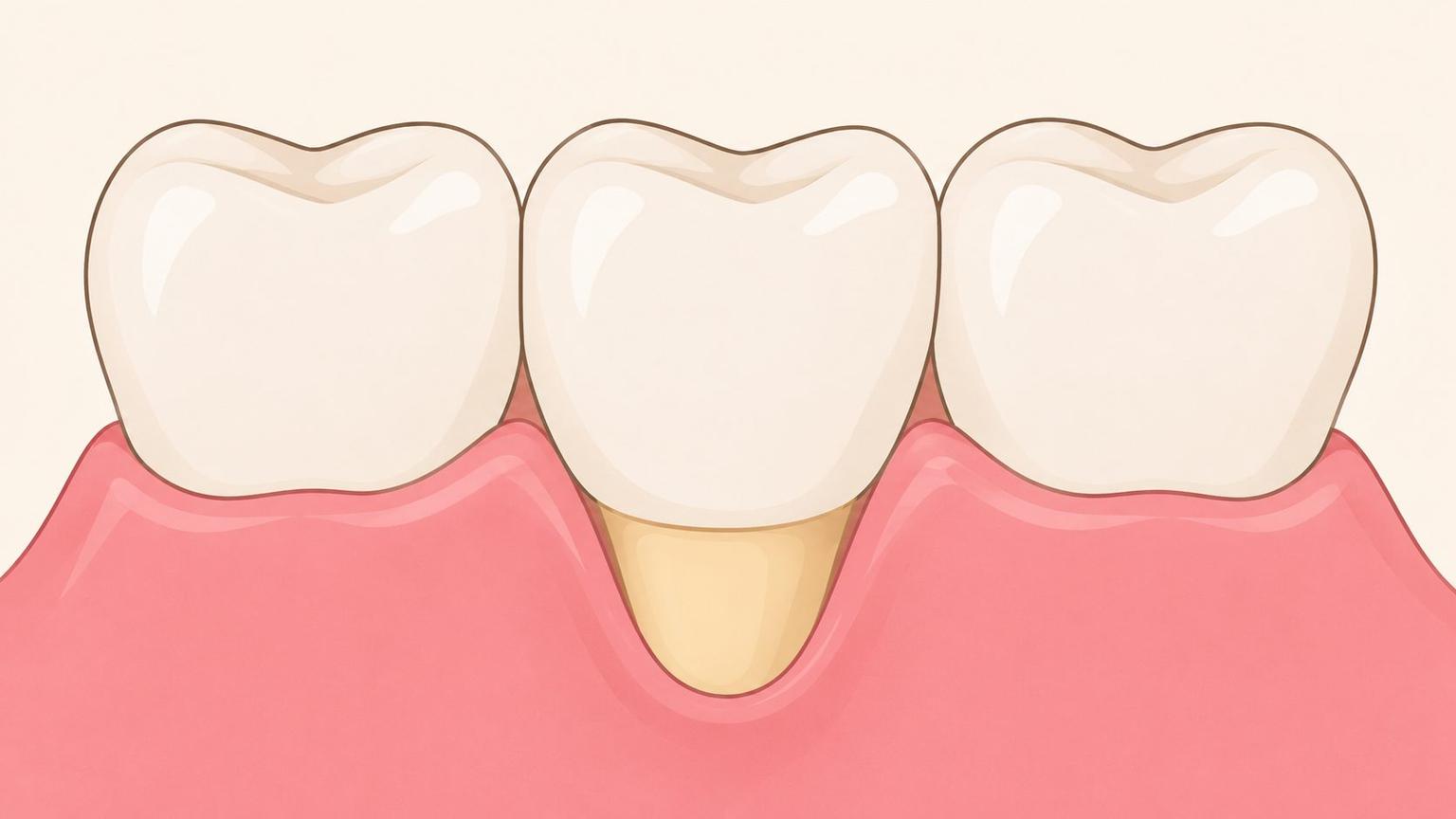
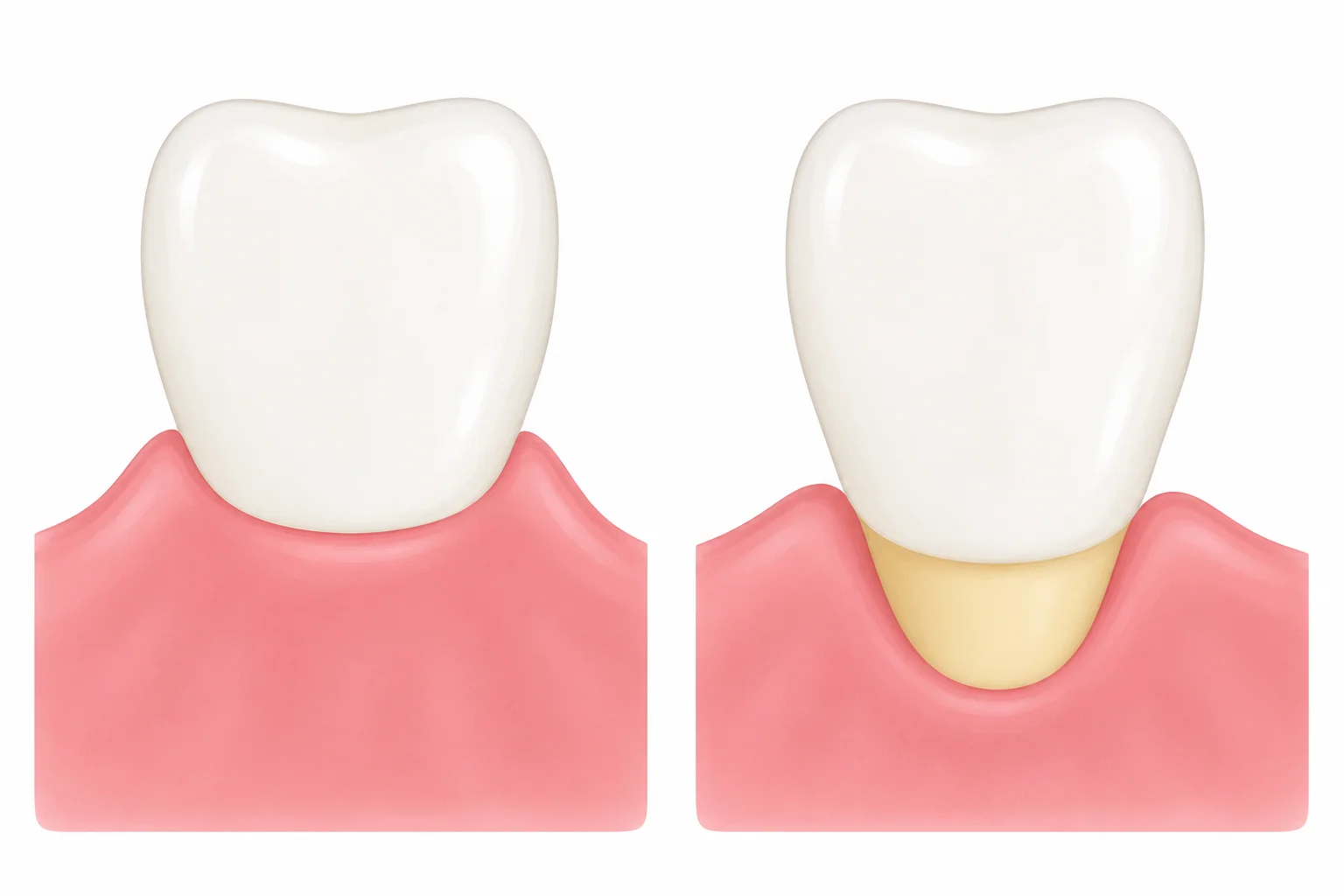
Gum recession, also called gingival recession, occurs when the gum margin moves toward the root beyond the junction between the crown and root of the tooth, exposing the root surface. When gums appear to be receding, both brushing habits and the condition of the periodontal tissues are assessed.
Age and other causes and risk factors
Gum recession becomes more common with age, but aging alone does not explain it. Periodontitis can damage the tissues supporting the teeth and cause the gums to recede. Recession is more likely when the gums and the bone on the outer side of a tooth are thin, or when a tooth is positioned outward. Brushing habits that injure the gums also need to be checked. During orthodontic treatment, the risk can vary depending on the direction of tooth movement and the thickness of the surrounding tissues. The possible role of the frenum, the tissue connecting the lip and gums, is also assessed if it pulls on the gums or interferes with cleaning.
Diagnosis and Treatment Path
Distinguishing recession depth from inflammation
The dentist examines brushing habits and tooth position and measures the distance from the junction between the crown and root to the gumline. The depth of the spaces between the teeth and gums and the extent of loss of the tissues supporting the teeth are assessed. X-rays may also be used to evaluate the bone when needed. Recession alone does not mean inflammation is currently active.
Sensitivity care and surgery to cover exposed roots
Excessive brushing and plaque control are reviewed, and any accompanying inflammation is assessed. For sensitivity, options include desensitizing toothpaste or dental treatment to reduce the transmission of stimuli through exposed dentin.
If sensitivity or inflammation persists, recession progresses, or appearance is a significant concern, a dentist who provides periodontal care may consider root coverage surgery, which covers exposed roots with gum tissue. Subepithelial connective tissue grafting uses connective tissue taken from a site such as the palate to cover the exposed area. Whether surgery can provide complete coverage depends on the extent of recession, tissue loss between the teeth, and tooth position.
Symptoms and Precautions
A receding gumline and brief sensitivity
Exposed roots may make teeth appear longer or cause concerns about appearance. Dentin hypersensitivity may also develop, causing brief, sharp pain in response to cold water or contact with a toothbrush. However, not all sensitivity should be attributed to gum recession. If pain lingers after the stimulus is removed or occurs when chewing, other causes such as tooth decay, a cracked tooth, or problems with the tissues inside the tooth need to be assessed. Exposed roots are also vulnerable to decay. Reduced sensitivity does not mean the gums have returned to their previous position or that the risk of root decay has returned to normal.
Monitoring progression and keeping teeth clean
If the gums continue to recede or sensitivity persists, a dentist who provides periodontal care can assess whether the recession is progressing and whether treatment is needed. Brush twice daily with fluoride toothpaste and keep sensitive areas clean while minimizing irritation, rather than avoiding them altogether. Fluoride toothpaste helps prevent decay. For sensitivity relief, toothpaste containing desensitizing ingredients such as stannous fluoride may be considered. Avoid forceful horizontal scrubbing, and choose cleaning tools that fit the spaces between your teeth. Where exposed roots have left wider spaces, floss alone may not clean adequately, and an interdental brush may be more suitable. Choose an interdental brush that fits the space, and use floss in narrow spaces where the brush cannot easily pass. Check how to use floss correctly as well to avoid injuring the gums.