
Overview
A brown spot on a tooth refers to a condition in which part of the tooth becomes noticeably darker than the surrounding area. The likely cause differs depending on whether the spot is confined to a small part of the tooth surface or the entire tooth has darkened overall. This article distinguishes between the two and guides you to related information.
Causes
If a localized brown or black spot appears on a chewing surface or between the teeth, and it feels rough or slightly sunken to the touch, this is often due to damage to the tooth's outer surface. This happens because acid produced by bacteria draws minerals out of the tooth surface, causing that area to become darkly stained. You can find more detail in the article on dental caries (cavities).
If, rather than a spot, an entire tooth appears darkened to gray, brown, or in severe cases dark blue-gray, this may indicate a problem in the nerve tissue inside the tooth. When the nerve dies, breakdown products from the tissue seep into the dentin, causing the color of the whole tooth to darken. You can find more detail in the article on pulp necrosis (nerve death).
Check Yourself
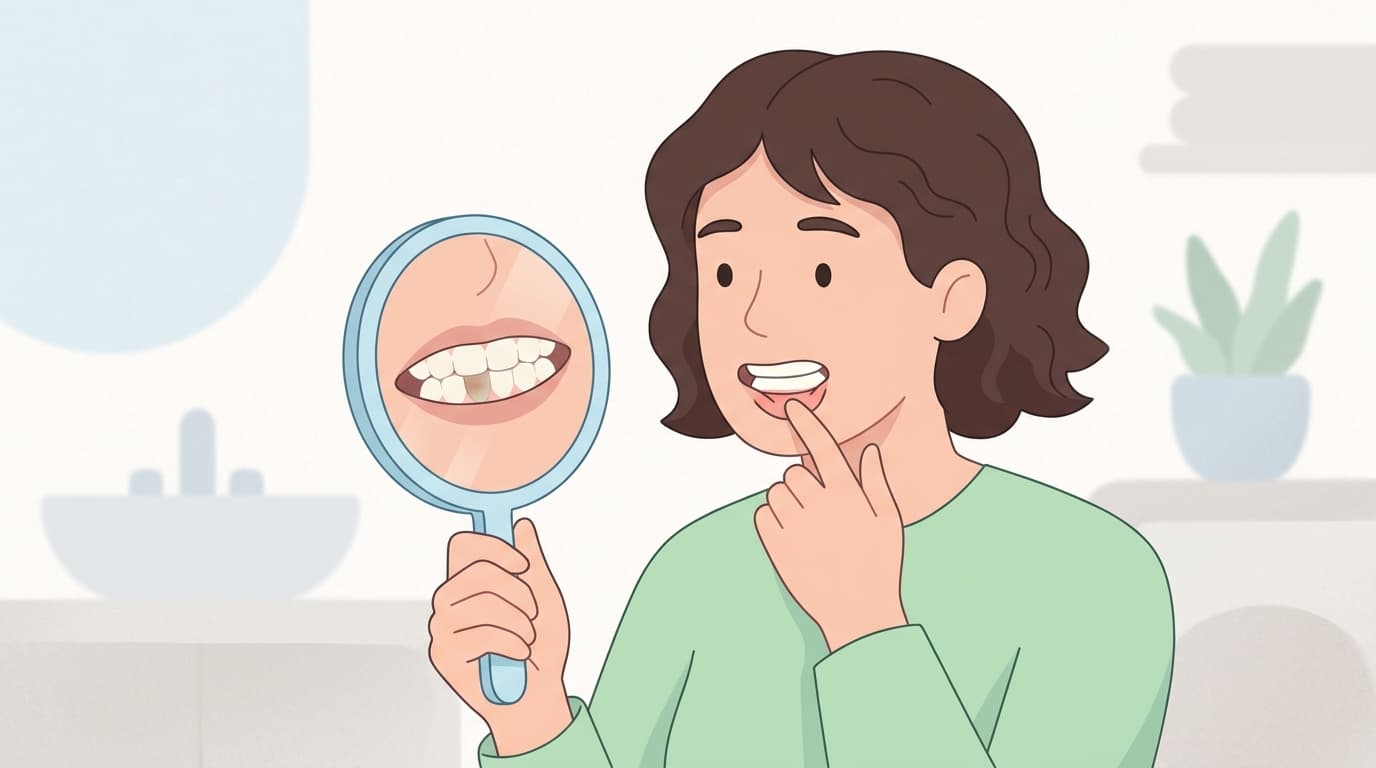
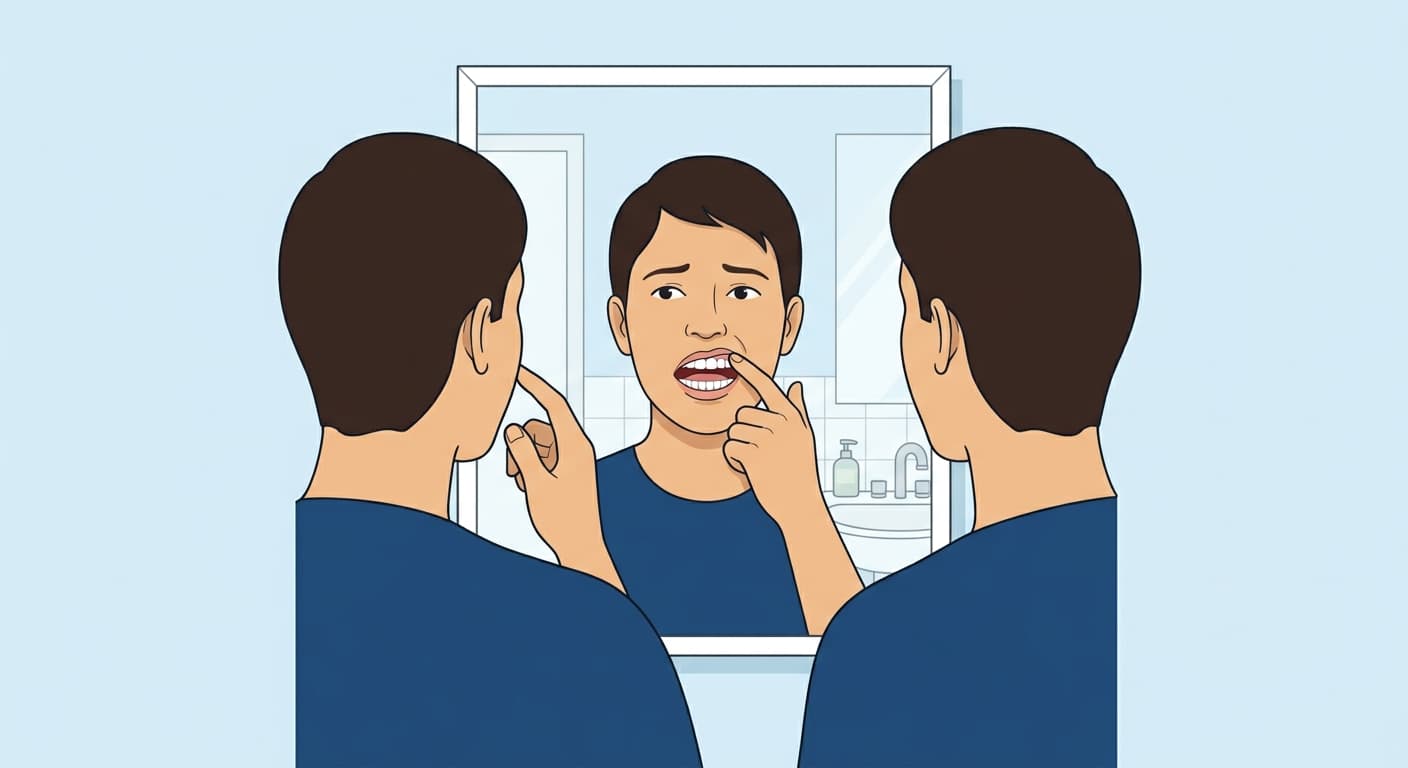
First, check the extent of the spot in a mirror. If the spot is confined to part of the tooth surface and feels uneven when touched with a fingernail or tongue, a surface-level problem is worth considering first. On the other hand, if rather than a spot, an entire tooth looks darker overall than the teeth next to it, the color change is likely inside the tooth rather than on the surface. Also think back to whether you've felt any pain, or whether that tooth was ever struck or injured in the past.
When to See a Dentist
If the spot is small and doesn't change over time, it may be fine to have it checked at your regular dental checkup. However, if the spot keeps spreading or an area that feels like a new hole develops, you should see a dentist without delay. If the entire tooth has changed color, it is best to see a dentist soon, even without pain, since the condition of the nerve needs to be checked.
Treatment & Where to Go
Treatment depends on the cause. If a surface spot is due to a cavity, treatment involves trimming away the damaged area and filling it; if discoloration of the entire tooth is due to a nerve problem, root canal treatment may be needed. Both cases are treated by a dentist who treats cavities and performs root canal treatment, and if nerve treatment is needed, this may lead to root canal treatment.
Outlook & Precautions
If left untreated, a spot may progress deeper into the tooth or darken further, depending on the cause. At home, keep up your usual care such as brushing and flossing while observing the spot for any changes, and avoid trying to remove it on your own with whitening products or strongly abrasive products before seeing a dentist. It is safest to have the diagnosis confirmed in person at a dental clinic.