
Overview
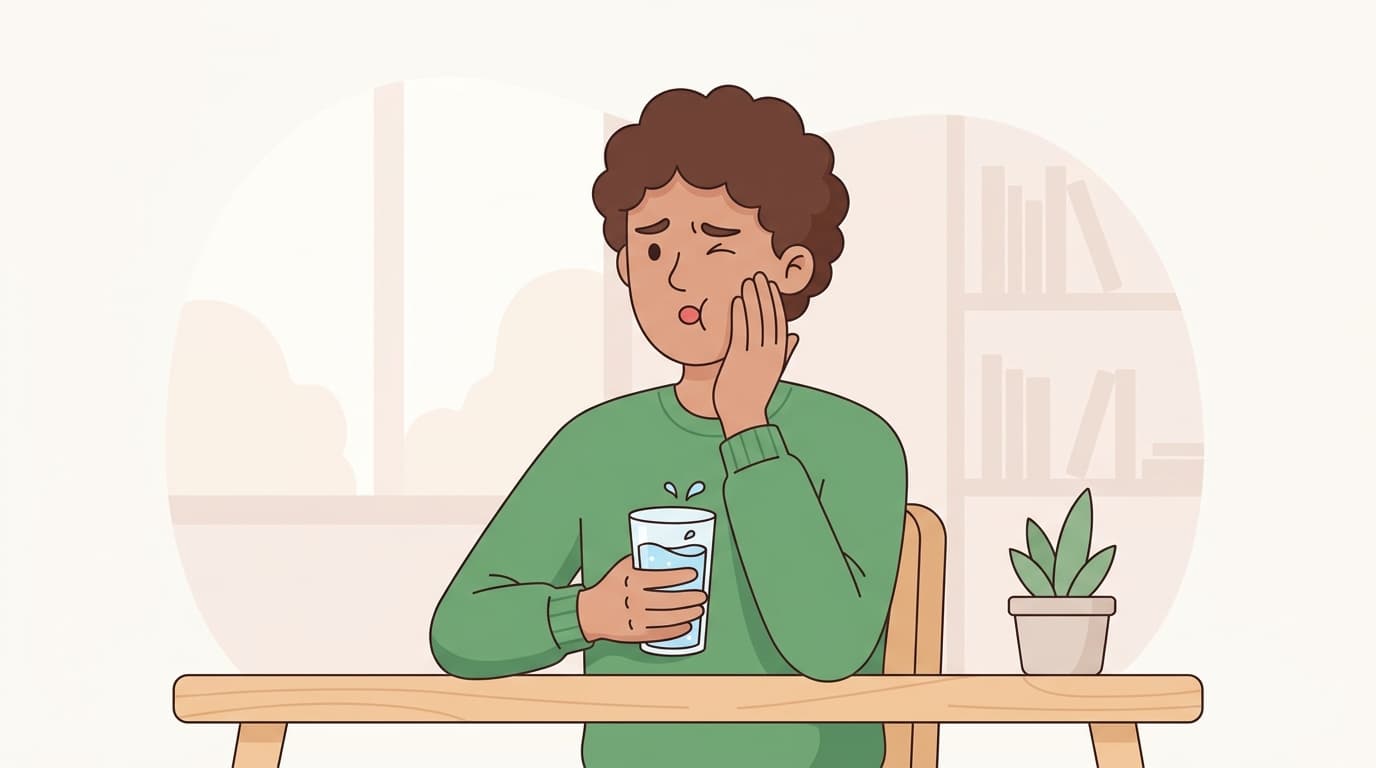
This refers to a brief, sharp, stinging sensation in a tooth when you drink cold water or are exposed to cold air. Commonly described as having "sensitive teeth," this symptom is sharp only for the moment the stimulus touches the tooth and fades within seconds once the stimulus is gone, unlike a constant, throbbing ache. It often occurs because the dentin beneath the tooth's outer surface is directly exposed to the stimulus, so it's important to identify the underlying cause and manage it accordingly.
Causes
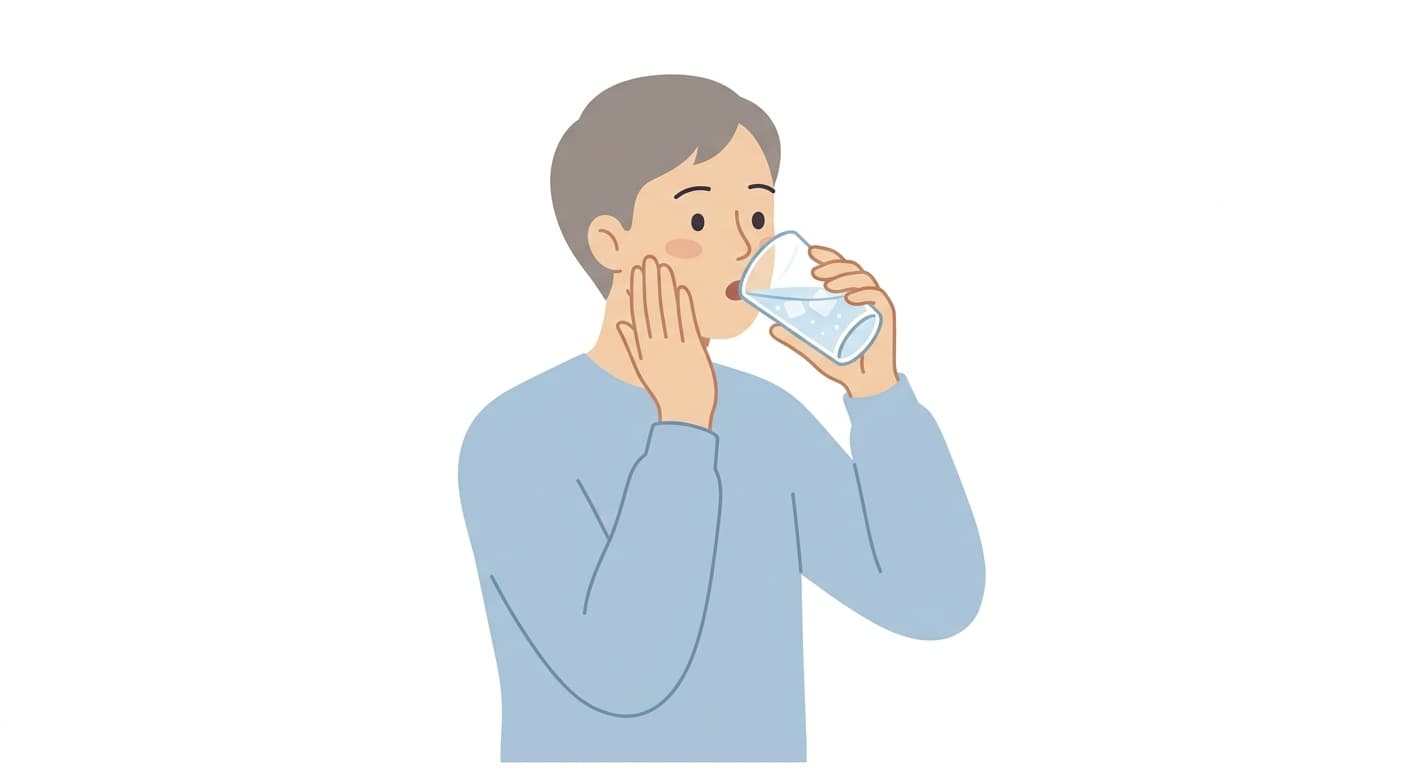
If you feel a sharp, momentary sting from cold water or cold air, and a similar sensitivity when brushing your teeth or eating sweet or sour foods, it may be that the enamel or gums covering the tooth's surface have thinned, leaving the dentin underneath directly exposed to stimuli. When the gums recede or aggressive brushing wears away the surface near the tooth root, stimuli can travel through this exposed area close to the nerve. See Dentin Hypersensitivity for more detail.
If the sensitivity keeps recurring in one specific tooth, and you notice discoloration or a pit in that area, it may be that a cavity has formed and is letting stimuli reach the deeper layers. Acid produced by bacteria gradually erodes the tooth surface and creates a cavity, and through that opening, cold and sweet stimuli can reach close to the nerve inside. See Dental Caries for more detail.
Check Yourself
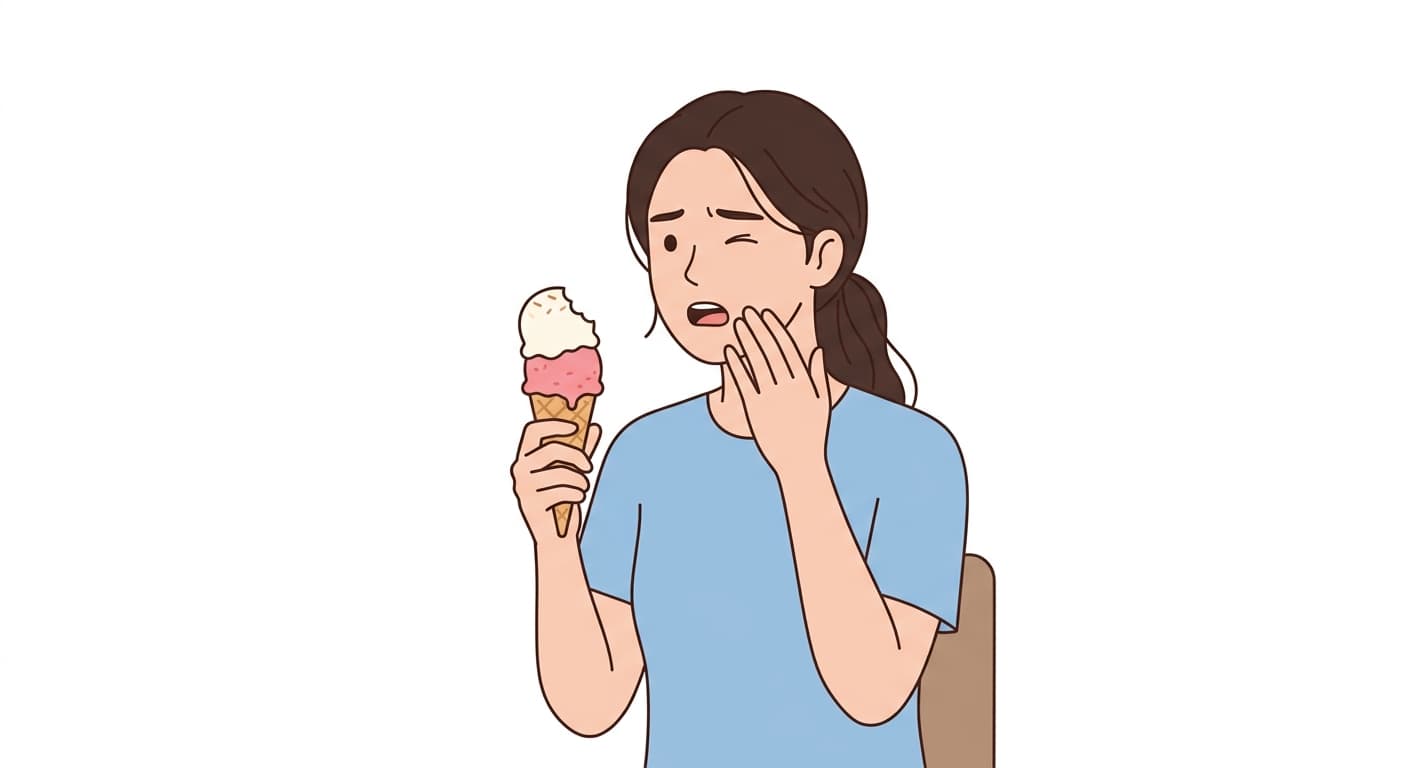
First, check whether the pain occurs only at the moment of the stimulus and fades within seconds once it's removed, or whether the throbbing continues even after the stimulus is gone. Also check whether the sensitivity spans several teeth and overlaps with areas of gum recession, or is confined to one specific tooth with discoloration or a pit in that spot. Noting whether the sensitivity occurs only when brushing, or also in response to cold water, sweet foods, and sour foods, can help you gauge which cause is more likely.
When to See a Dentist
If the pain is mild and fades soon after the stimulus is gone, you can try a desensitizing toothpaste and keep an eye on it. But if the sensitivity keeps getting worse, if pain lingers even without a stimulus, or if it wakes you up at night, don't delay - see a dentist. If it keeps recurring in one specific tooth along with discoloration or a visible pit, that also needs prompt evaluation.
Treatment & Where to Go
If dentin hypersensitivity is the cause, a desensitizing toothpaste or a protective coating over the exposed area often relieves the symptom. If tooth decay is the cause, the decayed part needs to be removed and filled, and the exact treatment depends on how far it has progressed. In both cases, see a dentist who treats cavities and tooth sensitivity, and confirm the exact cause through an exam.
Outlook & Precautions
Leaving the cause unidentified can let the symptom worsen or spread to a wider area over time. While the sensitivity persists, it helps to avoid very cold or hot foods and sour foods, and to use a soft toothbrush without scrubbing hard. If a sensitivity toothpaste doesn't help after several days, don't try to manage it with home care alone - see a dentist.