
Overview
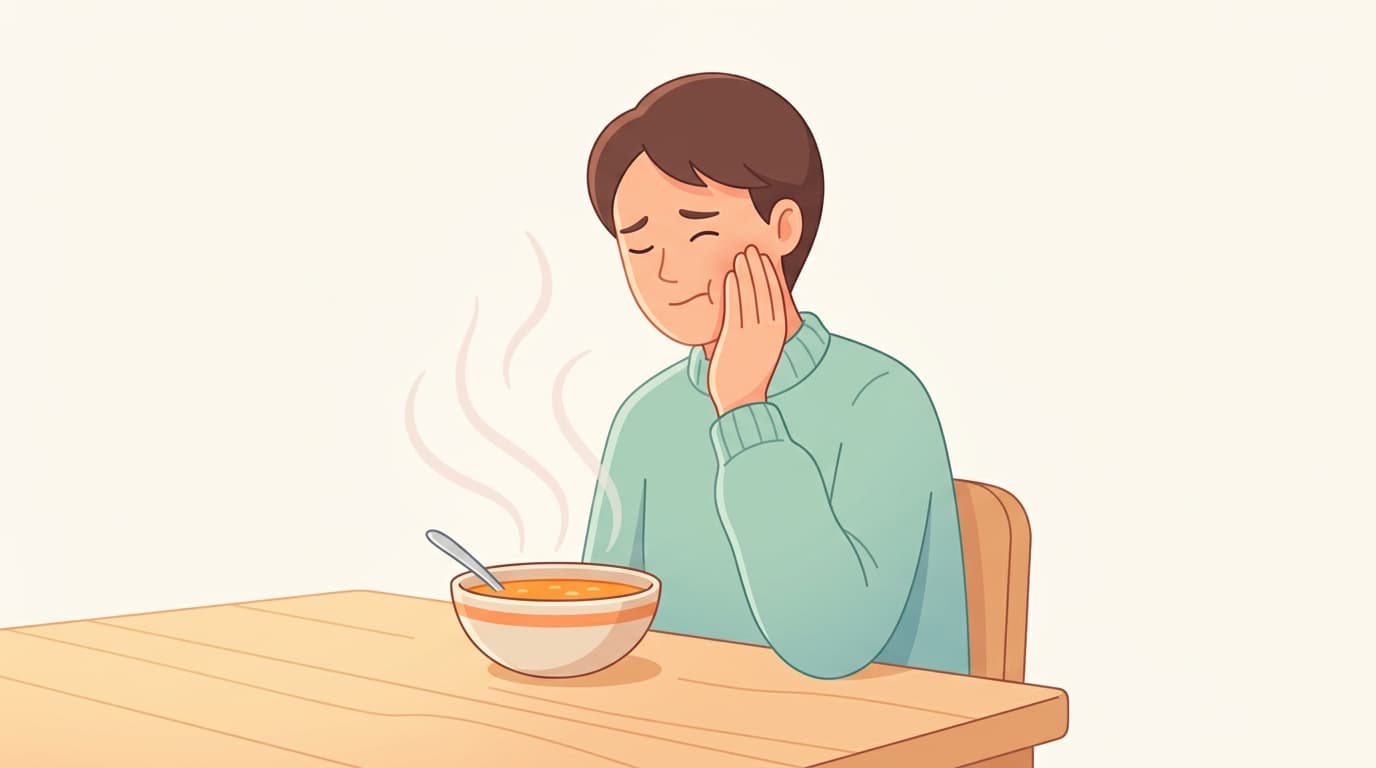
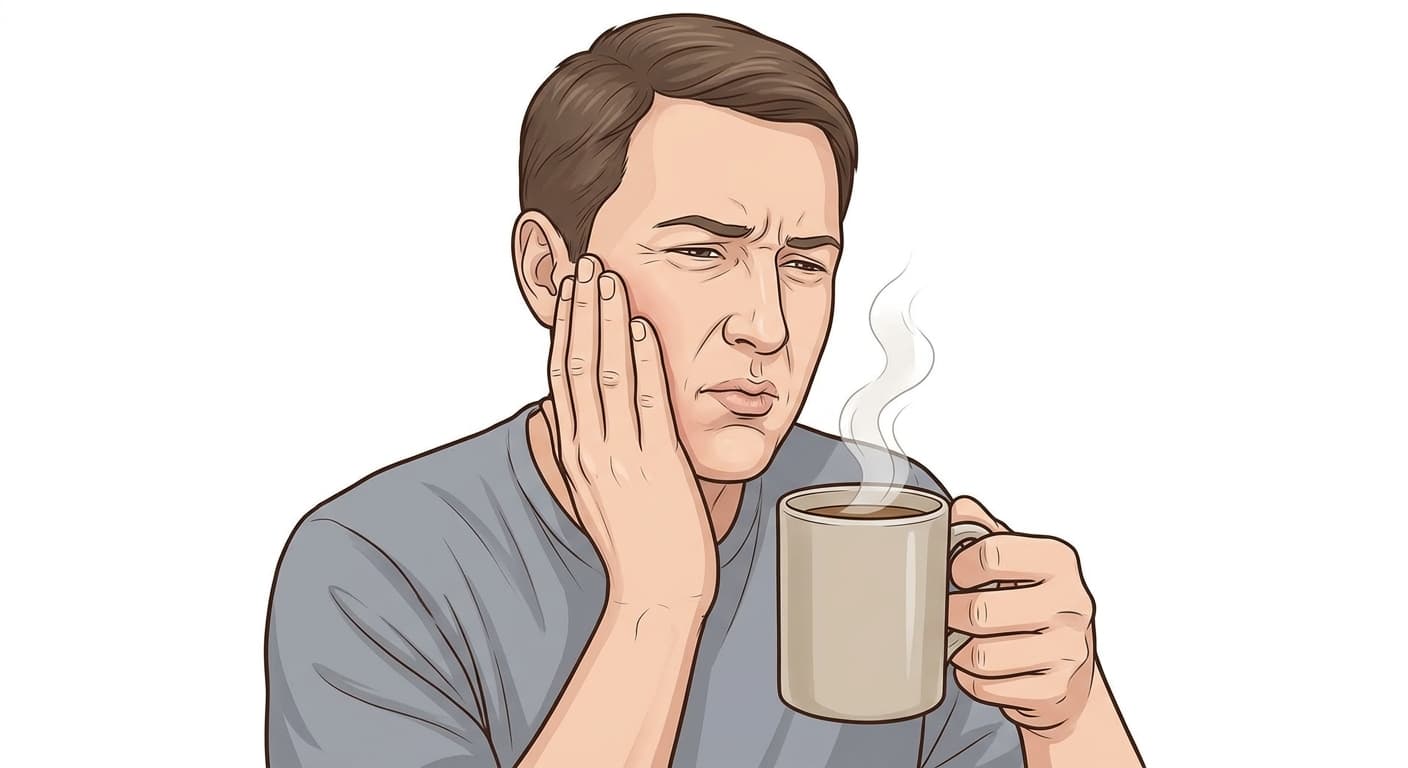
This is the symptom of a tooth throbbing or stinging when it comes into contact with hot food or drink. Sometimes the pain is just a brief flash the moment you sip hot soup, and other times the throbbing lingers for a while even after the stimulus is gone. Because the two patterns can point to different causes, it's worth telling them apart. In most cases, it's a sign that the nerve tissue inside the tooth is reacting sensitively to stimulation, and figuring out the underlying cause requires looking at how long the pain lasts along with any other symptoms.
Causes
If pain that used to appear with hot food suddenly stops, and instead the tooth only hurts when you chew or tap it, that calls for caution. This is because the nerve tissue is dying and losing its ability to transmit sensation altogether, not because the problem has healed. You can read more in Pulp Necrosis (Nerve Necrosis).
If a tooth that used to be sensitive to cold or sweet foods has started reacting to heat as well, it may mean that tooth decay is getting closer to the nerve. The deeper a cavity gets, the more easily outside stimuli reach the nerve inside. You can read more in Dental Caries (Tooth Decay).
Check Yourself
First check whether the pain lingers even after the hot stimulus is removed, or whether it fades quickly once the stimulus is gone. If the throbbing continues for tens of seconds to several minutes after the stimulus ends, it may point to a nerve-related problem; if the pain disappears as soon as the stimulus does, the case is often relatively mild. It also helps to check whether the tooth hurts when you chew or tap it, and to identify exactly which tooth is causing the pain. Look as well for any swelling in the gums or discoloration of the tooth.
When to See a Dentist
If the pain continues for more than a few minutes after the hot stimulus is gone, or if it's severe enough to wake you at night, you should see a dentist without delay. The same applies if pain when chewing or gum swelling appears alongside it. On the other hand, if you only feel a brief twinge while eating something hot and it settles as soon as the stimulus is gone, it may not be urgent, but if the symptom keeps recurring, it's best to get it checked to find the cause.
Treatment & Where to Go
Treatment depends on the cause. If tooth decay is the cause, removing the decayed portion and filling it is often enough to resolve the problem, but if it has spread to the nerve, root canal treatment may be needed. At the dental clinic, the cause is confirmed through X-rays and various tests before deciding on a treatment plan. You can receive this care from a dentist who treats tooth decay and performs root canal treatment.
Outlook & Precautions
If you assume the problem is resolved just because the pain has gone away, without confirming the cause, the issue may keep progressing internally even though everything looks fine on the outside, especially when the nerve is dying. While the pain lasts, avoid chewing on that side and cut back for a while on very hot or cold foods. Don't keep relying on painkillers and putting off care; if the symptom keeps recurring, see a dentist as soon as possible.