
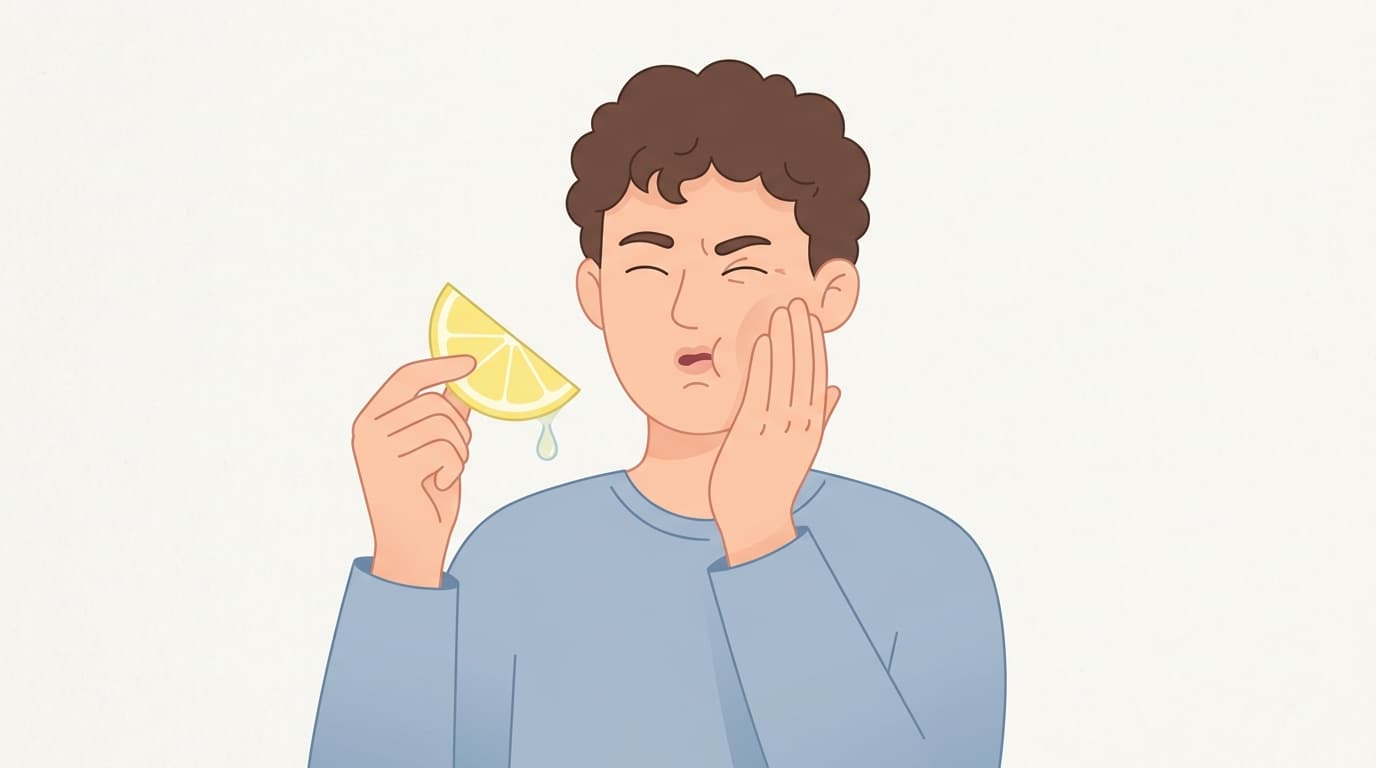
Overview
A quick stinging or sharp sensation in the tooth when eating sour foods. Sour foods tend to be acidic, which easily irritates the tooth surface, and when that irritation reaches the deeper layers, it produces a brief, sharp sensation. This feeling often occurs not only with sour foods but also with cold water or sweet foods, and the pain usually subsides once the stimulus is gone. Whether it occurs in just one or two specific teeth or throughout the mouth can point to different causes.
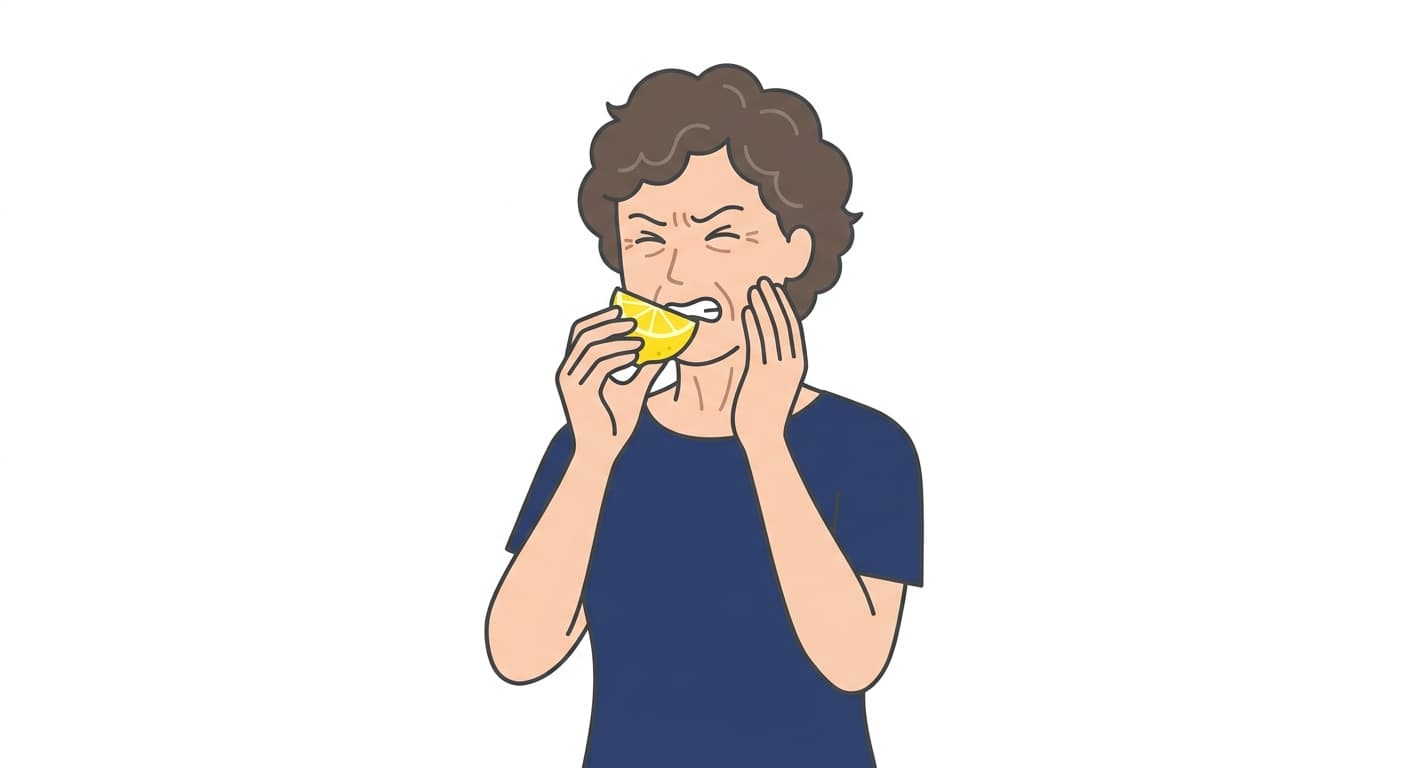
Causes
If you feel a sudden sharp sensitivity to cold water or cold air, or a similar feeling while brushing, in addition to sour foods, this may be the case. When the gums recede or the tooth surface wears down and exposes the dentin underneath, these stimuli are transmitted directly. See Dentin Hypersensitivity for more detail.
If a sharp sensation keeps recurring in one specific tooth when eating sour, cold, or sweet foods, this should also be considered. Acids produced by bacteria erode the tooth surface and create a cavity, and stimuli are transmitted directly through that area. See Dental Caries (Tooth Decay) for more detail.
Check Yourself
Check whether you feel similar sensitivity not only with sour foods but also with cold water, sweet foods, or brushing. Note whether it occurs in just one tooth or several. Check whether the pain subsides soon after the stimulus is gone, or whether it lingers. Look in a mirror to see whether the tooth surface has a pit or a visible hole.
When to See a Dentist
If the sensitivity is brief and appears only with a stimulus, then subsides quickly, it may not be urgent. However, if it continues for several days or worsens, or turns into a throbbing pain even without a stimulus, you should see a dentist without delay. A visibly pitted or holed tooth surface is also a sign to seek care promptly.
Treatment & Where to Go
Treatment depends on the cause. In some cases, sealing the exposed dentin can relieve the symptoms, and if a cavity has formed, filling that area may be necessary. In both cases, it is safest to have a dentist who performs restorative and conservative dental treatment examine the tooth and confirm the cause before deciding on treatment.
Outlook & Precautions
If left untreated, the symptoms may worsen or persist longer than they are now. Reducing sour or cold foods and avoiding hard brushing may help, but rather than deciding on your own and delaying treatment, it is best to first have the cause checked.