
Question
One of my front teeth is dark after root canal treatment and does not lighten much with external bleaching. Do I need a veneer or crown to match its color to the other teeth?
Short answer
A poor response to external bleaching does not automatically mean that a veneer or crown is needed. For a tooth that has completed root canal treatment, internal bleaching may be considered. This involves placing a bleaching agent in the pulp chamber (the space inside the tooth that previously contained nerve tissue). However, suitability depends on the cause of discoloration, the remaining tooth structure, and the condition of the root canal filling. If internal bleaching does not improve the color sufficiently, or if the tooth is extensively damaged, restorative treatment such as a veneer or crown is considered.
Why is that?
Lightening the tooth from within differs from covering its surface
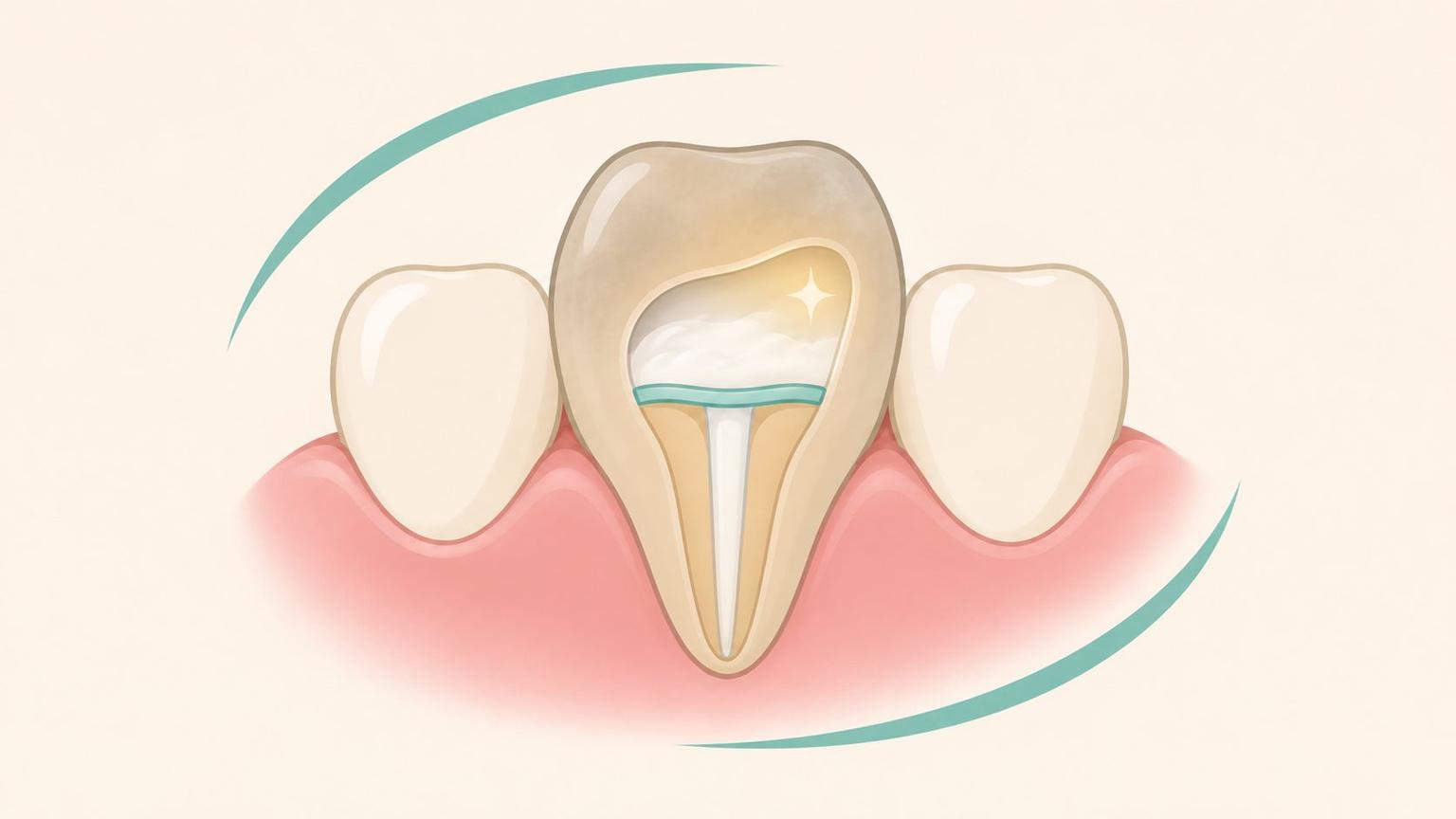
Discoloration after root canal treatment can occur deeper than the tooth surface. Nonvital bleaching, a form of internal bleaching, improves the color of the tooth itself by placing an agent in the pulp chamber to break down the substances causing discoloration. A veneer is a thin restoration bonded to the front surface of a tooth, while a crown covers the entire crown portion of the tooth to restore its shape and color. The response to external bleaching alone therefore does not determine whether internal bleaching is an option.
Walking bleach is one method of internal bleaching. The dentist places a bleaching agent in the pulp chamber and seals it temporarily, allowing bleaching to continue during everyday activities until the next visit. The name refers to the agent working while the patient goes about daily life. It does not mean that patients open the tooth or place the agent inside it themselves at home.
The root canal seal and remaining tooth structure are checked first
Root canal filling is the step in which the passages inside the roots, cleaned during root canal treatment, are filled with material to prevent reinfection. Since internal bleaching is performed on teeth that have completed root canal treatment, the filling inside the root and the seal at the top of the tooth must first be assessed. Through a clinical examination and radiographic assessment, the dentist checks the length of the filling, any gaps, and the quality of the seal, along with the extent of damage to the remaining tooth walls.
Lightening a tooth and restoring lost tooth structure are separate issues. If a front tooth has lost little structure apart from the access opening made for root canal treatment, restoring just that opening may be possible. If much of the tooth structure on the front surface has been lost, however, a restorative plan that includes a crown may be needed. Having had root canal treatment does not mean that every front tooth requires the same type of restoration.
Internal bleaching requires a barrier to reduce leakage of the agent
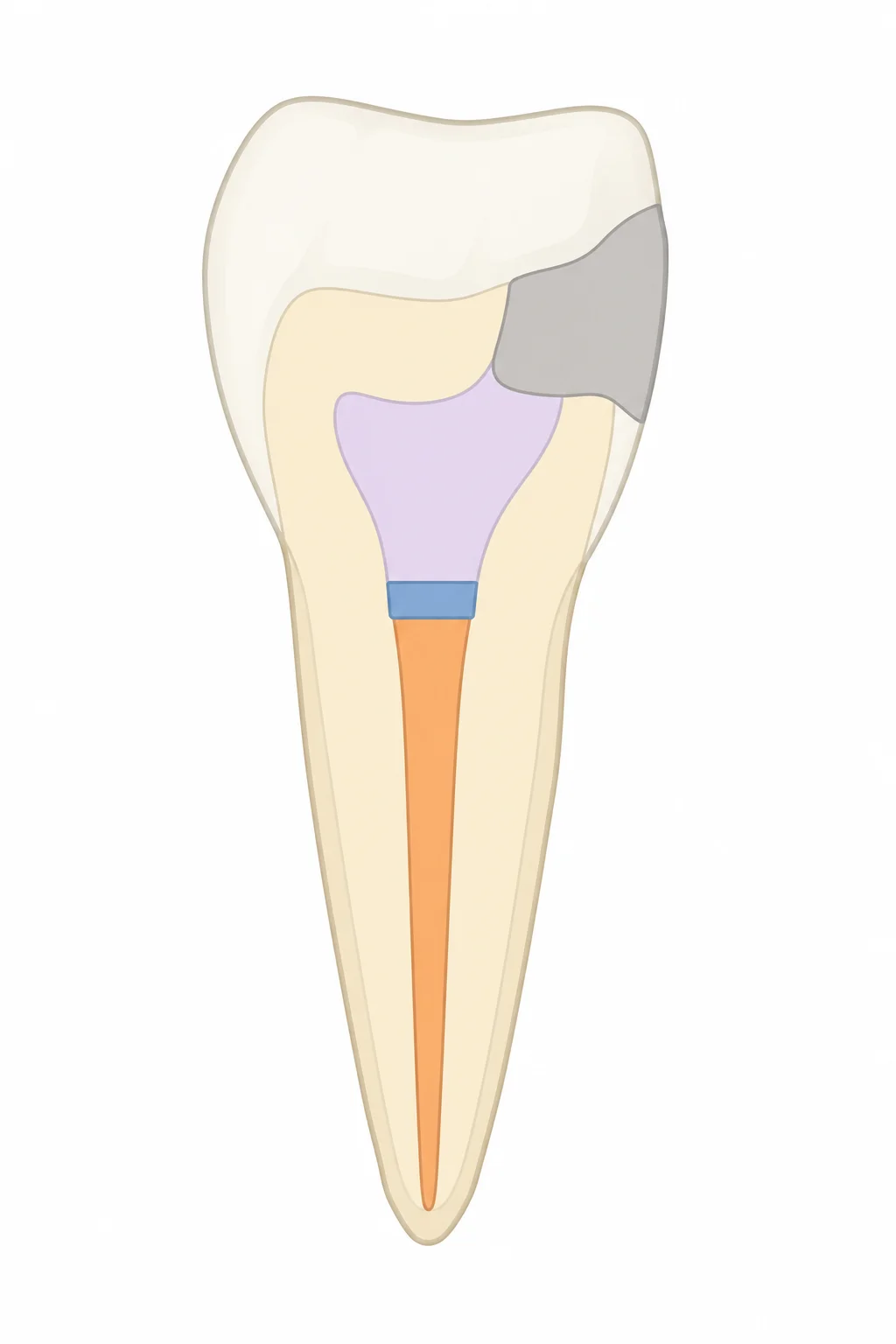
If the bleaching agent leaks into the tissues surrounding the tooth, external cervical resorption (resorption of tissue on the outer surface of the root near the gumline) can occur. To reduce this risk, a barrier called a cervical barrier is placed over the root canal filling. The agent is then placed in the pulp chamber above the barrier and sealed in. Internal bleaching requires a dentist to select the agent and create the barrier, so it should not be attempted at home.
When color improvement is limited, the extent of restoration is considered
Internal bleaching does not work equally well for every type of discoloration. Teeth darkened by amalgam (a metal filling material) may not reach the desired shade even after bleaching. For severe discoloration that does not improve sufficiently with internal bleaching, restorative treatment such as a veneer is an alternative.
With veneers, it is important to preserve as much enamel (the hard outer layer of the tooth) as possible while creating space for the restoration on the front surface. Tooth reduction criteria for veneers also vary according to the degree of discoloration and the space needed for the restoration. Because a crown covers the entire crown portion of the tooth, the remaining tooth structure and the extent of damage are also considered when choosing it. The starting point for selecting treatment is to assess separately how much color improvement internal bleaching can achieve and how much of the tooth needs to be restored.