Question
After having fluoride applied at the dentist, some people are told, "This will help remineralization go well." Because of this phrase, many people wonder whether applying fluoride and having a tooth remineralize are the same thing, and whether applying fluoride diligently enough can refill a cavity that has already formed.
Short Answer
The two are not the same thing. Remineralization is the repair process in which a tooth refills itself with minerals (the calcium and phosphate that make up the tooth). Fluoride application is one of several methods that support this repair. Remineralization can only reverse early lesions in which the tooth surface has not yet been cavitated. A cavity that has already formed will not be filled in even if fluoride is applied, and it requires restorative treatment.
Why Is That?
Remineralization Is a Repair Process That Naturally Occurs in the Mouth
Dental plaque (a thin bacterial film that builds up between and on the surfaces of teeth) is always present on the tooth surface. When the bacteria in it break down sugar from food, they produce acid, and once the pH around the tooth drops below about 5.5, calcium and phosphate begin to leach out from beneath the tooth surface. This process is called demineralization.
After a meal, once enough time passes for saliva to wash the acid away, the pH returns to normal. At this point, saliva still contains plenty of calcium and phosphate, and remineralization is the process in which these components return to the spots they left and refill the tooth's crystal structure. Demineralization and remineralization alternate every time you eat a meal or snack throughout the day. If the balance tips toward demineralization too often, the cavity progresses; if it tips toward remineralization, it stops progressing.
Fluoride Is a Supporting Measure That Helps This Repair
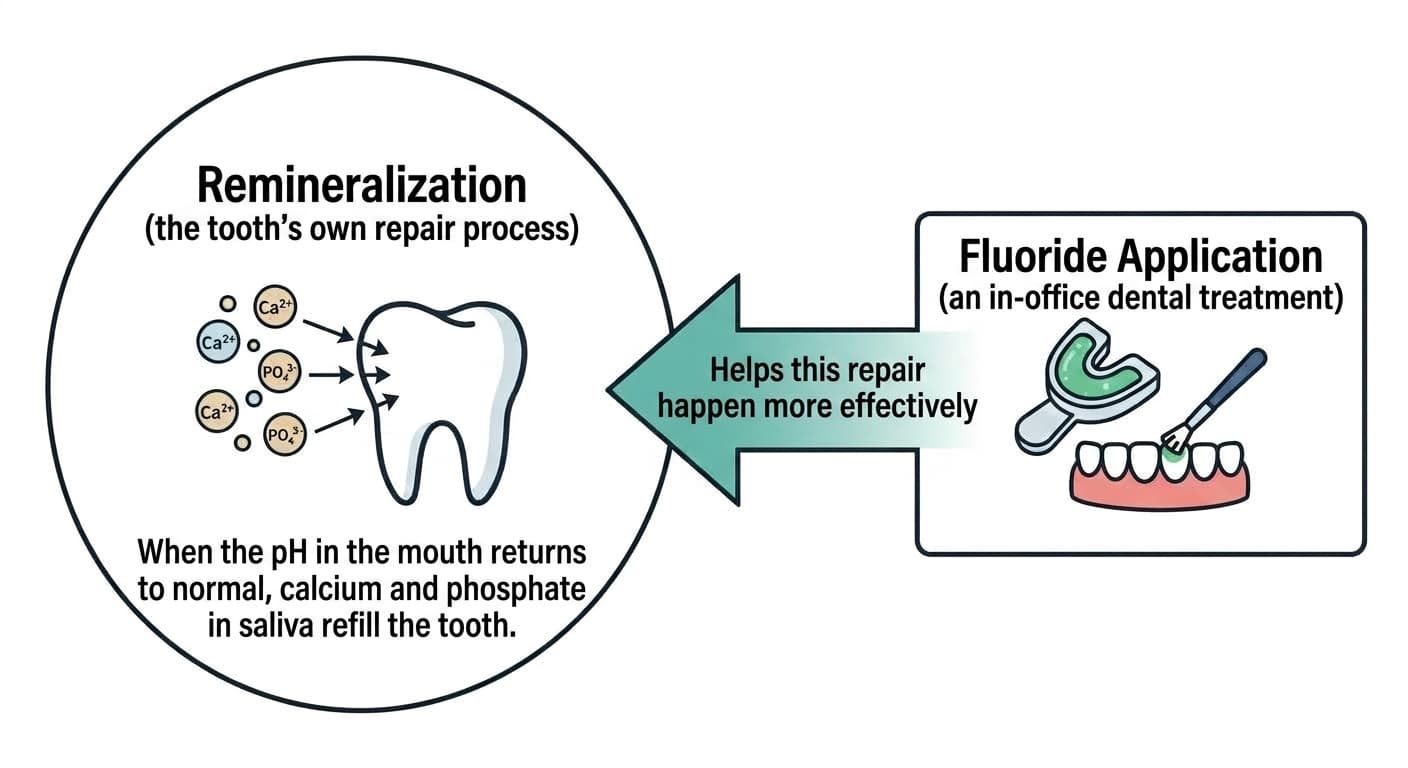
Fluoride is not a substance that creates remineralization; it is a component that makes the remineralization already taking place stronger. When fluoride is present at a low concentration (50 ppm or less), the crystal that forms at the remineralizing site (fluorapatite) is more acid-resistant than it would otherwise be. This crystal dissolves less and holds up longer the next time it is attacked by acid. Higher concentrations of fluoride (100 ppm or more), such as the kind applied at a dental clinic, create small reservoirs of calcium and fluoride on the tooth surface that release these components slowly when needed.
For this reason, fluoride is used not only in in-office applications but also in forms such as toothpaste and fluoride mouth rinses. Whatever form it takes, fluoride only assists the body's own repair process of remineralization, and it does not replace brushing, which physically removes plaque. Other substances besides fluoride are now being studied as ways to support remineralization as well. For example, as in research on remineralizing early caries with self-assembling peptides, fluoride is not the only way to help remineralization.
A Cavity That Has Already Formed Cannot Be Reversed by Fluoride Alone
Remineralization is effective only up to the point of early lesions in which the tooth surface has not yet broken down. These early lesions are called white spot lesions (early caries in which the surface still looks intact, but minerals have leached out beneath it, so the area looks white and chalky when dried). The surface itself remains smooth and hard. In fact, when white spot lesions were tracked in areas with fluoridated tap water, a considerable number did not progress further even without separate treatment, and some recovered to the point of being indistinguishable from the original enamel. At the white spot lesion stage, applying fluoride varnish or CPP-ACP (a calcium and phosphate component extracted from milk protein), along with consistent oral hygiene care, can help remineralization, and the general rule at this stage is to avoid treatment that scrapes away the lesion.
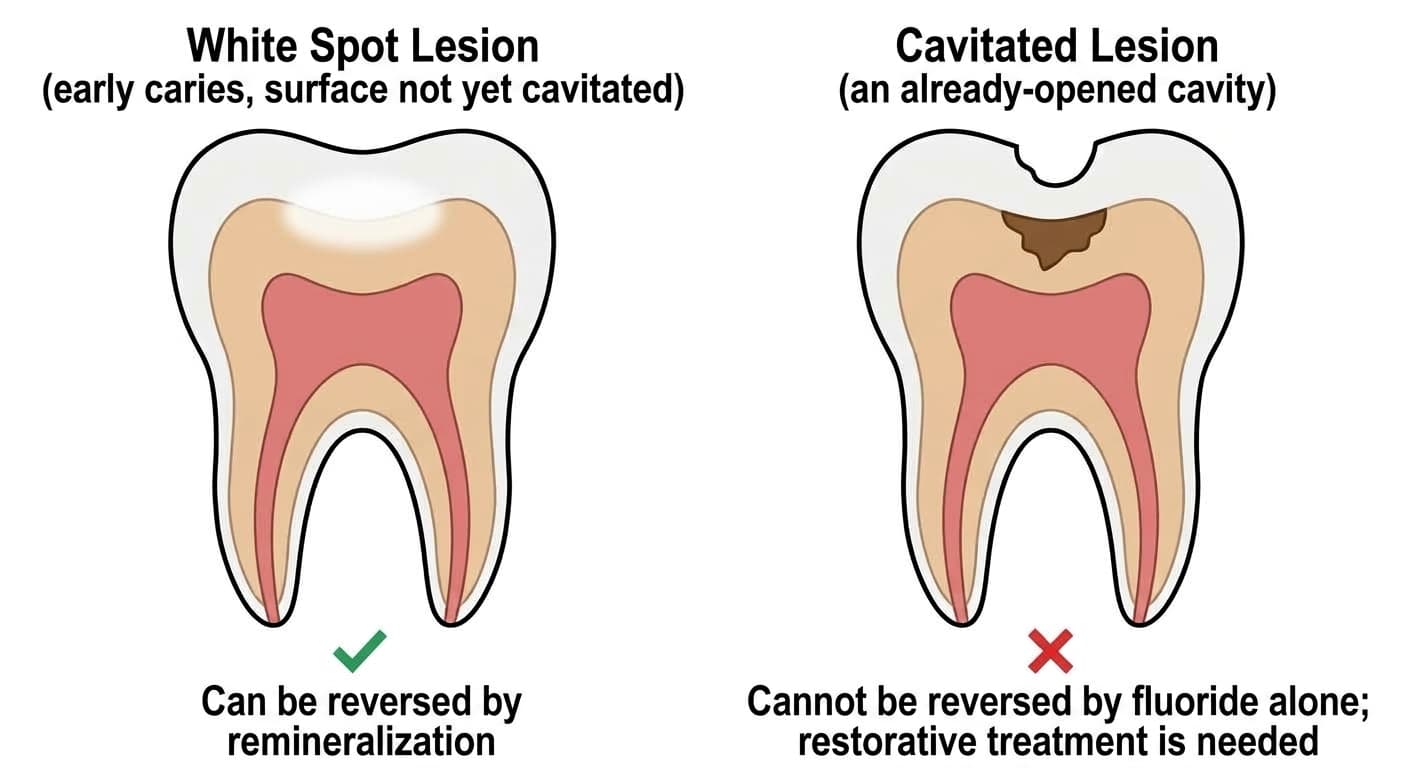
However, once the surface breaks down and an actual cavity (a cavitated lesion) forms, the situation changes. From this point on, stopping the lesion's progression becomes very difficult or effectively impossible, and restorative treatment (filling) is needed to fill in the damaged area. No matter how often fluoride is applied, tooth structure that has already been lost will not refill itself. So while fluoride application helps reverse early lesions or slow the formation of new cavities, it is not a substitute for treating a large cavity that has already formed.