Question
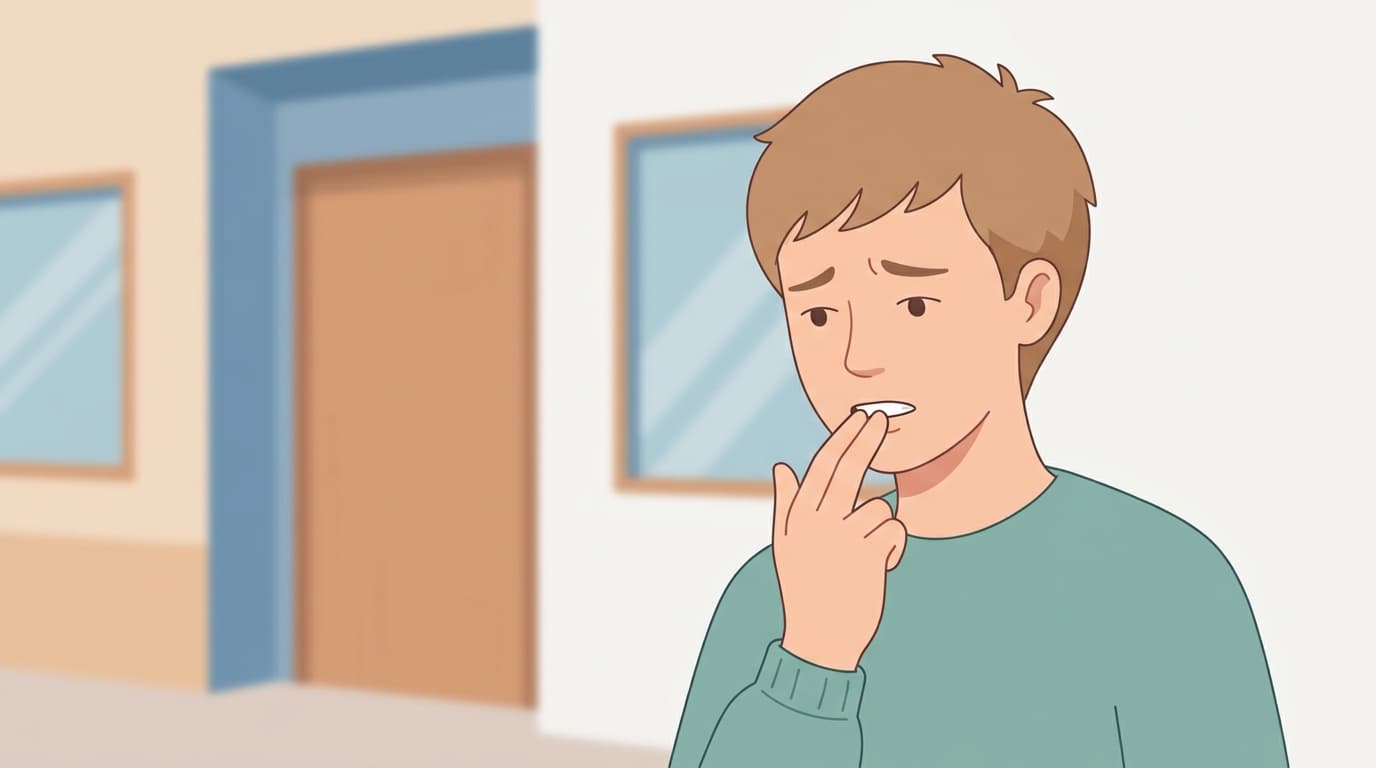
My front tooth has kept throbbing since I fell or bumped into something. When I check in the mirror, I don't see any chips or cracks, and it doesn't feel loose when I wiggle it with my fingers, so I'm not sure whether I need to see a dentist.
Short Answer
Even if there's no visible chip and no looseness, it's safer to get checked once if pain remains after a blow. The impact can injure only the periodontal ligament (the fibrous tissue connecting the tooth to the bone) rather than the tooth itself, and this kind of injury often shows up first as tenderness to tapping, before any change in appearance or mobility. However, whether the nerve (pulp) is still alive usually can't be confirmed with a single test; it often needs to be rechecked a few weeks later.
Why is that?
Even if it looks fine, the periodontal ligament can still be injured
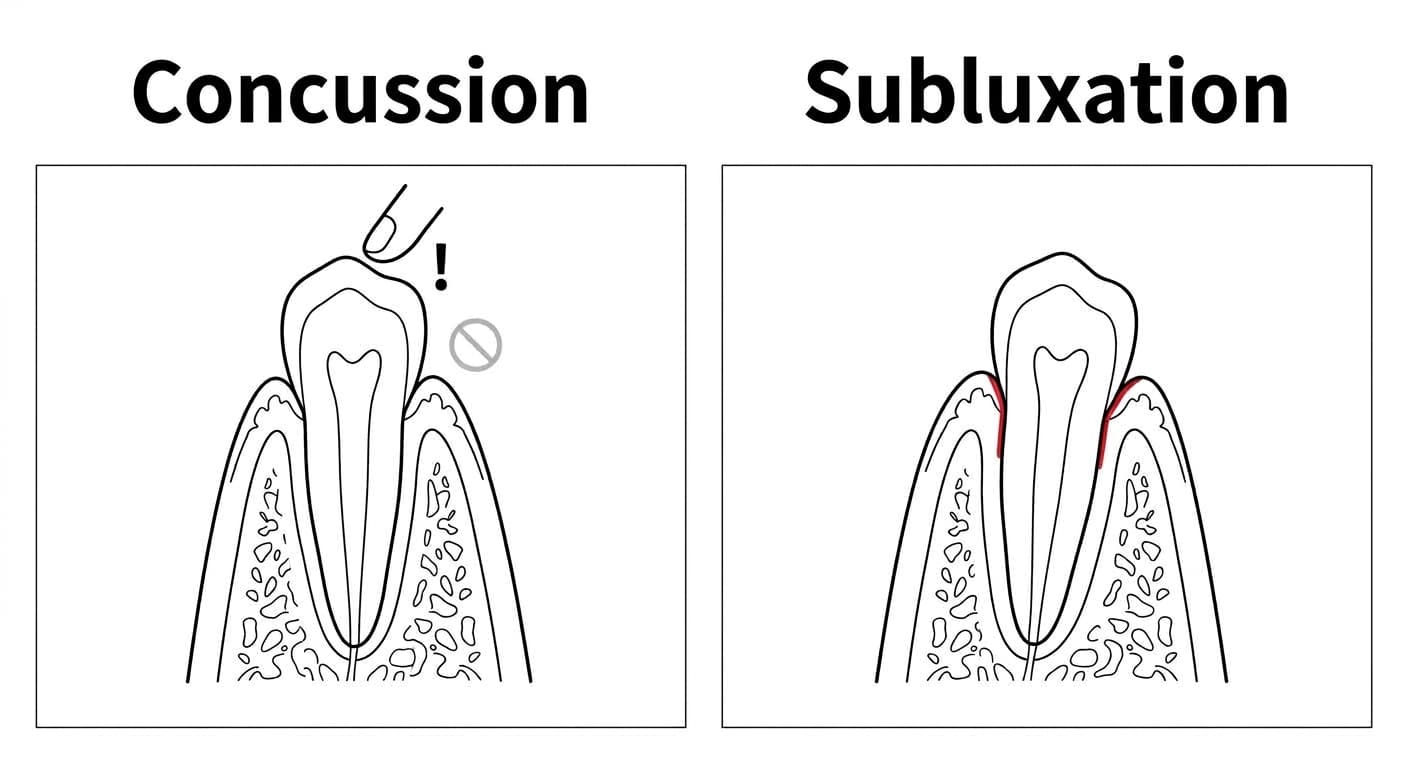
An impact to a tooth can injure only the supporting tissue without ever reaching the tooth surface or the nerve. If the tooth's position hasn't changed and it isn't any more mobile, but it's unusually tender when tapped (percussion), this may be a concussion (a mild injury to the periodontal ligament). A concussion often heals with rest alone, without any splint, and if there's a spot that bites unusually hard, slightly adjusting the bite height can ease the pain. The prognosis is generally reported to be good.
If tenderness to tapping is accompanied by slightly more mobility than before or bleeding at the gum margin, it may be closer to a subluxation (a somewhat more advanced periodontal ligament injury than a concussion). Here too, the tooth's position itself doesn't change, but if the mobility is significant, a short-term splint may be used; otherwise, the tooth is simply monitored.
Both cases share the absence of a visible fracture, but they're distinguished by whether there's mobility and gum bleeding. What to do when a chip is already visible is covered in Do I need to see a dentist even for a tiny chip on my front tooth?. This article covers the situation where pain remains without any fracture.
Why one nerve test isn't the end of it
The most common way to check whether a tooth is alive is electric pulp testing (a test that passes a weak electrical current through the tooth to see how the nerve responds). A response to the current means the nerve is alive, and no response is interpreted as a sign that the nerve has died. However, this test doesn't directly measure blood flow to the nerve; it only observes the nerve's sensory response, so it can give a result that doesn't match reality, meaning the nerve may be alive despite no response, or the reverse. That's why the result needs to be cross-checked with a test using thermal stimulation.
Right after an injury, the tiny blood vessels supplying the nerve can be temporarily damaged, which can also cause a lack of response on electric pulp testing. This response alone doesn't lead straight into root canal treatment (removing and disinfecting the nerve tissue inside the tooth); instead, the tooth is retested after some time to see whether the nerve actually recovers.
What follow-up checks look for
Even when the injury looks fine on the outside, follow-up care repeats electric pulp testing, percussion testing, and radiographs at set intervals to check whether the root surface is resorbing or the nerve's condition is changing. A subluxation that involved mobility has been reported to potentially progress to pulp necrosis, where the nerve dies. However, the same source also notes that this happens less often than with injuries where the tooth was displaced more severely or knocked out, so mobility alone doesn't mean the nerve will necessarily die soon. That's why, even if one exam shows nothing abnormal, it's safer to repeat pulp vitality testing to keep confirming. If the nerve is confirmed to have died, root canal treatment is then carried out. Having pain now doesn't mean the nerve has already died. Conversely, having no pain now doesn't guarantee there won't be a problem later.