Question
For several days now, my jaw area has been hurting and my mouth hasn't been opening as wide as it used to. I'd like to know exactly what gets examined when I go to the dentist.
Short Answer
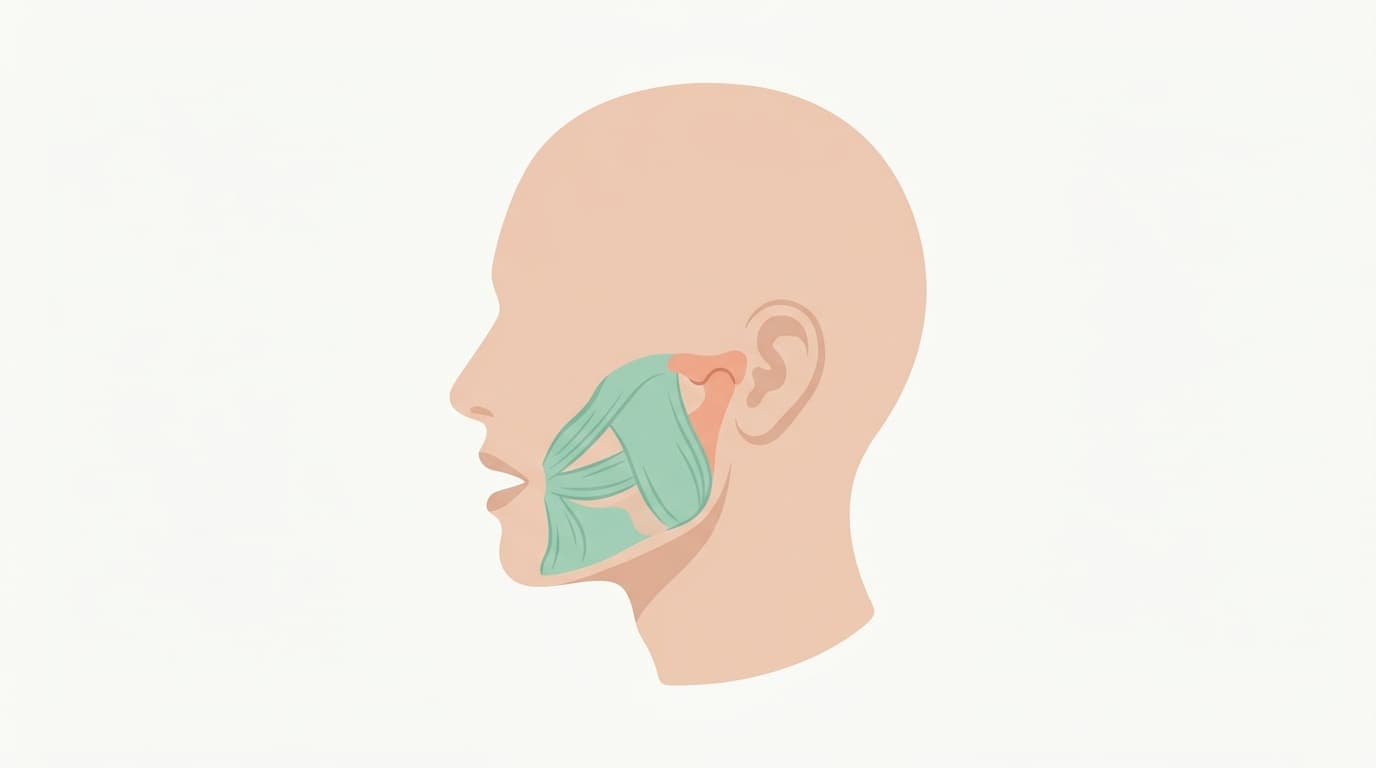
When your jaw hurts and your mouth doesn't open fully, dentists don't look at the jaw joint alone. They also examine the chewing muscles (the muscles used when biting and chewing) that move the jaw joint, the sounds made when opening and closing the mouth, and the degree and pattern of how the mouth opens. Whether the pain and limited mouth opening (a state in which the mouth doesn't open enough) come from a problem in the joint itself, a problem in the muscles, or a combination of both is hard to tell from symptoms alone, since each cause shows up differently across these four areas.
Why Is That?
Why the Jaw Joint and Chewing Muscles Are Examined Together
Pain and stiffness that occur when moving the jaw are collectively called temporomandibular disorder (a term covering functional problems and pain in the jaw joint and chewing muscles). As the name suggests, this problem includes not only the jaw joint itself but also the chewing muscles that move the jaw.
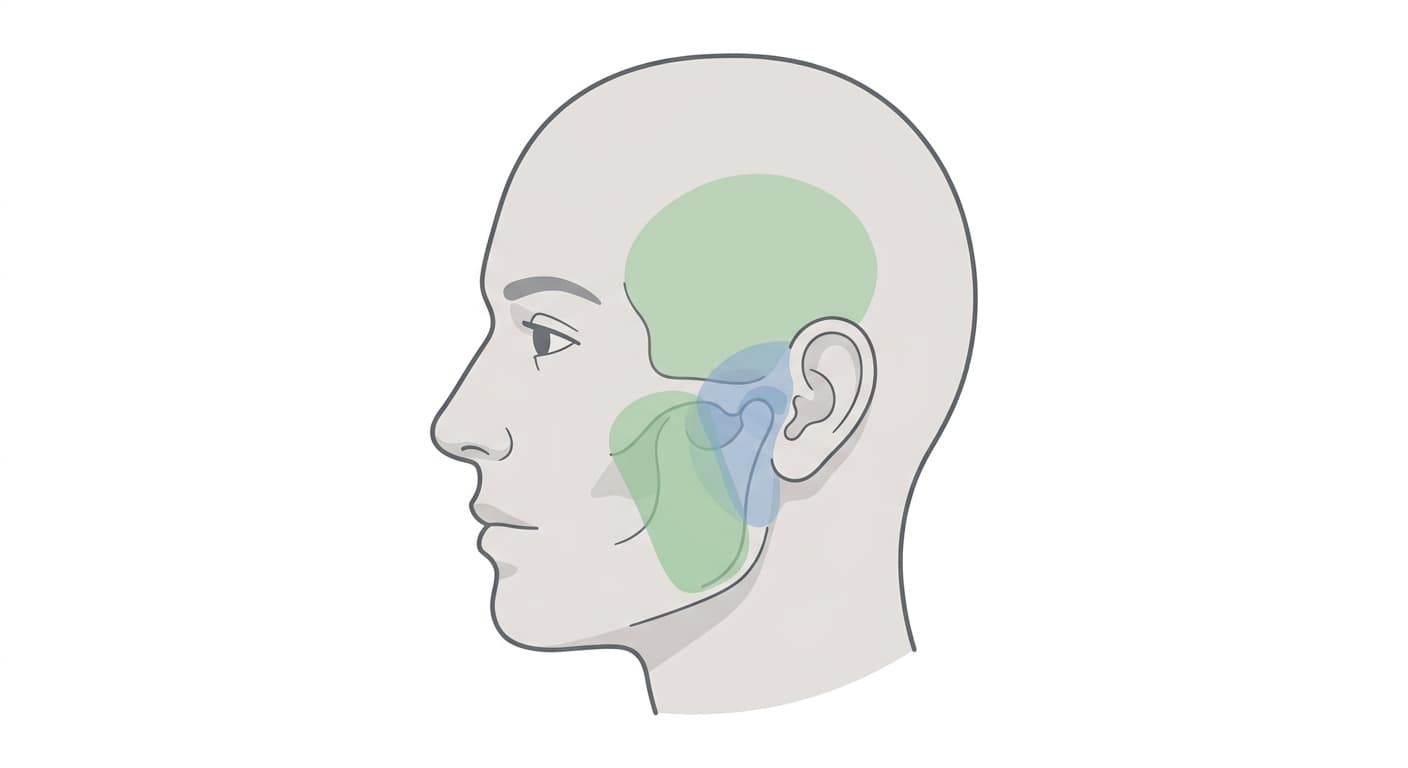
Inside the jaw joint is the articular disc (a cushioning tissue, like a disc, that fills the space between the bones). The lateral pterygoid muscle (one of the chewing muscles, connected to the jaw joint capsule and the articular disc) is divided into an upper and a lower head. The upper head attaches directly around the articular disc and the condyle (the part of the mandible that forms the jaw joint), positioning the disc and condyle when the mouth closes or the jaw moves sideways. The lower head contracts strongly to move the condyle when opening the mouth or moving the jaw forward. Because muscles are involved in both the joint's movement and the position of the articular disc in this way, the chewing muscles are examined together with the jaw joint.
Why the Sounds Made When Opening and Closing the Mouth Are Checked
Whether the joint makes a sound when opening and closing the mouth, and if so, what kind of sound, is also checked. If the articular disc has been pushed forward out of its normal position, for example from repeated minor strain, but the condyle slips back under the disc and finds its place again when the mouth opens, a clicking sound tends to occur both when opening and closing the mouth. Conversely, if the elasticity of the tissue behind the disc that supports it has declined so that the disc can no longer return to its place, that clicking sound may disappear instead, leaving only a firm catching sensation with the mouth unable to open any further. In cases where the joint has been under excessive strain for a long time, leading to wear on the bone surface, a different, crackling sound may occur instead of a click, and the pain tends to worsen in the afternoon or evening.
Because the presence and type of sound, together with the pattern of accompanying pain, differ from case to case, this is checked separately. How the direction of treatment changes depending on these findings is covered in more detail in Can a Splint Help When the Jaw Hurts and the Mouth Won't Open.
Why the Degree and Pattern of Mouth Opening Are Examined
How far the mouth opens is also checked numerically. A mouth opening of 40mm or less is considered limited mouth opening. As explained above, when the articular disc cannot return to its place, the amount of opening itself is often noticeably reduced, so this figure serves as a clue to the underlying condition.
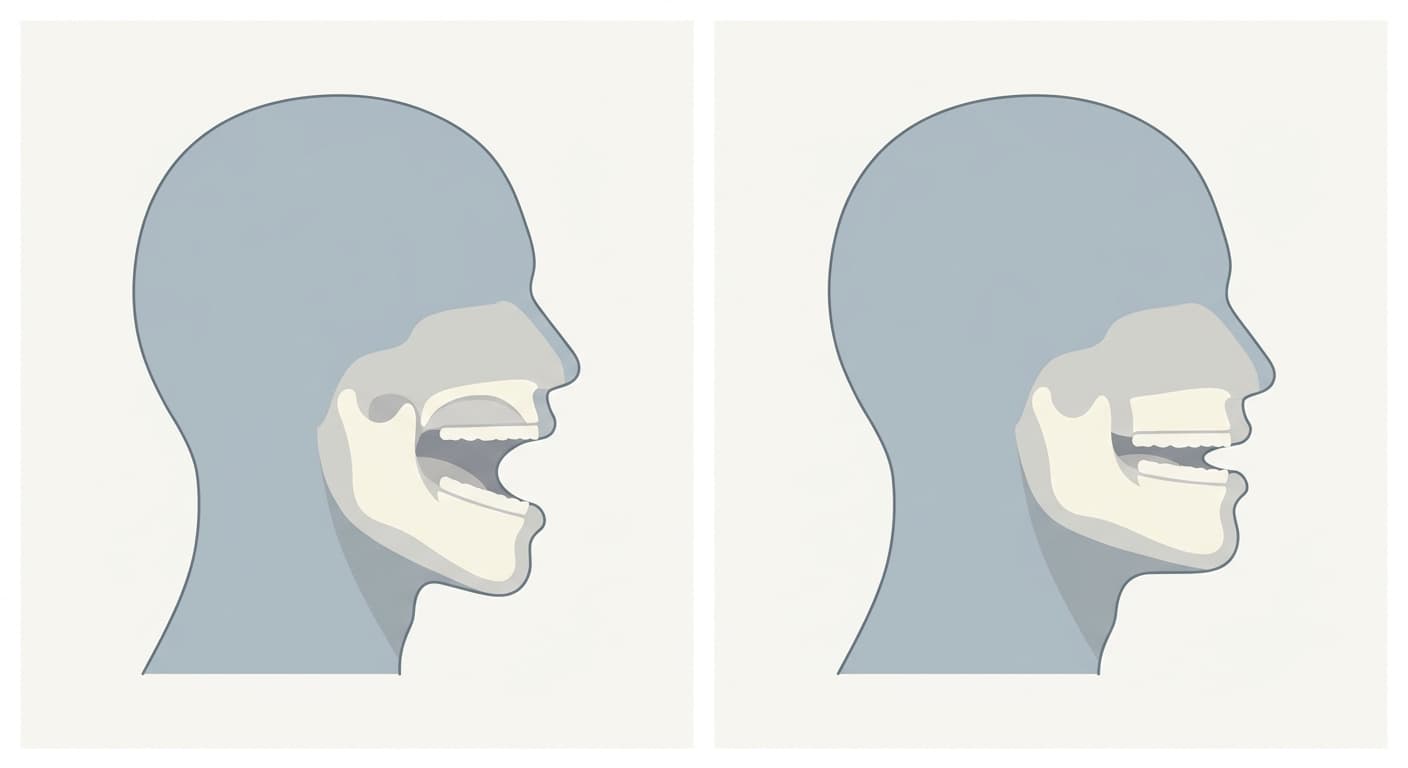
The jaw joint is not a hinge that opens and closes on a single axis like a door. It is a joint in which a forward sliding motion along the articular disc and a rotating motion at the same spot occur together. Separately, in cases where the disc has been pushed out of place and returns when the mouth opens, a characteristic feature is that the jaw tends to shift to one side partway through opening, a deviation. So not only how far the mouth opens but also the direction and manner in which it opens are checked together.
Sometimes the dentist also asks whether habits such as teeth grinding or clenching lie behind the jaw stiffness or pain. This kind of history-taking and evaluation is also covered in Does Morning Jaw Stiffness Suggest Teeth Grinding or Clenching. Only after examining the joint, the muscles, the sounds, and the pattern of movement together can the cause of the pain and limited opening be narrowed down.