Question
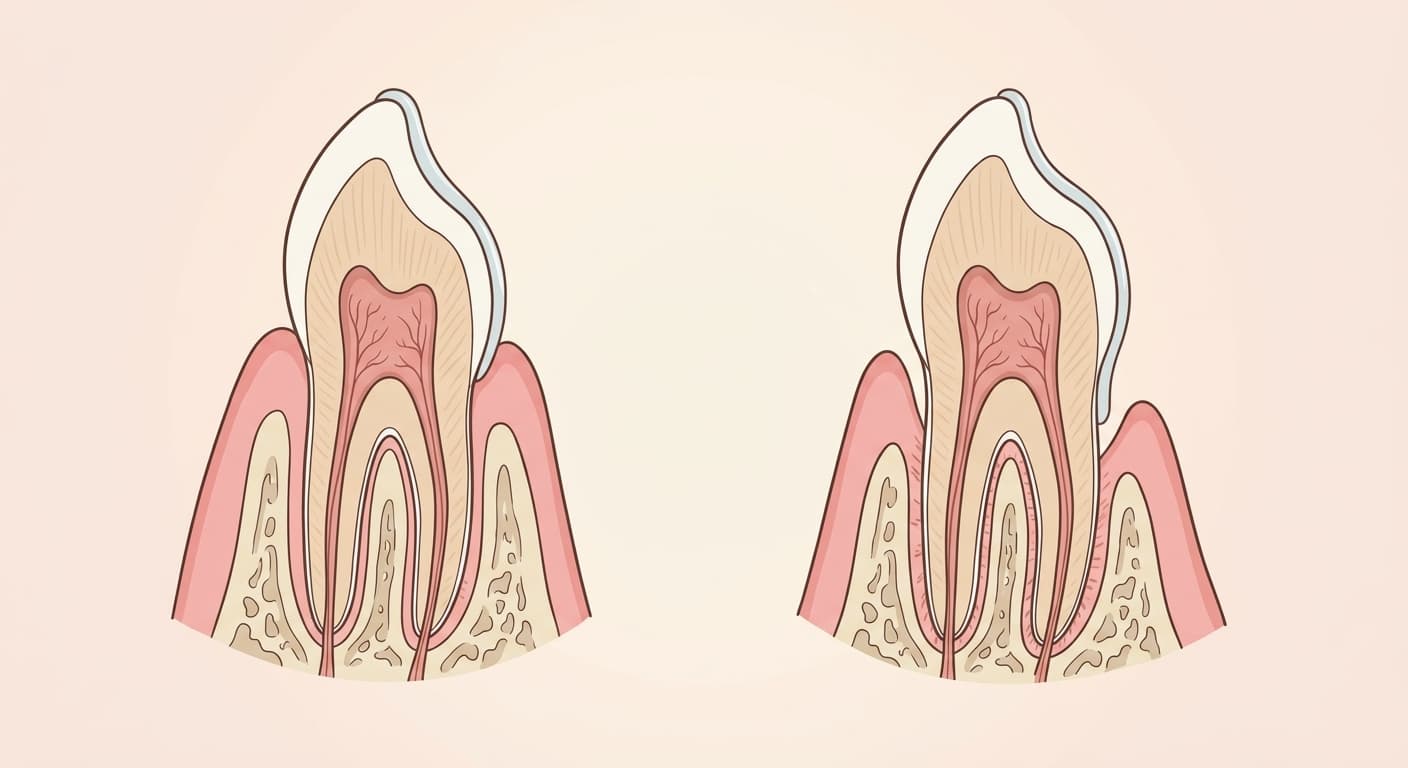
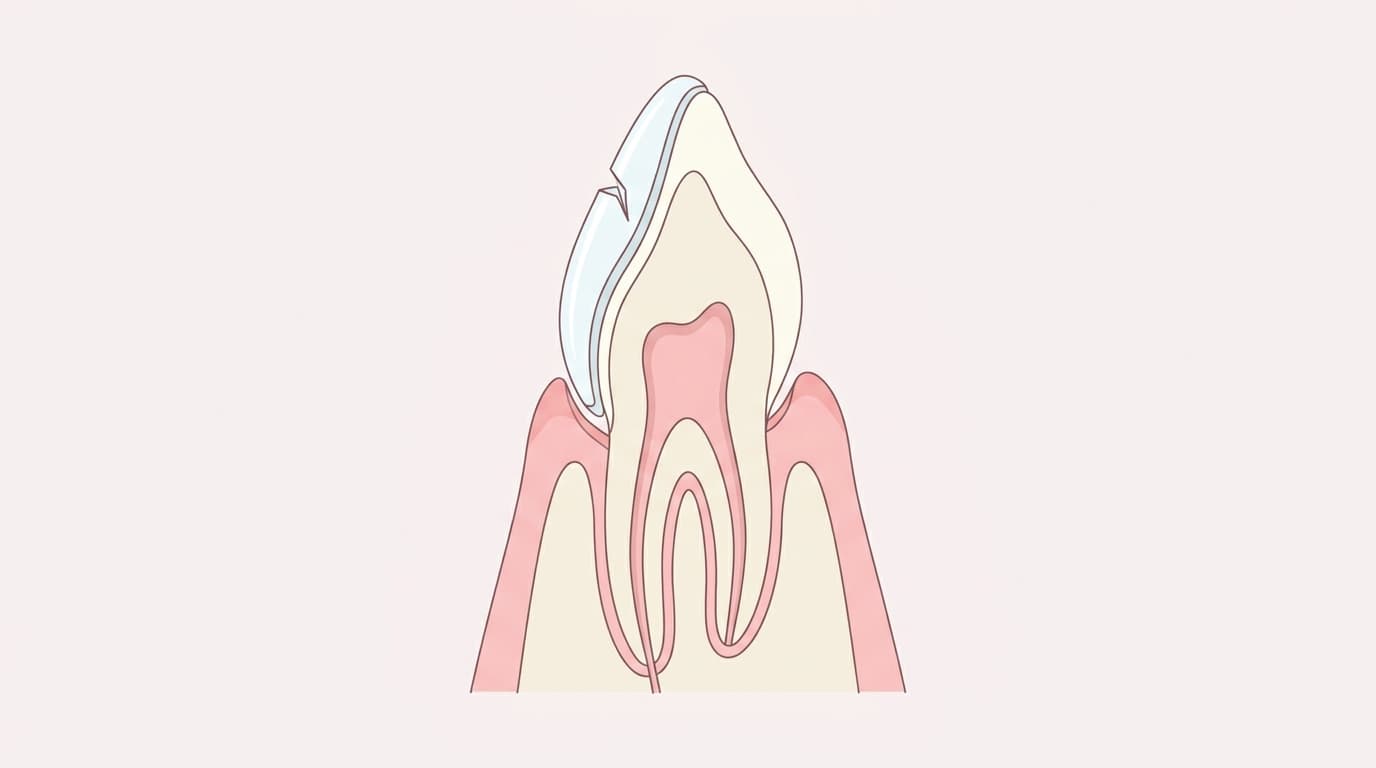
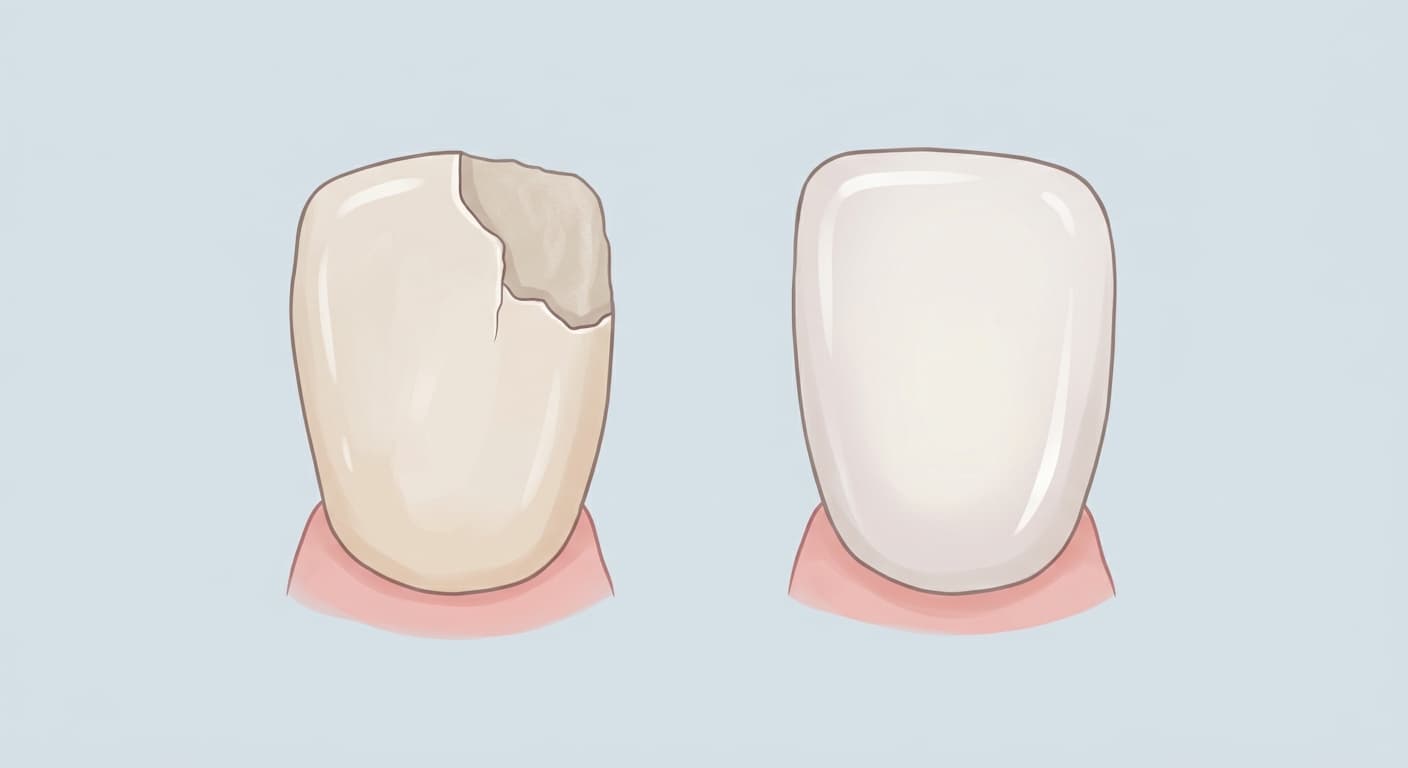
On a front tooth that has had a laminate veneer (a thin porcelain shell bonded to the front surface of a tooth for esthetic restoration) for several years, one corner recently chipped, and the gum line has gradually receded, making the boundary between the veneer and the natural tooth increasingly visible. The question is whether it is fine to leave a chipped or exposed-margin veneer as it is, and if replacement is needed, whether the entire veneer must be remade.
Short Answer
A chip or a gum-exposed margin does not automatically mean the entire laminate veneer needs to be remade. If the damage is localized and the bond between the remaining tooth structure and the veneer is still sound, repairing just the chipped area with composite resin can sometimes resolve the problem. If the damage is extensive or secondary caries has developed at the margin, a full replacement is considered. When the gum has receded, the decision between repair and replacement is likewise made only after checking the exposed margin, the root surface, and the periodontal condition together.
Why Is That?
Localized Repair Can Also Fix Just the Chipped Area
When part of a laminate veneer chips or debonds, dentists first consider a localized repair rather than removing the entire restoration: only the damaged area is trimmed and then filled with bonded composite resin. This approach removes only the fractured area or any secondary caries (decay that develops again at the margin of an existing restoration), reshapes it into an accessible form, treats the surface of the remaining material, and bonds composite resin to it. In practice, there are cases where a fractured veneer was successfully repaired and finished with composite resin. If the bond between the veneer and the tooth remains sound and the chip is localized, this method can resolve the problem without cutting any additional tooth structure. The same principle applies when a resin filling or inlay comes loose: whether to do a localized repair or a full re-restoration depends on the extent of the damage and whether caries has developed underneath.
Repeating Full Replacements Removes More Tooth Structure Each Time
If the damage is too extensive to resolve with a repair, or if secondary caries has developed broadly along the margin, the entire laminate veneer is remade and replaced. However, removing the existing restoration and bonding a new veneer makes it difficult to avoid cutting away additional healthy tooth structure. The pattern in which each round of replacement shifts toward a slightly wider and more invasive restoration is called the restorative cycle of repeated treatment. For this reason, dentists consider partial repair or simple reshaping before a full replacement. Even when a laminate veneer is first made, the principle is to cut minimally, staying within the enamel (the hard layer covering the tooth surface) where bonding is most reliable. As discussed in the criteria for determining how much tooth to remove, this same principle applies when replacing a veneer. With each repeated replacement, the enamel diminishes, and once the underlying dentin is exposed, bond strength decreases, which can affect the longevity of the next restoration as well.
If the Gum Has Receded, Start by Checking the Margin
A laminate veneer's margin is originally placed supragingivally, above the gum line, which favors periodontal health. Over time, however, as the gum recedes, this margin can become relatively more visible, or the root surface beneath it can become exposed. A root surface that was once covered by gum tissue is more vulnerable to acid than enamel, making it prone to root caries (decay that develops on an exposed root surface after gum recession). For this reason, when a patient presents with gum recession, the dentist checks not only the veneer itself but also the exposed margin, the surrounding root surface, and the condition of the periodontal tissue before deciding whether a repair will suffice or a full replacement is needed. If the margin needs to be extended further below the gum line, it is also considered important not to go too deep into the gingival sulcus (the microscopic space between the tooth and the gum, averaging 0.69 mm), so that the periodontal tissue can settle back into a stable position.