Question
My child bumped a front tooth (a baby tooth) while playing, and a few days later the tooth turned a dark color. The child doesn't seem to be in any particular pain, so I'm wondering whether it's fine to just keep watching it, or whether this discoloration could also be affecting the permanent tooth developing underneath.
Short Answer
When a baby tooth darkens after a bump, it's usually a common reaction caused by bleeding in the pulp, the nerve and blood vessel tissue inside the tooth. A change in color alone does not mean the nerve has died. However, the force applied to the baby tooth can also reach the tooth bud, the developing permanent tooth underneath, so if discoloration appears, it's important to have a dentist regularly check both how the baby tooth is progressing and how the tooth bud is doing.
Why Does This Happen?
Why the Color Changes
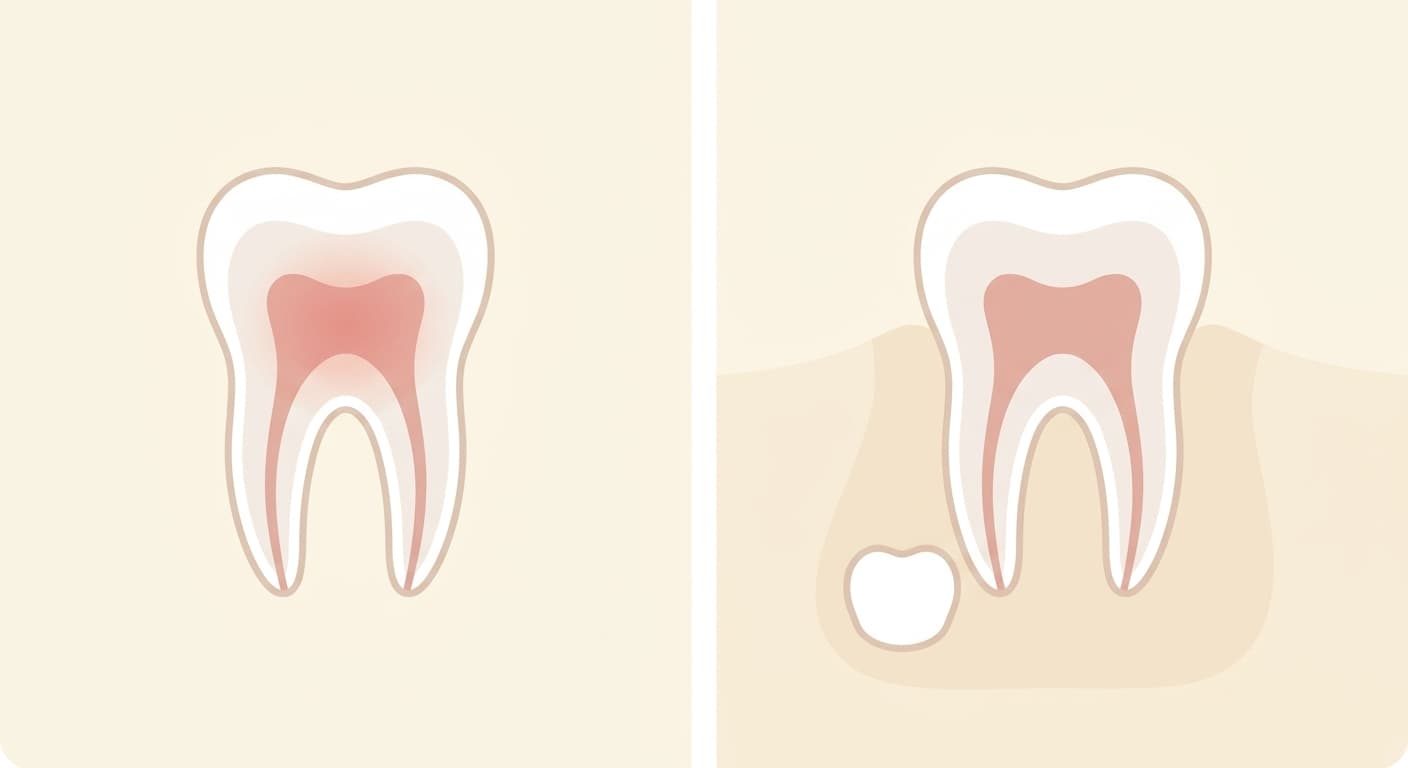
When a tooth is injured, small blood vessels inside the pulp can rupture, breaking down red blood cells and letting their pigment collect in the tiny tubules inside the tooth (dentinal tubules). This reaction is called intrapulpal hemorrhage, and the tooth usually starts to look dark red or pink about two to three weeks after the injury. This discoloration is somewhat reversible, and the tooth can return to its original color after a few weeks, but if the pigment stays fixed in place, it can remain as permanent discoloration or be an early sign that the nerve is dying.
There isn't just one cause of darkening. If the tooth takes on a yellowish or opaque color that gradually deepens, this points more toward calcific metamorphosis, a reaction in which dentin builds up excessively inside the pulp chamber while the nerve hasn't fully died. If, on the other hand, the tooth loses its shine and turns gray or dark brown, this points more toward pulp necrosis, where the nerve has actually died. Neither can be confirmed from color or a single photo alone, so dentists make this judgment over time by tracking changes through pulp vitality tests and radiographs.
Why the Permanent Tooth Bud Is Checked Too
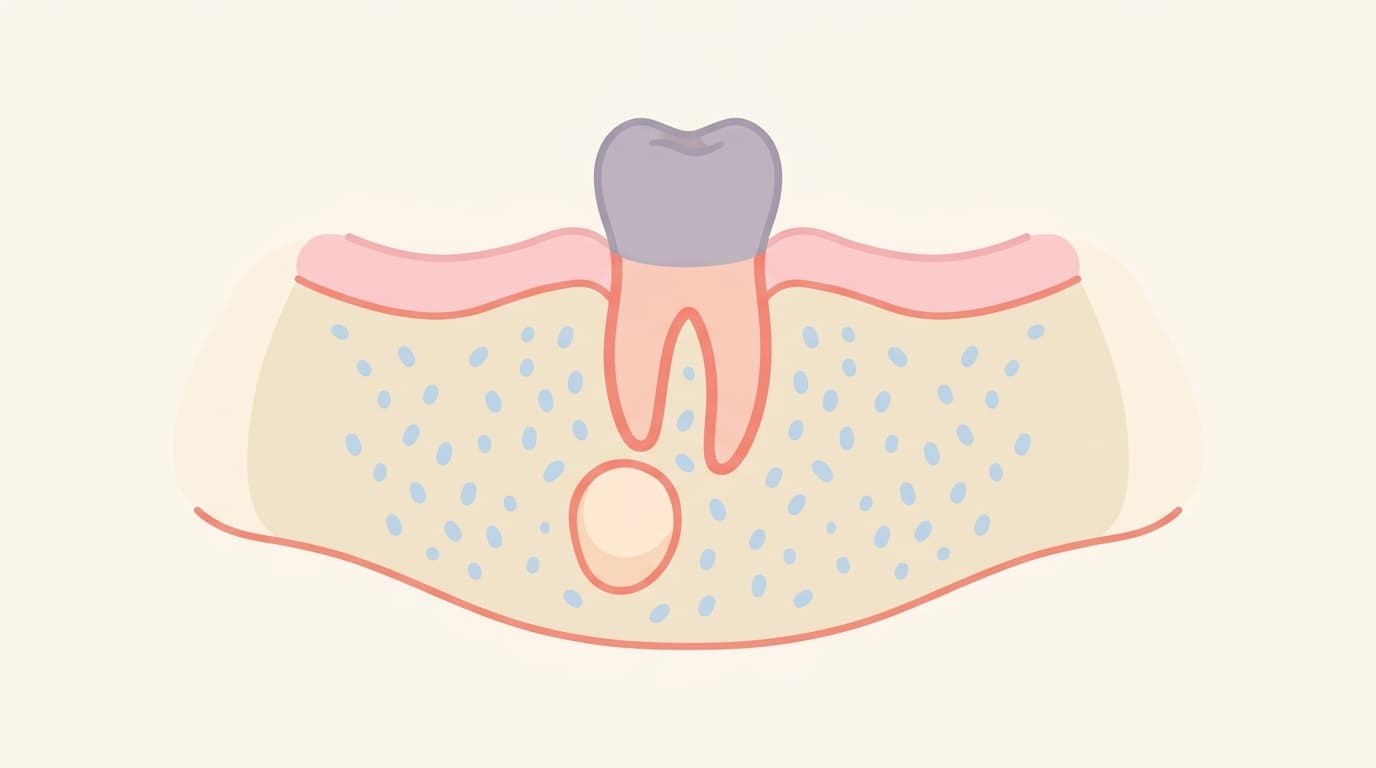
Beneath the root of a baby tooth, the tooth bud of the permanent tooth that will come in next is already positioned and developing. It's easy to assume that a baby tooth will fall out anyway, but as explained in Does a Baby Tooth Cavity Need Treatment If the Tooth Will Fall Out Anyway?, the tooth bud develops under the influence of the condition of the baby tooth above it.
When the force applied to the baby tooth is strong, or the injury is severe, such as intrusion, where the tooth is pushed into the jawbone, or avulsion, where it is knocked completely out, the impact can carry through to the tooth bud right below it and affect the development of the permanent tooth.
If the cells that form enamel on the tooth bud are damaged, the permanent tooth that erupts later can end up with a partial white or yellowish-brown defect on its crown. A localized defect like this, caused by trauma to the baby tooth, is called a 'Turner tooth,' and it shows up most often after severe injuries such as avulsion or intrusion.
The resulting shape also depends on the stage of tooth development at the time of injury. If the injury occurs while the crown is forming (roughly ages 1.5 to 3.5), the permanent tooth's crown can end up distorted, and if it occurs while the root is forming (roughly ages 4 to 5), the root can end up curved, a condition called dilaceration. If the curve is severe, the permanent tooth may not be able to erupt into its proper position, and orthodontic traction or surgical treatment may be needed.
In some cases, scar tissue that forms after a baby tooth is lost early due to trauma can actually change the tooth bud's eruption path. When this happens, the permanent tooth may come in later than expected or at an altered angle; Should I Get an Exam If a Permanent Tooth Doesn't Erupt for a Long Time After a Baby Tooth Falls Out? covers how this is checked in more detail.
That said, this kind of damage to the tooth bud doesn't happen with every injury. A simple bump that causes pain without any displacement (concussion) generally has a very good prognosis. An injury with only slight looseness and no displacement (subluxation) is also generally favorable, though the blood vessels supplying the pulp may have been affected as well, so pulp vitality needs to be monitored continuously. On the other hand, the more severe the injury, such as the tooth being pushed into the jawbone or knocked completely out, the greater the chance that it will leave an effect on the tooth bud.
What to Watch Going Forward
For a discolored baby tooth, dentists repeatedly check over time, using tests that gauge whether the nerve is still alive and radiographs to see whether any abnormality has developed around the root. In many cases the baby tooth itself remains stable without particular symptoms, but alongside that, the development and eruption progress of the tooth bud growing underneath also becomes something to monitor at regular checkups. How much the tooth bud is affected depends on the severity of the injury and the age at which it occurred, so continuing to be checked on the schedule the dentist recommends, rather than stopping after a single visit, matters more than the discoloration itself.