Question
My child has developed a cavity in a baby tooth. Since it's a tooth that will fall out and be replaced by a permanent tooth within a few years anyway, I'm wondering whether it really needs to be treated.
Short Answer
Yes, even a tooth that will eventually fall out should not be left with an untreated cavity. Until a baby tooth falls out, it helps with chewing and speech and holds the space for the permanent tooth growing underneath it to come in properly. Leaving a cavity untreated can cause your child pain and infection, and it can also affect the permanent tooth. That said, not every baby tooth cavity requires the same treatment. Depending on how deep the cavity has progressed and whether the nerve (pulp) tissue inside the tooth is still alive, the options range from a simple procedure to root canal treatment or extraction.
Why Is That?
Baby Teeth Have a Job to Do Until They Fall Out
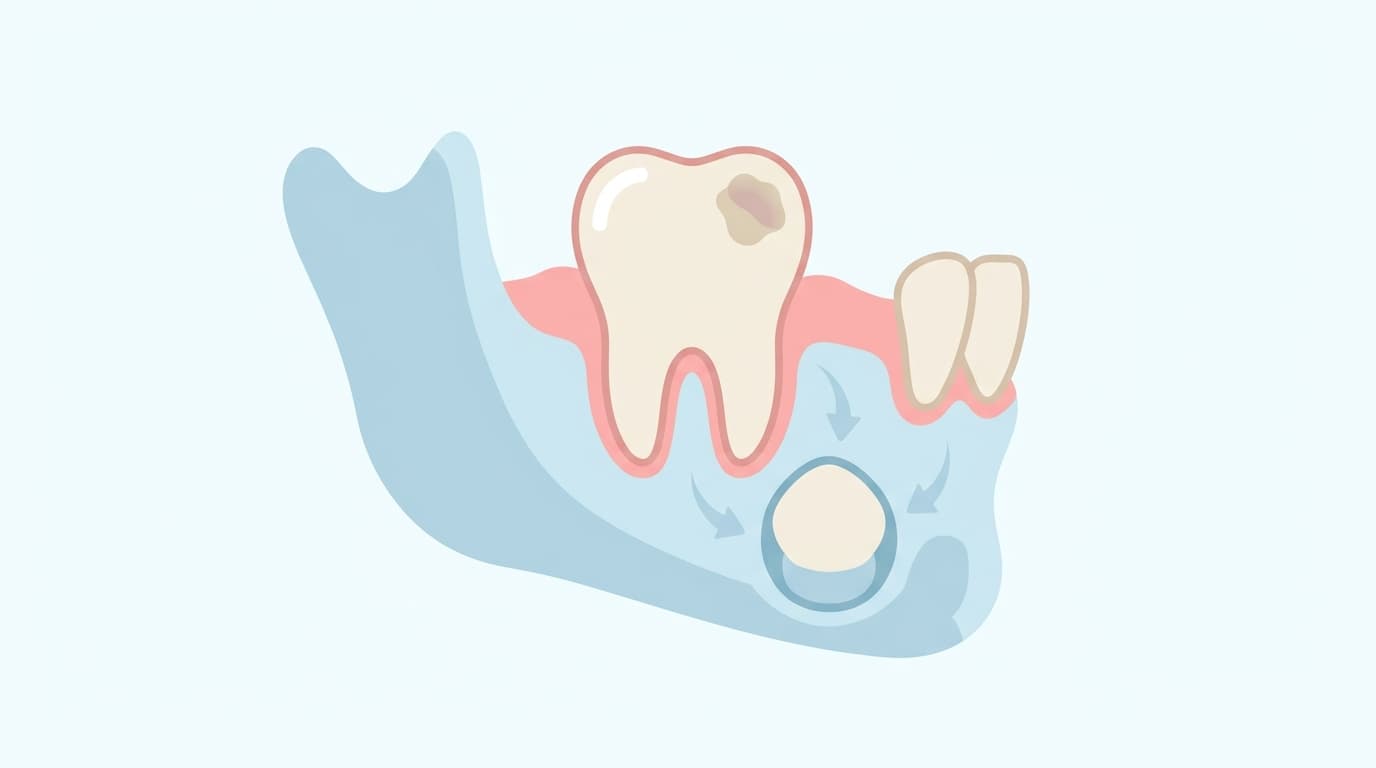
Baby teeth handle chewing, speech, and appearance, while also functioning to hold space for the permanent tooth that will later erupt (come in) in their place. The primary dentition begins erupting with the lower front teeth around 6-7 months of age and is typically complete by around 24-30 months, and for some time after that, the permanent tooth bud continues developing beneath the baby tooth. If a baby tooth doesn't hold its place, the space can narrow or neighboring teeth can tilt, making it harder for the permanent tooth to find its proper position later.
Cavities in Baby Teeth Tend to Spread Quickly
The crown of a baby tooth (the part visible above the gum) is only about 1mm thick, roughly half the thickness of a permanent tooth. This means a cavity can reach the nerve tissue in a shorter amount of time. Dental caries (tooth decay) progresses as acid produced by bacterial plaque on the tooth surface dissolves the tooth's minerals. When this destruction breaks down the hard tissue that protects the nerve, bacteria and their byproducts can penetrate into the nerve tissue (dental caries (tooth decay)). Early childhood caries refers to the presence of one or more decayed, missing, or filled baby teeth in a child 71 months of age or younger. Among these, the more rapidly progressing forms are known to start in the upper front teeth and can reach the point where the nerve becomes exposed or an abscess (pocket of pus) forms at the root tip.
Left Untreated, It Can Go Beyond Pain and Infection to Affect the Permanent Tooth
Even after a cavity has spread to the nerve and the pulp (nerve tissue) has died, there may initially be no noticeable symptoms or changes visible on an X-ray (pulp necrosis (nerve death)). Over time, however, the infection can spread to the tissue around the root tip and lead to an acute periapical abscess. This condition comes with spontaneous pain along with firm, red swelling. If the infection spreads further, the swelling can become more pronounced, and if that kind of change appears, the tooth should be reassessed at the dental clinic right away (If My Child's Cheek and Eye Area Swell After Tooth Treatment, Is It Okay to Wait?).
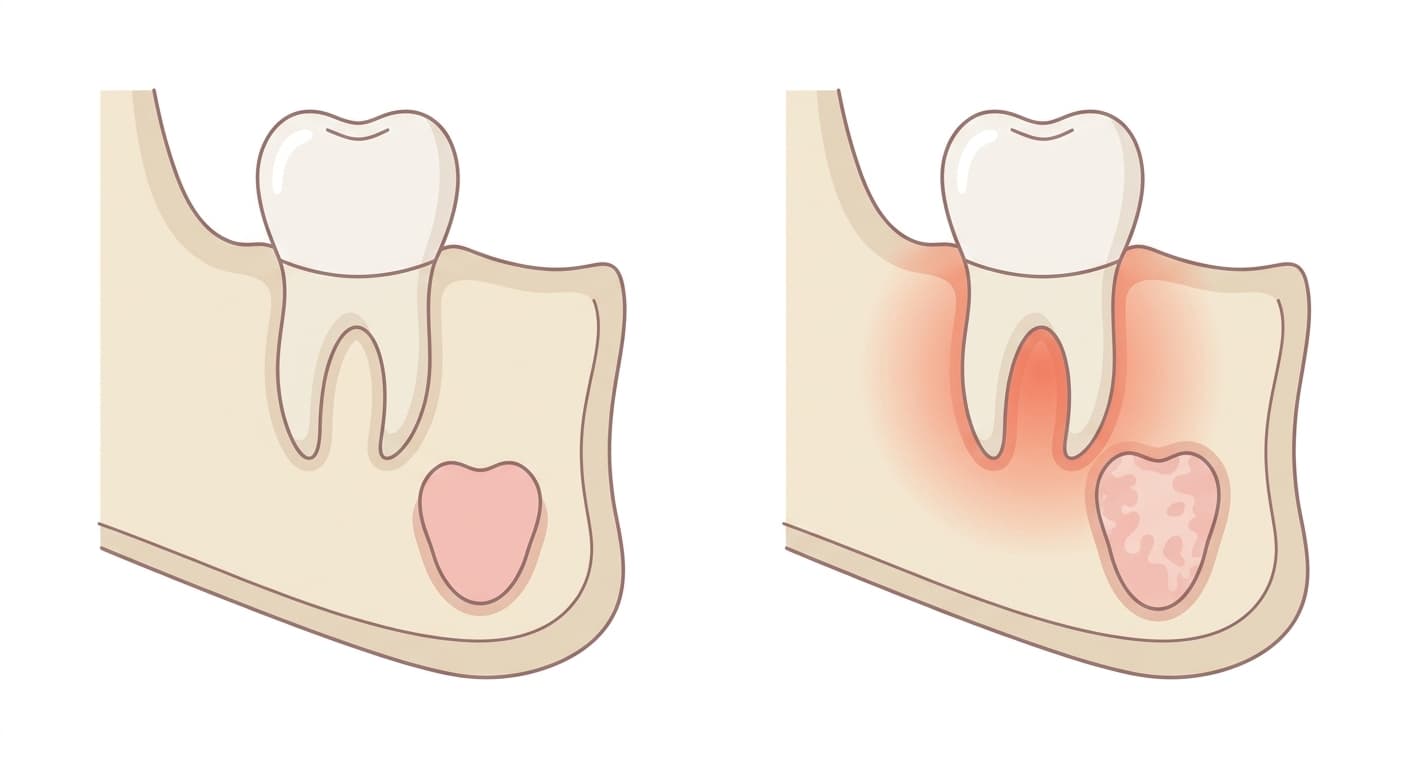
An infection at the root tip of a baby tooth may not stop at causing pain in the moment. When an infection at the root tip of a baby molar affects the bud of the permanent premolar developing beneath it, the premolar can erupt discolored in brown or yellowish-brown, or with part of its enamel (the hard layer covering the tooth surface) missing. This kind of localized enamel defect caused by infection in a baby tooth is called a Turner's tooth. In other words, what looks like a problem confined to a tooth that will fall out anyway can leave a visible trace on the permanent tooth growing underneath it.
How Deep the Cavity Is Changes the Range of Treatment
Treating a cavity in a baby tooth doesn't always mean touching the nerve. If the cavity is deep but the nerve isn't exposed, it can be managed with indirect pulp therapy, which removes only the infected dentin (the tissue beneath the enamel) while leaving the hard dentin layer close to the nerve in place to seal the cavity. Reducing bacterial irritation allows the remaining dentin to form reparative dentin (new dentin that protects the pulp).
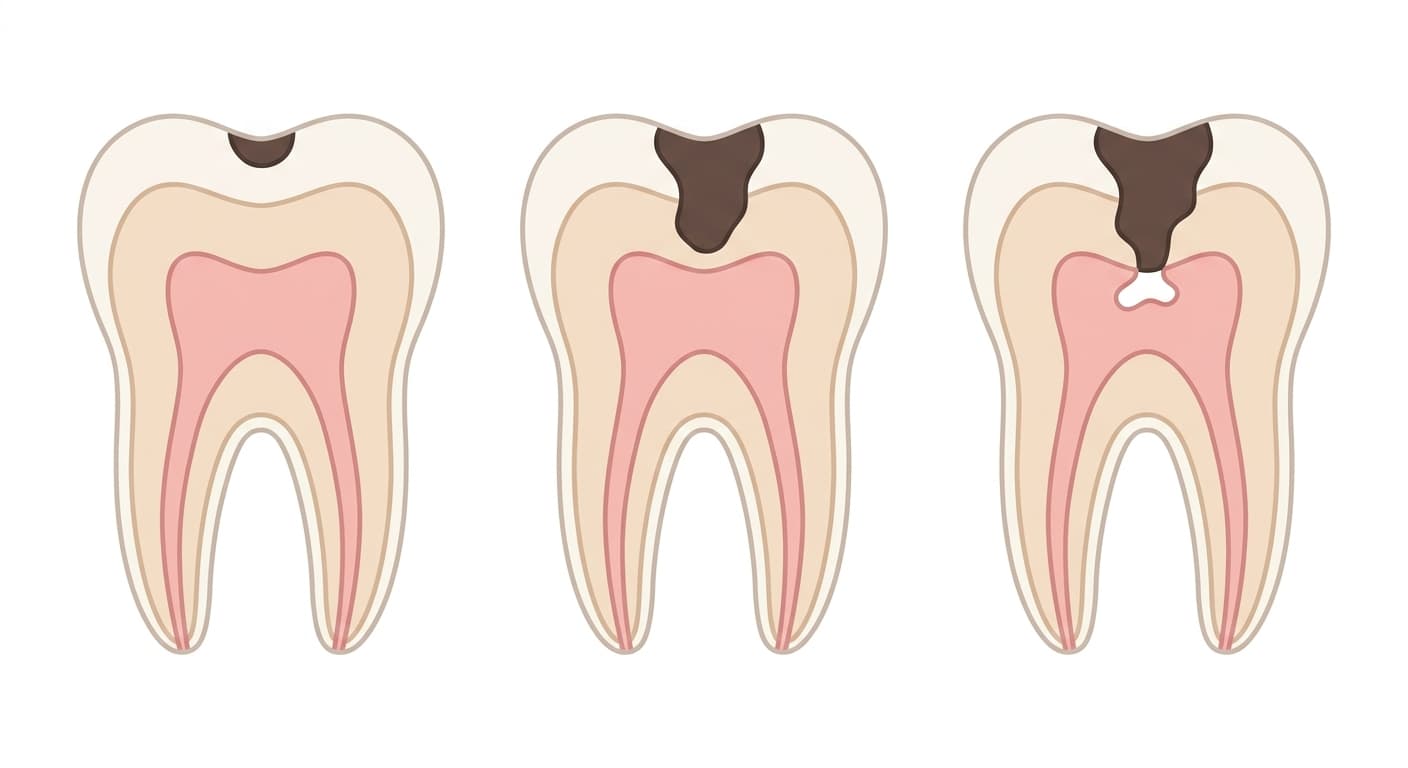
Even if the cavity has exposed the nerve, if the nerve tissue is still alive, a pulpotomy can be used, removing only the inflamed tissue in the crown portion (the upper part of the tooth) while leaving the nerve in the root intact. This procedure is known as the standard approach for baby teeth with nerve exposure caused by decay. Afterward, a medicated dressing is typically placed and the whole tooth is reinforced with a stainless steel crown (a pre-made metal cap) (Does a Baby Tooth Need a Crown After Root Canal Treatment Too?).
If the nerve tissue is deeply infected or already dead, a pulpectomy, which removes the entire nerve, becomes necessary. Since a baby tooth's root naturally resorbs over time, the space left after nerve removal is filled with a material that is gradually absorbed by the body, so it doesn't interfere with the root resorption process.
If Treatment Is Delayed and the Baby Tooth Is Lost Early
If the infection is too severe to save the tooth with treatment, or if the tooth structure has already broken down significantly, extraction becomes the option. In this case, the real issue isn't the extraction itself but what comes after. Since most space loss has been reported to occur within six months after early extraction of a baby tooth, a space maintainer often needs to be placed to preserve room for the permanent tooth to erupt into. Delaying treatment to the point of extraction can turn what could have been resolved with a single cavity treatment into an additional procedure involving a space maintainer.