Question
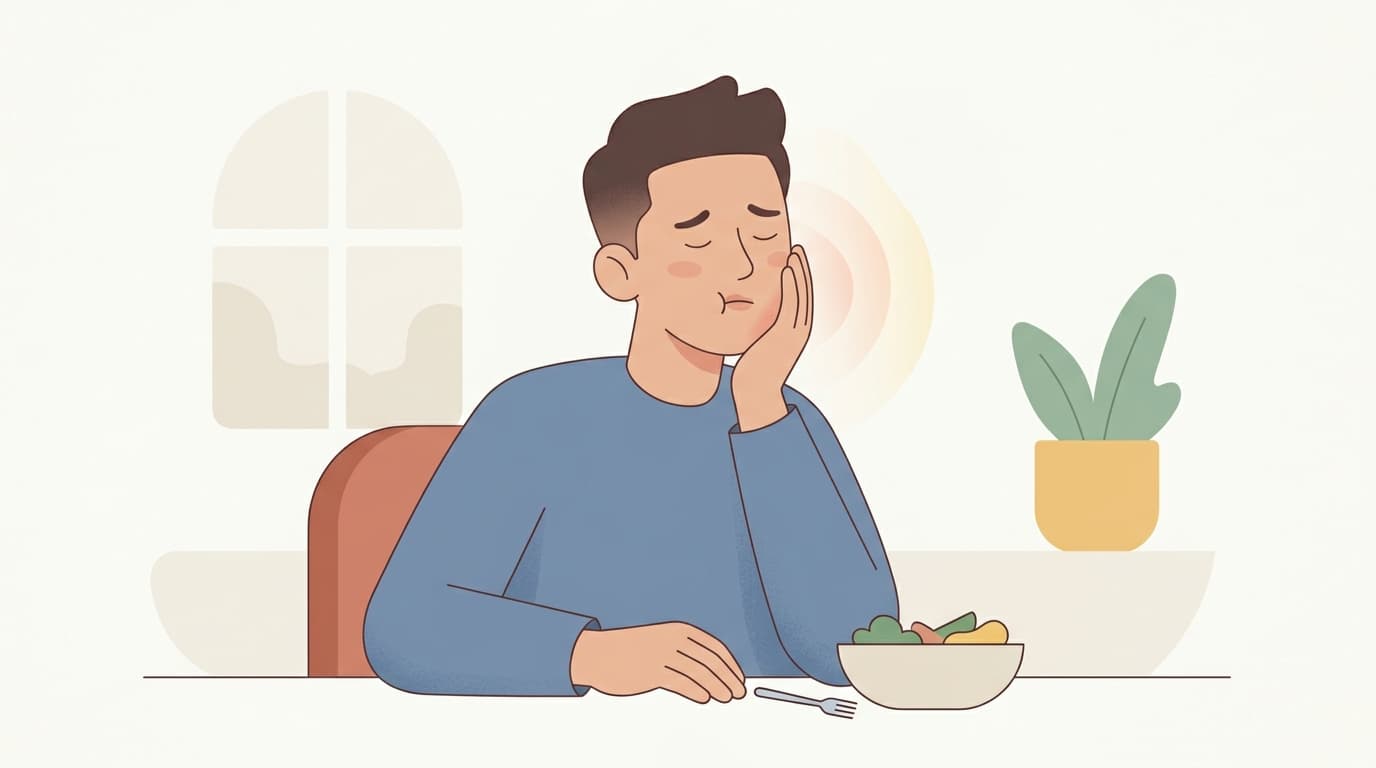
I have a tooth that was treated for a cavity with resin (a tooth-colored filling material). Since then, every time I chew, this tooth feels like it touches before the others, and it also hurts. I'm wondering whether it's okay to leave it as is, or whether I should go back to the dentist to have the height adjusted.
Short Answer
If a tooth filled with resin feels like it hits first and hurts when you chew, it's a good idea to have your occlusion (how your upper and lower teeth come together) checked again. If the filling material was left higher than the original tooth, the force of chewing can concentrate on that tooth first and cause pain. In this case, adjusting the high spot to even out the contact can relieve the symptoms. However, if throbbing pain occurs on its own without any stimulus, or if the pain continues for more than a few weeks even after adjustment, it may not be explained by an occlusal problem alone, and further evaluation is needed.
Why Does This Happen?
How a High Contact Point Leads to Pain When Chewing
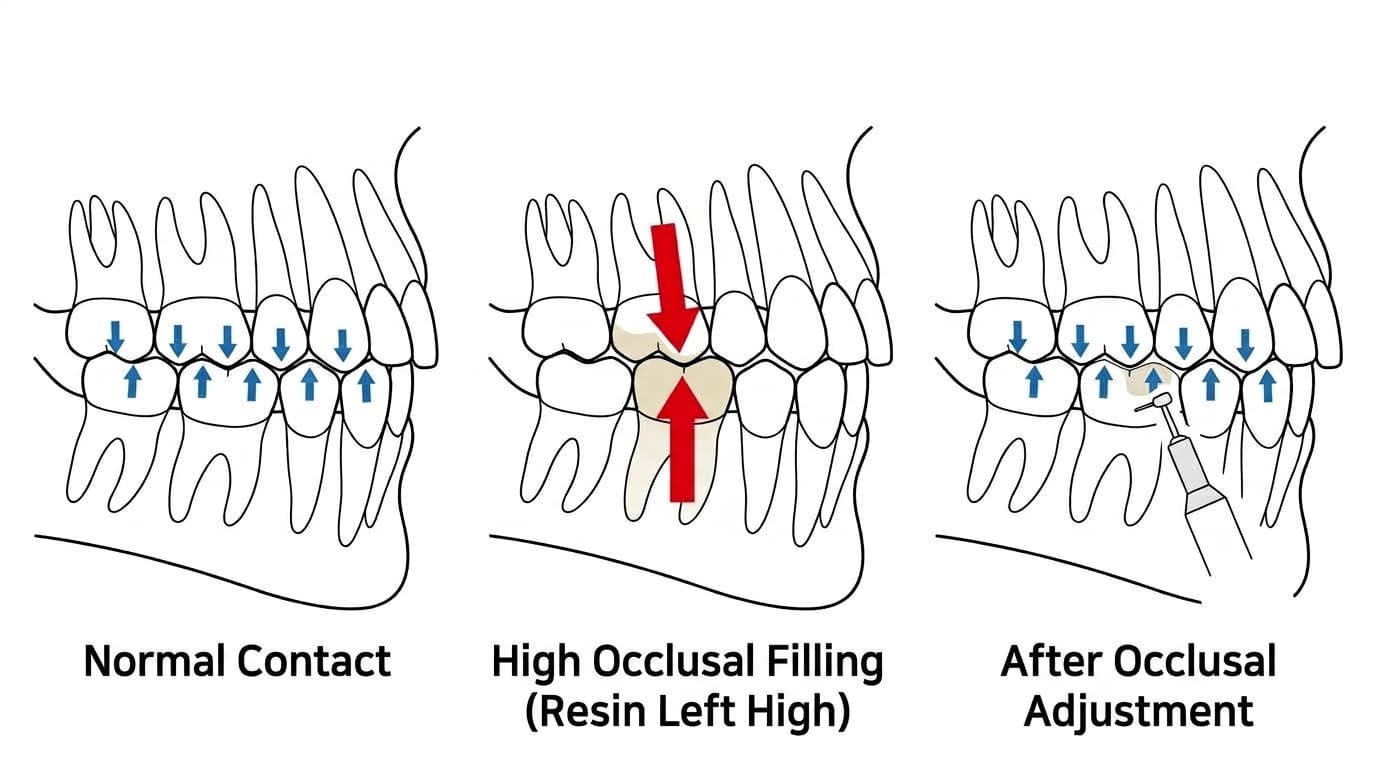
If a tooth filled with resin is left even slightly higher than the other teeth, this tooth touches first when you close your mouth (a premature contact). Before the rest of the teeth even come together, this tooth alone ends up bearing the chewing force. Repeated chewing under these conditions can build up stimulation in the pulp, the nerve tissue inside the tooth, leading to mild pulpitis that only hurts when chewing. At this stage, removing the high contact that's causing the problem can allow the inflammation to subside and the nerve to return to normal.
How Dentists Check and Adjust This
In the clinic, the dentist checks the location and severity of the pain with a test that involves gently tapping the tooth. This test looks at the state of inflammation in the periodontal ligament, the tissue that surrounds the tooth root and connects it to the jawbone. A positive response doesn't automatically mean there's a problem with the nerve (pulp). The same response can occur from causes unrelated to the nerve, such as a remaining premature contact after the restoration, a microscopic crack in the tooth, or inflammation on the gum side. That's why the dentist checks the occlusion together with tests that assess the condition of the nerve.
If occlusal interference is confirmed, only that spot is very slightly reduced so the upper and lower teeth meet evenly. After the adjustment, the dentist monitors whether the pain decreases over about 2-3 weeks. If the pain continues during this period, or if new spontaneous pain develops, where the tooth throbs even at rest and not just when chewing, this raises the possibility that the pulp damage has progressed to a stage that's difficult to recover from. In that case, root canal treatment is considered.
If a high contact point continues for a long time, it can also cause irritation-related inflammation in the periodontal ligament surrounding the tooth root. In teeth with a living nerve, traumatic occlusion or premature contact from a high filling can be a cause of this kind of apical periodontitis. Treatment includes lowering the occlusion to relieve pressure, along with pain-control measures if needed.
If the Bite Height Is Normal but It Still Hurts When Chewing
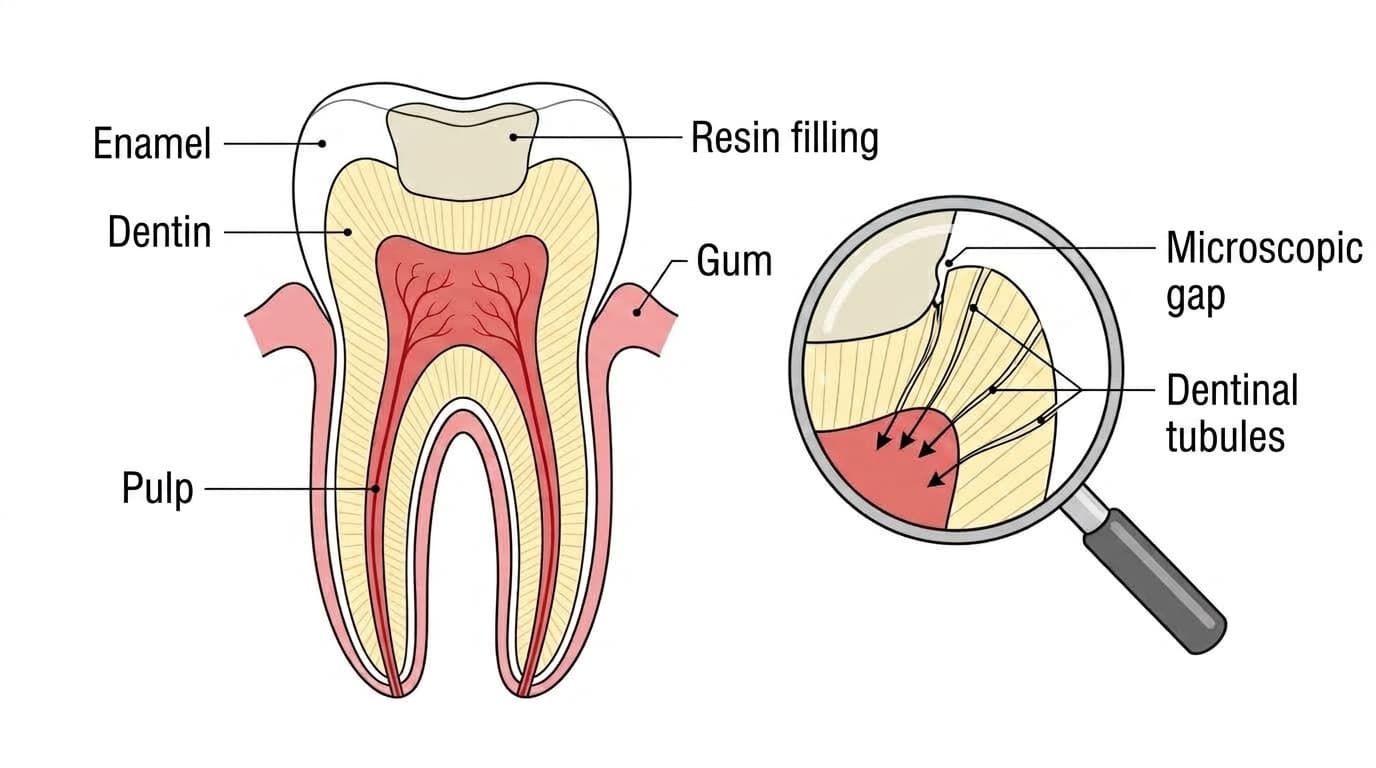
If the occlusion has been checked and there's no particular high spot, the cause may be different. Resin shrinks very slightly in volume as it hardens. Because of this, a small gap can form between the filling material and the tooth, or the fine tubules in the dentin (the mineralized tissue inside the tooth) may not be completely sealed. If chewing force or temperature stimulation passes through this gap, the nerve reacts and pain occurs. This kind of case is approached differently from an adjustment that lowers the height, and the material and the condition of the nerve need to be reassessed.