
Question
I've been putting off dental treatment for years because I'm scared of it. I heard that getting sedation at the dentist lets you get through treatment comfortably, and I'm wondering if that's the same thing as general anesthesia. I'd also like to know whether it really means feeling nothing, as if asleep, and whether there's anything I need to prepare beforehand.
Short Answer
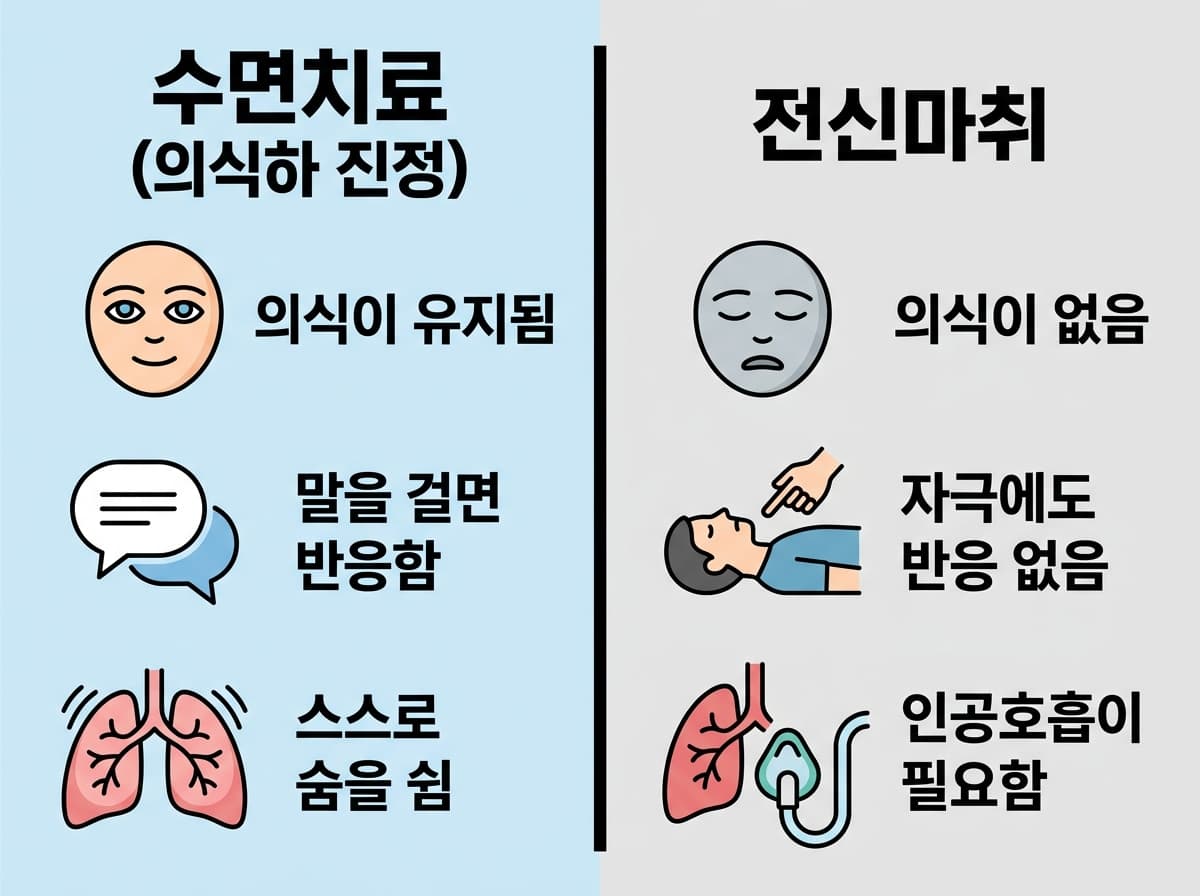
Sedation dentistry (conscious sedation) and general anesthesia are not the same state. Sedation dentistry is a method that uses medication to ease anxiety and fear; consciousness is not completely lost, you can still respond when spoken to or given a light physical cue, and the ability to breathe on your own is maintained. General anesthesia, on the other hand, is a state in which consciousness is completely lost and there is no response even to surgical stimulation; the ability to breathe on your own and the reflexes that protect the airway are both diminished, so artificial ventilation is needed to assist breathing. Because of this difference, the pre-procedure evaluation items and who needs to be present afterward also differ.
Why Is That?
What "Sedation Dentistry" Actually Means
What clinics commonly call sedation dentistry corresponds to psychosedation, or conscious sedation. This method uses medication to lower anxiety and fear without eliminating the patient's consciousness, helping them cooperate with treatment. Inhalation sedation, breathing a mixture of nitrous oxide (laughing gas) and oxygen, is the most common form, using a gas mixture of 20-30% nitrous oxide and 70-80% oxygen.
There's an important point here. Conscious sedation is much safer than general anesthesia, but its pain-relieving effect on its own is incomplete. So getting sedation doesn't mean you can skip the anesthetic injection at the treatment site, that is, local anesthesia; the two methods are always used together. Even though sedation dentistry sounds like it "puts you to sleep," its actual role is reducing anxiety, while local anesthesia is what blocks the pain.
Sedation also varies in depth. Moderate sedation, for instance, is a state in which consciousness is lowered by medication, but the patient can still purposefully respond to verbal commands alone or to verbal commands paired with a light tactile stimulus. No separate measures are needed to maintain the airway, and the ability to breathe on one's own and cardiovascular function are both preserved. However, it's noted that administering additional medication before the drug's effect has fully taken hold can cause an abrupt, unexpectedly deep drop into a deeper sedation state, so caution is needed. How breathing is monitored differently depending on the depth of sedation is covered in more detail in How Are Local Anesthesia and Sedation Used When Removing Wisdom Teeth?.
The Fundamental Difference from General Anesthesia
General anesthesia is a method that uses medication to completely eliminate consciousness, producing a state with no response even to surgical or painful stimulation. The ability to feel sensation and the ability to move the body are both removed, and autonomic nervous activity is also suppressed. The biggest difference lies in breathing. Because protective reflexes, including those of the airway, are partially or completely lost, impairing the ability to breathe on one's own, measures to maintain the airway and positive-pressure ventilation to mechanically push air in are required. It can also affect cardiovascular function.
Textbooks describe general anesthesia as a method applied to pediatric and disabled patients for whom cooperation is difficult to obtain through ordinary behavior guidance methods, such as those with physical or intellectual disabilities, severe dental phobia, cases where local anesthesia doesn't work well, or extensive decay. Whether general anesthesia is appropriate for situations outside this category, such as dental fear in adults, isn't determined by this description alone; it's judged individually during a pre-treatment consultation, taking into account the extent of treatment needed, the likelihood of cooperation, and overall health status.
What's Checked Before the Procedure
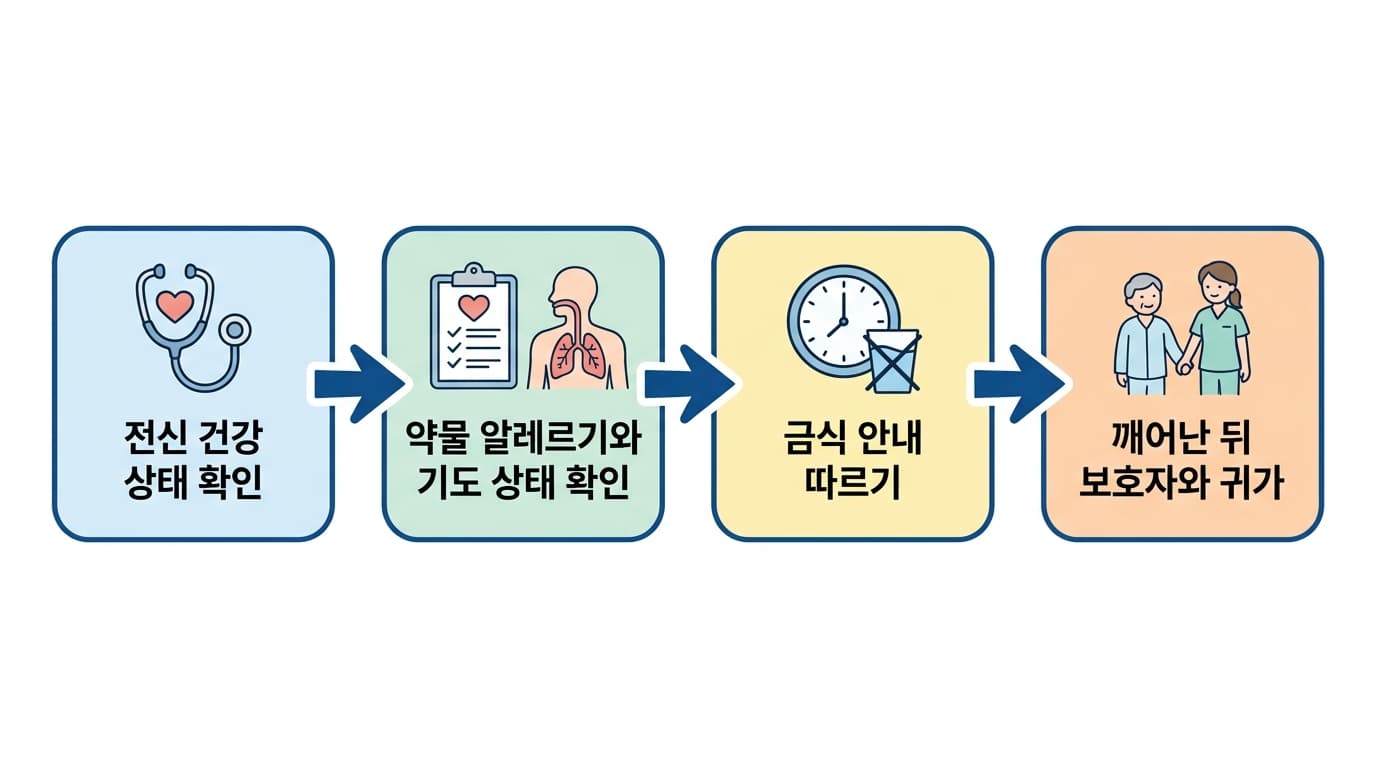
Whether it's sedation dentistry or general anesthesia, the patient's overall condition is checked before the procedure. A representative tool for this is the physical status classification (ASA classification) set by the American Society of Anesthesiologists. It ranges from ASA Class I, a healthy state, to ASA Class VI, brain death, and in dental treatment, ASA Class I and Class II patients can generally undergo general anesthesia relatively safely, while ASA Class III proceeds with caution for medical emergencies. ASA Class IV and Class V are described as not typically being indications for dental treatment. When planning general anesthesia, physical examinations and clinical laboratory tests are performed together with this ASA classification to assess risk.
Items that affect the sedation or anesthesia plan, such as drug allergies and airway condition, are also checked in advance. Clinics keep records of these pre-procedure checks along with guardian consent and vital signs before and after treatment.
Before sedation treatment or general anesthesia, you'll also be given fasting instructions to avoid water and food for a certain period of time. This is because if vomiting occurs during anesthesia or sedation, stomach contents can enter the airway and lead to problems such as laryngospasm, which narrows the airway. The exact fasting duration, the personnel needed during the procedure, and the type of monitoring equipment are determined by the clinic based on the patient's age and health status, so it's safest to follow the guidance given during the pre-procedure consultation.
There's also an outpatient general anesthesia option where you come in, complete treatment, and go home the same day. Pre-operative tests are completed within two weeks of the procedure date, and on the day of treatment, the patient comes in, receives treatment under general anesthesia, and is then woken up and sent home. This method is mainly used for patients who are ASA Class I or II, or ASA Class III patients whose systemic conditions are stably controlled. It can reduce the cost of hospitalization and the risk of infection, but since it's difficult to manage one's own condition once home, it's described as essential to confirm that the patient is fully awake before going home together with a guardian.