Question
A small front tooth, often a lateral incisor that's naturally narrow and pointed, had its shape built out with composite resin (a tooth-colored bonding material), but the resin came off not long after. The question is whether to simply redo it with resin, or whether this is the moment to switch to a laminate veneer (a thin ceramic shell bonded to the front surface of the tooth).
Short Answer
The resin coming off doesn't by itself make switching to a laminate veneer necessary. If the tooth underneath the debonded resin is sound and enough enamel remains for bonding, redoing the same site with composite resin after refreshing the surface is also an accepted approach. On the other hand, if the goal is to reshape the tooth itself more distinctly and have that change last longer, a laminate veneer is the more stable alternative. Even so, a laminate veneer is also bonded in place, so it doesn't eliminate the possibility of debonding or fracture.
Why Is That?
A Site Where Resin Has Debonded Can Be Restored Again With Resin
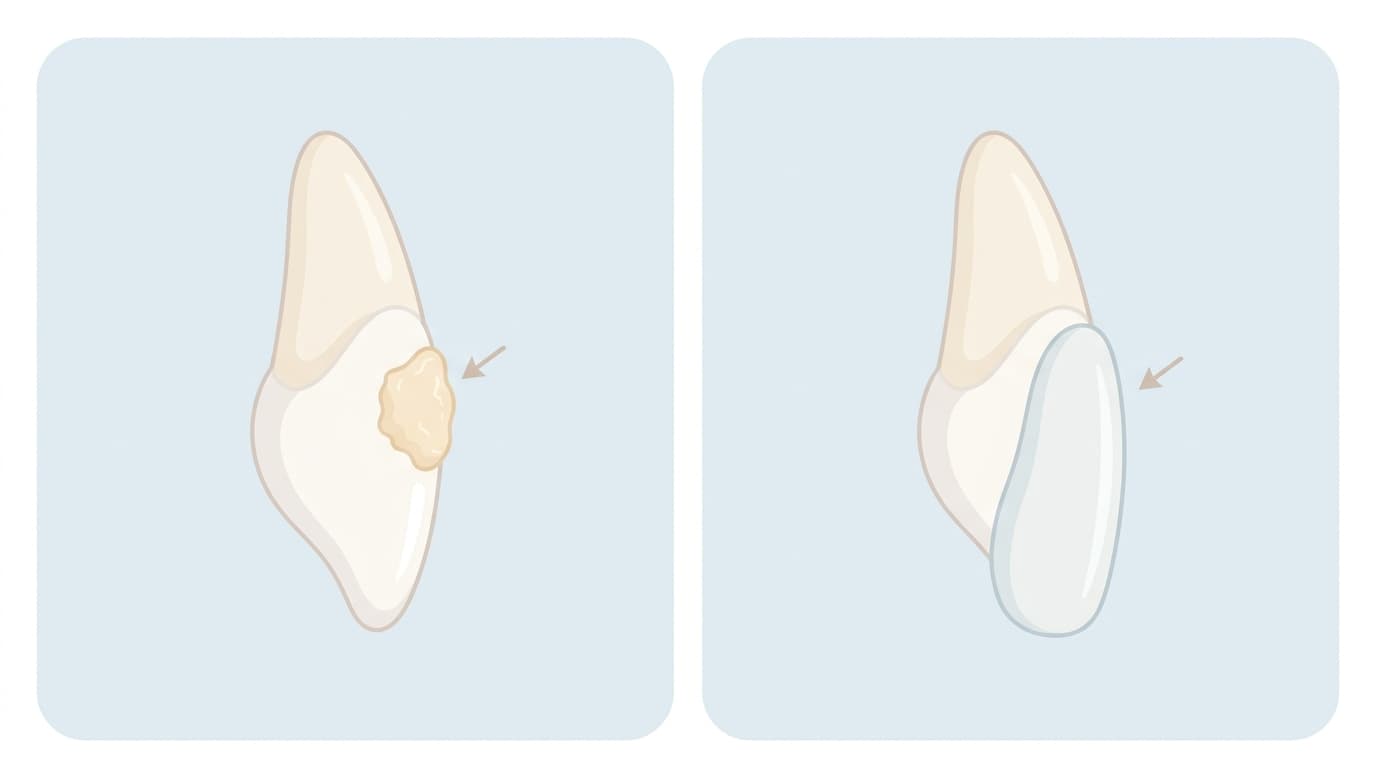
A small front tooth, particularly a maxillary lateral incisor that has grown as a small, cone-shaped microdontia (a tooth that developed smaller than normal, also called a peg lateralis), often lacks enough contact surface with the neighboring tooth, which makes a gap between the teeth more likely. Restoring such a gap or the missing width with composite resin is done by acid-etching the enamel surface and bonding resin onto it, without cutting into the tooth structure. Because it requires almost no tooth reduction, no anesthesia, and can be finished in a single visit, it's a common first choice for addressing microdontia or a diastema (a gap between teeth).
When an existing composite resin restoration needs to be removed due to discoloration or damage, building composite resin back up on the same tooth is also used. In one reported case, carefully removing a discolored existing composite restoration revealed the original microdontia shape underneath, and composite resin was built back up directly on top of it using a pre-made shape guide (a silicone index). However, a site where the resin has simply debonded cannot be filled again as-is. The already-cured resin surface has lost the uncured layer (the oxygen-inhibited layer) that let new resin chemically bond to it, since that layer has already been abraded away or contaminated. That's why the surface needs to be roughened again and taken through fresh acid-etching and adhesive application before the next layer of resin will bond reliably. The criteria for choosing between a local repair and a full redo when resin or an inlay debonds weighs the same factors: the extent of the damage together with the condition of the tooth underneath.
When Switching to a Laminate Veneer Makes Sense
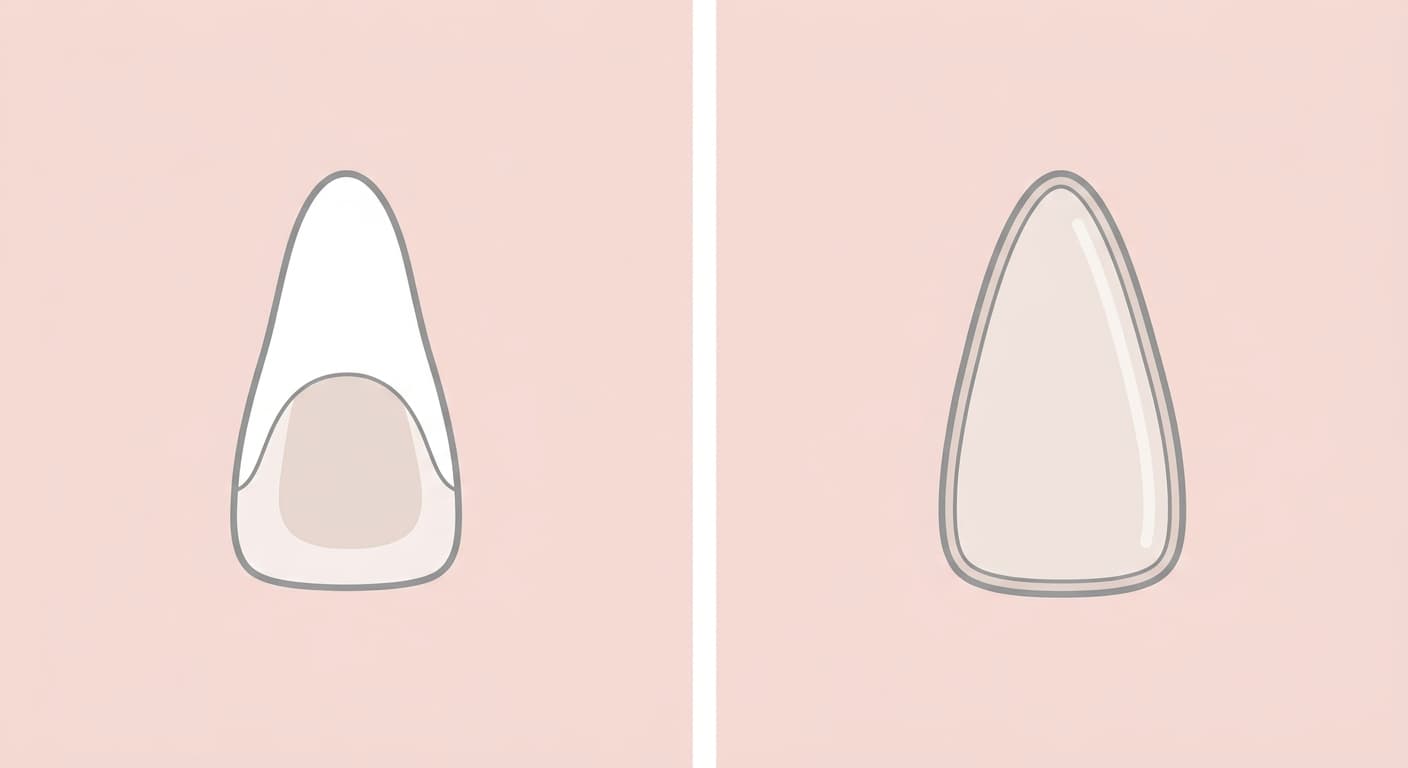
When the tooth's shape itself is small and pointed, as with microdontia, and the goal is to reshape it more distinctly and have that change last longer, a laminate veneer is the standard option. A laminate veneer involves minimally reducing the enamel on the front surface of the tooth and bonding a thin ceramic shell onto it with resin cement; it's indicated for conservatively correcting discolored teeth, microdontia, or a diastema. That said, the standard amount of reduction needed is about 0.7mm at the incisal edge and at least about 0.5mm at the cervical area (the portion near the gumline).
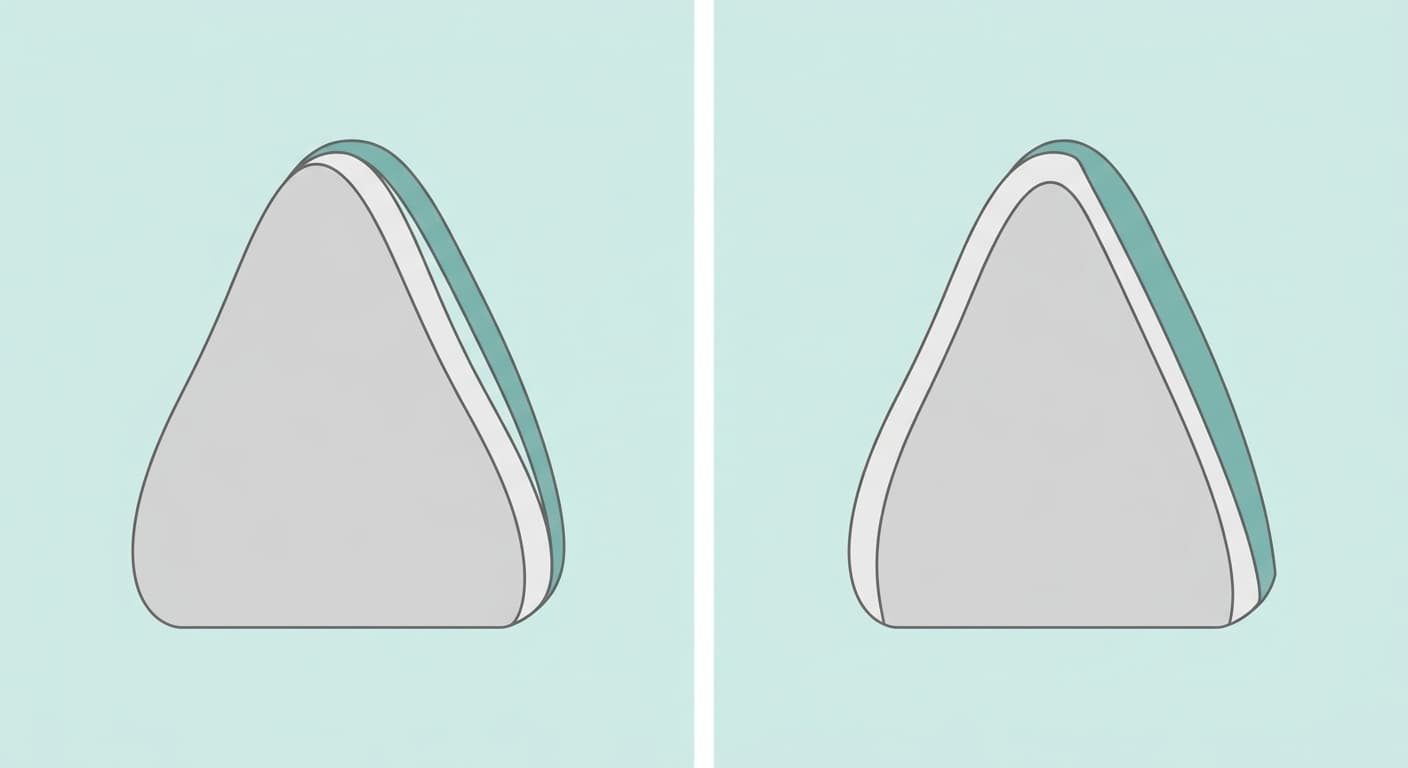
When the tooth is naturally small and space already remains, a prepless veneer that skips this reduction altogether is also an option. It's described as most suitable when the tooth shape is naturally deficient, when there's space between teeth, or when both conditions are present together; in that case the existing enamel only needs acid-etching before the ceramic shell is bonded, so it's possible to switch to a veneer without cutting the tooth at all. On the other hand, if the tooth is already normal-sized, placing a thick ceramic shell without any reduction tends to make the restoration overly bulky and more likely to irritate the gums, which also has to be weighed.
A Laminate Veneer Isn't a Permanent Restoration Either
Switching to a laminate veneer doesn't make the risk of debonding or fracture disappear. The 10-year survival rate for laminate veneers is reported at around 95.5%, and the main causes of the remaining failures are cited as fracture, debonding, and secondary decay (new decay forming at the margin of the restoration). Failure rates are reported to be higher in particular for teeth with a bruxism habit or teeth that have had root canal treatment and no longer have a pulp (the tooth's nerve), so in those conditions, care such as wearing an occlusal guard (a device that protects the teeth) may also be needed after switching to a veneer. As covered in the criteria for choosing between a local repair and a full replacement when a laminate veneer chips or its margin becomes exposed, even after switching to a laminate veneer, a local repair is often considered first if damage occurs, rather than remaking the whole restoration.