Question
People who enjoy drinking colored beverages like wine, or beverages with acidity, often wonder whether these drinks discolor teeth, and if so, whether pigments or acid are responsible. This question is about whether colored and acidic beverages affect teeth in the same way, and if not, what the difference is.
Short Answer
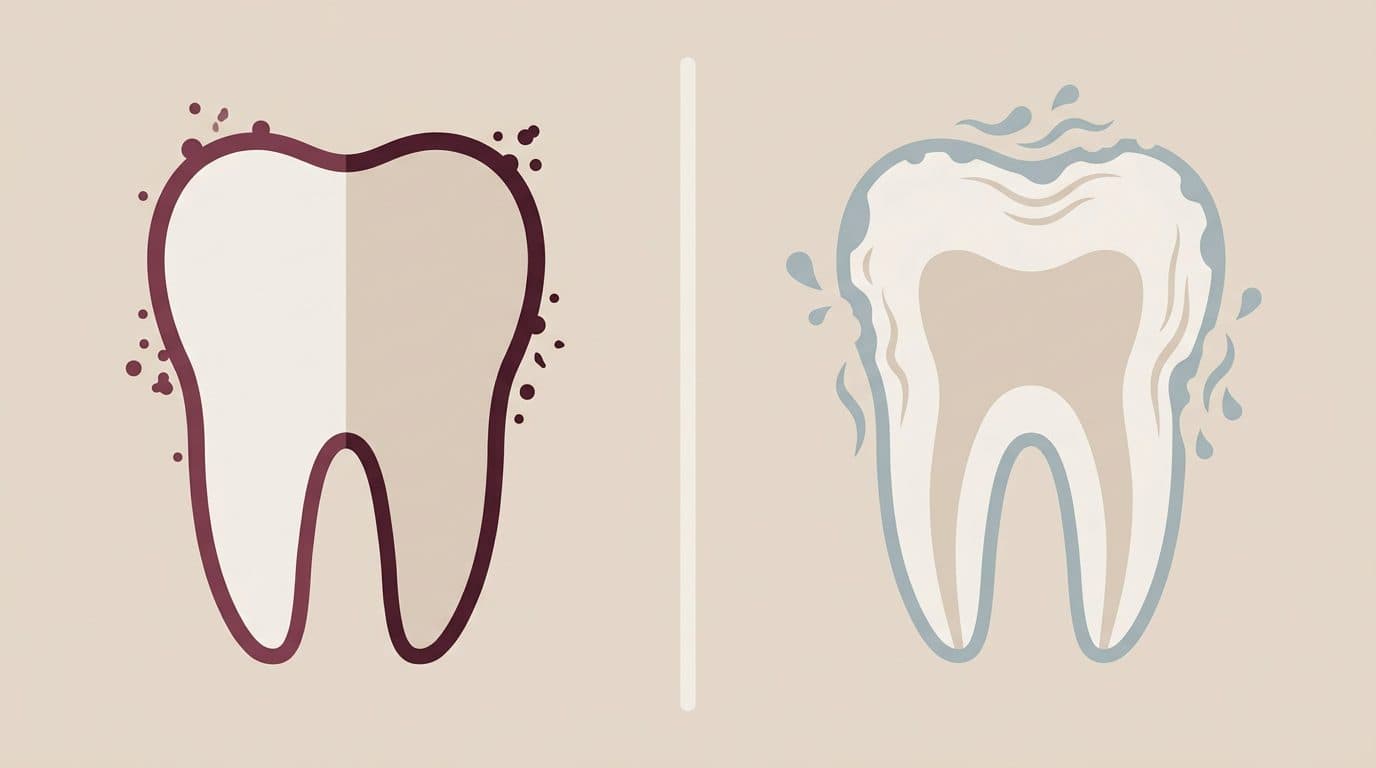
Colored drinks and acidic drinks act on teeth through different mechanisms. Colored drinks cause extrinsic staining, discoloration that forms on the outer surface of the tooth, where pigments adhere to the tooth surface. Acidic drinks can cause dental erosion, in which the hard tissue that makes up the tooth is chemically dissolved. A beverage like wine, which has both color and acidity, can be involved in both processes, but since pigment concentration, acidity, and drinking habits vary by beverage, not every drink or every alcoholic beverage affects teeth to the same degree. The most important difference is that staining can mostly be reversed through professional dental cleaning (a procedure that professionally removes tartar and pigment) or surface polishing, while tooth tissue dissolved by erosion does not grow back.
Why Is That?
How Pigments Stick: Extrinsic Staining
Even after a professional dental cleaning, the acquired pellicle (a thin film made of salivary proteins) re-covers the tooth surface within minutes. Dental plaque (the bacterial biofilm on the tooth surface) settles on top of this film, and because plaque is composed of polysaccharides and proteins, it readily absorbs pigments. When pigments from deeply colored drinks such as coffee or tea build up on this plaque and film, the outer surface of the tooth shifts toward brown or black, which is what extrinsic staining looks like. Deeply colored drinks like wine can build up pigment in the same way. Nicotine and tar from cigarettes also leave heavy stains through the same mechanism, typically at the cervical area (where the tooth meets the gum) or on the inner surfaces of the teeth.
Extrinsic staining is easier to treat and has a better prognosis than intrinsic discoloration, which mainly occurs during tooth development, because routine care such as professional cleaning or microabrasion (a procedure that gently polishes away surface stain) removes most of it. Tooth-whitening treatments work in a similar direction to stain removal in that they don't shave down tooth structure but instead oxidize and break down organic pigments inside the tooth, though, as explained below, they cannot restore tooth structure that has already been worn away by erosion. Whether yellow or stained teeth can be whitened through brushing or whitening depends on the type of staining involved.
How Acid Dissolves Teeth: Dental Erosion
Dental erosion is a phenomenon in which acid contacts the tooth surface directly and chemically dissolves the hard tissue, without bacteria being involved. Erosion caused by directly consuming acidic foods and drinks such as carbonated beverages, lemon juice, or vinegar is called extrinsic acid exposure, while erosion caused by acid rising from inside the body, such as from acid reflux or frequent vomiting, is called intrinsic acid exposure. Erosion from drinking an acidic beverage like wine also falls under extrinsic acid exposure.
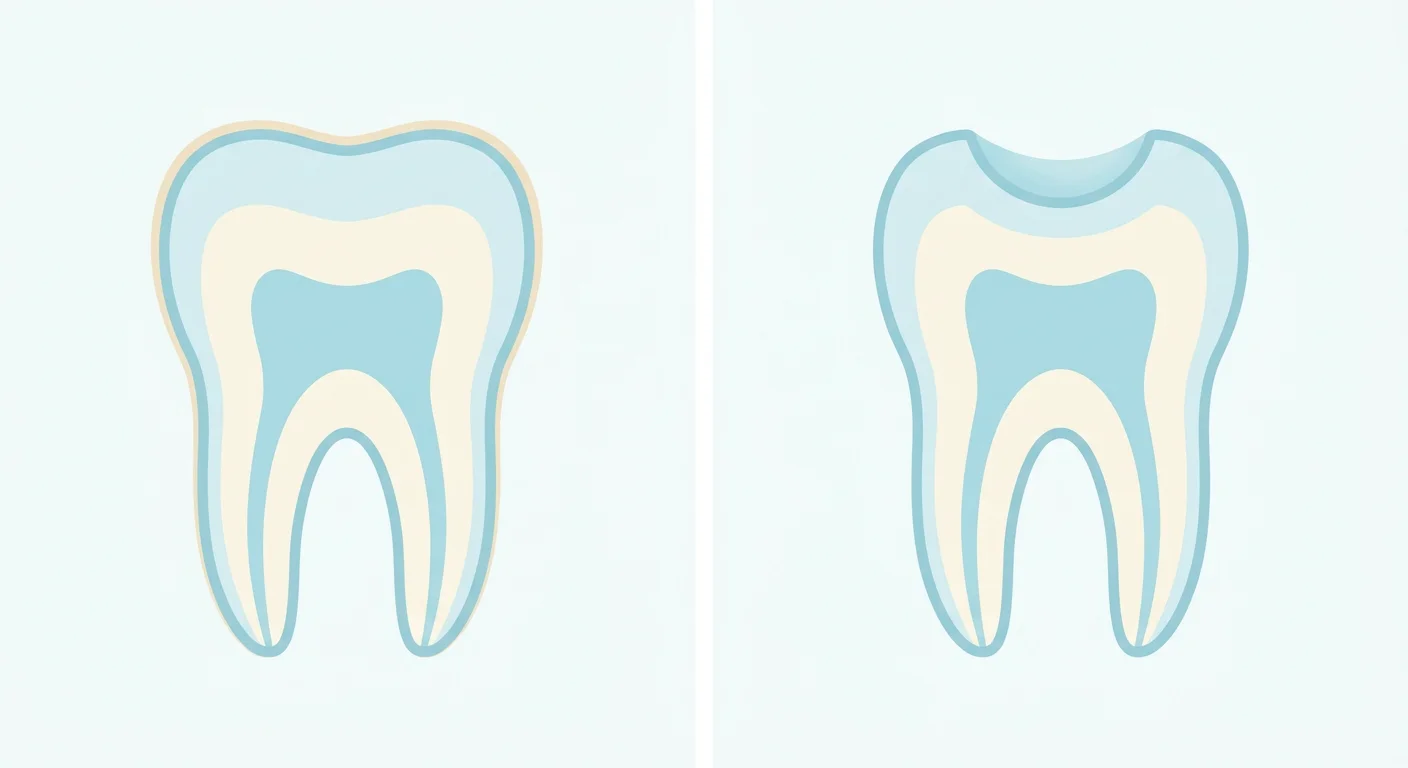
Hydroxyapatite, the main crystalline component of tooth hard tissue, begins to dissolve once the surrounding acidity drops below a certain threshold, called the critical pH. The critical pH of enamel is about 5.5, while that of the underlying dentin and the cementum covering the tooth root is higher, between 6.2 and 6.7. In other words, dentin exposed by gingival recession (where the gum recedes and the tooth root becomes exposed) begins to dissolve even in a milder acidic environment than enamel would require. Areas affected by erosion are characterized by a smooth, glossy, concave shape, and cases have been reported in which long-term sucking on strongly acidic fruit such as lemons produced crescent-shaped defects on the outer tooth surface.
Drinking Habits and Care Principles
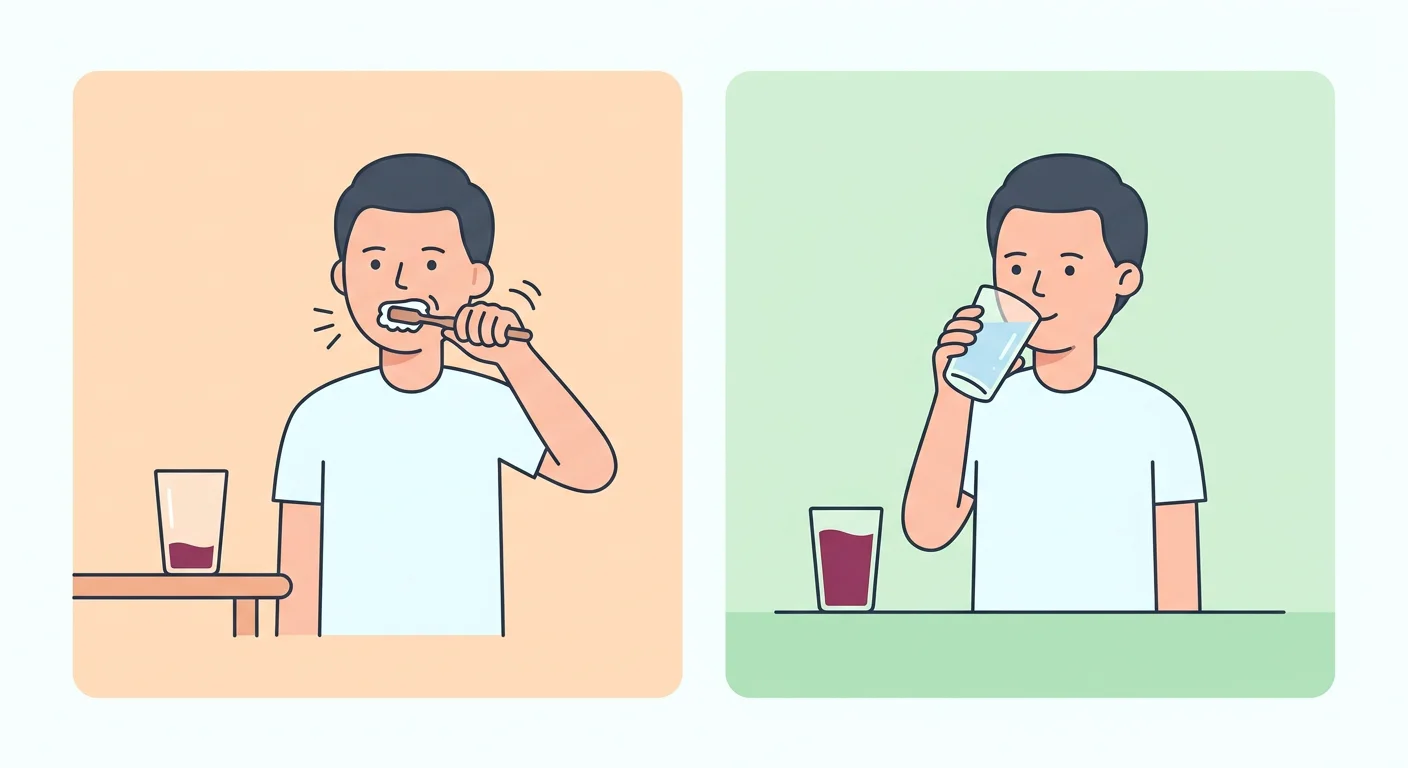
Immediately after drinking an acidic beverage, the enamel surface temporarily softens to a depth of about 0.2 to 3 micrometers. Brushing right away in this state can add the mechanical friction of chewing or brushing on top of the softened surface, actually accelerating damage. Conversely, if you wait, saliva restores normal acidity, and remineralization occurs, during which supersaturated calcium, phosphate, and fluoride ions redeposit onto the softened crystal surface, reducing the damage. For this reason, the recommended care principle is to avoid brushing immediately after drinking an acidic beverage and instead rinse the mouth with water or a fluoride solution to support remineralization.
Fluorapatite, the crystal formed when fluoride binds to tooth structure, has a critical pH of about 4.5, meaning it remains stable even in more acidic conditions than enamel can withstand, so regular fluoride exposure also helps strengthen resistance to acid. That said, since pigment concentration and acidity vary by beverage, and drinking frequency and habits differ from person to person, it isn't possible to label any specific drink or alcoholic beverage as carrying the same degree of risk across the board. If staining and erosion are both suspected, or if changes in the tooth surface are noticeable, it is best to have a dentist check which condition is involved. The progression and management of dental erosion are covered in more detail in the Dental Erosion article.