
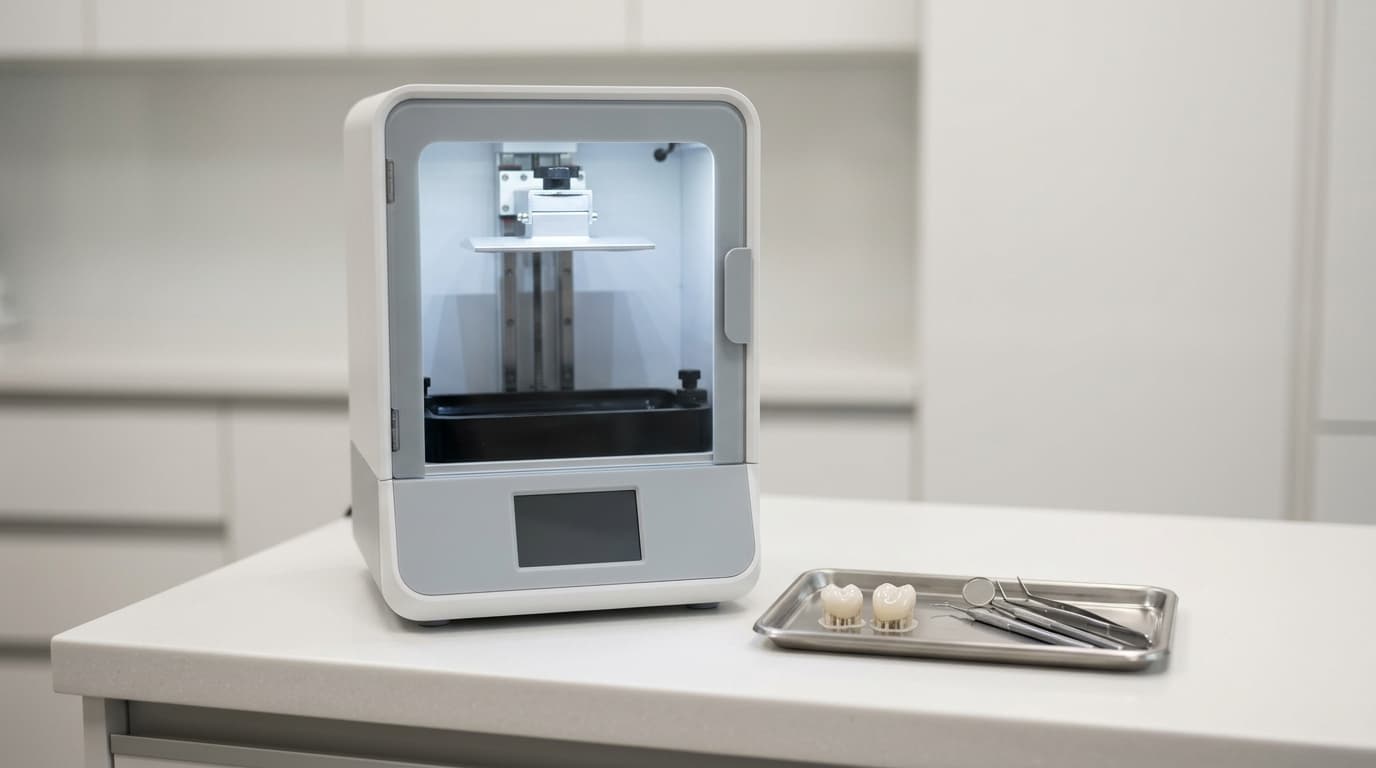
SprintRay has introduced a material that lets dentists print finished crowns and inlays right in the chair on a 3D printer, without sending an impression to a dental lab and waiting for it to come back. Until now, most dental 3D printing has been limited to temporary teeth or surgical guides. This time the company has extended the technology to definitive restorations meant to stay permanently in the mouth.
SprintRay announced on September 1 that it had launched Midas Restore, a resin made specifically for its Midas Digital Press dental 3D printer, in the United States. According to the 3D printing trade publication TCT Magazine, the material received FDA clearance as a prescription-use Class II medical device (510(k) number K260661).
Glass-Ceramic-Filled Resin Held Up Five Times Longer in Wear Tests
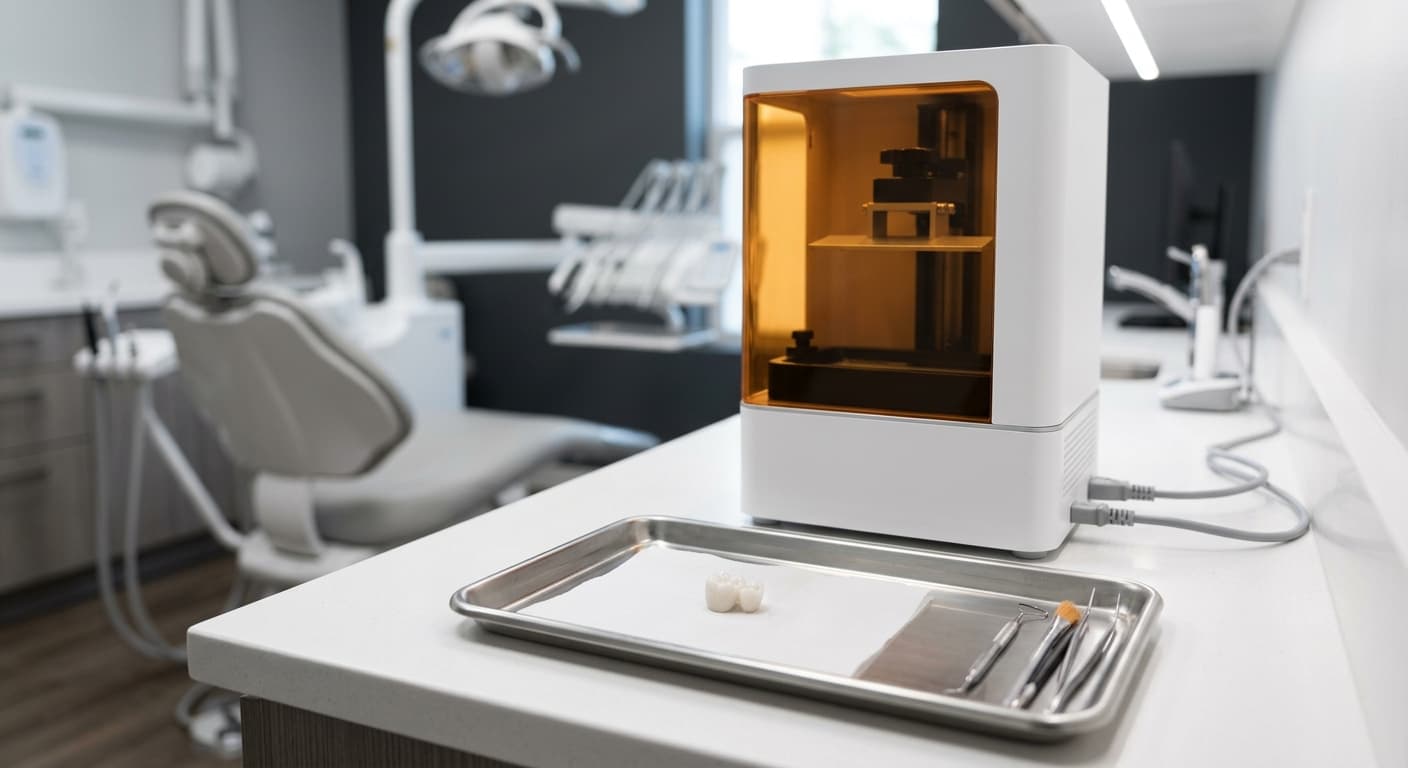
Midas Restore is a resin containing more than 75% glass-ceramic and zirconia filler by weight. According to SprintRay's own testing, the material withstood wear testing that simulated 200,000 chewing cycles five times longer than the company's previous ceramic crown resin, and retained 98% of its original gloss even after simulating 5,000 brushing cycles.
The printing method also differs. Unlike conventional photopolymer 3D printers that hold resin in an open vat, the Midas Digital Press uses a process called Digital Press Stereolithography (DPS), which keeps the high-viscosity resin sealed in a cartridge and dispenses it with an automated piston. After scanning the mouth and designing the crown shape, the printer can produce three crowns or six inlays in about 10 minutes. A pack of three cartridges costs $135 (about 190,000 won).
Skipping the Impression-and-Lab Workflow
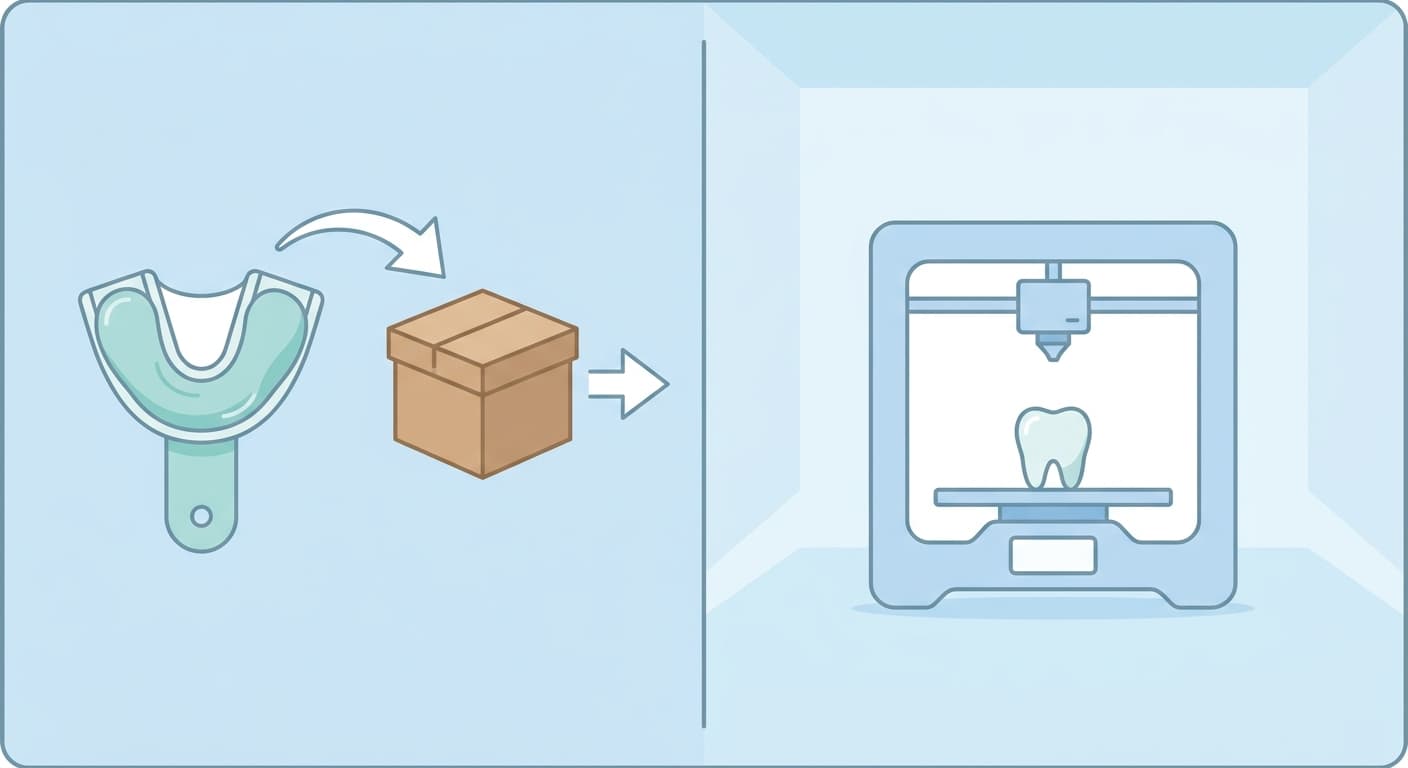
Until now, making a new crown or inlay typically meant grinding down the tooth, then either taking a physical impression or scanning it with an intraoral scanner and sending the data to a dental lab, while the patient waited with a temporary filling for about a week until the finished restoration came back. Midas Restore aims to complete this entire process inside the dental operatory in one visit. SprintRay is not alone in this approach. According to the industry trade publication 3D Printing Industry, China's Shining 3D has also recently introduced its own cartridge-based resin and dedicated printer system called LumiCera, continuing a trend of bundling proprietary hardware with materials.
3D printing has not always had the edge in making dental restorations, however. As this publication previously reported, a study comparing denture manufacturing methods found that milled restorations outperformed 3D-printed ones in flexural strength and hardness. SprintRay's emphasis on wear resistance and gloss retention for Midas Restore appears to be a direct response to this durability weakness that has dogged 3D printing.
South Korean Clinics Remain Unchanged for Now
Milling, which produces same-day crowns by grinding a ceramic block, is already familiar in South Korean dental clinics. Dentsply Sirona Korea markets its CEREC milling equipment as capable of producing same-day crowns, inlays, and even bridges. No news has yet confirmed that a cartridge-based printing system like Midas Restore has formally entered the South Korean market. Until clearance from South Korea's Ministry of Food and Drug Safety or a distribution plan is announced, domestic patients seeking same-day crowns will continue to receive milled restorations as before.