
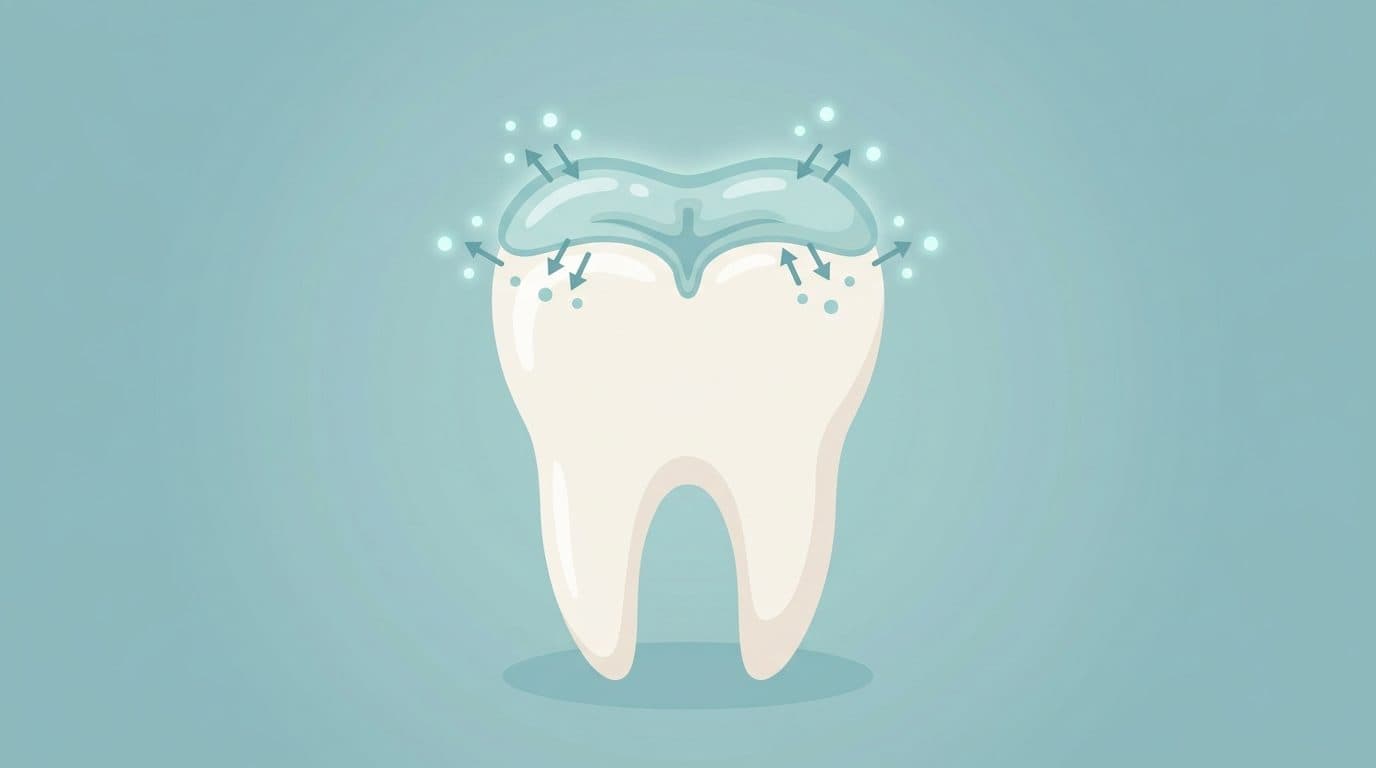
Dental sealants (pit-and-fissure sealants) are usually known as a treatment applied preventively to healthy molars to block cavities. But a clinical trial published in December 2025 by a research team at Cairo University, Egypt, in the international journal Scientific Reports applied sealants to adult teeth where caries had already begun and followed them for two years. A new sealant that exchanges calcium, phosphate, and fluoride ions bidirectionally showed fewer failures and blocked further caries spread more effectively than a conventional fluoride-releasing sealant.
Dental Sealants Applied to Early Cavities in Adults
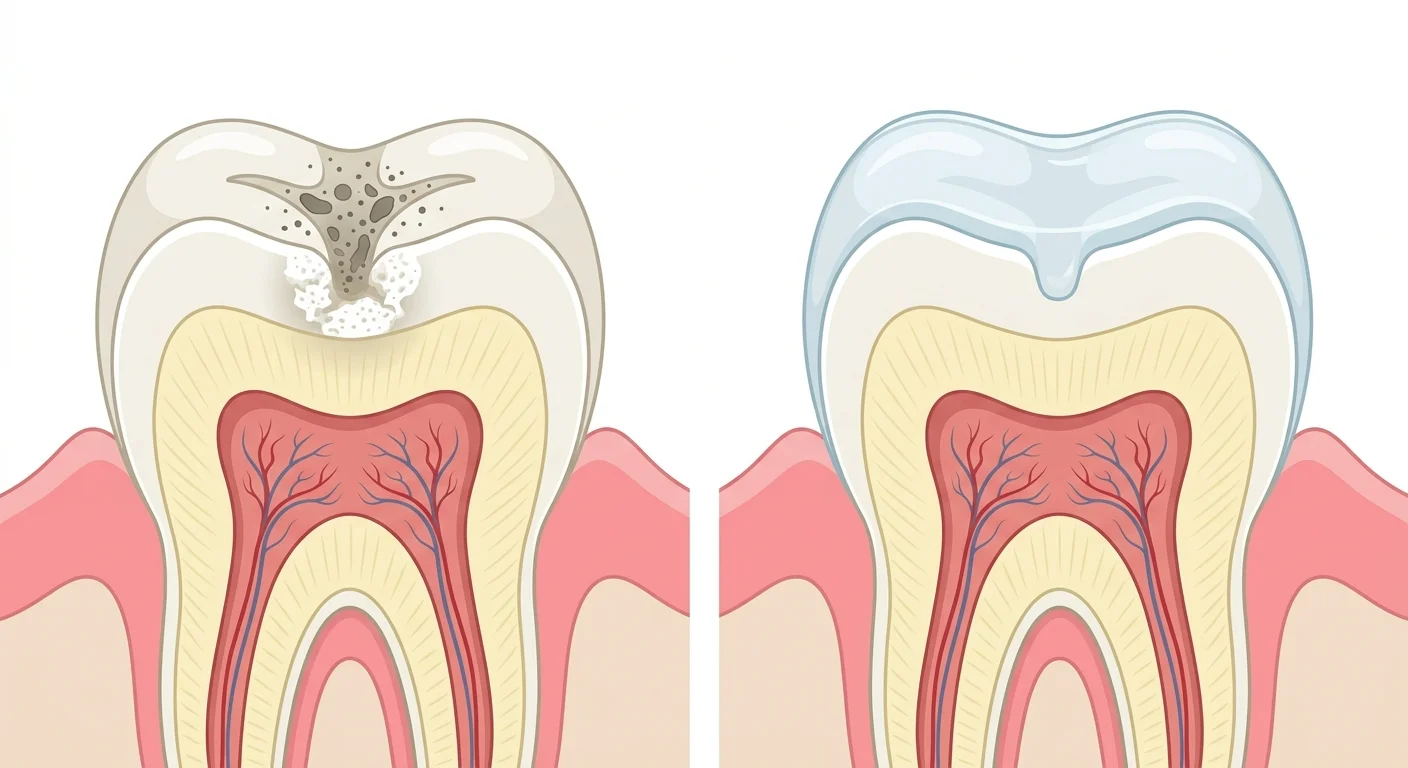
Dental sealants fill the narrow, deep grooves (pits and fissures) on the chewing surfaces of molars with resin, preventing food debris and bacteria from accumulating in those crevices. These grooves are so narrow that toothbrush bristles can't reach them, making them one of the first places cavities tend to form. The fact that Korea's national health insurance covers this treatment only for the molars of patients aged 18 or younger, before any cavities have formed, reflects how the procedure has so far been used strictly as a preventive measure.
This study went beyond that scope, applying sealants to early caries lesions where the surface had already turned white or rough but had not yet formed a cavity. The subjects were 64 teeth in 36 adults aged 19 to 25. Such lesions are known to have an altered mineral composition that resists acid, which weakens resin penetration and makes it harder for conventional sealants to bond well.
Microcapsules That Exchange Ions in Both Directions
The two sealants compared in the study released fluoride in different ways. 3M's Clinpro sealant releases fluoride that gradually dissolves out of glass particles embedded in the resin, a pattern that starts high right after application and tapers off over time until it bottoms out.
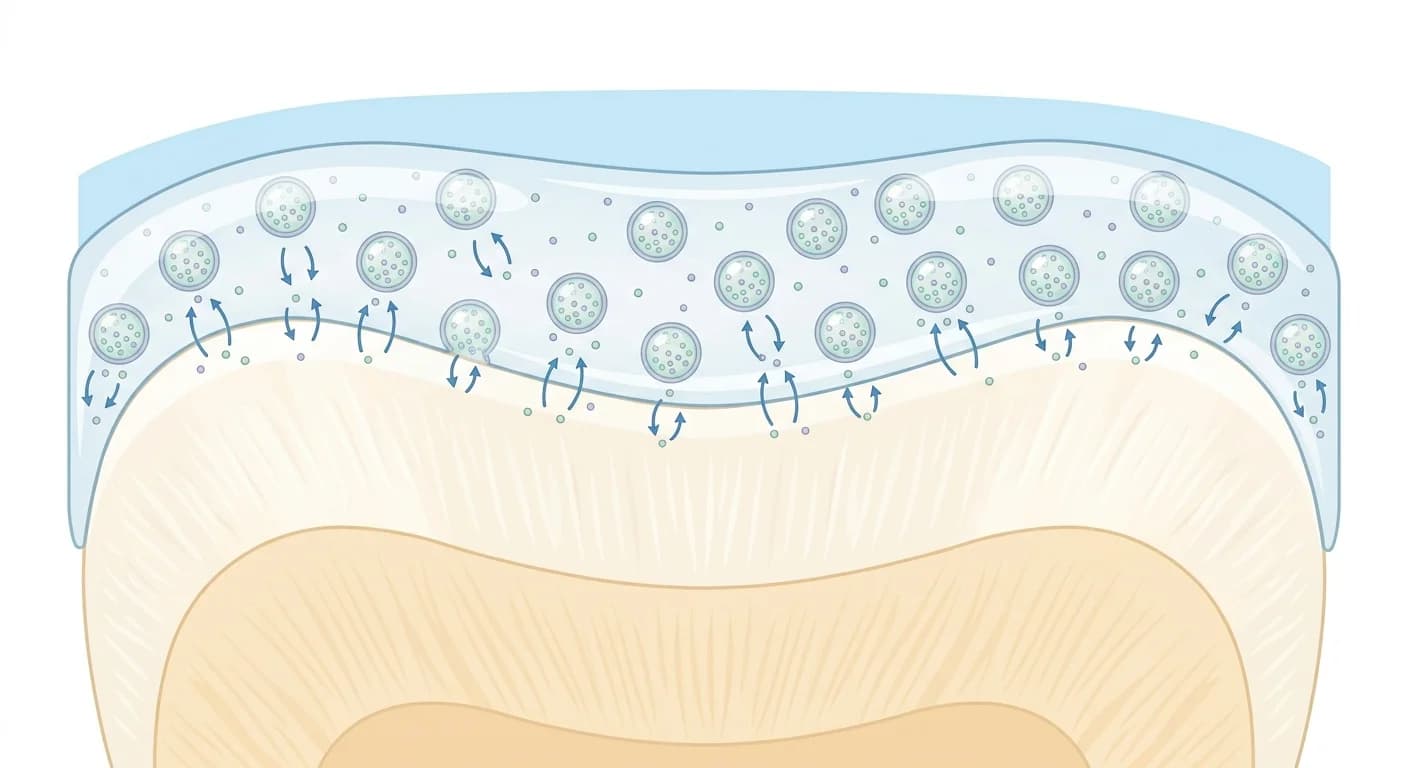
BioCoat, made by Premier Dental, uses a microcapsule technology called SmartCap. These capsules, wrapped in a semi-permeable membrane, contain a solution of dissolved fluoride, calcium, and phosphate ions, and the membrane is designed to let ions pass through in both directions. When the ion concentration in the mouth drops below that inside the capsules, ions flow out and help the tooth surface reabsorb them; conversely, when saliva becomes rich in those ions, the capsules refill. This means the effect doesn't easily run out after a single application.
Retention and Caries Progression at 24 Months
In this evaluator-blinded clinical trial, the difference between the two sealants wasn't clear at 12 months. The rate of complete retention was 84.3% for BioCoat and 78.1% for Clinpro, a gap that wasn't statistically significant. The difference only emerged at 24 months. The complete retention rate was 62.5% for BioCoat, while Clinpro's dropped to 37.5%, and complete debonding occurred only in the Clinpro group, at 18.75%. Results from fluorescence camera assessments of caries progression showed a similar pattern: the rate at which caries did not progress further was 93.75% for BioCoat versus 71.8% for Clinpro.
Overall success, factoring in both debonding and caries progression, came out at 93.75% for BioCoat versus 65.62% for Clinpro, translating to an 82% lower risk of failure for BioCoat (relative risk 0.18, p=0.019). The research team explained that the tooth surface around early caries lesions becomes porous, making it easy for bacteria-secreted enzymes to break down the resin bond. They said the continuous ion release from the capsules reinforced that surface and preserved the bond for longer. Since the trial involved only 36 participants at a single university hospital in Egypt, the researchers noted that larger studies with more than three years of follow-up are needed.
How Sealing Differs from Remineralizing Agents
Attempts to replace or supplement fluoride to reverse early caries have also come from toothpaste and varnish. Hydroxyapatite toothpaste supplies a mineral identical to tooth enamel on a daily basis, while self-assembling peptides penetrate into white spot lesions to fill them with minerals. Unlike those two approaches, this sealant covers the tooth surface with resin to block bacterial access in the first place, with an added ion-exchange function. In effect, a covering-and-blocking treatment and an applying-and-filling treatment are pursuing the same goal through different routes.
Dental sealants have so far been regarded as a preventive treatment used only before cavities form. This result showed that adding a material that exchanges ions bidirectionally can make the treatment work even on early caries that has already begun.