
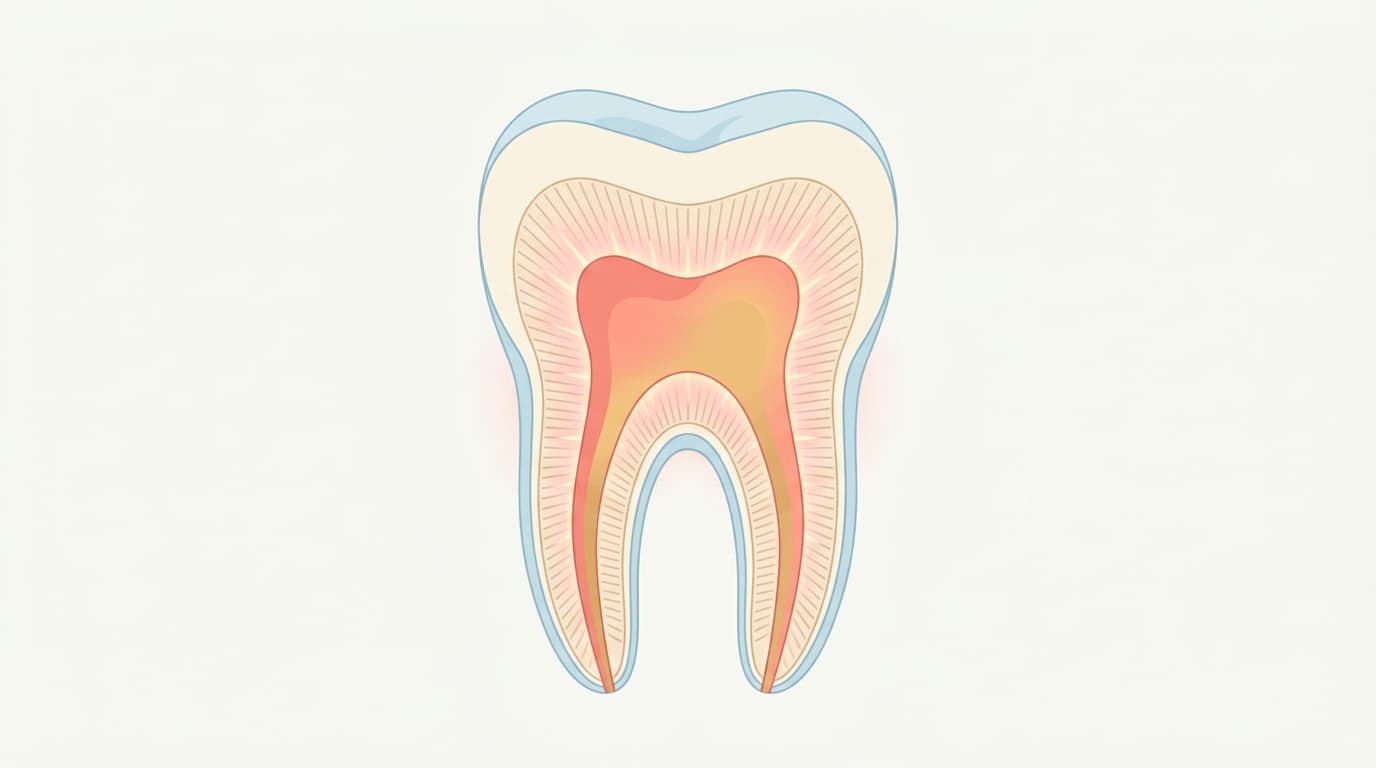
When a tooth is sensitive, the treatment dentists commonly use physically plugs the microscopic channels in the exposed dentin. A Korean research team recently applied to humans, for the first time, a peptide that instead makes the dentin itself regenerate rather than plugging the channels, and confirmed its safety and effectiveness. What sets this apart from treatments used until now is that an approach aimed at reviving the dentin, rather than simply sealing it off, has moved beyond the laboratory and been tested in people.
Why It Hurts
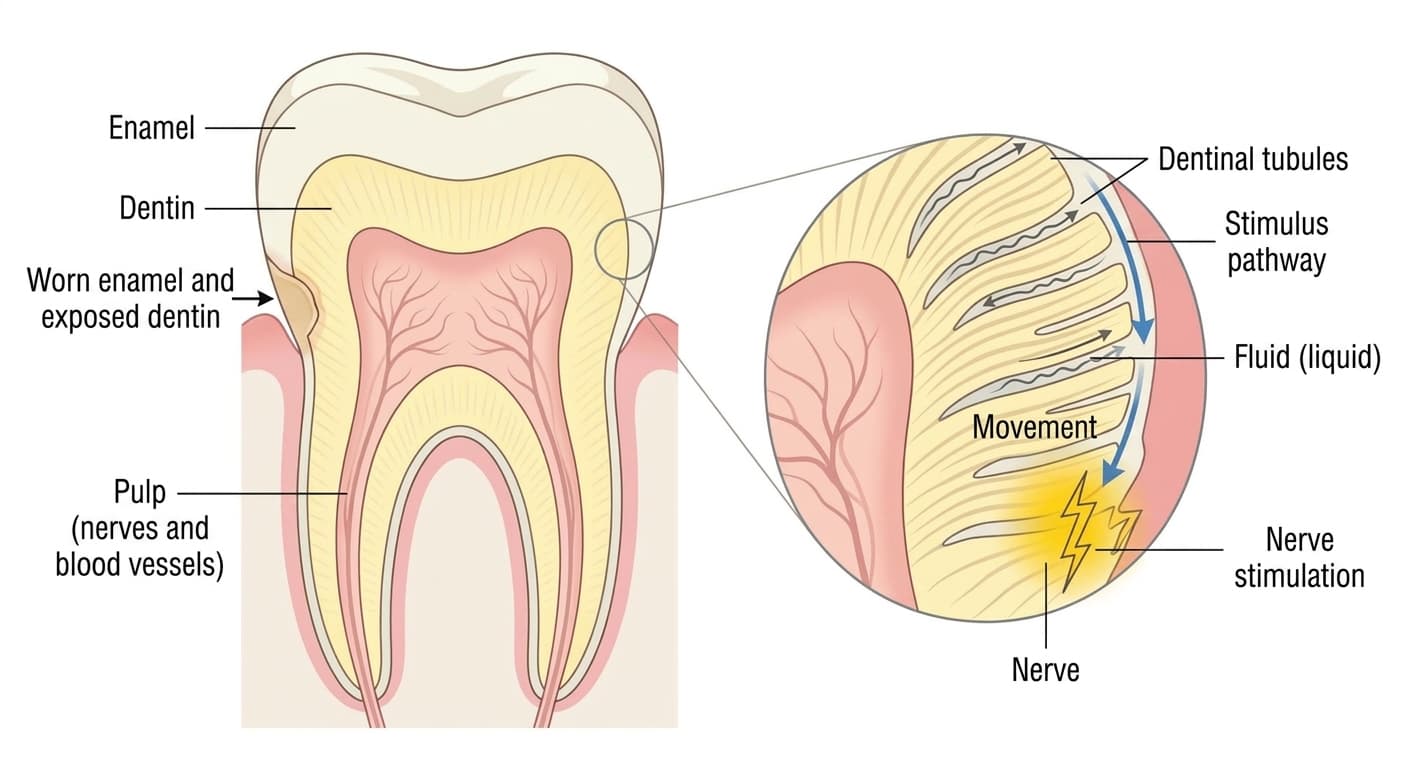
When the enamel covering the visible part of a tooth, or the cementum covering the root beneath the gum, wears away or is stripped off by improper brushing, the dentin underneath becomes exposed. Dentin is riddled with narrow channels called dentinal tubules, and fluid moving through these tubules stimulates the nerve inside, causing brief, sharp pain. This explanation is known as the hydrodynamic theory, and it is the most widely accepted basis for understanding tooth sensitivity (dentin hypersensitivity) pain, including sensitivity while brushing. Estimates vary by study method, but a substantial share of adults experience this pain, and the rate is reported to be far higher among patients with gum disease.
Until Now, Treatments Just Plugged the Holes
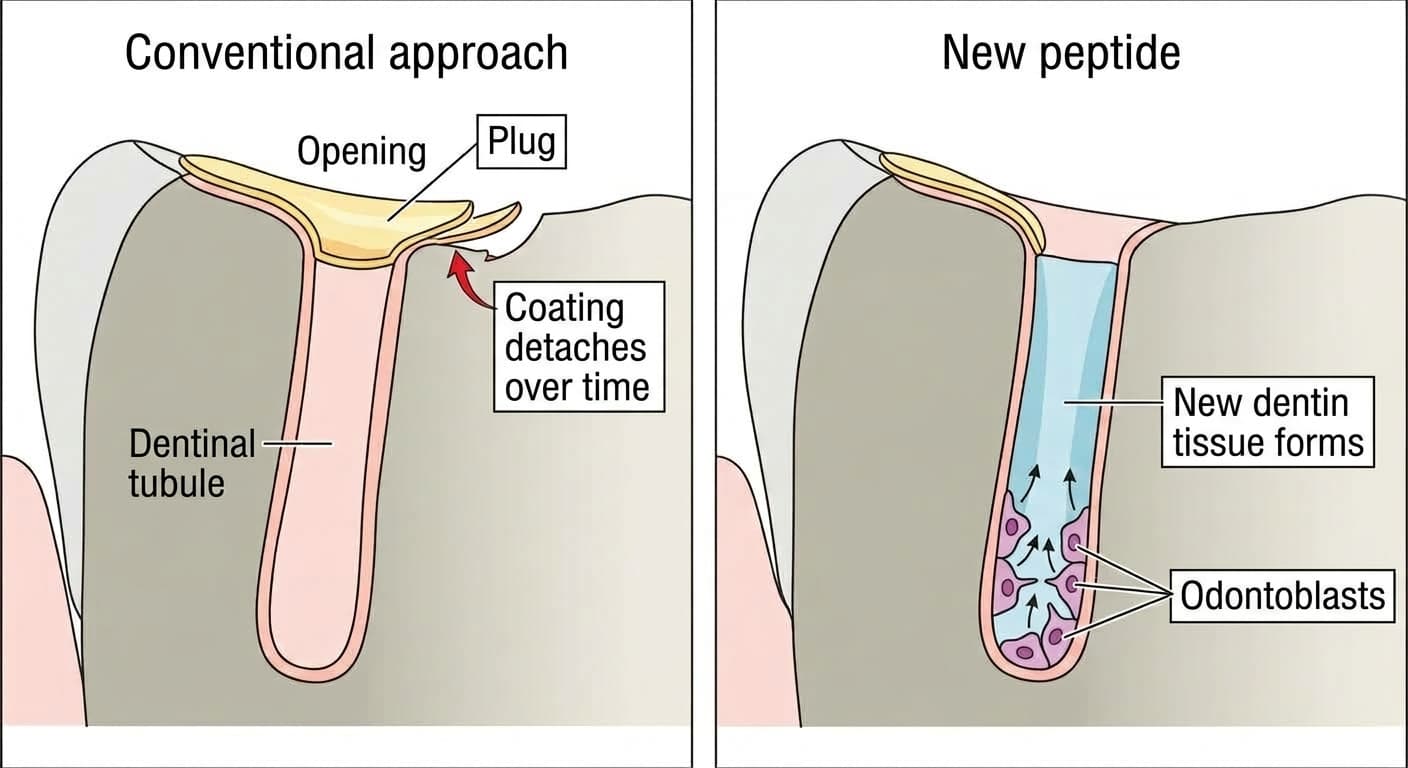
Most tooth sensitivity treatments in use today work by plugging the entrances to the dentinal tubules or by dulling the nerve's response. This includes toothpastes containing potassium salts or fluoride, as well as surface coatings applied in the dental office. The limitation is that this plugged layer is not the same tissue as the original dentin. It tends to wear off again with brushing, acidic foods, or simply over time, so the effect does not last long. Remineralization approaches that fill the tubules with mineral content are also being studied, but the newly deposited minerals lack the organic scaffold that natural dentin has, which can leave them weaker and less resistant to acid.
A Peptide That Reawakens Odontoblasts
Selcopintide (code name KH001), developed jointly by research teams at Jeonbuk National University and Seoul National University along with the dental drug developer HysensBio, takes a fundamentally different approach. It is a 10-amino-acid peptide derived from the active region of CPNE7, a protein that activates odontoblasts, the cells that form dentin. Applied to exposed dentin, it reactivates dormant odontoblasts, prompting them to form new dentin, called tertiary dentin, right at the site. In earlier canine studies, applying this peptide to shallowly exposed dentin produced enough new dentin within a few weeks to plug the dentinal tubules.
Safety and Efficacy Confirmed for the First Time in Humans
The phase 1/2a trial, conducted at Seoul National University Dental Hospital, divided participants into a group that received a single application of selcopintide and a group that received three applications over 15 days. Neither group had any serious adverse events, and no trace of the peptide was detected in the blood after administration, indicating that it acts only on the tooth surface and does not spread through the body. Among participants in the repeated-application group who received the highest dose, all three pain measures improved from baseline; among these, the cold-stimulus pain score dropped by an average of 23.2 mm on a 100 mm scale. However, pain also decreased in the placebo group, so the two groups were not directly compared statistically, and this improvement trend was not clearly seen at lower doses or with a single application. Because this was an early-stage trial with a small number of participants, it is too soon to draw firm conclusions about efficacy. One of the paper's co-authors disclosed a conflict of interest as the CEO and a shareholder of HysensBio.
This trial is also the first case in Korea to pharmacokinetically analyze how much of a topically applied dental drug is absorbed into the body. It marks a first step confirming that a peptide treatment that regenerates dentin, rather than merely plugging it, can be used safely in humans, with a larger trial to verify its efficacy still to come.