
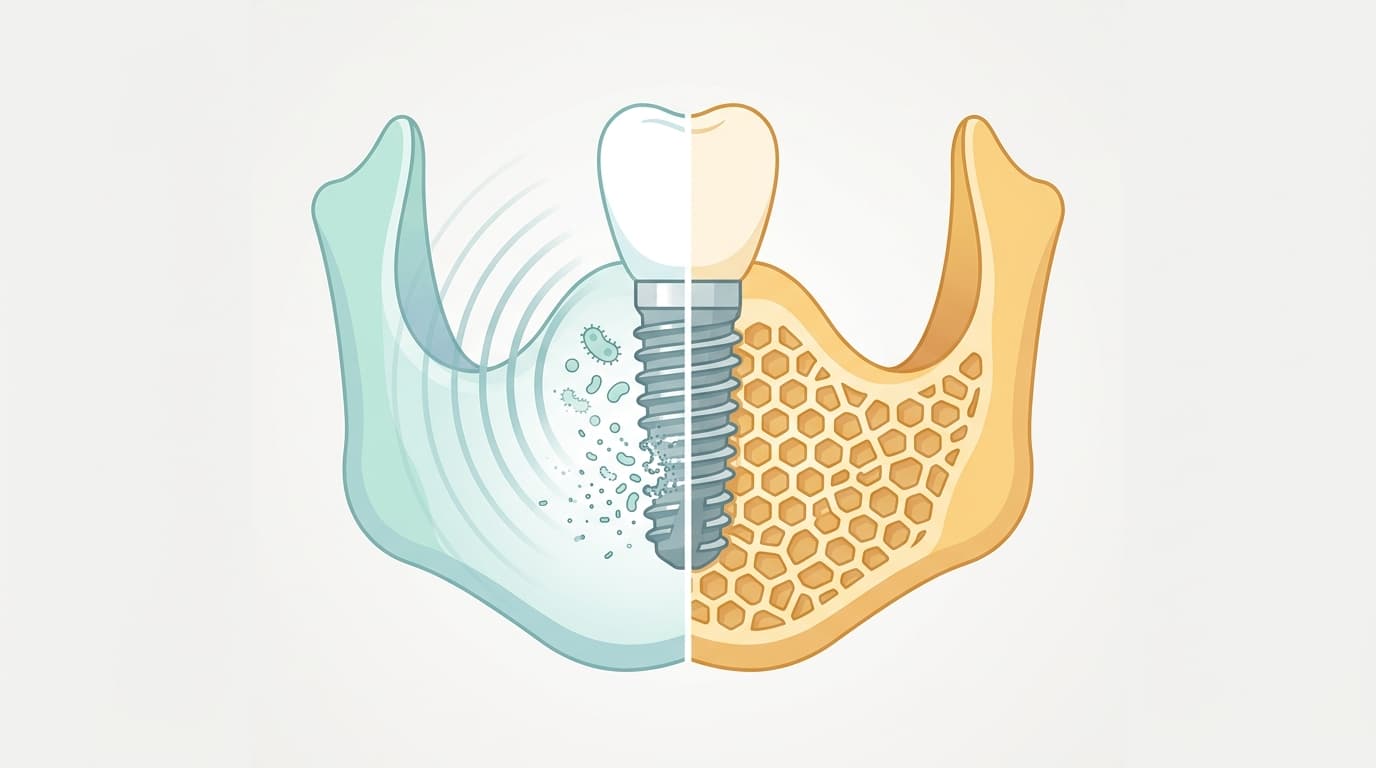
After an implant is placed, two things need to happen at the same time: bacteria must be kept from colonizing the surface, and bone must bond tightly to it. But drugs or antibacterial coatings that kill bacteria usually also act on bone-forming cells, interfering with bone growth. In a mouse study published in 2026 in the international journal Biomaterials, a research team at Shandong University in China showed that the same implant surface could alternate between clearing bacteria when exposed to ultrasound and promoting bone growth when the ultrasound was turned off.
The Titanium Surface Itself Generates Electricity
Implants are usually made of titanium. The research team coated this titanium surface with a nanostructured layer of barium titanate. Barium titanate is a ferroelectric material that maintains different electrical properties on each side of its surface on its own, without any external electric field applied. It is also piezoelectric, meaning it converts pressure or vibration into electricity. Ultrasound is a force that vibrates a surface extremely rapidly at an intensity barely perceptible to the body. When this surface is exposed to ultrasound, the vibration is converted into an electrical signal. The research team called the implant made this way ferroTi.
Turning the Ultrasound On Increases Bacterial Engulfment
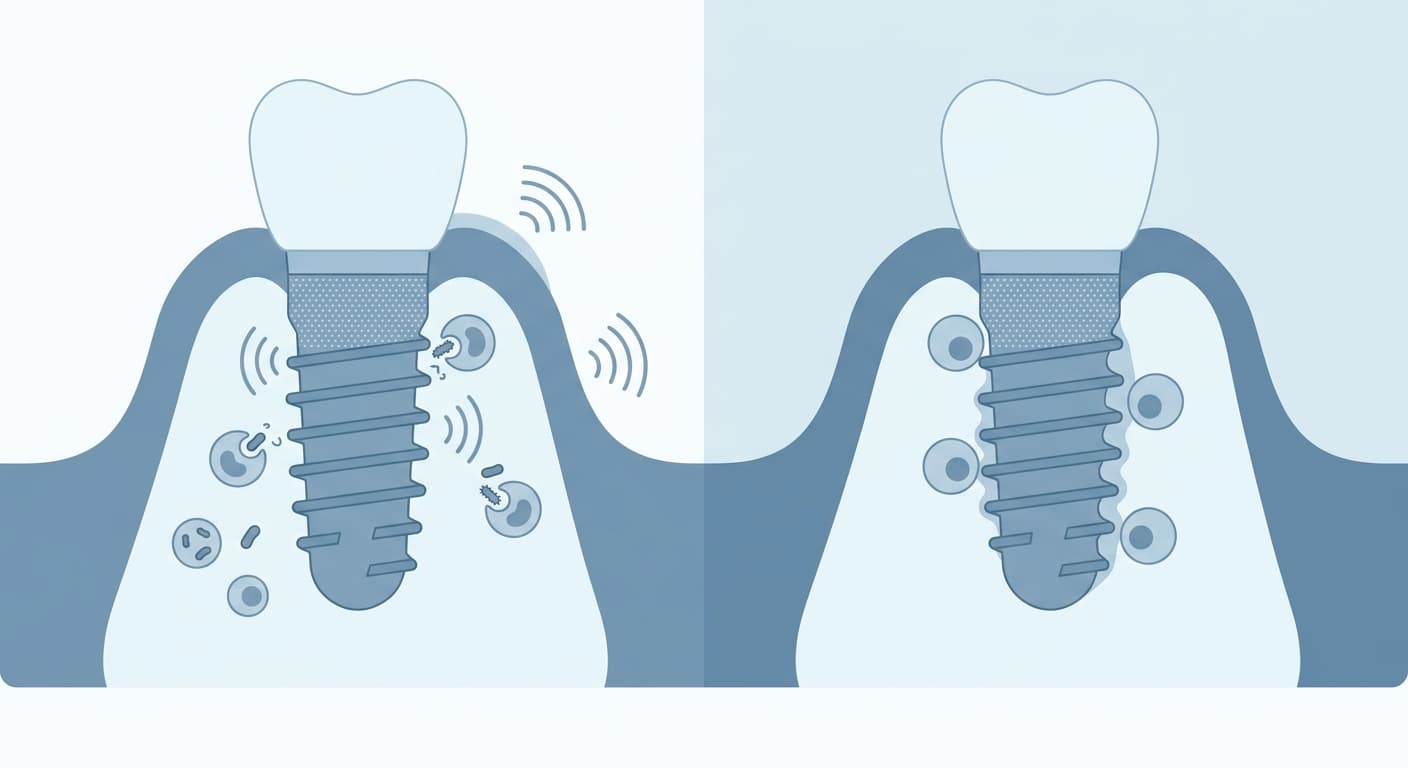
The electrical signal generated by ultrasound exposure (the dynamic signal) activates calcium channels in the cell membrane of macrophages, the immune cells that gather at infection sites; these channels open only when a specific electrical signal reaches them. When the channels open, calcium flows into the macrophages, which strengthens their phagocytic activity, the process of engulfing and eliminating bacteria. The research team reported that this signal was enough to clear infection by methicillin-resistant Staphylococcus aureus (MRSA), which does not respond well to antibiotics, in the bodies of mice.
Turning the Ultrasound Off Switches the Signal to Bone Formation
Even when the ultrasound is turned off, the barium titanate surface retains the static electrical properties it has always had. This static signal makes macrophages adhere more tightly to the surface and shifts their character away from promoting inflammation and toward healing wounds, a shift known as M2 polarization. Macrophages that have shifted this way help nearby bone marrow mesenchymal stem cells grow into bone-forming cells. In the mouse study, this static signal also improved how firmly the bone reattached to the implant after the infection was cleared.
How This Differs from Drugs or Coatings
Current implants coated with antibiotic coatings or antibacterial substances such as silver are effective at killing bacteria, but those substances can also act on bone-forming cells and interfere with bone growth. The research team presented as the core finding of this study that the surface uses no drugs at all and instead sequences infection clearance and bone formation simply by switching the type of electrical signal generated from the same material. A study on plasma-activated water that addressed peri-implantitis by switching between bacterial clearance and vascular regeneration based on voltage also used a single variable to alternate between two effects, but in that study a chemical substance created by treating water with electricity acted directly on bacteria and vascular cells. This study differs in that the implant surface itself, not water, generates the signal, and that signal produces its two effects by changing the behavior of macrophages, immune cells, rather than acting on bacteria directly. Treatment that pre-activates the surface with cold plasma before implant placement also supports bone integration, but it is not a method that can be used after an infection has already occurred.
Still Only Tested in Mice
These results come from implants placed in mice. Mouse immune responses and bone growth rates differ from those in humans, and whether the same signal sequence would work in human jawbone has not yet been confirmed. Whether ultrasound applied from outside the body can accurately deliver an electrical signal to an implant deep inside the mouth, and how often it would need to be applied, are also questions this study does not answer.
What this mouse study demonstrated is that the long-standing conflict between clearing bacteria and bonding bone can be resolved sequentially, without drugs, simply by turning ultrasound on and off on the same surface.