
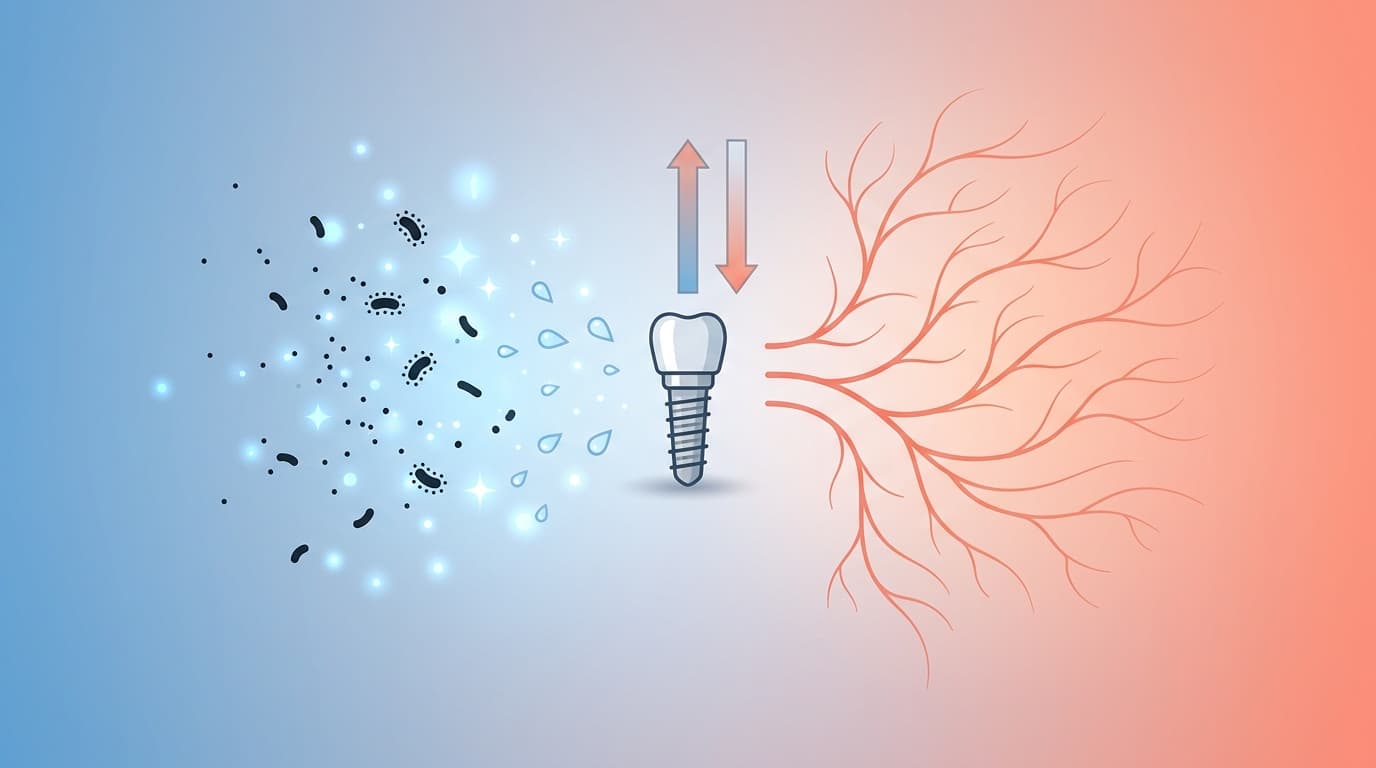
When treating peri-implantitis, the first step is to clear away the bacteria attached to the surface, and then regrow the bone and blood vessels lost to inflammation. In an April 2026 lab study, a research team at Nanjing Medical University in China confirmed that plasma-activated water (PAW, water activated by plasma), with voltage adjusted between 33 and 46 kV, can handle both of these tasks with a single device. Raising the voltage shifted the water's properties toward killing bacteria, while lowering it shifted them toward regenerating blood vessels.
One Voltage Switch Handles Both Bacteria and Blood Vessels
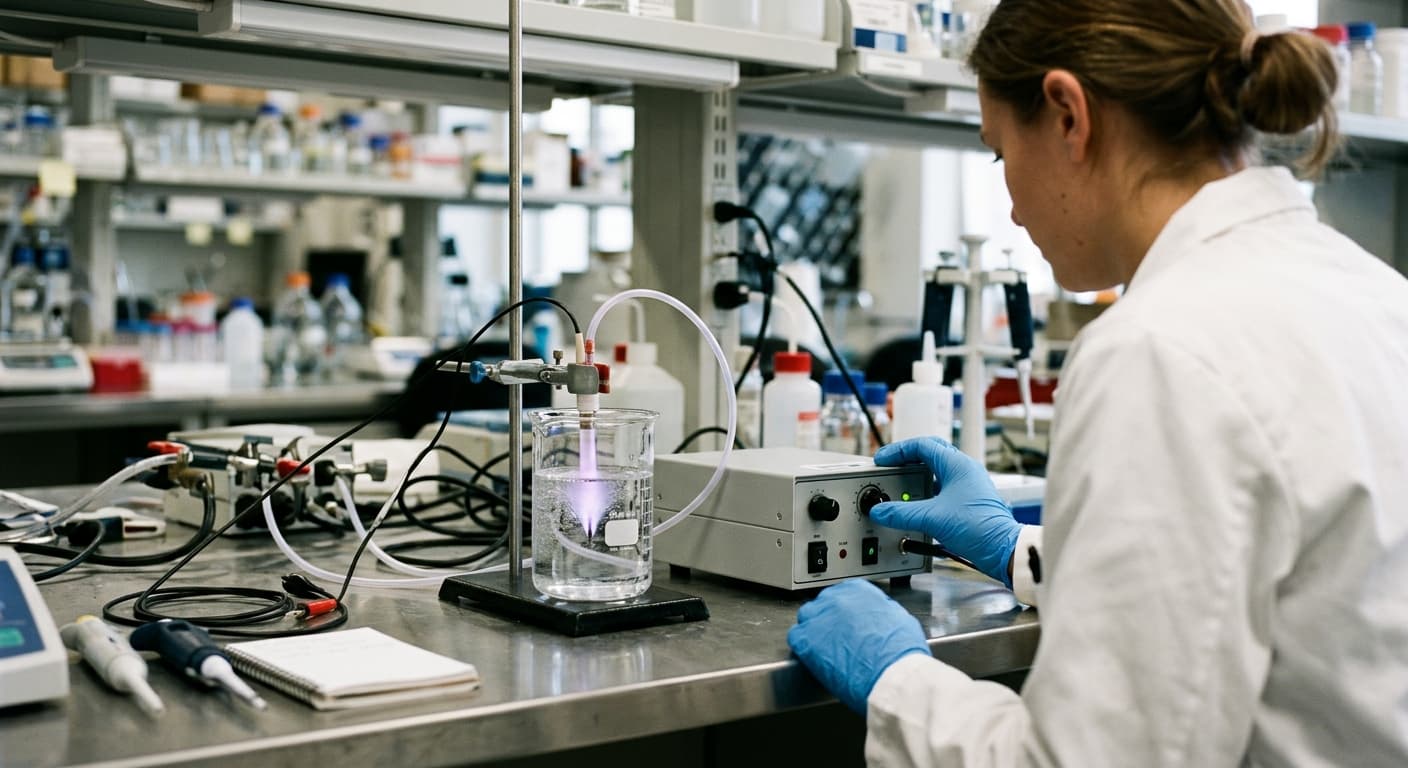
The research team created plasma-activated water by treating water with a dielectric barrier discharge device, which generates plasma by passing electricity across an insulator. Water treated at 46 kilovolts (kV) for 30 minutes reduced Porphyromonas gingivalis, the periodontitis-causing bacterium, by more than a millionfold (6-log), and scanning electron microscopy and confocal laser microscopy showed that the structure of the mixed-species biofilm had also collapsed. By contrast, water treated at 36 kV for 15 minutes showed no bacteria-reducing effect; instead, it raised the survival rate of vascular endothelial cells to 118.5%, 18.5 percentage points above the control group, while also increasing cell migration and the formation of the tube-like structures that appear when new blood vessels form.
Why Dissolve It in Water Instead of Using Gas
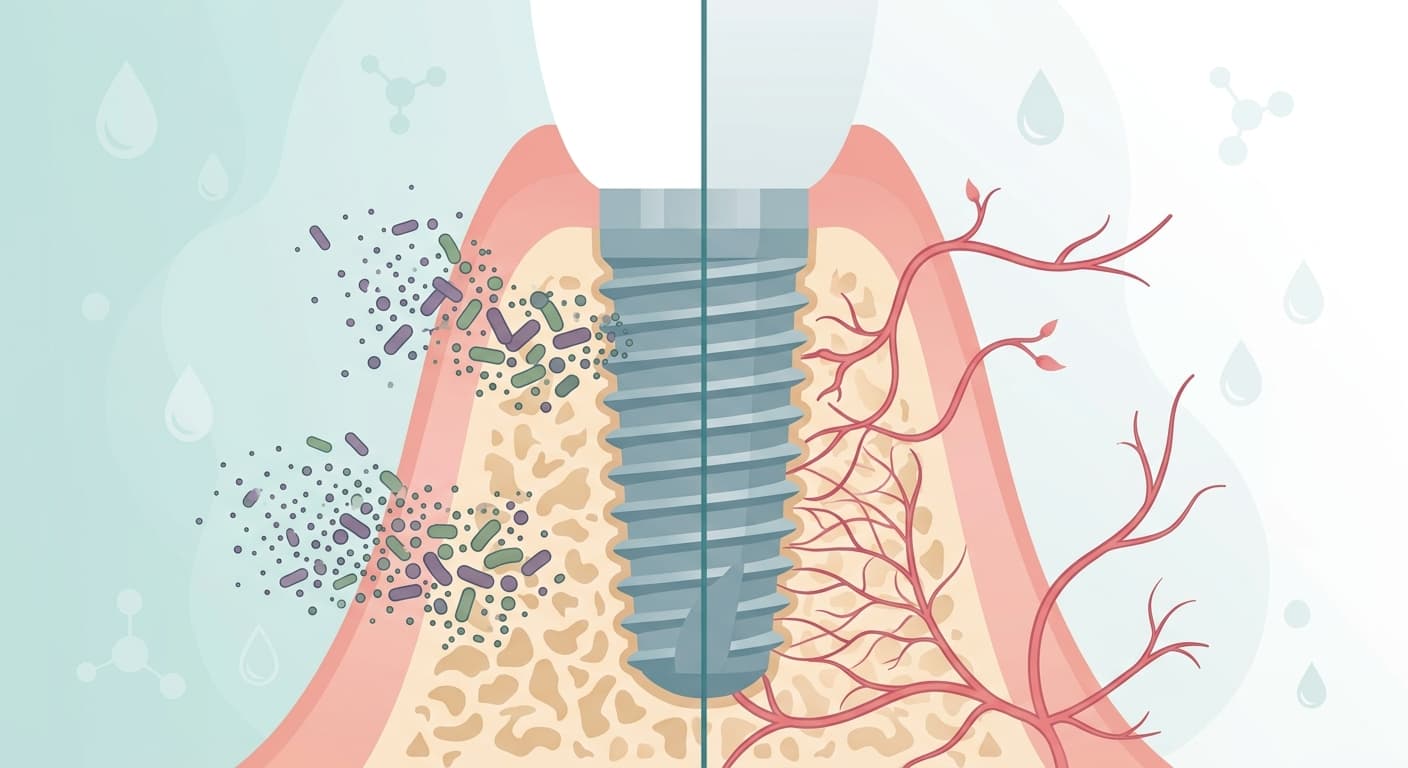
Earlier research also treated implant surfaces with plasma. In a study that exposed the surface to cold plasma before placing the implant to remove hydrocarbons that had built up as the surface aged, the gas was applied directly to a dry surface. This study dissolved that plasma in water instead. Dissolving it in water allows it to be flushed into the deepened, pocket-like inflamed area after the implant has already been placed, and lets the high-voltage and low-voltage treatments be applied in sequence to match each stage of treatment. Lasers and photodynamic therapy are also used to treat peri-implantitis, but older and more recent studies disagree on how effective that is. A meta-analysis also found that systemic antibiotics reduced pocket depth by only 0.1mm, a limited effect.
Why Target Blood Vessels at All
About one in four people with implants develop inflammation around them over time. If treatment stops at removing bacteria, blood cannot circulate sufficiently through tissue broken down by inflammation, slowing recovery. In liquid plasma research outside dentistry, reactive species have been described as increasing nitric oxide production in vascular endothelial cells, triggering signals for new blood vessel growth, and the low-voltage effect in this study pointed in a similar direction.
Still at the Cell and Bacteria Stage, Far From Humans
These results come from lab research using bacterial cultures, cells, and titanium surfaces. Actual peri-implantitis sites contain a mix of saliva, blood, and complex biofilms, so it hasn't been confirmed whether the same effects seen in this experiment would hold up there. Whether the sequence of high-voltage treatment followed by low-voltage treatment can be safely applied to inflamed sites in humans, and whether it can be translated into equipment usable in a clinical setting, also remain open questions. Compared to the same plasma technology that has already reached human clinical trials for pre-implant surface activation, this research is at an earlier stage.
That a single variable, voltage, can switch between a bacteria-killing mode and a blood-vessel-regenerating mode is what this study demonstrated in the lab. It points to the possibility of handling both of the separate tasks in peri-implantitis treatment, bacteria removal and tissue regeneration, with a single device.