

An Open Mouth During Sedation Narrows the Airway
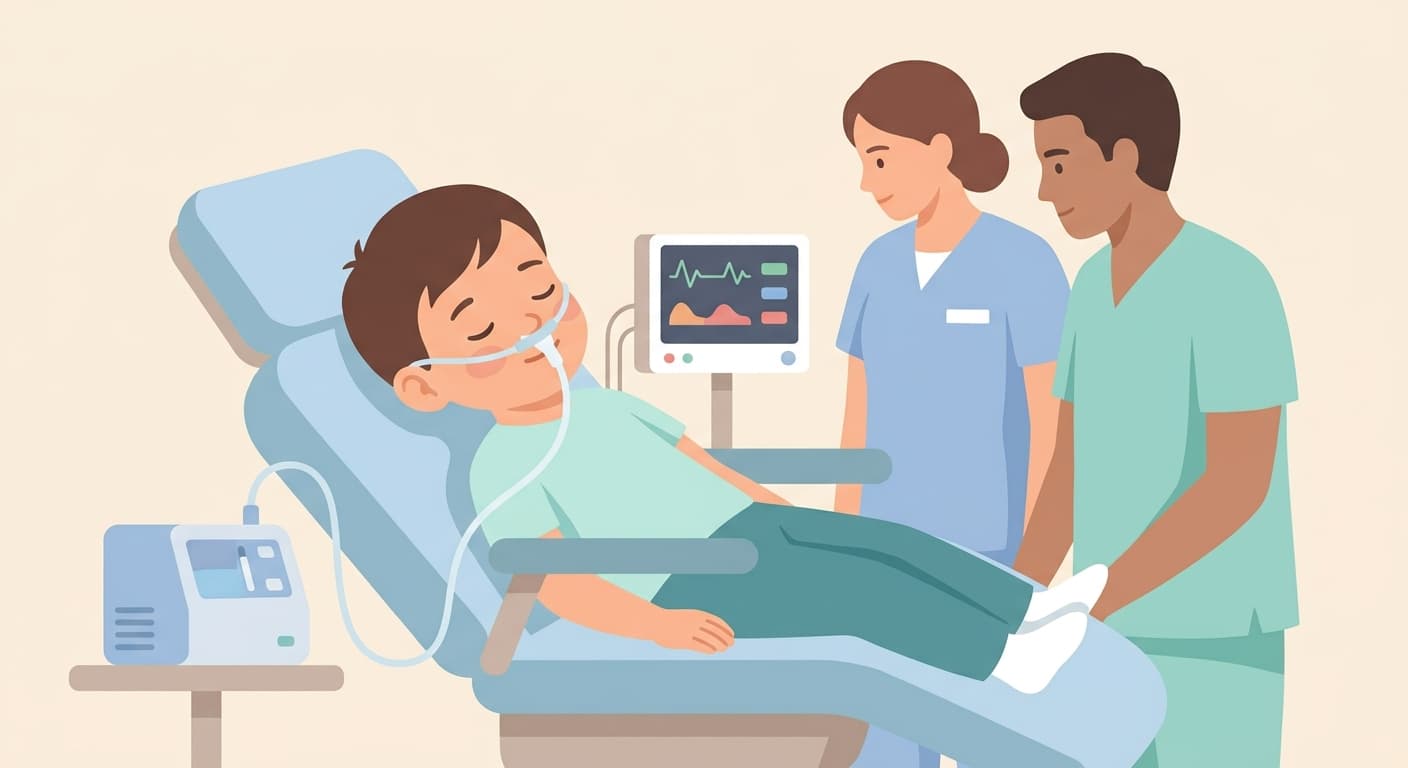
Twenty children aged 3 to 7 with extensive tooth decay and difficulty cooperating underwent dental treatment averaging 73 minutes at Peking University School and Hospital of Stomatology in China. The children received intravenous sedatives that put them into a state of "deep sedation," breathing on their own but unconscious, and instead of a low-flow nasal oxygen cannula, they were fitted with a device that pushed in up to 30 liters of oxygen per minute. Throughout the procedure, none of the 20 children ever had their oxygen saturation drop below the dangerous threshold of 90%. This is the first evidence that a method previously confirmed only for checkups or short, simple procedures also works for complex pediatric dental treatment lasting one to two hours.
Unlike general anesthesia, where both consciousness and breathing are lost, deep sedation keeps a child breathing on their own while sedatives put them to sleep, so preparation and recovery are relatively simple. The problem is that the mouth is both the treatment site and the airway. Propofol, a commonly used sedative, weakens the muscles that drive breathing, and the open-mouth, head-tilted-back position needed for treatment narrows the space at the back of the throat, making the airway easy to compress. Earlier studies reported that under these conditions, using only a low-flow (around 5 liters per minute) nasal cannula led to a temporary drop in oxygen saturation in 12% to 20% of cases.
Pushing In Oxygen Faster, in Greater Volume, and Warmed
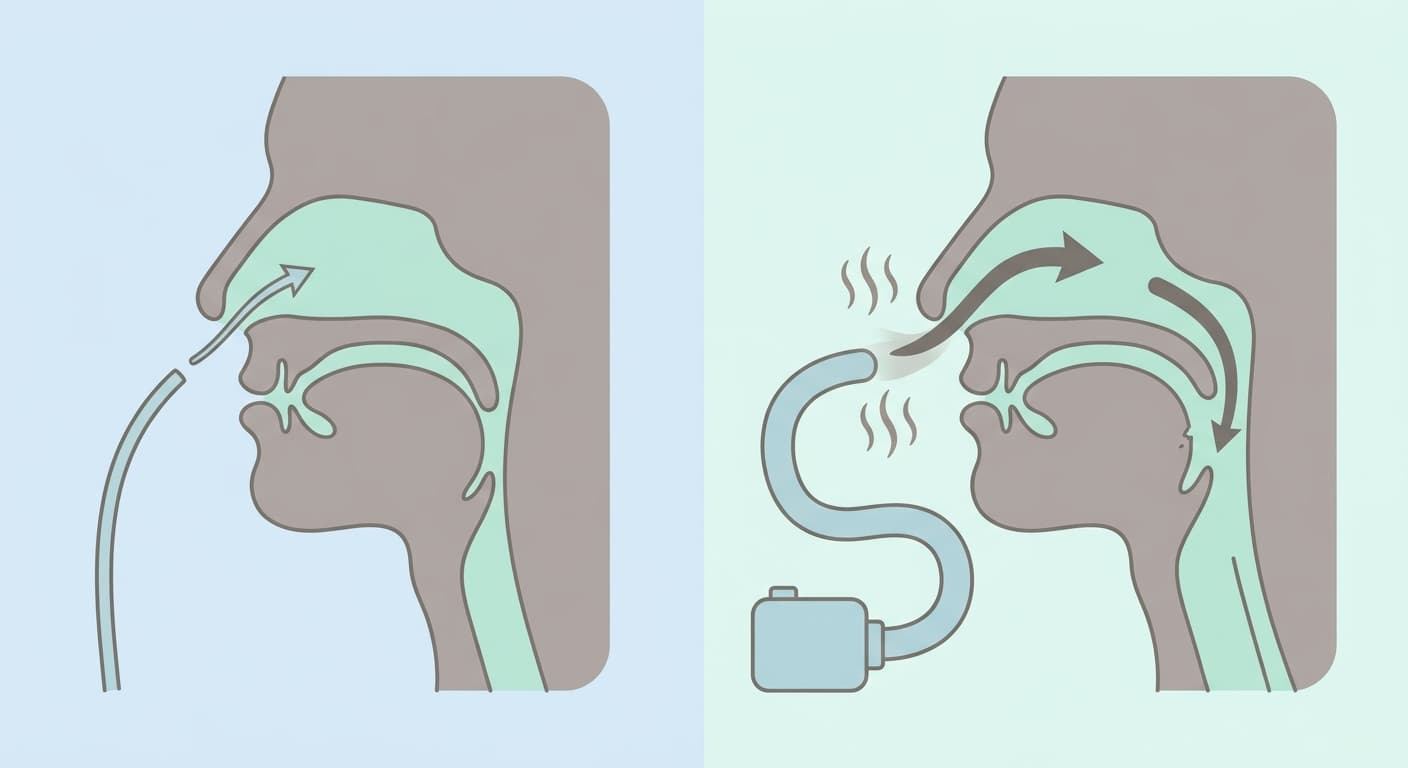
As its name suggests, high-flow nasal oxygen therapy differs in the volume and speed of the oxygen it delivers. While a standard nasal cannula delivers around 5 liters per minute, this device pushes in warmed, humidified oxygen at 30 to 50 liters per minute, up to a maximum of 70 liters per minute in adults. In this study, the flow rate was set at 2 liters per minute per kilogram of the child's body weight (up to a maximum of 30 liters per minute), and the inspired oxygen concentration was raised to 100%. The study used the Airvo 2 device made by Fisher & Paykel Healthcare of New Zealand.
Pushing the flow in forcefully has the effect of helping the airway stay open on its own. It creates a mild pressure of about 2.7 to 7.4 cmH2O between the nose and throat, which pushes open the airway that had narrowed from the open mouth and tilted-back head, and it flushes out the carbon dioxide left in the nasopharynx on exhalation, reducing how much is re-inhaled. A previous meta-analysis pooling three clinical trials from Japan (78 patients total) likewise found that, compared with a low-flow nasal cannula, high-flow oxygen therapy resulted in fewer episodes of both falling oxygen saturation and rising carbon dioxide. These results came from randomized comparisons conducted separately in obese patients, adults, and children, and in the pediatric comparison, cases requiring a jaw-lift maneuver for airway obstruction fell from 10 in the low-flow group to 3 in the high-flow group.
Extending to Complex Procedures Lasting 60 to 120 Minutes
What this study newly confirmed is how long and complex a procedure the method can withstand. Earlier studies were mostly limited to short procedures such as checkups or simple treatments, but this one applied it to preschool-aged children undergoing 60- to 120-minute procedures that combined resin fillings, pulp therapy, stainless steel crown placement, and even extractions. Seventy percent of the children had conditions likely to have already narrowed their airway, such as a recent upper respiratory infection or enlarged tonsils and adenoids.
All 20 children completed treatment safely, and none had oxygen saturation drop below 90%. Most maintained 100%, and even the lowest reading was only 99%. Carbon dioxide levels in the body did rise gradually, with the average peak reaching 53 mmHg, but this stayed within the 65 mmHg tolerance limit the researchers had set in advance. Among the children who showed signs of a narrowing airway, such as snoring or an abnormal carbon dioxide waveform, a quarter still needed a supporting jaw-lift maneuver to open the airway. This suggests that high-flow oxygen therapy does not eliminate airway obstruction itself, but rather buys time to respond before oxygen levels actually fall. Because this was a preliminary trial that observed only 20 children without a comparison group, it is too early to statistically confirm the size of the effect.
A Technology From the ICU Moves Into the Dental Chair
High-flow nasal oxygen therapy is a respiratory support technology that first became established in neonatal and pediatric intensive care units and emergency rooms, because it can supply both oxygen and pressure to patients struggling to breathe without inserting a tube. This result is a sign that the same technology is also expanding into pediatric dental offices, where sedated children's mouths are being treated. Just as intranasal sedation is replacing oral sedatives, the method of delivering oxygen is likewise shifting from low-flow to high-flow.