
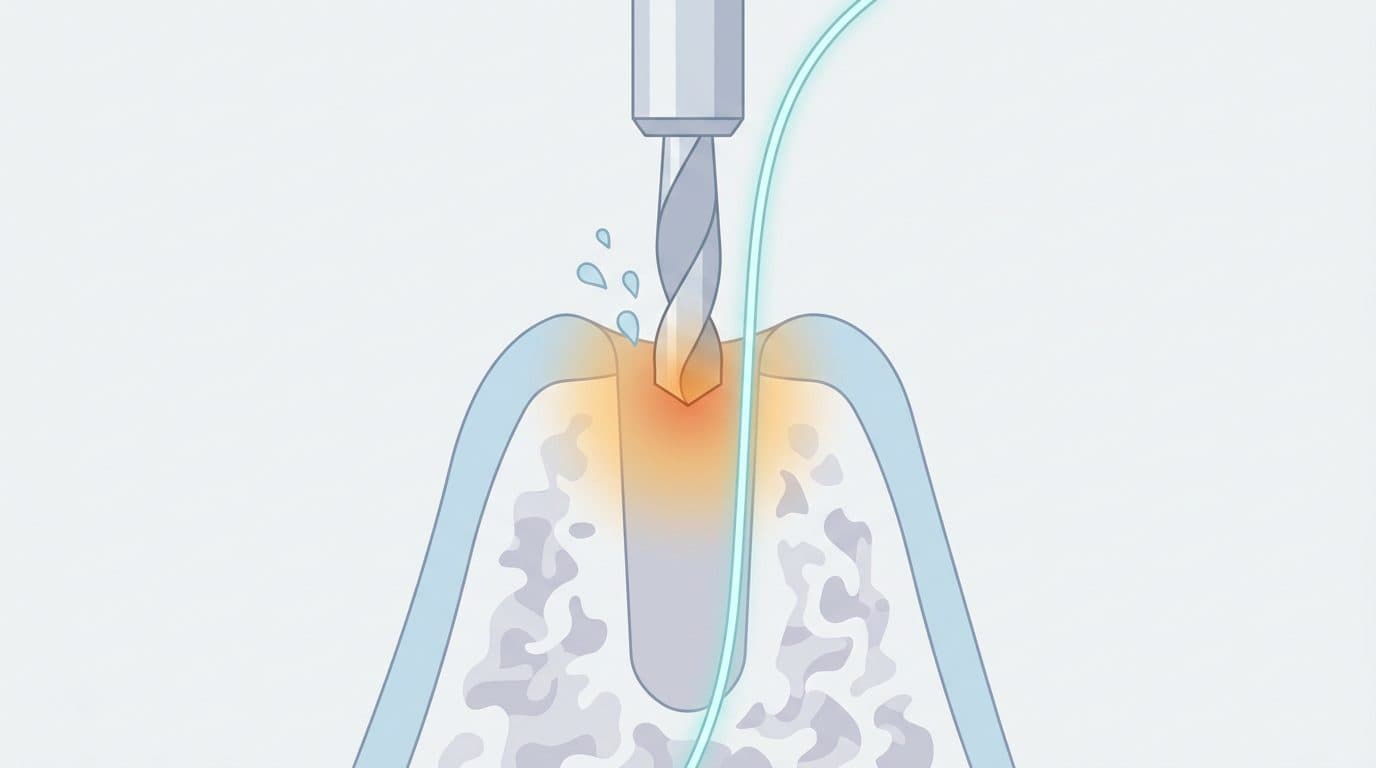
When placing a dental implant, the dentist first drills a hole into the jawbone. Friction between the drill and the bone generates heat, and once the bone surface temperature exceeds 47°C, that heat alone can kill bone cells, causing a failure of osseointegration (the process by which the implant fuses with the bone). The problem is that this heat builds up in an instant, deep inside the bone within the mouth. Thermometers used until now have struggled to measure it precisely. A research team at Nanchang University in China succeeded in measuring the heat generated while cutting bovine bone more precisely than before, using fiber-optic sensors. The results showed that water irrigation had the biggest effect on reducing heat, and that drilling speed and depth each acted differently on the outer and inner parts of the bone.
A Fiber-Optic Sensor Measuring Cortical and Cancellous Bone at Once
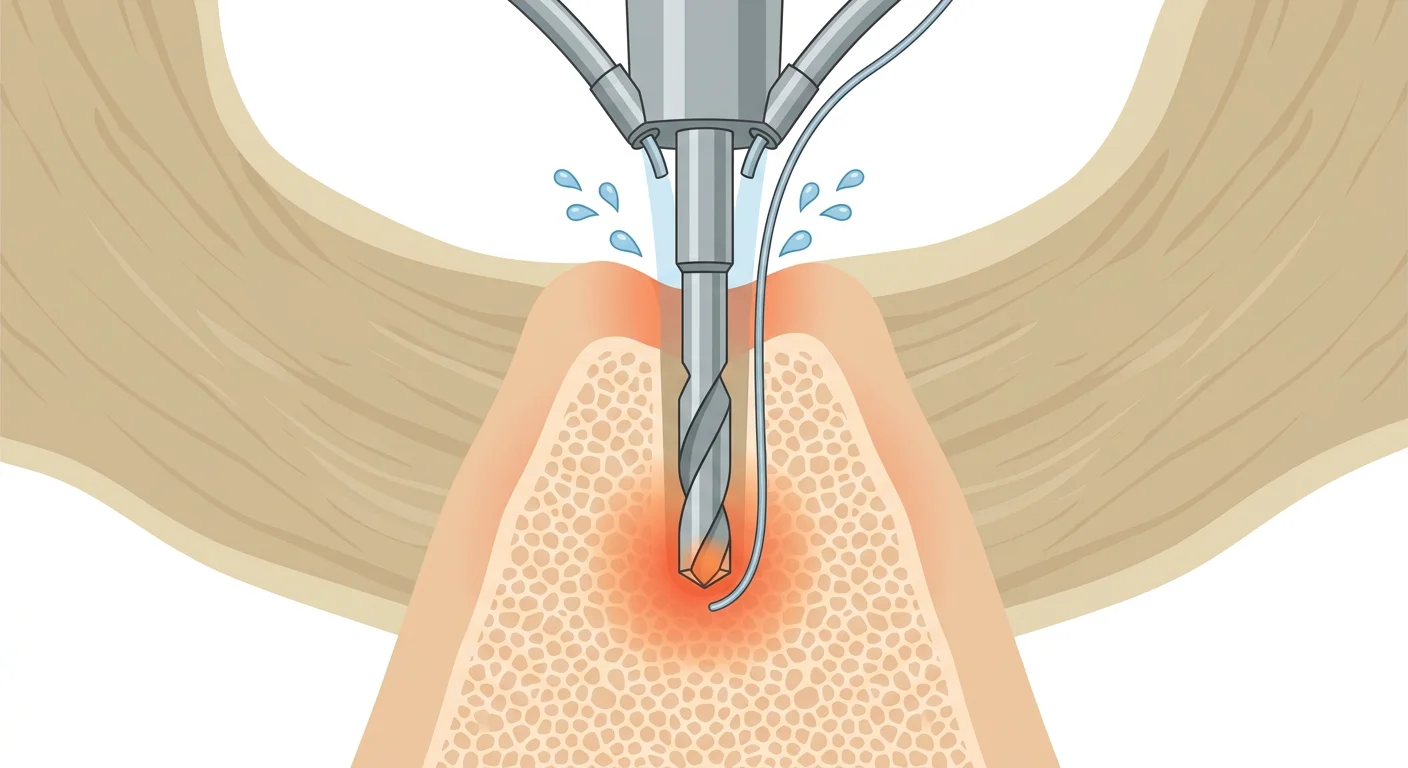
Previously, bone heat was measured using infrared thermometers, thermocouples, or NTC sensors that read temperature through electrical resistance. Infrared thermometers can only capture the bone surface without contact, so they cannot reveal the temperature deep inside the bone, while thermocouples and NTC sensors can only measure a single point, requiring multiple holes to be drilled to measure several depths at once. The fiber Bragg grating (FBG) sensors used by the research team pass light through a glass fiber slightly thicker than a human hair and read temperature by how much the wavelength of the returning light shifts. By etching multiple gratings onto a single fiber, temperature can be measured separately at each point, so the research team placed two sensors inside a protective tube about 0.5mm in diameter, inserting one into the hard outer part of the bone (cortical bone) and the other into the porous inner part (cancellous bone) to measure the heat at both locations simultaneously.
Irrigation and Drilling Conditions Determine the Temperature Rise
Using bovine rib bone to recreate conditions similar to the jawbone, the team drilled 210 times and found that without irrigation or intermittent drilling, cancellous bone temperature rose by up to 7.8°C and cortical bone by up to 5.77°C. Since this rise was measured at a laboratory room temperature of 23°C, it should be noted that the starting point differs from the body-temperature environment inside the mouth. By contrast, when drilling was done with cold water irrigation and short intermittent bursts, the temperature rise never exceeded 1.6°C. Irrigation had a bigger effect than intermittent drilling. Looking at the remaining conditions after excluding the effects of irrigation and intermittent drilling, raising drilling speed from 800rpm to 1400rpm made only the cortical bone hotter, with little difference in cancellous bone. Conversely, drilling to a greater depth noticeably increased heat only in cancellous bone, while cortical bone stayed nearly unchanged. The research team attributed this to irrigation water not reaching deep enough, making it harder to cool the heat in the inner bone.
Guided Surgery's Accuracy and the Challenge of Irrigation Pathways
Guided implant surgery, which plans the implant site on a computer in advance and drills according to a 3D-printed template, is known for achieving more accurate positioning. Heat, however, turned out to be a different story. When an Austrian research team compared guided surgery with freehand surgery using bovine bone in 2025, freehand surgery ran hotter when drilling without irrigation, but guided surgery ran hotter when drilling with cold water irrigation down to a depth of 12mm using a 3.5mm drill. Results from an Egyptian research team in 2026, which compared irrigation pathways using a resin model, pointed in a similar direction. Spraying irrigation water from outside the drill reduced the temperature rise from 31.41°C to 9.48°C, while channeling it directly through an internal passage in the drill lowered it even further, to 3.50°C. This suggests that in guided surgery, a separate pathway is needed for irrigation water to reach the entire drill evenly, so that heat can be controlled as effectively as positional accuracy.
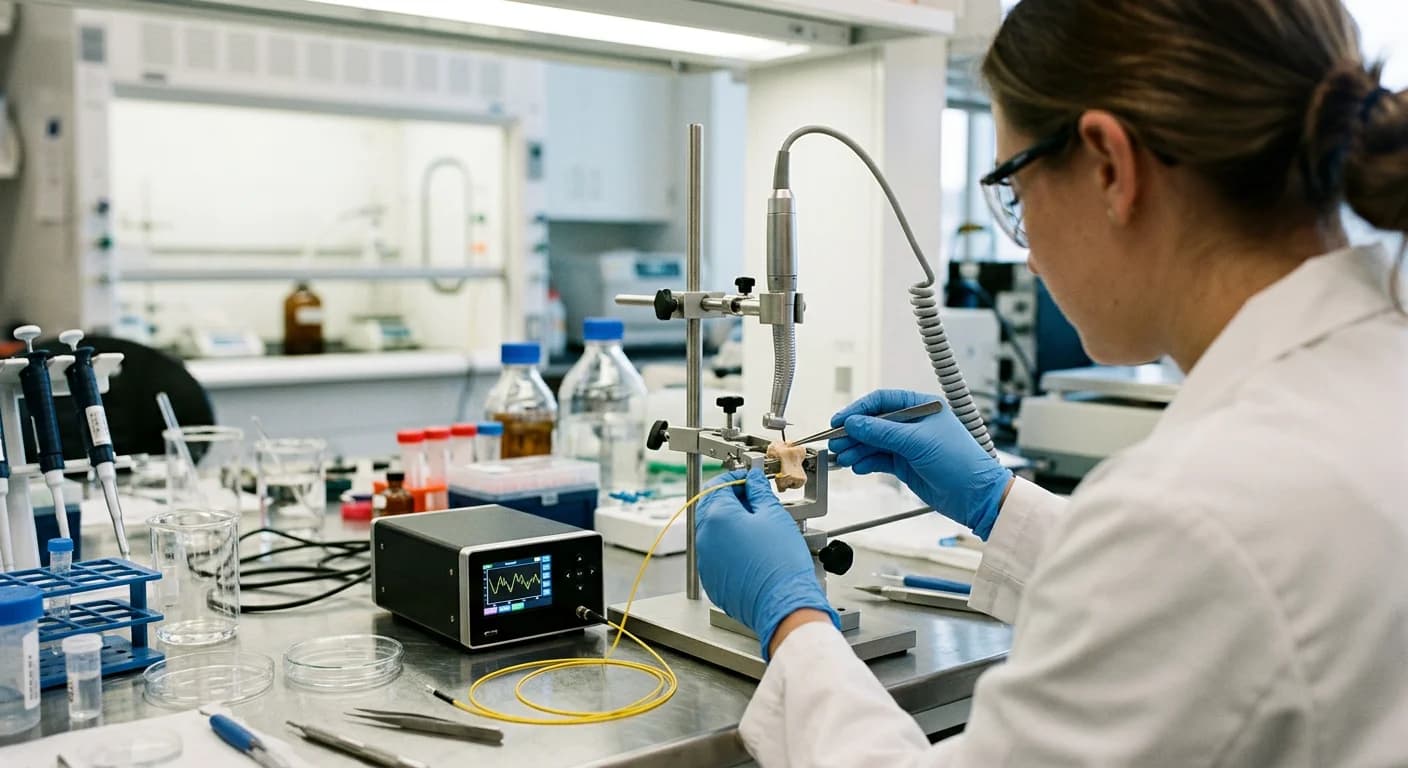
This study is a laboratory-stage result conducted on bovine bone rather than in humans or live animals. Even so, it demonstrated that fiber-optic sensors can measure heat at two points inside bone simultaneously and more precisely than conventional thermometers, and it revealed with concrete figures that irrigation method and drilling conditions each affect different locations inside the bone differently. The research team is preparing the next step: embedding this sensor directly into implant surgical instruments to measure heat in real time during actual surgery.