
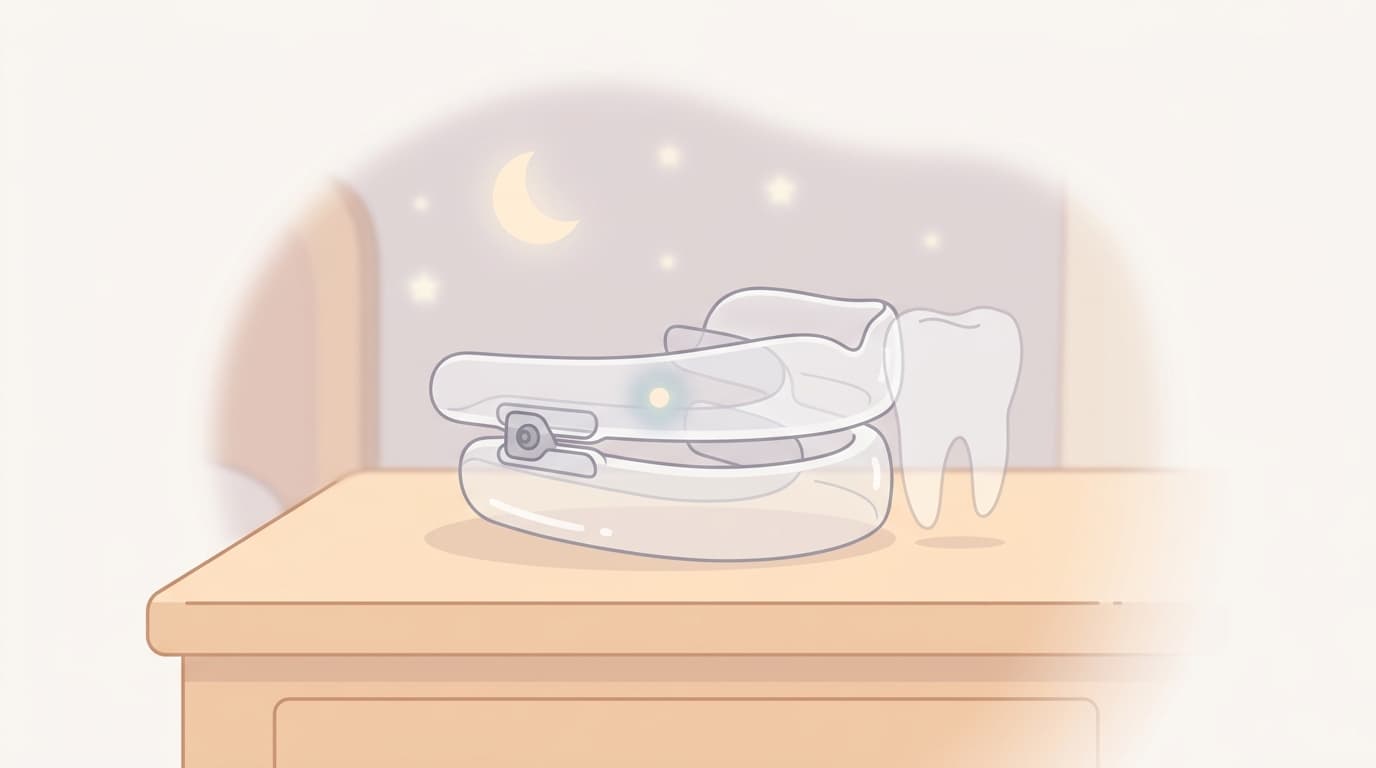
For patients with snoring or obstructive sleep apnea, the mandibular advancement device is a widely used alternative to CPAP (continuous positive airway pressure) therapy. It is an oral appliance that holds the lower jaw forward during sleep to widen the airway behind the base of the tongue, but multiple studies have repeatedly confirmed that longer wear brings side effects such as widening front teeth or a changed bite surface. Earlier, smaller studies have also suggested a link between objectively measured wear time and these side effects. A previous article covered a design change aimed at reducing lower front tooth pain, but no study had precisely examined the relationship between wear time and side effects. A research team at Regensburg University Hospital in Germany embedded a sensor in the device to measure actual wear time and precisely superimposed intraoral scans to measure how much the teeth had moved. The result: side effects were larger the longer the device was worn, and larger in people with a particular jaw shape.
How Wear Time Is Measured Has Changed
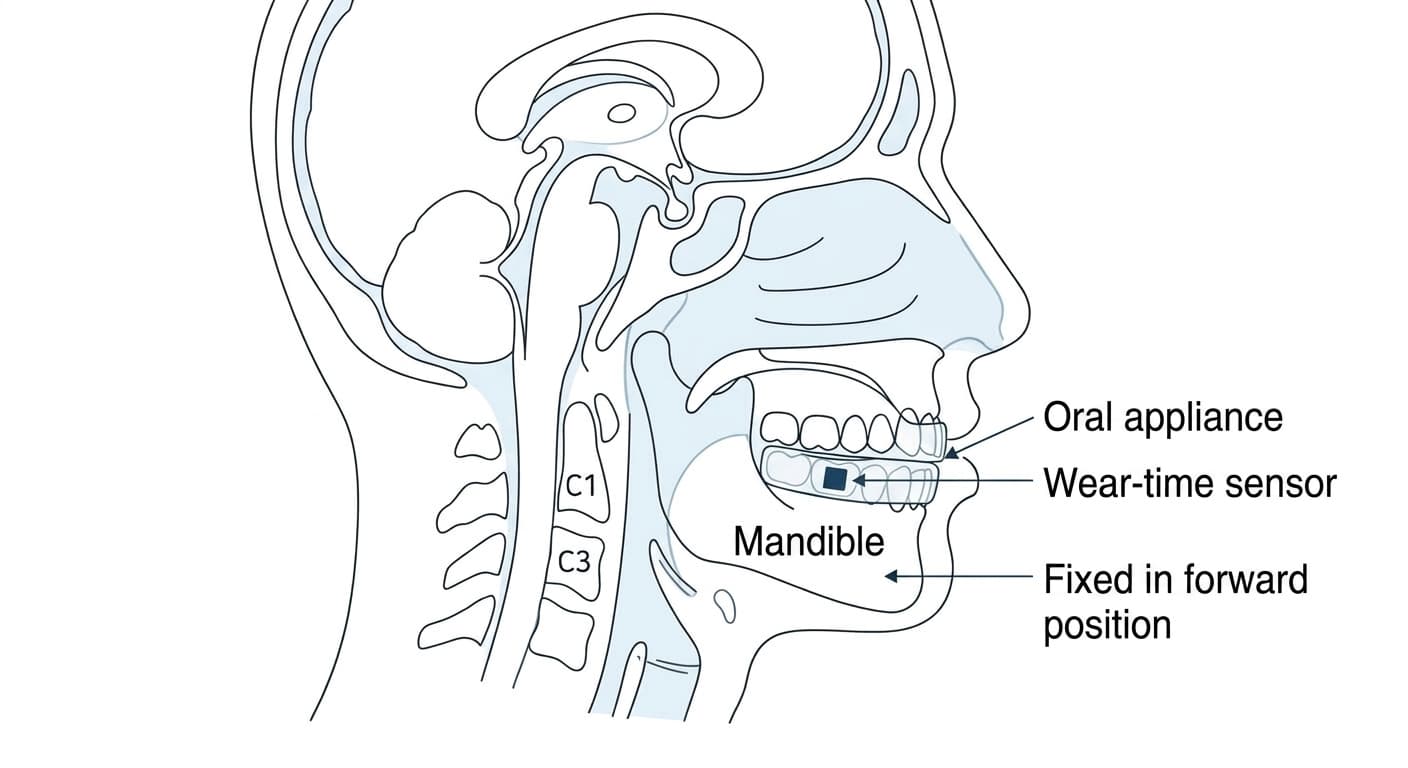
Until now, research on mandibular advancement device side effects has mostly relied on wear-time logs that patients recorded themselves. Self-reports carry the risk of overstating actual use. This study embedded a temperature-sensing sensor in the TAP-T, an adjustable mandibular advancement device made by Thornton, to automatically record how long the device was actually worn in the mouth each night. Tracking patients with mild to moderate sleep apnea over 12 months, the average wear time was 5.52 hours per night. Earlier research has already confirmed that wear time measured this way, with a sensor built into the device, does not differ much from patients' own self-reported logs.
Tooth Movement Was Also Measured by Precisely Overlaying Scans
The way side effects are measured has also changed. In the past, only a lateral cephalometric X-ray (a radiograph taken from the side of the head at a fixed angle) was used to measure how deeply the front teeth overlapped (overbite) and their front-to-back distance (overjet). This study superimposed 3D impressions taken with an intraoral scanner before treatment and 12 months later, using a registration algorithm (ICP) that minimizes the error between the two scans, to separately measure the amount of movement in the molar and incisor regions. Cephalometric X-rays were also taken alongside this to check whether the jawbone itself had changed shape.
The Longer It Was Worn, and the More a Jaw Had This Shape, the More Teeth Moved
The superimposition showed that tooth movement was more pronounced on the lower jaw side. The lower incisors were pushed toward the lips, while the upper incisors were pushed the opposite way, toward the palate, and the molars were also found to increase in length or widen side to side. The longer the wear time, the significantly larger these changes became. An earlier meta-analysis pooling multiple studies had already shown results in the same direction, with overjet decreasing by an average of 0.89mm and overbite by an average of 0.68mm.
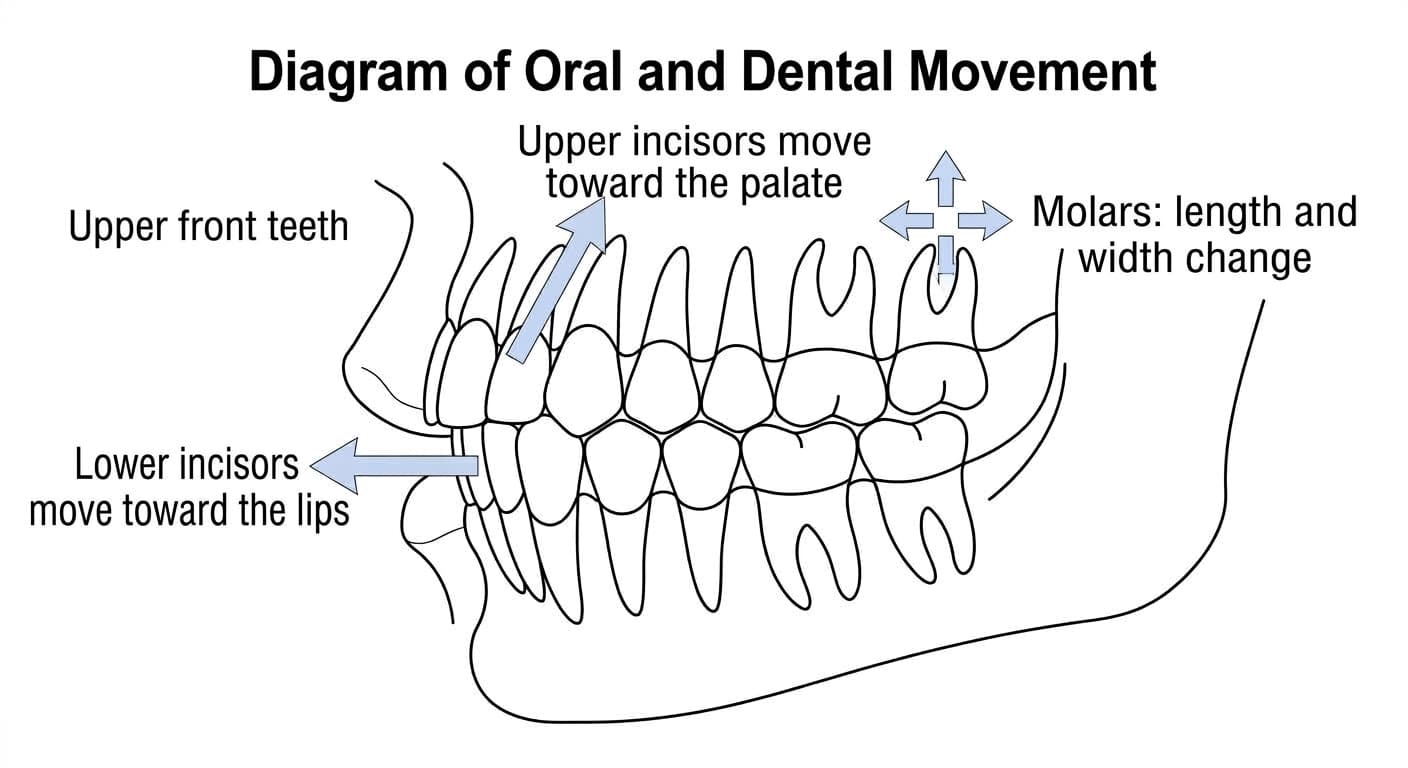
What this study newly adds is the variable of jaw shape. Side effects were significantly larger in faces where the angle between the upper and lower jaw was more widely open, and in faces where the lower jaw was already protruding and had grown in a more horizontal pattern. In other words, even with the same wear time, the burden placed on the teeth differed depending on jaw shape.
What This Means
These results show that accurately measuring wear time can itself become a tool for managing treatment. Because side effects grow larger as wear time increases, checking actual usage habits with a sensor can help identify patients who are wearing the device for too long. Adding jaw shape to this picture also makes it possible to identify, from the start, patients at higher risk of side effects and provide them with more frequent, tailored monitoring. However, since these results come from a single product tested on a small number of patients, further study is needed to confirm whether the same trend holds for other devices and larger numbers of patients.