
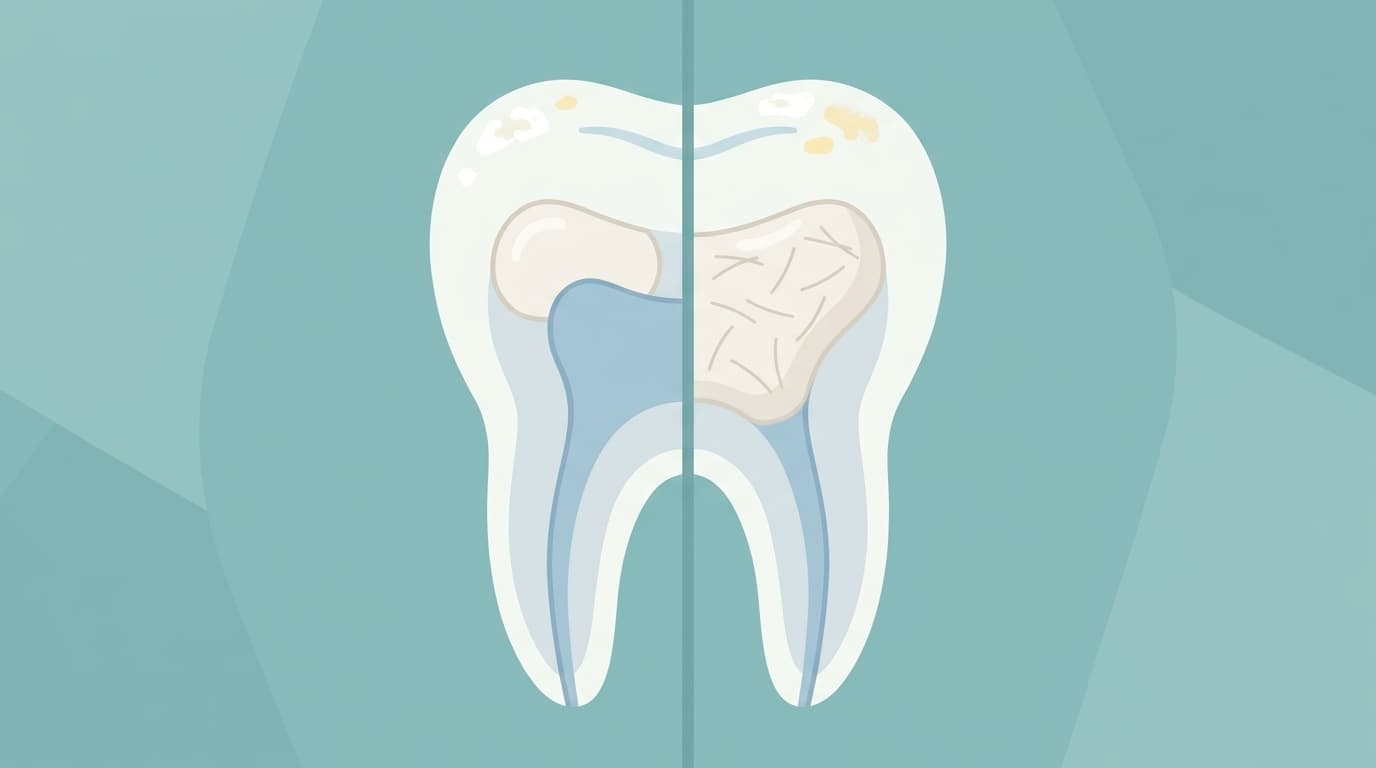
If a child has yellowish-brown spots on their molars and unusually sharp sensitivity, the cause may not be decay but molar incisor hypomineralization (MIH), a developmental defect in which the enamel (the hard layer covering the tooth surface) fails to mature properly while the tooth is forming. Molars affected this way tend to chip easily and become sensitive soon after they erupt, so which filling material lasts longest has been a long-standing question. A 5-year clinical trial published in 2026 offered part of the answer. Two materials performed similarly through 3 years, but by the 5-year mark, the proportion of restorations still in place had diverged.
Not Decay, But a Developmental Defect
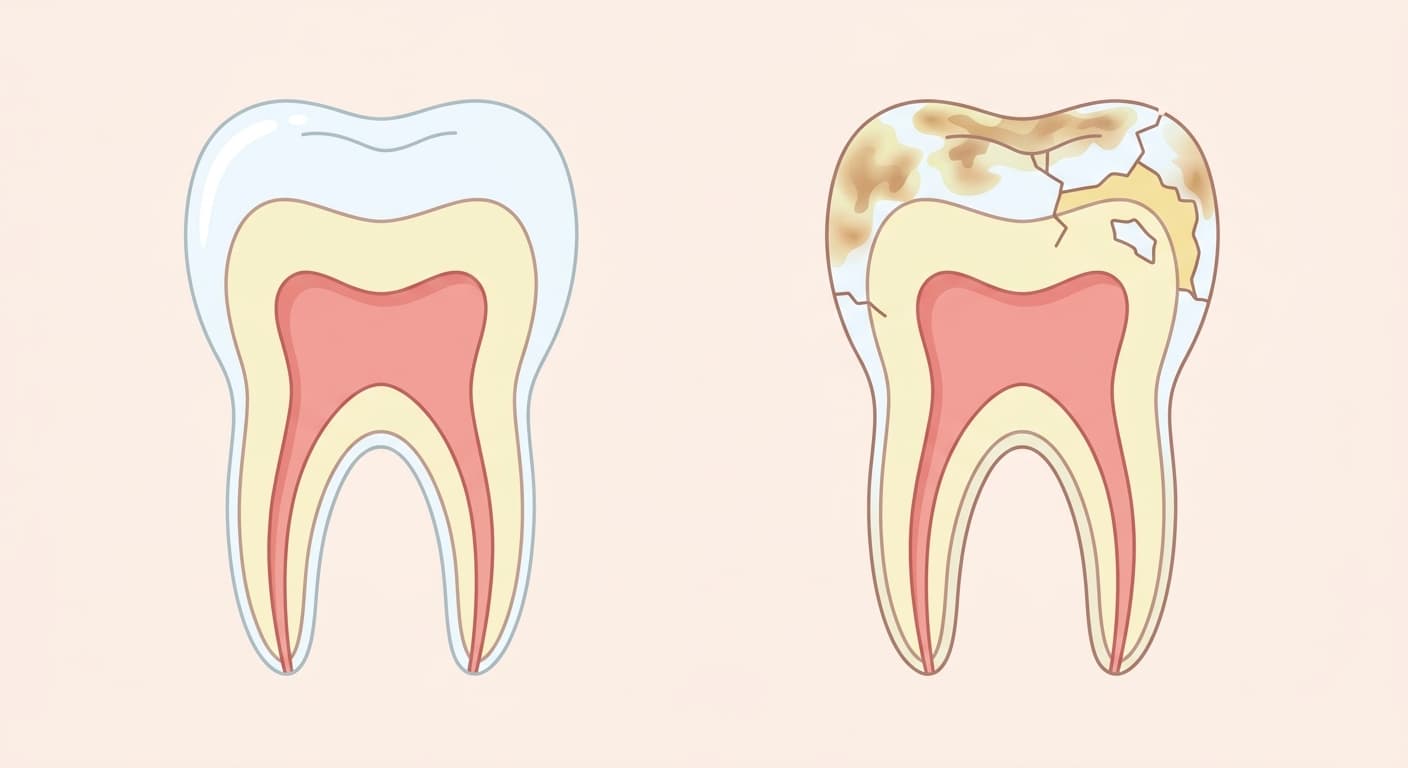
Molar incisor hypomineralization is common enough to affect roughly 1 in 7 children. A pooled analysis of more than 70 studies worldwide found an average prevalence of 14.2%, with about 27% of those cases requiring actual treatment because of pain or enamel fracture. The cause isn't brushing habits; it's reported to result from a combination of factors experienced from late pregnancy through around age 3 to 4, while the teeth are forming, including respiratory illness, antibiotic use, and genetic predisposition. In severe cases, the enamel cracks and breaks away soon after the tooth erupts (post-eruptive breakdown), exposing the dentin underneath. This makes the tooth sensitive to temperature and chewing force and makes brushing painful, which in turn makes the tooth more prone to decay.
Split-Mouth Fillings: No Difference Through 3 Years
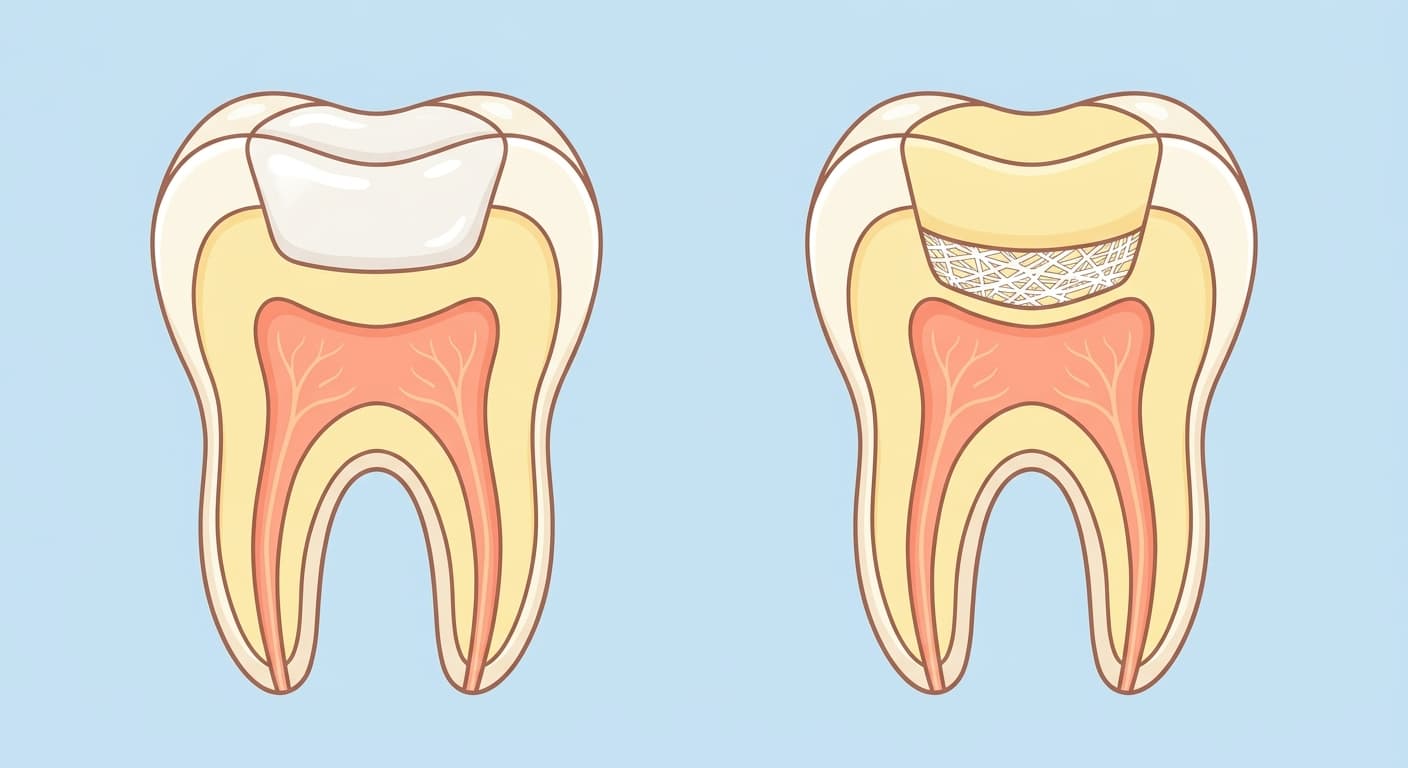
A pediatric dentistry team at Marmara University in Turkey performed selective caries removal, taking out only the softened, hypomineralized tissue, and then split 62 molars from 31 children aged 6 to 12 in half within each child, filling each half with a different material. One side received a glass ionomer-based glass hybrid (Equia Forte HT); the other received a fiber-reinforced composite made of a short glass fiber-reinforced base material (EverX Flow) topped with a conventional composite resin (G-Aenial Posterior). The glass fiber works to keep cracks from spreading through the entire restoration. The same team had previously reported that the two materials performed similarly at the 36-month follow-up.
At Year 5, It Was Survival Rate That Diverged
At 6, 12, 24, 36, and 60 months, clinical exams evaluated marginal fit, sensitivity, and secondary decay, and the two materials declined together over time with no difference between them. But the actual proportion of restorations still in place at 60 months did differ: 75.5% of fiber-reinforced composite restorations remained, compared to only 59.2% of glass hybrid restorations. In other words, even though clinical quality scores looked similar, the two materials diverged in how many restorations were lost. The research team said that if long-term durability beyond 5 years matters, fiber-reinforced composite may be worth considering first.
A Problem That Remains Even After Switching Materials
Another clinical trial published the same year makes this gap even clearer. Following 72 molars for 12 months after filling hypomineralization-related breakdown with either glass ionomer or conventional composite resin, the survival rates of the two materials showed no difference, at 91.7% and 88.9%. However, 25 to 30% of the failures weren't caused by the filling itself, they happened because the hypomineralized enamel remaining right next to it kept breaking down further. The restoration itself stayed intact while the weak enamel beside it kept fracturing. When a tooth is already severely broken down, clinicians sometimes choose a full crown over any particular filling material. A small case report in which bacteria were first controlled with silver diamine fluoride (SDF) before placing a stainless steel crown found the crown remained intact over 24 months. Choosing a material that lasts and preventing the remaining enamel from breaking down on its own remain two separate challenges.