
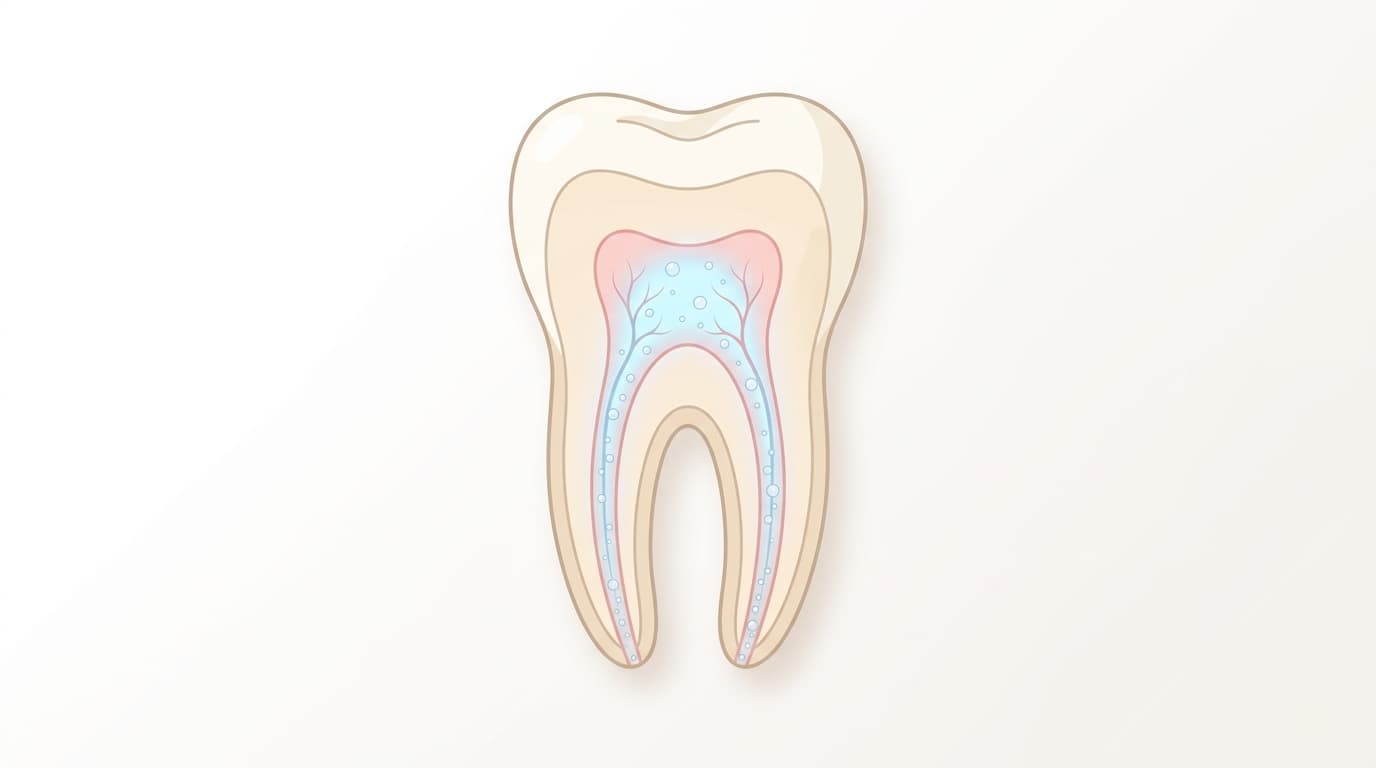
A research team at West China School of Stomatology, Sichuan University in China has developed a material that releases oxygen and glucose over an extended period at the site where a tooth's nerve tissue has died. This study, published in 2026, reported that animal experiments using this material produced more pulp-like (dental nerve) tissue and blood vessels than an untreated control group. It is an attempt to solve, through the material itself, a problem that regenerative endodontics (the field trying to refill a nerve-removed tooth with real nerve tissue) has long faced: implanted cells dying from lack of nutrients inside the narrow root canal.
The Long-Standing Wall Facing Regenerative Endodontics
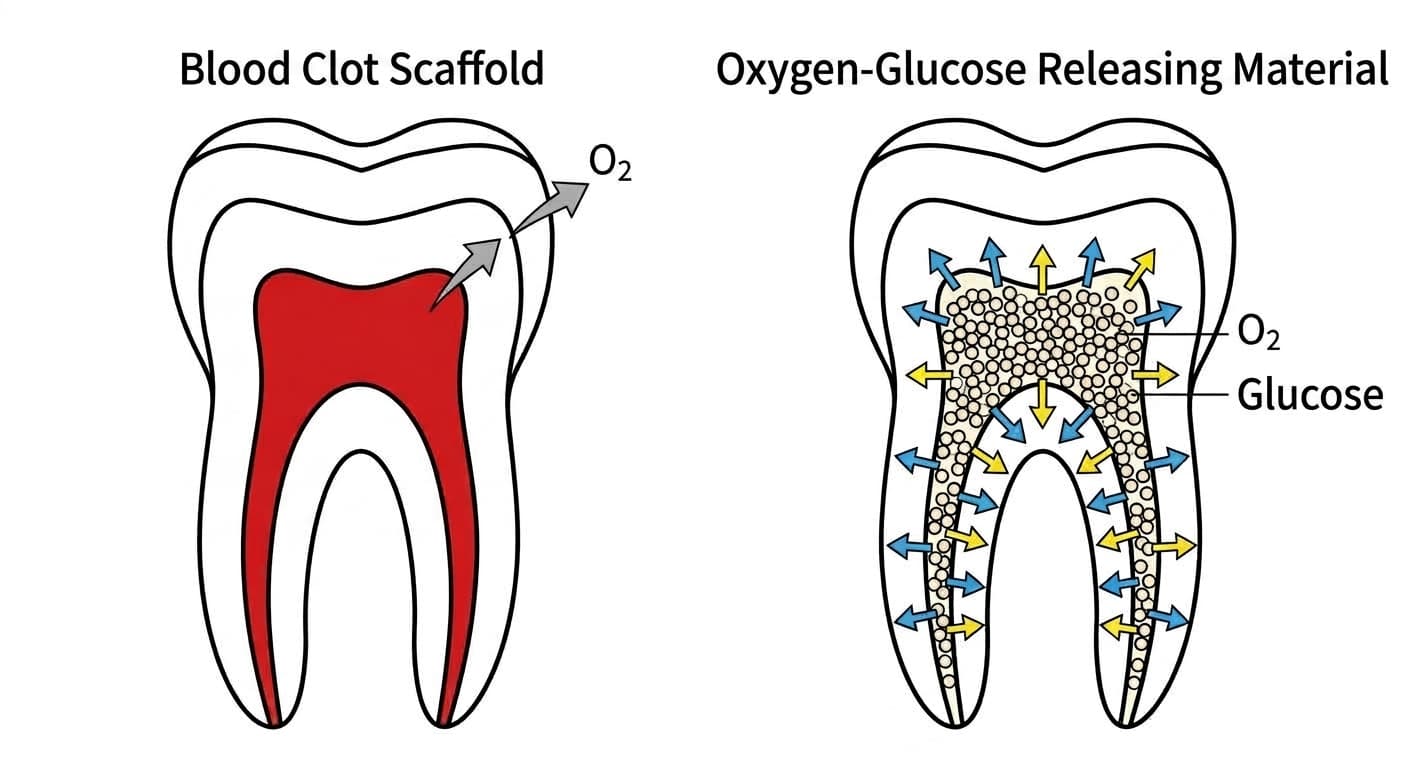
Root canal treatment removes the pulp, a tooth's nerve tissue, when it is damaged beyond recovery or dies from pulp necrosis, then fills the empty space with material. But in young permanent teeth whose roots have not yet fully formed, completely removing the nerve stops root development and leaves the walls thin and prone to fracture. Regenerative endodontic procedures emerged to avoid this problem. The approach deliberately irritates the root tip to induce bleeding, then uses the resulting blood clot as a scaffold that cells can enter to grow new tissue. Unlike antibody therapy, which aims to regrow an entire tooth, this approach aims only to revive nerve tissue inside a tooth that already exists.
The problem is that the blood clot formed this way does not last long. A recent review found that while this approach does resolve root-tip inflammation and allow root development to continue, it remains unclear whether the tissue that grows back is truly pulp, and concluded that results so far look more like biologically assisted repair than predictable pulp regeneration. That is because stem cells transplanted into the clot, or cells that migrate in from surrounding tissue, die before they can settle in when placed in an environment lacking oxygen and glucose.
A Dual-Release Structure That Delivers Oxygen and Glucose Separately
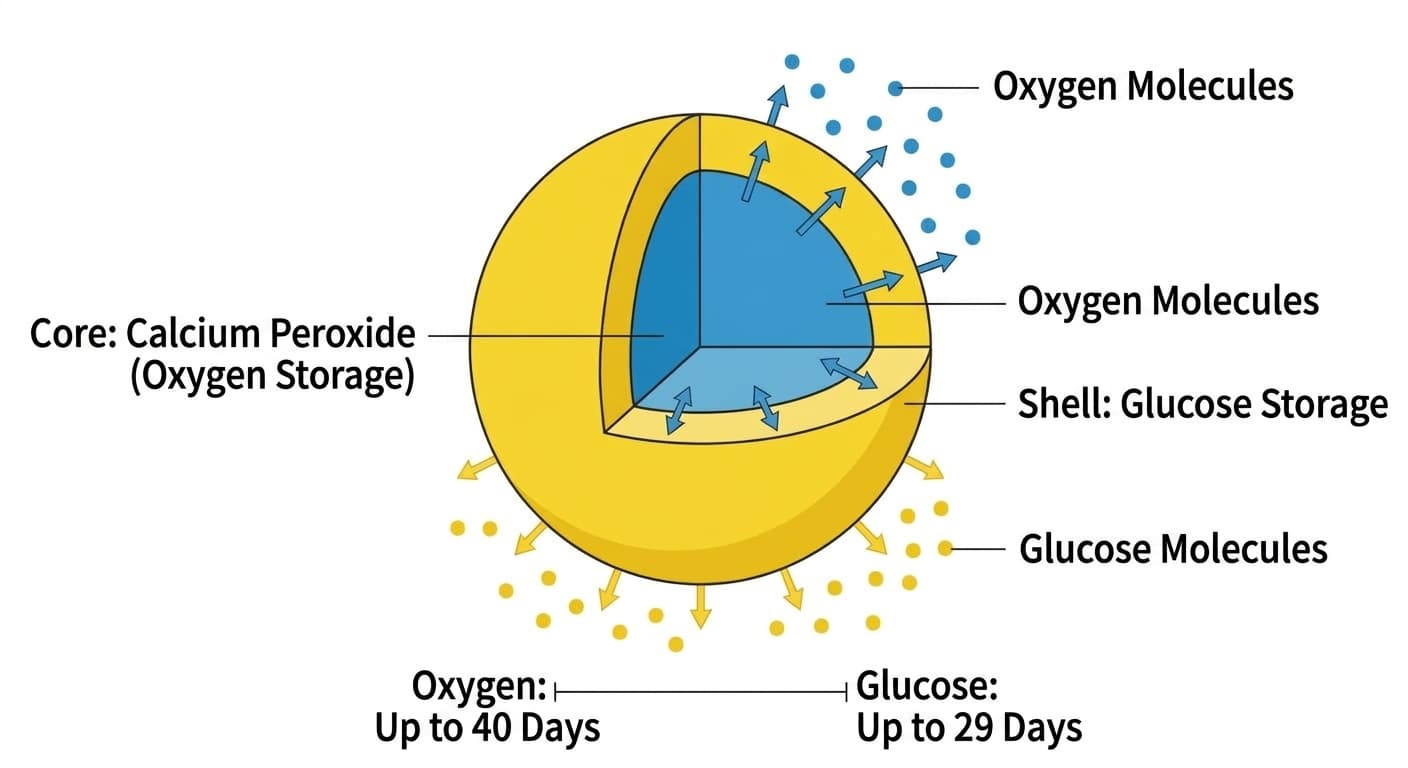
The material the team created has a core-shell structure (made of different materials inside and outside) built from polydimethylsiloxane (PDMS, a silicone-based polymer). The core contains calcium peroxide, which slowly releases oxygen on contact with water, while the shell layer holds glucose and was designed to release it over a longer period than the oxygen. As a result, oxygen release continued for up to 40 days and glucose release for up to 29 days.
Calcium peroxide also produces hydrogen peroxide as it releases oxygen, which can harm cells, but the team reduced this side effect by controlling the diffusion rate through the material. The release rate was controlled purely through the material's structure, without adding any external enzymes.
Tissue Regeneration Confirmed in Experiments
In cell experiments, dental pulp stem cells supplied with both oxygen and glucose survived and proliferated better than cells given only one of the two, and also showed a greater capacity to differentiate into dentin-forming cells. Gene expression analysis revealed changes in the TNF-α/NF-κB pathway, which is linked to cell survival, and the Wnt/β-catenin pathway, which is involved in tissue regeneration, evidence that the material does more than keep cells alive and also engages signaling tied to regeneration.
In animal experiments, the group that received this material grew more pulp-like tissue and blood vessels than the control group, and also showed more pronounced expression of DSPP, a marker protein for dentin-forming cells.
Next Step: Applying This to Human Teeth
These results come from experiments using cultured cells and mice, so it remains a separate task to confirm whether oxygen and glucose would be released at the same rate when placed inside a human's narrow, winding actual root canal, and whether the material stays safe when left in place for a long period. Even so, this research takes a different direction from existing approaches: rather than relying on natural blood supply, the material itself supplies oxygen and nutrients directly, aiming to solve a problem consistently cited as a cause of regenerative endodontic failure: implanted cells dying from nutrient deprivation inside the root canal.