
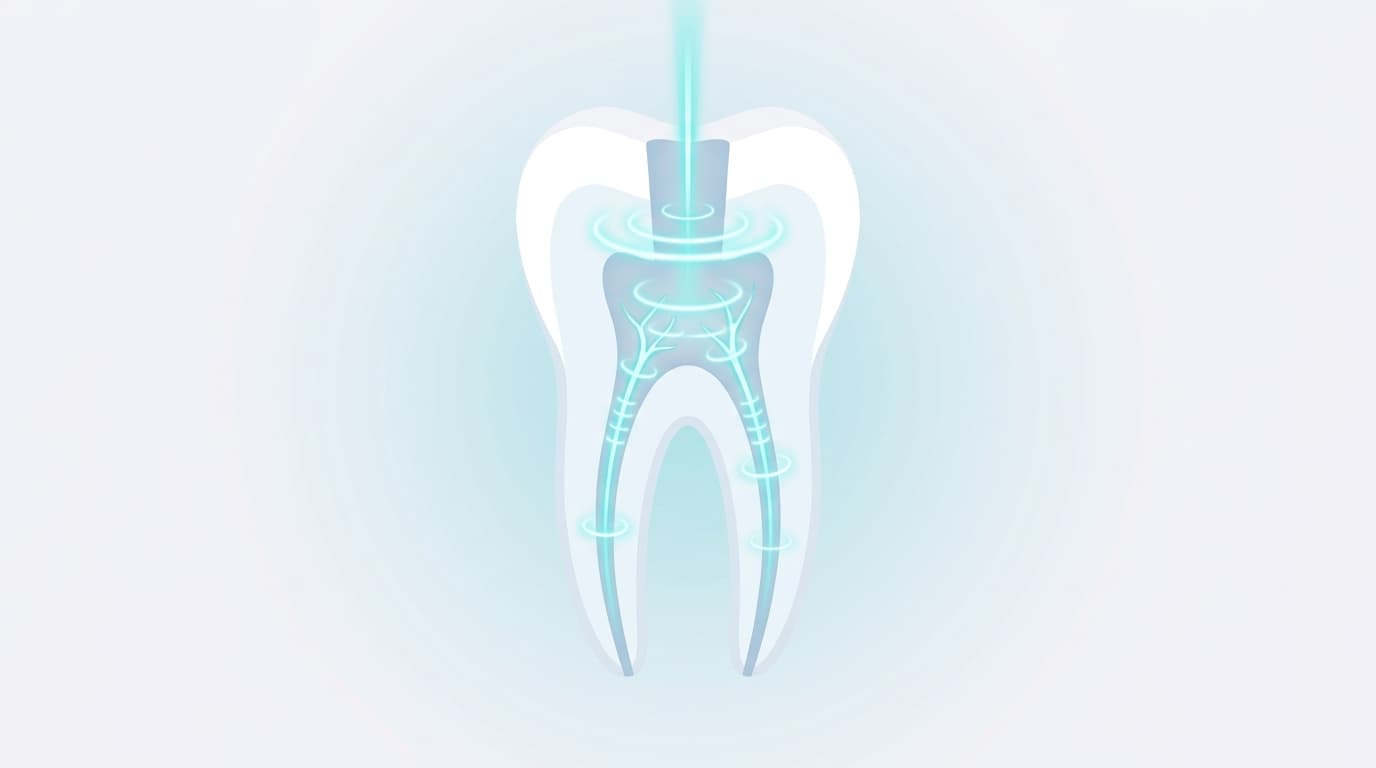
Root canal treatment succeeds or fails based on whether bacteria are eliminated from the root canal, the narrow channel inside a tooth's root. A laser-based approach to the irrigation step that flushes out this canal, known as PIPS, has recently been put through clinical trials. A systematic review published in 2026 concluded that this laser irrigation causes less pain than conventional ultrasonic irrigation during the first two days after treatment. However, another review published around the same time reported a conflicting finding: the same laser irrigation pushes more debris past the root tip.
The Irrigant Is Agitated Differently
Conventional root canal irrigation either flows disinfectant solution through a thin needle inserted deep into the canal, or uses ultrasonic irrigation, in which a thin file vibrated by ultrasound is moved back and forth along the length of the canal to agitate the liquid. Both methods require inserting the instrument itself into the canal, so in canals that are curved or narrow, corners remain that neither the instrument nor the disinfectant can reach.
Laser-based irrigation (PIPS, Photon-Induced Photoacoustic Streaming) does not insert an instrument into the canal at all. Briefly firing an erbium
(Er) laser only at the access opening at the top of the tooth causes the disinfectant filling the canal to momentarily boil, generating microscopic shockwaves. The laser energy used here is below the threshold for cutting dentin, the hard tissue beneath the tooth's surface, and the pulses are extremely short, so the tooth structure itself is barely affected. Instead, these shockwaves drive the disinfectant into every corner of the canal wall, letting it sweep through spots the instrument cannot directly reach.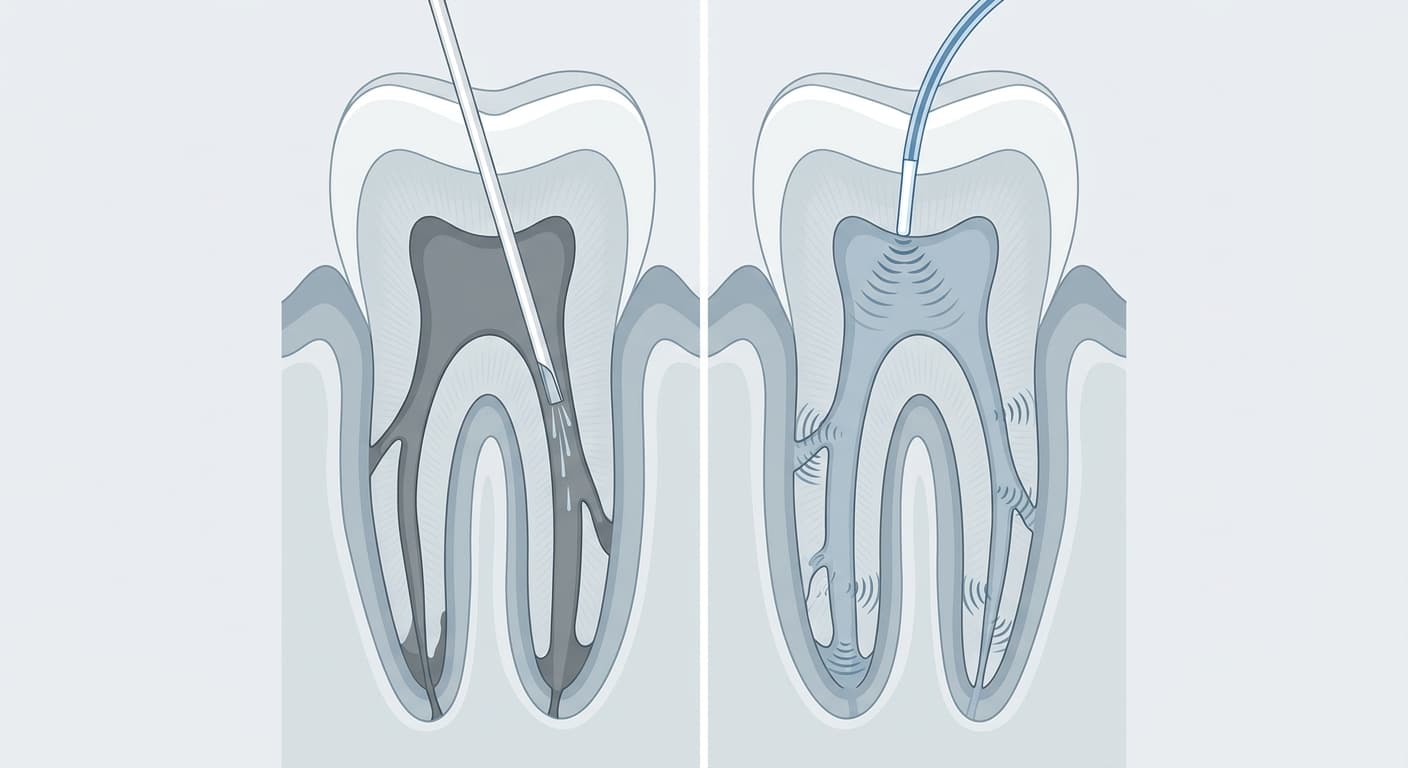
Less Painful Than Ultrasonic Irrigation for the First Two Days
A 2026 systematic review pooling seven randomized clinical trials compared laser irrigation with ultrasonic irrigation in patients undergoing root canal treatment for irreversible pulpitis. When post-treatment pain was scored on a 0-to-10 scale, laser irrigation showed lower pain between 24 and 48 hours after treatment. This difference nearly disappeared between the two methods after 72 hours, and painkiller use was similar in most studies. One study even reported that the ultrasonic irrigation group took less pain medication.
But It Pushes More Debris Past the Root Tip
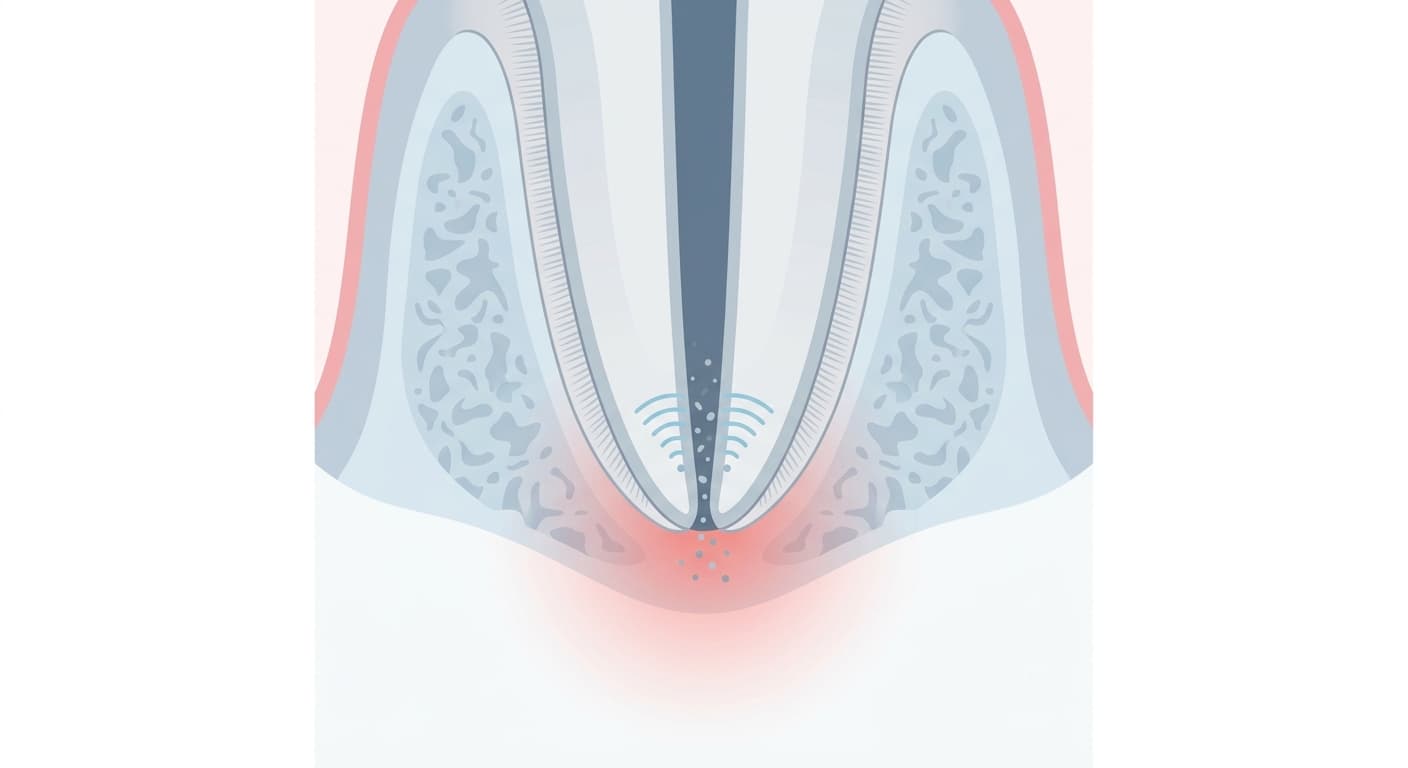
Laser irrigation's weakness was also confirmed. Another systematic review pooling 12 studies found that laser irrigation pushed more debris past the root tip than conventional needle irrigation. This is presumed to happen because the shockwaves generated inside the canal drive debris toward the root tip along with the disinfectant. Debris pushed past the root tip has long been suspected of inflaming the surrounding tissue and worsening post-treatment pain. By contrast, irrigation methods that draw the disinfectant out while flushing it through the canal pushed out less debris than needle irrigation. Why early pain was actually lower despite more debris being pushed out remains unexplained, and the certainty of evidence in both reviews was rated low.
Root canal irrigation methods have now expanded from needles and ultrasound to lasers. Conflicting evidence has accumulated: laser irrigation showed slightly lower pain in the first two days, while the risk of pushing debris past the root tip was, conversely, greater with laser irrigation. Sample sizes are small and the type and settings of lasers vary between studies, so it is still too early to reconcile the two findings.